
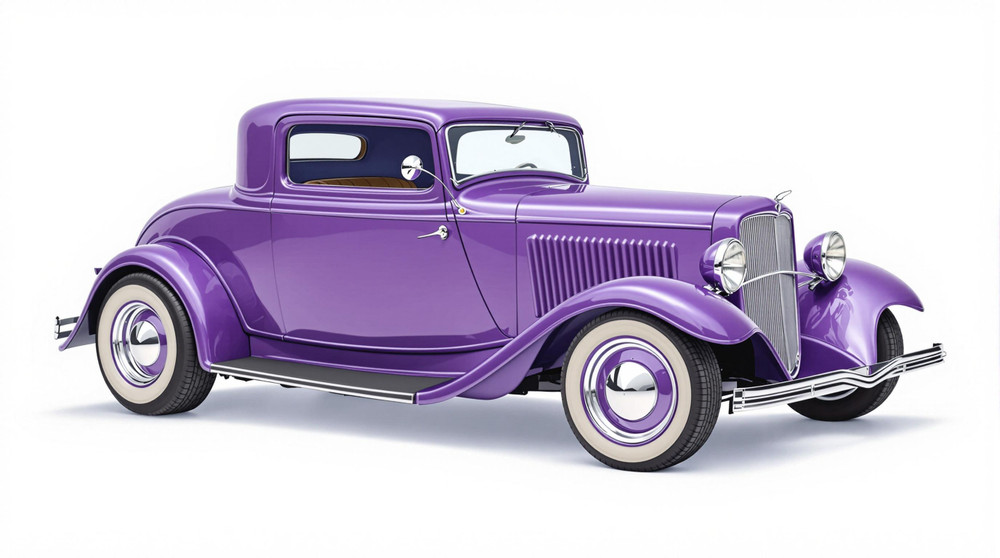
Image of 1932 Hupmobile Series I-226, Note: These illustrations use artistic license and may differ from actual historical models.
Performance Metrics
Fundamental Metrics
Emotional Appeal
MMP Rating
| Engine Specifications | |
|---|---|
| Engine Options: | Inline 6 |
| Displacement Range: | 226 cubic inches |
| Horsepower Range: | Estimated 70-80 HP |
| Torque: | Not available |
| Compression Ratio: | Not available |
| Ignition System: | Distributor and coil |
| Cooling System: | Water-cooled |
| Performance Specifications | |
| 0-60 Time: | Not available |
| 1/4 Mile Time: | Not available |
| Top Speed: | 70 mph |
| Transmission and Drive | |
| Drive Type: | Rear-wheel drive |
| Transmission Type: | 3-speed manual |
| Fuel and Efficiency | |
| Fuel System Type: | Carburetor |
| MPG: | Not available |
| Dimensions and Brakes | |
| Brakes: | Mechanical drum brakes |
| Wheelbase: | 119 inches |
| Weight: | 2,800 lbs |
Note: Specifications for classic cars are given to the best of our ability, considering the limited and variant data available.
1932 Hupmobile Series I-226: A Classic American Six
The 1932 Hupmobile Series I-226 brought substantial six-cylinder power and polished, conservative style to a car market battered by the Great Depression. Built by the Hupp Motor Car Corporation of Detroit, Michigan, it represented the company’s effort to keep its cars appealing to buyers who wanted comfort and quality without stepping up to a costly luxury model.
Hupmobile had been founded in 1909 by Robert C. Hupp, an automotive pioneer who had previously worked at Oldsmobile and Ford. The company earned a reputation for well-engineered cars, and its name became familiar across America during the early decades of motoring. By 1932, however, falling demand and intense competition were putting independent manufacturers under severe pressure. The I-226 was part of Hupp’s determined attempt to offer a capable, well-equipped car in difficult times.
One detail worth keeping in mind: the I-226 belongs to Hupmobile’s conventional early-1930s line, not the striking aerodynamic Hupmobile introduced in 1934. That later car became the company’s most famous styling statement, but the 1932 I-226 offers a different appeal: traditional American proportions, a large straight-six engine, and the substantial feel of a prewar automobile.
Exterior Design and Body Styles
The I-226 has the confident, upright look associated with early-1930s American cars. Its tall radiator shell, long hood, separate sweeping fenders, and running boards give it a formal profile. A broad grille and prominent headlamps make the front end especially recognizable, while wire or artillery-style wheels, depending on equipment and specification, add period character. The body is substantial without looking as imposing as the most expensive luxury cars of the day.
Hupmobile offered the series in several passenger-car body styles. Depending on the catalog and market, buyers could choose among sedan and coupe configurations, with open or rumble-seat variations also associated with the period’s Hupmobile range. Sedans made the most practical choice for families, while coupes delivered a sportier look and the option of an occasional rear seat on some versions. Exact body availability and trim can vary by production run, so surviving cars should be identified by their original body plate and documentation.
Factory paint choices changed by model and year, and surviving examples may also have been repainted. Period buyers could select from restrained colors typical of the era, including dark blues, greens, browns, and black, often paired with contrasting trim or wheels. Dark, formal colors suit the car’s upright styling, while a rich green or blue can make a restored I-226 stand out without looking out of character.
Interior Comfort and Equipment
Inside, the I-226 followed the expectations of a well-appointed American car. The cabin was arranged around a broad bench seat, a large steering wheel, clear instruments, and controls designed for a driver who did most tasks by hand. Upholstery and trim depended on body style and finish level, but cloth was common in closed cars, with more elaborate materials or details available on better-equipped versions. Wood-grain finishes and bright metal accents helped create a more formal atmosphere than a basic economy car offered.
It was comfortable by 1932 standards, but not modern in the contemporary sense. There was no air conditioning, power steering, or automatic transmission. The driver worked a manual gearbox and used a large steering wheel to manage the car’s weight at low speeds. That direct, mechanical layout is part of the appeal today, though it also means the I-226 asks more of its driver than a modern classic with upgraded controls.
Engineering and Technology
The I-226’s central feature was its inline six-cylinder engine. The series designation is commonly associated with a roughly 226-cubic-inch engine, though published specifications can differ among reference sources and individual cars. The engine was designed for smooth, steady road performance rather than high-revving speed. A conventional manual transmission, rear-wheel drive, and a separate chassis placed the Hupmobile firmly within the established engineering approach of its time.
Four-wheel braking and conventional suspension components reflected the steady evolution of early-1930s motoring. Equipment could differ by specification, so buyers restoring an I-226 should confirm brake type and other details against factory literature or the car’s original components. Its technology was not radical, but that was part of the point: Hupmobile aimed to deliver dependable, familiar operation with a level of refinement that made longer trips more pleasant.
Why the I-226 Matters
The I-226 captures an important moment for independent American automakers. In the early 1930s, companies such as Hupmobile had to compete with the enormous production capacity and dealer networks of General Motors, Ford, and Chrysler. Hupmobile’s answer was to combine recognizable styling, generous engine capacity, and a more personal, carefully finished product.
The car did not introduce a technology that transformed the industry, nor did it outsell the mass-market leaders. Its significance is more representative: it shows how an established independent manufacturer tried to preserve its place in the market during the Depression. Hupmobile continued to experiment with styling and engineering, culminating in the more streamlined models of the mid-1930s. The I-226 belongs to the bridge between the upright touring-car tradition and that coming wave of aerodynamic design.
That context also explains the car’s lasting appeal. It is less familiar than a Ford Model A, yet it offers a similarly vivid connection to the period, with a larger-car presence and a distinctly independent identity.
Performance and Road Manners
Period specifications and the condition of surviving cars vary, so modern performance figures should be treated as estimates rather than guaranteed factory test results. A sound I-226 is generally best understood as a comfortable touring car, not a sports machine. Depending on engine condition, gearing, body style, and road conditions, a top speed in the neighborhood of 65 to 75 mph is a reasonable expectation. Acceleration from 0 to 60 mph would likely take roughly 25 to 35 seconds, if the car could reach that speed under the conditions of the test.
On ordinary roads, the straight-six should deliver a measured, even pull, with its strongest impression being smoothness rather than urgency. The engine’s note is a low mechanical hum that grows fuller under load. A three-speed manual transmission requires deliberate shifts, and the driver must anticipate hills and traffic rather than rely on quick bursts of acceleration.
The chassis favors a relaxed pace. Its period suspension and tall tires can soften rough pavement, but the car will move more over bumps than a modern vehicle. On winding roads, expect slower steering response and noticeable body movement. The long wheelbase helps it settle into a straight line, while the large steering wheel provides leverage at low speed. It is rewarding when driven smoothly, with gentle braking and early gear changes.
Living With a 1932 Hupmobile
Today, an I-226 is best suited to touring, club events, museum displays, and local car shows. Some owners may use one for occasional errands, but frequent modern traffic is a different challenge from the driving environment for which it was built. The car’s modest acceleration, vintage braking feel, and lack of contemporary safety equipment call for defensive driving and sensible route planning.
Its mechanical layout is relatively straightforward compared with later cars, and many routine jobs can be handled by an experienced home mechanic. The bigger challenge is often parts availability. Wear items and common hardware may be adaptable or obtainable through specialist suppliers, while model-specific trim, body panels, and engine components can require patience, specialist knowledge, or careful sourcing. A pre-purchase inspection should cover the engine, cooling system, transmission, brakes, chassis, and any prior restoration work.
Reliability depends heavily on condition and maintenance history. A properly rebuilt and carefully serviced I-226 can be enjoyable on touring runs, but age alone makes a thorough mechanical inspection essential. Before regular use, check the fuel system, tires, electrical wiring, steering, and brakes, and make sure the cooling system can cope with warm-weather driving.
Hupmobile Facts and Common Misconceptions
The best-known Hupmobile design story comes later. In 1934, the company introduced its streamlined Aerodynamic model, a bold car associated with designer Raymond Loewy and an important example of the move toward more modern automobile styling. The 1932 I-226 should not be confused with that car, though it belongs to the same company’s effort to remain relevant as tastes changed.
There is no widely documented record of the I-226 holding a major speed, endurance, or sales record, and no particular celebrity ownership story is firmly attached to the model. Its interest lies instead in its place within Hupmobile’s broader history and in the survival of a relatively uncommon independent make.
Common criticisms are practical rather than surprising: the car is slow by modern standards, its steering and braking demand attention, and restoration parts can be harder to find than those for mass-produced classics. Those drawbacks come with the territory of owning a Depression-era car from a smaller manufacturer. For enthusiasts who value originality and character, they are part of the experience rather than a reason to dismiss it.
Collector Value and Availability
There is no dependable, widely published production total for the 1932 Series I-226 alone. Hupmobile built cars in much smaller numbers than the Big Three, and surviving examples are not commonly seen at general classic-car auctions. As a broad estimate rather than a verified factory figure, production of the I-226 may have been in the low thousands, with totals varying by body style. The number of surviving cars is smaller still, but a precise count is not available.
Condition, originality, body style, restoration quality, and documentation have a major effect on value. As a general current-market estimate, a project car might bring roughly $5,000 to $12,000, while a usable driver or presentable restoration could fall around $15,000 to $35,000. An exceptionally restored, highly original, or particularly desirable example may reach $40,000 to $60,000 or more, though results depend on buyer interest and sale venue.
Values for uncommon prewar cars can be uneven. The I-226 is unlikely to follow the same price curve as a famous muscle car or a top-tier luxury automobile. Excellent examples with authentic details may attract stronger interest over time, but restoration costs can exceed market value. For collectors, the most sensible purchase is often the best-preserved car they can find, rather than the cheapest project.
A Quietly Distinctive Prewar Classic
The 1932 Hupmobile Series I-226 is a substantial, well-engineered American six from a company navigating one of the toughest periods in automotive history. Its upright styling, roomy cabin, and measured road manners make it a rewarding example of prewar motoring, while its relative rarity gives it a character that more familiar classics cannot quite match.
It may not be the fastest or most famous Hupmobile, but the I-226 tells a compelling story of independent craftsmanship and survival during the Depression. Take the wheel, let the straight-six settle into its rhythm, and the car becomes more than a collectible: it becomes a rolling reminder of a very different American auto industry.
1932 Hupmobile Series I-226 Catalog of Parts
 1932 Hupmobile Series I-226 Accessory Floor Mat - 12"X17"-AC 39Accessory Floor Mat - made of high quality black rubber with molded original emblem. Also designed to be sewn into new carpets. 12"X17", Each
 1932 Hupmobile Series I-226 Clutch and Brake Pedal Pads. 3" wide X 4-1/8" long. Pair-CB 52Clutch and Brake Pedal Pads. 3" wide X 4-1/8" long. Pair
Why Choose Metro?
For over 100 years, Metro Moulded Parts has been the pinnacle of quality in classic car restoration parts. Our commitment to precision and authenticity in every component ensures a perfect fit and an OEM-level appearance.
- Expert Craftsmanship & Quality: Each part is a testament to our dedication to reliability and perfection, crafted from original designs and thoroughly tested.
- Advanced Technology: We use cutting-edge techniques to create flawless, long-lasting parts that surpass others in performance.
- SuperSoft Sponge – The Ultimate Door Seal: Not only are our door seals 30% softer than competitors', but they're also guaranteed to never leak. They effectively reduce wind and road noise, enhancing your classic car's comfort and driving experience.
- Proudly American: Our parts are a product of American craftsmanship, made in the USA with a spirit of excellence and heritage.
- Unrivaled Warranty: We back our products with a 30-year industry-leading warranty, a testament to our confidence in their quality.
Join us in preserving the legacy of classic cars with parts that are crafted for perfection, not just made.