
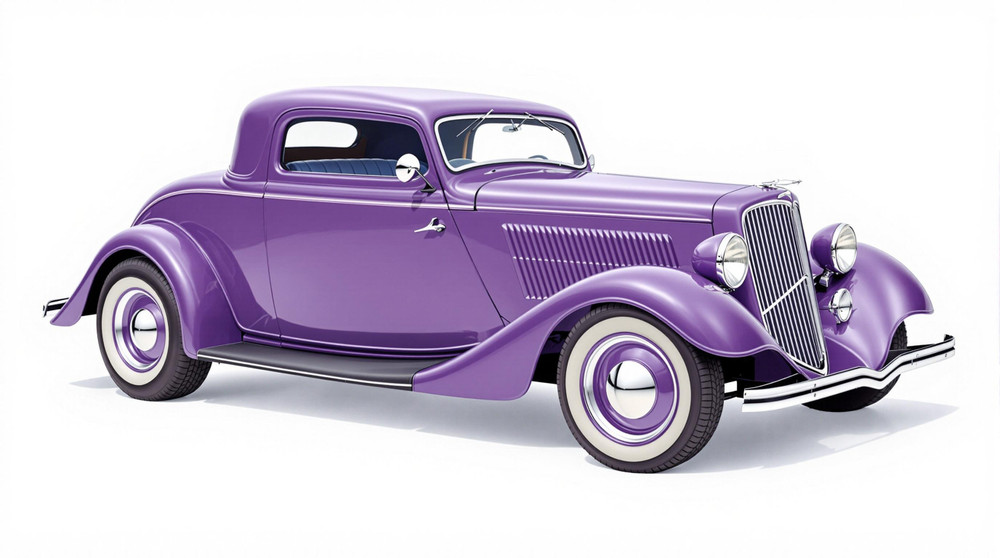
Image of 1933 Hupmobile Series F-322, Note: These illustrations use artistic license and may differ from actual historical models.
Performance Metrics
Fundamental Metrics
Emotional Appeal
MMP Rating
| Engine Specifications | |
|---|---|
| Engine Options: | Inline 8 |
| Displacement Range: | 4.2L |
| Horsepower Range: | Estimated 100-120 HP |
| Torque: | Not available |
| Compression Ratio: | Not available |
| Ignition System: | Distributor and coil |
| Cooling System: | Water-cooled |
| Performance Specifications | |
| 0-60 Time: | Not available |
| 1/4 Mile Time: | Not available |
| Top Speed: | 75-85 mph |
| Transmission and Drive | |
| Drive Type: | Rear-wheel drive |
| Transmission Type: | 3-speed manual |
| Fuel and Efficiency | |
| Fuel System Type: | Carburetor |
| MPG: | Not available |
| Dimensions and Brakes | |
| Brakes: | Mechanical drum brakes |
| Wheelbase: | 127.5 inches |
| Weight: | Estimated 3,500 lbs |
Note: Specifications for classic cars are given to the best of our ability, considering the limited and variant data available.
1933 Hupmobile Series F-322: A Classic Six-Cylinder Sedan
The 1933 Hupmobile Series F-322 is a handsome survivor from the final, difficult years of America’s independent carmakers: a substantial six-cylinder automobile built by a Detroit company known for engineering ambition and more than a little style. It paired a smooth, roughly 80-horsepower engine with traditional front-engine, rear-wheel-drive construction, offering buyers an alternative to the mass-market Fords and Chevrolets of the day.
Hupmobile was made by the Hupp Motor Car Company, founded in Detroit in 1909 by Robert Craig Hupp. The company earned a reputation for well-built cars and, during its earlier years, proved that an independent manufacturer could compete with much larger rivals. By 1933, however, the Depression had put heavy pressure on carmakers, especially smaller companies with fewer resources than General Motors or Ford.
One intriguing point about the F-322 is its place just before Hupmobile’s most famous styling experiment. The dramatic, streamlined Hupmobiles associated with designer Raymond Loewy arrived for 1934. The 1933 F-322 is more conventionally shaped, making it a useful snapshot of the industry between traditional coachbuilt-looking design and the coming rush toward automotive streamlining.
Exterior Design and Body Styles
The F-322 wears the confident proportions of an early-1930s American car. Its tall, upright radiator grille, long hood and sweeping front fenders give it a formal, purposeful appearance. Separate fenders frame the wheels, while running boards bridge the gap between them. At the rear, the body tapers into a rounded trunk or luggage area, depending on configuration. Details such as brightwork, headlamps mounted beside the grille and a prominent hood ornament add to its prewar presence.
Hupmobile offered the Series F in closed-body configurations, including sedan and coupe types. Exact names and availability could vary by catalog, production run and market, so surviving cars and original sales literature are the best guides to a particular body style. Sedans were the practical choice for families and business use. Coupes, with their shorter cabins and sportier proportions, tend to draw attention at shows today.
Paint choices were selected from period offerings and could vary by body style and trim. Dark shades such as black, deep blue, green and maroon suited the car’s formal lines, while contrasting fenders or coachwork could add visual interest where offered. A restored car’s color may reflect a documented factory specification, a later repaint or an owner’s preference, so originality should be checked rather than assumed.
Cabin Materials and Period Equipment
Inside, the F-322 was designed for comfort and practicality rather than modern luxury. Expect a broad bench seat, a large steering wheel, a clear instrument panel and generous glass for its era. Depending on the body and original trim, upholstery could be cloth, broadcloth, mohair or leather. Higher-grade fabrics and carefully finished trim helped the cabin feel more substantial than a basic economy car.
The driving position is distinctly prewar. The wheel is large, the pedals are simple and the controls require more deliberate movement than those in a modern car. Instruments provide essential information, but the cabin does not surround the driver with switches or electronic aids. Its appeal lies in the directness of the controls and the craftsmanship of its mechanical parts.
By 1933, features such as electric starting and lighting were established expectations on cars in this class. The F-322’s important technology was less about futuristic gadgets than dependable fundamentals: a conventional six-cylinder engine, a manual transmission and four-wheel braking. Equipment could differ by specification and production details, so individual cars should be inspected against period documentation.
Engineering and Historical Importance
The F-322 shows how an established independent manufacturer tried to remain competitive during a severe economic downturn. Hupmobile offered a larger, more substantial alternative to entry-level cars, while still relying on familiar engineering that owners and mechanics could understand. Its six-cylinder layout aimed to deliver smoother running than many smaller four-cylinder rivals.
Its broader significance is also tied to what came next. The 1933 car represents Hupmobile’s traditional design language, while the following year brought a much more adventurous visual direction. Loewy’s work helped make the later Hupmobiles memorable examples of prewar streamlining. The F-322 itself was not the celebrated aerodynamic showpiece, but it belongs to the story of a company trying to adapt its identity as tastes and technology changed.
Unlike a mass-produced Ford, a Hupmobile was a less common sight, and that distinctiveness was part of its appeal. It offered buyers a different badge, a different body and the feeling of supporting an independent automaker. Its lasting influence is less about one defining mechanical invention than about the role Hupmobile played in a competitive era when dozens of American manufacturers were vying for attention.
Engine, Speed and Road Manners
The Series F-322 is generally associated with a 228-cubic-inch, side-valve inline-six producing about 80 horsepower. Power went to the rear wheels through a three-speed manual transmission. Exact specifications can vary with production details and reference sources, so a car’s engine number and period paperwork are worth checking before a restoration or purchase.
Factory-style performance figures are not consistently documented for every F-322 body. As a practical estimate, a sound, correctly tuned example might reach roughly 70 to 80 mph under favorable conditions. Acceleration from 0 to 60 mph was leisurely, likely in the neighborhood of 25 to 30 seconds, depending on body weight, gearing, engine condition and road surface. These are estimates, not modern instrumented test results, and sustained high-speed driving is not advisable in an unrestored car.
On the road, the six should feel relaxed rather than urgent. It produces the low, steady mechanical note typical of a large-displacement side-valve engine, with more audible engine and exhaust character than a modern car. The three-speed gearbox asks for deliberate shifts, and drivers should allow time to build speed rather than expect quick passing power.
The long wheelbase and substantial chassis help the car settle over ordinary road imperfections, although worn springs, old tires and tired dampers can make any surviving example feel loose or unsettled. On winding roads, expect slower steering response and more body movement than in a modern vehicle. The driver’s job is to plan ahead, keep a generous following distance and use smooth inputs. Braking performance depends heavily on the condition of the car’s original system and should be inspected before road use.
Living With a 1933 Hupmobile
Today, an F-322 is best suited to touring, local club events, static displays and occasional fair-weather drives. It can be used on the road when properly maintained, but it is not a sensible everyday commuter by modern standards. It lacks contemporary crash protection, convenience features and the pace needed for routine highway traffic.
Many repairs are mechanically straightforward for an experienced classic-car owner. The engine, gearbox and chassis are built around familiar prewar principles, and routine work such as ignition service, lubrication and brake adjustment does not require electronic diagnostic equipment. The bigger challenge is often sourcing correct parts, locating a specialist familiar with Hupmobile components and dealing with age-related issues such as stale fuel systems, brittle wiring, worn bearings and previous repairs.
Before buying, inspect the frame, floor, body mounts, wood structure where applicable, and the condition of the drivetrain. Check whether the engine is original or a replacement, whether the brakes have been rebuilt and whether the car has been converted to modern electrical components. A running car can still require a substantial mechanical recommissioning before it is safe to tour.
Hupmobile Facts and Common Criticisms
The most notable styling fact is the F-322’s timing: it arrived just before Hupmobile’s striking Loewy-designed models of 1934. That connection gives the 1933 car an interesting place in the company’s design story, even though it does not share the later cars’ headline-grabbing streamlined bodywork.
There is no widely recognized speed, endurance or sales record associated specifically with the Series F-322. Its appeal is instead its relative rarity and its representation of an independent marque during the Depression. Hupmobile’s shrinking resources and the broader collapse of demand for higher-priced cars made it increasingly difficult for the company to compete. Hupmobile production ended in 1940.
Common criticisms are familiar to anyone considering a prewar car: slow acceleration, limited parts availability, modest braking by modern standards and a less predictable supply of specialist knowledge. Some owners may also find the car’s size and manual controls demanding in town. Those drawbacks are balanced by its character, distinctive badge and the pleasure of driving a car that is far less common than the era’s best-known Fords and Chevrolets.
Collector Value and Availability
Surviving Series F-322s are uncommon, and the market is thin enough that condition and body style can matter more than a simple guidebook figure. As a broad 2026 estimate, a project car may fall around $5,000 to $12,000. A usable driver or older restoration might bring roughly $15,000 to $30,000, while a high-quality, well-documented example could reach approximately $30,000 to $50,000 or more. Exceptional or particularly desirable body styles can exceed those ranges, but buyers should rely on recent comparable sales rather than assume a premium.
There is no dependable published production total specifically for the F-322 that can be applied confidently to every body style. A reasonable working estimate is that Series F production was in the low thousands, with the number of surviving, well-presented cars much smaller. That is an estimate, not a confirmed factory count. Cars appear infrequently, and finding one may require marque-club contacts, specialist dealers or patience at auctions.
Values for prewar independents have generally been selective rather than uniformly rising. The best examples can attract steady interest, especially when they have known history and correct details, while projects may be difficult to sell because restoration costs can exceed the finished car’s value. The F-322 is best bought for its history and enjoyment, not as a guaranteed investment.
Why the 1933 Hupmobile F-322 Matters
The 1933 Hupmobile Series F-322 combines traditional American proportions, a smooth six-cylinder engine and the story of an independent Detroit manufacturer navigating the hardest years of the Depression. It is not the most famous Hupmobile, nor the fastest car of its time, but it offers an unusually tangible link between the company’s established engineering and its bold design experiments that followed.
For collectors, the F-322’s appeal is its rarity, honest mechanical character and place in Hupmobile history. It rewards patient ownership and careful driving. In a world of familiar classics, this six-cylinder Hupmobile stands out as a reminder that some of the most compelling cars are the ones built just outside the mainstream.
1933 Hupmobile Series F-322 Catalog of Parts
 1933 Hupmobile Series F-322 Accessory Floor Mat - 12"X17"-AC 39Accessory Floor Mat - made of high quality black rubber with molded original emblem. Also designed to be sewn into new carpets. 12"X17", Each
 1933 Hupmobile Series F-322 Clutch and Brake Pedal Pads. 3" wide X 4-1/8" long. Pair-CB 52Clutch and Brake Pedal Pads. 3" wide X 4-1/8" long. Pair
Why Choose Metro?
For over 100 years, Metro Moulded Parts has been the pinnacle of quality in classic car restoration parts. Our commitment to precision and authenticity in every component ensures a perfect fit and an OEM-level appearance.
- Expert Craftsmanship & Quality: Each part is a testament to our dedication to reliability and perfection, crafted from original designs and thoroughly tested.
- Advanced Technology: We use cutting-edge techniques to create flawless, long-lasting parts that surpass others in performance.
- SuperSoft Sponge – The Ultimate Door Seal: Not only are our door seals 30% softer than competitors', but they're also guaranteed to never leak. They effectively reduce wind and road noise, enhancing your classic car's comfort and driving experience.
- Proudly American: Our parts are a product of American craftsmanship, made in the USA with a spirit of excellence and heritage.
- Unrivaled Warranty: We back our products with a 30-year industry-leading warranty, a testament to our confidence in their quality.
Join us in preserving the legacy of classic cars with parts that are crafted for perfection, not just made.