
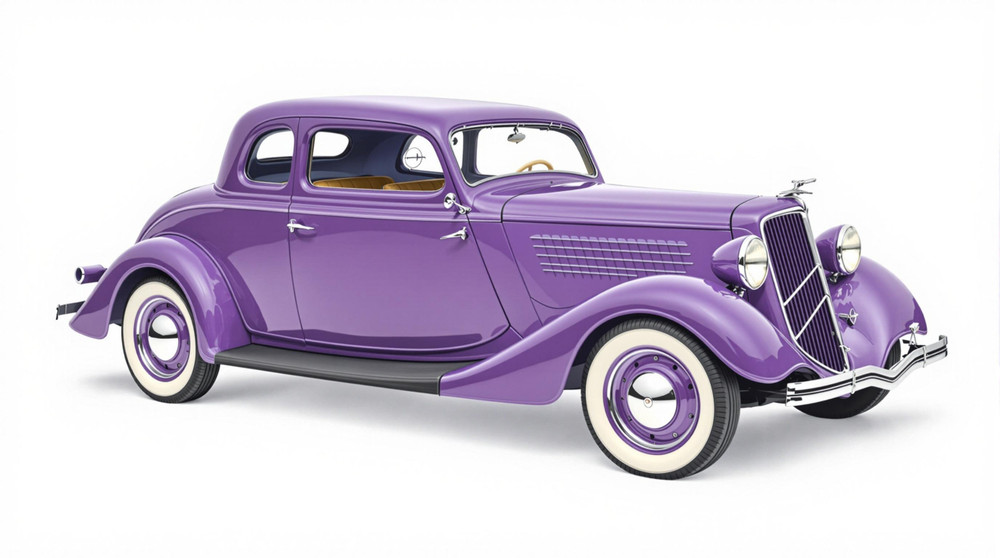
Image of 1934 Hupmobile Series 421-J, Note: These illustrations use artistic license and may differ from actual historical models.
Performance Metrics
Fundamental Metrics
Emotional Appeal
MMP Rating
| Engine Specifications | |
|---|---|
| Engine: | Inline 8 |
| Displacement: | 4.2L |
| Horsepower: | Estimated 100-120 HP |
| Torque: | Information not available |
| Compression Ratio: | Information not available |
| Ignition System: | Distributor and coil |
| Cooling System: | Water-cooled |
| Performance Specifications | |
| 0-60 Time: | Information not available |
| 1/4 Mile Time: | Information not available |
| Top Speed: | 75-85 mph |
| Transmission and Drive | |
| Drive Type: | Rear-wheel drive |
| Transmission Type: | 3-speed manual |
| Fuel and Efficiency | |
| Fuel System Type: | Carburetor |
| MPG: | Information not available |
| Dimensions and Brakes | |
| Brakes: | Mechanical drum brakes |
| Wheelbase: | 119 inches |
| Weight: | Estimated 3,000-3,500 lbs |
Note: Specifications for classic cars are given to the best of our ability, considering the limited and variant data available.
1934 Hupmobile Series 421-J: A Refined Eight from Detroit
The 1934 Hupmobile Series 421-J brought quiet eight-cylinder power and carefully tailored styling to a car market still feeling the effects of the Great Depression. Built by the Hupp Motor Car Corporation in Detroit, it represented the company’s effort to compete with better-known American luxury and near-luxury marques while preserving Hupmobile’s reputation for solid engineering.
Hupmobile’s story began with engineer and entrepreneur Robert Craig Hupp, who founded the company in 1908. Its first cars earned a following for practical construction and value, and the marque grew into a substantial independent automaker. By 1934, however, it faced intense competition and a difficult economy. The 421-J was part of Hupmobile’s bid to offer buyers a sophisticated, substantial automobile without the price and prestige of a top-tier luxury car.
One intriguing detail of the period is that Hupmobile also pursued advanced streamlining. Its 1934 range included the striking, Raymond Loewy-associated Aerodynamic design. That car is often discussed alongside the era’s more conventional Hupmobiles, but it should not automatically be confused with every Series 421-J: model identification depends on the individual car’s chassis and body details.
Art Deco Lines and Substantial Cabin Craft
The 421-J wears the confident proportions of a mid-1930s American automobile. Its long hood, upright grille, sweeping front fenders and separate running boards give it a formal, purposeful stance. The tall radiator shell and carefully shaped lamps create a recognizable face, while the rear fenders and body panels soften the car’s otherwise upright profile. Details such as bright trim, hood louvers and wire or steel wheels add period character without overwhelming the design.
Inside, the emphasis is on comfort and traditional workmanship rather than gadgetry. Depending on body style and specification, occupants could expect broad upholstered seats, a substantial dashboard, a large steering wheel and useful wood or wood-grain accents. Cloth upholstery was common in closed cars, while more expensive or open models could feature upgraded trim. The cabin feels roomy by modern standards, with a high seating position and generous glass that make the car seem airy.
Factory paint and trim choices varied by body and ordering year. Period-appropriate colors included dark blues, greens, maroons, grays and black, with contrasting fenders or two-tone combinations available on some cars. Exact combinations are best confirmed against factory literature or the car’s original paint evidence, since later repainting can make a survivor’s current color a poor guide to its original specification.
Hupmobile offered its cars in several body forms across the range, including closed sedans and coupe-style bodies, with open or convertible forms available in the broader lineup. The sedan is the most familiar practical expression of the 421-J, while coupes and open cars have a more sporting, less frequently encountered appeal. The precise body styles attached to a particular 421-J should be checked against period catalogues and the car’s serial information.
Engineering in a Competitive Era
The Series 421-J’s defining feature was its smooth inline-eight engine. Published specifications commonly associate the model with an engine of roughly 240 cubic inches and output around 100 horsepower, although figures can vary among reference sources and by exact configuration. Power went through a conventional three-speed manual transmission to the rear wheels. Four-wheel brakes and a substantial chassis helped make the car feel composed and reassuring for its time.
That combination placed the Hupmobile in a useful middle ground. It offered the smoothness and status of an eight-cylinder car, yet remained more attainable than many flagship luxury models. Hupmobile’s larger contribution to automotive history was not a single breakthrough credited solely to the 421-J. Rather, the company’s cars demonstrate how independent makers competed through a blend of engineering, distinctive styling and value. The 1934 streamlining program also shows that Hupmobile was willing to explore forward-looking design as tastes began to move away from purely upright bodies.
How the 421-J Drives
A healthy 421-J is best understood as a relaxed touring car, not a modern performance machine. With approximately 100 horsepower moving a heavy prewar body, a reasonable estimate for top speed is around 75 to 85 mph under favorable conditions. A period factory 0-to-60-mph figure is not readily established; based on the car’s power, weight and gearing, acceleration would likely take roughly 20 to 30 seconds. Treat those figures as estimates, not guaranteed specifications for every surviving car.
The straight eight is valued for its even, unhurried character. At idle it produces a low mechanical burble, building to a smooth hum as road speed rises. The manual gearbox and large steering wheel ask for more deliberate input than a modern car, and steering can feel heavy at parking speeds. On open roads, the long wheelbase helps the car settle into a steady cruise.
On rough pavement, the 421-J’s traditional suspension and tall tires absorb bumps in a soft, rolling way rather than delivering the tightly controlled response of a modern touring car. On winding roads, drivers should allow for body lean, slower steering response and the limits of period tires and brakes. It is rewarding when driven with anticipation: look well ahead, brake early and let the car flow rather than hustling it into corners.
Living with a Prewar Hupmobile
Today, a Series 421-J is more likely to serve as a show car, touring car or occasional weekend driver than as everyday transportation. It suits regional antique-car tours particularly well, where its comfortable cabin and smooth engine can be appreciated at moderate speeds. A carefully sorted example can be enjoyable on the road, but modern traffic, limited parts availability and the car’s age make routine commuting a demanding proposition.
Maintenance is manageable for an owner familiar with prewar cars, though it is not the same as servicing a widely supported Ford or Chevrolet. The engine, clutch, transmission, ignition and chassis follow familiar mechanical principles, and many repairs can be handled by a competent vintage-car shop. The challenge is often sourcing correct Hupmobile-specific trim, body parts and mechanical components. Before buying, inspect the engine for oil pressure and overheating, check the gearbox and rear axle, examine the frame and floor for corrosion, and test the brakes carefully.
Reliability depends heavily on restoration quality and regular use. A car that has been stored for years may need fuel-system work, wiring repairs, brake rebuilding and attention to cooling before it is roadworthy. Originality can also complicate repairs: a missing piece of trim may take longer to find than a mechanical fault takes to fix.
Hupmobile Facts and Common Misconceptions
The most useful piece of trivia is the distinction between the conventional 421-J and Hupmobile’s better-known streamlined styling experiments. The 1934 Aerodynamic design associated with Raymond Loewy is an important part of the marque’s design story, but the name should be applied only when the car’s model and body support it. A dramatic-looking Hupmobile is not automatically an Aerodynamic model.
There is no widely recognized speed, endurance or sales record specifically attached to the 421-J. Nor is there a well-established celebrity ownership story that defines the model. Its appeal is quieter: it represents the work of an ambitious independent automaker trying to survive in a period when scale, dealer networks and price competition increasingly favored the largest manufacturers.
A common criticism of Hupmobiles is that they are harder to support than mainstream American classics. That is fair, especially for body trim and model-specific parts, but it does not mean the cars are inherently fragile. A complete, well-maintained example can be dependable for appropriate touring. The bigger concern is usually finding the right parts and specialist knowledge when a car has been neglected or modified.
Collector Values, Rarity and Market Outlook
Exact production totals for the Series 421-J are difficult to establish from commonly available records. As a cautious estimate rather than a confirmed factory figure, the number built may have been in the low thousands, perhaps around 2,000 to 4,000. The number surviving in usable, well-documented condition is much smaller, and availability varies considerably by body style.
As a broad 2026 market estimate, a project car may fall around $8,000 to $18,000, while a sound driver could bring roughly $20,000 to $40,000. A high-quality restoration or especially desirable body style might reach $45,000 to $70,000 or more, depending on originality, provenance, condition and buyer interest. These are general estimates, not a formal appraisal. Rare streamlined Hupmobile models are a separate category and may command substantially different prices.
Values for less familiar prewar marques tend to be condition-sensitive. Over the long term, exceptional and well-documented cars may appreciate, but restoration costs can exceed resale value, and the buyer pool is narrower than for mainstream classics. The best purchase is usually the most complete, mechanically sound example available, not the cheapest car with the most ambitious restoration plan.
Why the 1934 Hupmobile 421-J Still Matters
The 1934 Hupmobile Series 421-J combines a smooth straight-eight engine, formal prewar styling and the substance of a Detroit-built touring car. It was not a mass-market icon or a record-breaking performance car. Its significance lies in the way it captures an independent automaker’s determination to offer refinement and character during one of the hardest periods in American automotive history.
For today’s enthusiast, the 421-J rewards careful research and patient ownership. Find a complete example, give its mechanical systems the attention they deserve, and it becomes more than an uncommon classic. It becomes a rolling reminder of the ambitious ideas and distinctive craftsmanship that once made Detroit’s independent carmakers worth watching.
1934 Hupmobile Series 421-J Catalog of Parts
 1934 Hupmobile Series 421-J Accessory Floor Mat - 12"X17"-AC 39Accessory Floor Mat - made of high quality black rubber with molded original emblem. Also designed to be sewn into new carpets. 12"X17", Each
 1934 Hupmobile Series 421-J Clutch and Brake Pedal Pads. 3" wide X 4-1/8" long. Pair-CB 52Clutch and Brake Pedal Pads. 3" wide X 4-1/8" long. Pair
Why Choose Metro?
For over 100 years, Metro Moulded Parts has been the pinnacle of quality in classic car restoration parts. Our commitment to precision and authenticity in every component ensures a perfect fit and an OEM-level appearance.
- Expert Craftsmanship & Quality: Each part is a testament to our dedication to reliability and perfection, crafted from original designs and thoroughly tested.
- Advanced Technology: We use cutting-edge techniques to create flawless, long-lasting parts that surpass others in performance.
- SuperSoft Sponge – The Ultimate Door Seal: Not only are our door seals 30% softer than competitors', but they're also guaranteed to never leak. They effectively reduce wind and road noise, enhancing your classic car's comfort and driving experience.
- Proudly American: Our parts are a product of American craftsmanship, made in the USA with a spirit of excellence and heritage.
- Unrivaled Warranty: We back our products with a 30-year industry-leading warranty, a testament to our confidence in their quality.
Join us in preserving the legacy of classic cars with parts that are crafted for perfection, not just made.