
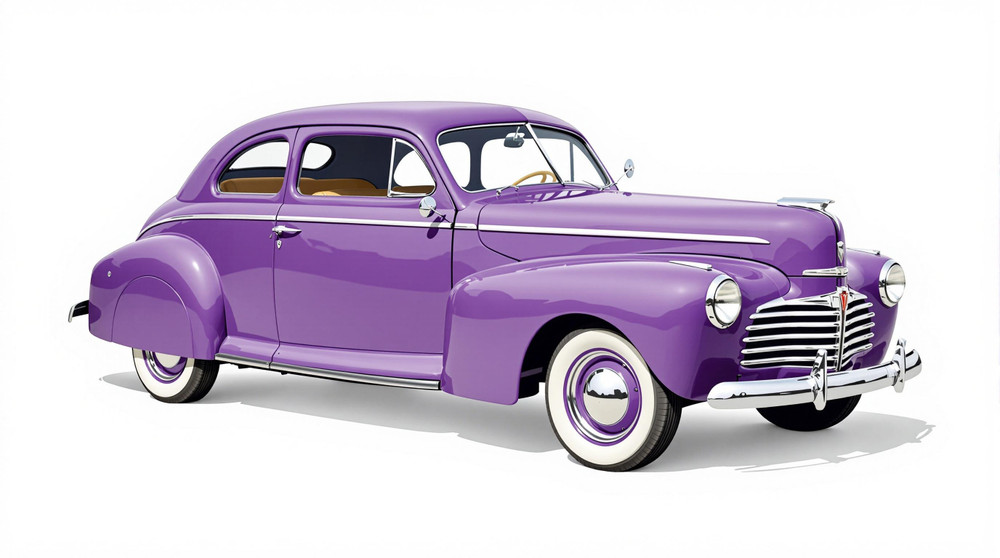
Image of 1941 Hupmobile Skylark, Note: These illustrations use artistic license and may differ from actual historical models.
Performance Metrics
Fundamental Metrics
Emotional Appeal
MMP Rating
| Engine Specifications | |
|---|---|
| Engine Options: | Inline 6 |
| Displacement Range: | 245 cubic inches |
| Horsepower Range: | Estimated 101 hp |
| Torque: | Not available |
| Compression Ratio: | Not available |
| Ignition System: | Points and condenser |
| Cooling System: | Liquid-cooled |
| Performance Specifications | |
| 0-60 Time: | Not available |
| 1/4 Mile Time: | Not available |
| Top Speed: | 80 mph |
| Transmission and Drive | |
| Drive Type: | Rear-wheel drive |
| Transmission Type: | 3-speed manual |
| Fuel and Efficiency | |
| Fuel System Type: | Carburetor |
| MPG: | Not available |
| Dimensions and Brakes | |
| Brakes: | Drum brakes |
| Wheelbase: | 115 inches |
| Weight: | 3,200 lbs |
Note: Specifications for classic cars are given to the best of our ability, considering the limited and variant data available.
1941 Hupmobile Skylark: A Streamlined American Original
The 1941 Hupmobile Skylark looks like a car from a more confident future, yet it arrived just as its maker’s future was running out. Built by the Hupp Motor Car Corporation of Detroit, the Skylark was a low, fastback two-door that combined dramatic prewar styling with the practical mechanical layout of a conventional American car.
Its story began with the Graham-Paige Hollywood. When Graham-Paige ended production of that streamlined model, Hupp acquired the body tooling and reworked the design for its own final-generation cars. The result was the Skylark, a striking last stand for a company that had been building automobiles since 1909. Hupp’s passenger-car production ended in 1941, making the Skylark one of the marque’s final—and most memorable—models.
One detail makes the car especially intriguing: the Skylark was not an entirely new design created from a blank sheet. It was a carefully adapted car, born from another automaker’s abandoned project and given a new identity just as the American auto industry was about to turn its attention toward wartime production.
Fastback Styling and Skylark Details
The Skylark’s defining feature is its long, sloping roofline. The roof flows into a rounded rear end, giving the car a clean fastback silhouette rather than the upright, separate-trunk appearance common on many cars of the period. Its low stance, tapered body, and carefully blended fenders make it look unusually streamlined for a full-size American car of 1941.
At the front, the Skylark wears Hupp-specific details that distinguish it from its Graham Hollywood relative. The nose, grille, trim, and badging were adapted to suit the Hupmobile identity, while the broad hood and flowing front fenders keep the overall design cohesive. The result is more than a simple badge change, even though the car’s underlying body story is closely tied to Graham’s earlier model.
Inside, the Skylark offered a conventional, comfortable cabin rather than an exotic sports-car cockpit. Period upholstery used durable cloth materials, with trim and finish appropriate to a well-equipped American touring car. A broad bench seat, straightforward instrumentation, and generous glass made it practical for ordinary road use. Today, original upholstery, dashboard trim, and interior hardware can be as challenging to find as exterior-specific parts.
Hupp marketed the Skylark as a distinctive, upscale car, but it did not introduce a revolutionary new mechanical system. Its appeal came chiefly from its advanced-looking body, its smooth six-cylinder power, and its relatively modern presentation. Factory paint choices varied by year and availability; period solid colors such as dark blue, green, gray, and maroon suit the car’s character, while black remains a popular choice among restorers. Confirming a particular car’s original color is best done through factory records, paint traces, or reliable historical documentation.
The most iconic—and essentially defining—body style was the two-door fastback sedan. Unlike a model line offered with a wide range of convertibles, coupes, and station wagons, the Skylark’s identity rests on this single streamlined form.
Why the Skylark Matters
The Skylark’s importance is less about changing the direction of the auto industry than about capturing a brief, ambitious moment in American design. Streamlining had become a powerful visual language in the 1930s, and cars such as the Cord 810 and Graham Hollywood helped popularize low, flowing forms. The Hupmobile Skylark carried that style into the early 1940s, when many competitors still favored more upright bodies and separate-looking trunks.
What set the Skylark apart was the contrast between its futuristic appearance and its familiar engineering. It looked more exotic than its basic layout suggested, which gave it a distinctive place among contemporary cars. It was not a high-volume design trendsetter, but it demonstrated that a small manufacturer could still produce a car with real visual presence.
Its lasting significance is also bound to Hupp’s final chapter. As an end-of-line model from a once-established independent automaker, the Skylark represents the pressures facing smaller manufacturers before and during the Second World War. Hupp’s disappearance from passenger-car production makes surviving examples tangible reminders of an industry that was rapidly consolidating.
Six-Cylinder Power and Road Manners
The 1941 Skylark used a 245-cubic-inch (about 4.0-liter) L-head inline-six. Published specifications commonly put output at approximately 101 horsepower, driving through a three-speed manual transmission. As with many cars of this age, specifications can vary slightly between references and individual examples, particularly after decades of repairs or engine work.
There is no dependable modern factory figure for acceleration that applies to every surviving Skylark. Based on its power, gearing, and full-size construction, a 0-to-60-mph time in the neighborhood of 20 seconds is a reasonable period-car estimate, not a guaranteed test result. Top speed is often estimated at roughly 80 to 85 mph, though a well-preserved original car is better enjoyed at sensible cruising speeds than pushed toward its limit.
On the road, the Skylark is a relaxed prewar tourer. Its six-cylinder engine delivers steady, low-revving power, while the manual gearbox asks the driver to plan shifts rather than hurry through them. Expect engine and mechanical sounds that are more present than in a modern car: the measured note of the straight-six, gear noise, and the movement of the chassis over uneven pavement all contribute to the experience.
The long body and period suspension help soften ordinary bumps, but the car will not feel as controlled as a modern vehicle on broken pavement or a winding road. Steering requires more effort, braking distances are longer, and narrow tires provide less grip than contemporary rubber. On a clear country road, however, the Skylark’s flowing body and unhurried pace make for an appealing vintage drive. Wind and road noise are part of the experience, especially at higher speeds.
Living With a Hupmobile Skylark
Today, a Skylark is best suited to weekend touring, club events, and concours or preservation displays. Its rarity and distinctive profile make it a natural conversation starter at shows. It is not generally chosen for racing, and using one as a daily driver would require patience, mechanical sympathy, and a willingness to work around the limitations of prewar brakes, lighting, and parts supply.
The six-cylinder engine follows familiar principles for a prewar American car, so an experienced vintage mechanic can understand its basic service needs. Regular attention to ignition, fuel delivery, cooling, lubrication, brakes, and the electrical system is essential. The bigger challenge is often sourcing correct components. Hupmobile-specific trim and body parts are scarce, and Skylark-only pieces may need to come from donor cars, specialist suppliers, or careful repair and reproduction.
Reliability depends heavily on condition and the quality of previous restoration work. A properly sorted Skylark can be enjoyable on planned outings, but age alone makes inspection important. Before purchase, check the engine and cooling system, transmission, frame and structural areas, brake condition, electrical modifications, and the availability of missing trim. A car that has sat unused may need substantial recommissioning even if it appears complete.
Skylark Trivia and Common Myths
The Skylark’s best-known claim to fame is its connection to the Graham Hollywood. Hupp adapted the earlier car’s body tooling rather than developing a wholly unrelated fastback from the ground up. That unusual lineage helps explain why the two models share a family resemblance while still carrying distinct front-end details and badging.
Production is generally described as very small, with commonly cited estimates placing the Skylark total at about 319 cars across its brief run. Exact figures can vary in references, partly because production and model-year accounting do not always line up neatly. In any case, it was a low-volume car, and surviving examples are scarce.
There is no widely recognized speed, endurance, or sales record associated with the Skylark. Its significance is more closely tied to rarity, styling, and Hupp’s final years than to competition achievements. Nor is it best known for a famous celebrity owner or a defining appearance at a major historical event. Its most compelling historical setting is the end of independent Hupmobile production on the eve of America’s wartime industrial conversion.
A common criticism is that the Skylark’s dramatic body promised more sporting performance than its standard six-cylinder powertrain delivered. That is fair: it was a stylish touring car, not a high-performance machine. Its unusual body can also make restoration difficult, since replacement panels and model-specific trim are not easy to find.
Collector Values and Rarity
The 1941 Hupmobile Skylark is rare on the market, and a buyer may wait a long time before finding one for sale. The often-cited production estimate of roughly 319 cars underscores that scarcity, though the number of surviving cars is not firmly established. Condition, completeness, originality, restoration quality, and documentation have a major effect on value.
As a broad U.S. market estimate, a project or incomplete example might fall around $20,000 to $40,000. A sound, usable car could bring approximately $40,000 to $75,000, while a high-quality restoration or exceptional original example may reach $75,000 to $110,000 or more. These are guide ranges, not appraisals; rare-car sales can vary sharply, and a particularly desirable or well-documented car may not follow typical pricing.
Values for unusual prewar cars tend to depend on collector demand as much as on general classic-car market trends. The Skylark’s rarity and design appeal support its long-term interest, but its small audience and specialized restoration needs can limit how quickly it sells. Rather than assuming steady appreciation, buyers should treat it as a historically interesting collectible whose value is strongly tied to condition and provenance.
A Final Look at the 1941 Skylark
The 1941 Hupmobile Skylark brought together a dramatic fastback body, familiar six-cylinder engineering, and the story of an independent automaker nearing its end. Its performance was measured rather than thrilling, and its low production makes ownership a specialist pursuit. Yet its styling, unusual Graham connection, and place in Hupp’s final chapter give it an identity few prewar cars can match.
The Skylark is more than a rare old automobile. It is a streamlined farewell from a manufacturer that still dared to look forward, even as the road ahead was closing.
1941 Hupmobile Skylark Catalog of Parts
 1941 Hupmobile Skylark Accessory Floor Mat - 12"X17"-AC 39Accessory Floor Mat - made of high quality black rubber with molded original emblem. Also designed to be sewn into new carpets. 12"X17", Each
 1941 Hupmobile Skylark Clutch and Brake Pedal Pads. 3" wide X 4-1/8" long. Pair-CB 52Clutch and Brake Pedal Pads. 3" wide X 4-1/8" long. Pair
Why Choose Metro?
For over 100 years, Metro Moulded Parts has been the pinnacle of quality in classic car restoration parts. Our commitment to precision and authenticity in every component ensures a perfect fit and an OEM-level appearance.
- Expert Craftsmanship & Quality: Each part is a testament to our dedication to reliability and perfection, crafted from original designs and thoroughly tested.
- Advanced Technology: We use cutting-edge techniques to create flawless, long-lasting parts that surpass others in performance.
- SuperSoft Sponge – The Ultimate Door Seal: Not only are our door seals 30% softer than competitors', but they're also guaranteed to never leak. They effectively reduce wind and road noise, enhancing your classic car's comfort and driving experience.
- Proudly American: Our parts are a product of American craftsmanship, made in the USA with a spirit of excellence and heritage.
- Unrivaled Warranty: We back our products with a 30-year industry-leading warranty, a testament to our confidence in their quality.
Join us in preserving the legacy of classic cars with parts that are crafted for perfection, not just made.