
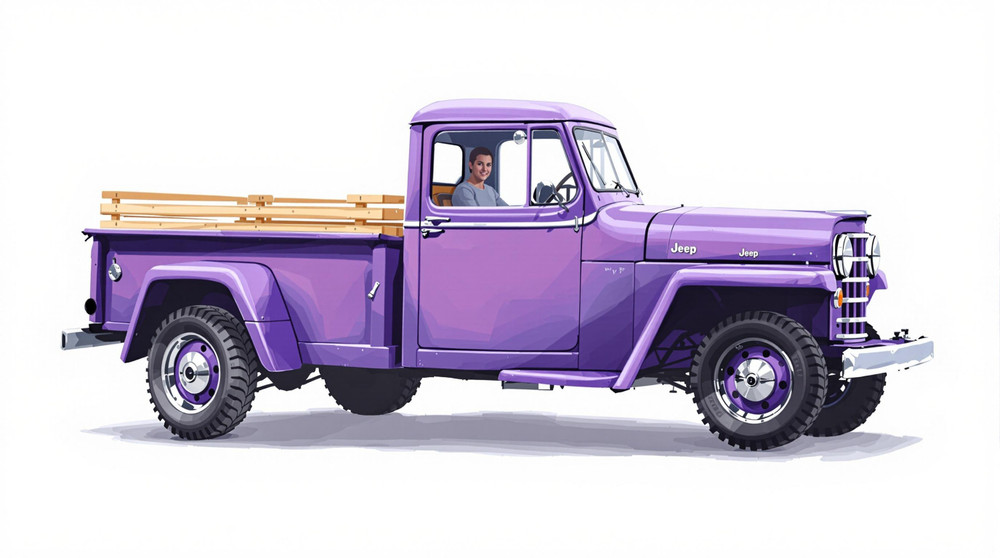
Image of 1951 Jeep Willys, Note: These illustrations use artistic license and may differ from actual historical models.
Performance Metrics
Fundamental Metrics
Emotional Appeal
MMP Rating
| Engine Specifications | |
|---|---|
| Engine: | L134 Go Devil I4 |
| Displacement: | 134 cu in (2.2 L) |
| Horsepower: | 60 hp at 4000 rpm |
| Torque: | 105 lb-ft at 2000 rpm |
| Compression Ratio: | 6.48:1 |
| Ignition System: | Battery and coil |
| Cooling System: | Liquid-cooled |
| Performance Specifications | |
| 0-60 Time: | Not available due to the vehicle's age and purpose |
| 1/4 Mile Time: | Not available due to the vehicle's age and purpose |
| Top Speed: | 65 mph |
| Transmission and Drive | |
| Drive Type: | 4WD |
| Transmission Type: | T-90 3-speed manual |
| Fuel and Efficiency | |
| Fuel System Type: | Carter YF 1-barrel carburetor |
| MPG: | 17 mpg |
| Dimensions and Brakes | |
| Brakes: | Hydraulic drum brakes |
| Wheelbase: | 80 inches |
| Weight: | 2,337 lbs |
Note: Specifications for classic cars are given to the best of our ability, considering the limited and variant data available.
1951 Willys Jeep Truck: A Workhorse With Jeep DNA
The 1951 Willys Jeep Truck was built to take the rough road, the muddy field, and the heavy day’s work in stride. Produced by Willys-Overland Motors in Toledo, Ohio, it brought the toughness and four-wheel-drive know-how associated with the wartime Jeep to civilian buyers who needed a practical truck.
The Jeep Truck had been introduced in 1947, during the postwar rush to put military engineering to civilian use. By 1951, it had earned a reputation as a compact, capable hauler for farms, businesses, utility fleets, and rural drivers. A memorable detail is that buyers could order it with either two-wheel drive or four-wheel drive, making it one of the early factory-built pickups to offer 4x4 capability. It was not a military Jeep with a cargo bed attached: it was a dedicated civilian truck designed around work.
Rugged Styling and Simple Cab
The Jeep Truck’s shape was unapologetically functional. Its upright cab, broad fenders, flat hood, and exposed running boards gave it a purposeful, almost architectural look. The front end featured round headlamps set into the fenders and a narrow, upright grille with vertical slots. The proportions were tidy by pickup standards, but its sturdy frame and generous ground clearance made it look ready for a tough assignment.
Inside, practicality came first. The cab was sparse, with a painted-metal dashboard, straightforward gauges, a wide bench seat, and durable rubber flooring. Upholstery was generally utilitarian, often in vinyl or similar easy-to-clean material. There was little trim to damage and few comforts to distract from the job. The high seating position provided a commanding view, though the cab was not especially quiet or spacious by modern standards.
Technology was simple but meaningful for the era. The four-wheel-drive version used a transfer case with low range, giving the truck extra traction and gearing for steep grades, loose ground, and slow work. Its mechanical layout was comparatively accessible, an advantage for owners who maintained their own equipment. Buyers could also choose between two-wheel-drive and four-wheel-drive configurations, depending on whether price, road use, or off-road capability mattered most.
Body and equipment choices included the familiar pickup bed, as well as work-oriented configurations such as platform, stake-bed, and cab-and-chassis setups. The pickup was the most recognizable version and remains the image most people associate with the 1951 Jeep Truck. Factory paint choices varied over the years and by equipment, with subdued work-truck colors and fleet finishes common. Restored examples are often seen in red, green, blue, cream, or other period-style shades, but buyers should check original paint codes and documentation before calling a particular color factory-correct.
Why the Jeep Truck Mattered
The 1951 Jeep Truck reflected a major shift in American motoring. Postwar buyers wanted vehicles that could earn their keep during the week and handle poor roads or outdoor pursuits on the weekend. Willys had experience building durable four-wheel-drive vehicles, and the civilian truck brought that expertise into a useful pickup format.
Its compact footprint and available 4x4 drivetrain set it apart from many larger, more road-focused pickups. It was especially attractive to farmers, utility companies, and rural owners who needed traction and easy service more than a plush cabin. The truck also helped establish the idea that four-wheel drive could be a practical feature in a civilian pickup, not simply a specialized military or industrial tool. That concept would become central to the modern 4x4 market.
The Jeep Truck’s influence was not about luxury or high-volume styling trends. Its legacy is the durable, purpose-built 4x4 pickup: a vehicle expected to work in conditions that would stop an ordinary light truck. That straightforward mission helped keep the model in production through 1965.
Engine, Speed, and Road Manners
A commonly encountered 1951 Jeep Truck uses Willys’ 134-cubic-inch, four-cylinder L-head engine, rated at approximately 72 horsepower. It is paired with a manual transmission, typically a three-speed, with a transfer case on four-wheel-drive models. Exact equipment can vary by configuration, market, and production changes, so engine and drivetrain details are best confirmed from the truck itself and its records.
Performance is modest. Depending on gearing, tires, condition, and drivetrain, a healthy truck may reach roughly 60 to 65 mph. A 0-to-60-mph run is a long affair, commonly estimated in the 30-second range or slower. These are period-vehicle estimates, not modern factory test figures. The truck was built to pull, carry, and crawl, not to win a stoplight sprint.
On pavement, the Jeep Truck feels mechanical and direct. Steering takes effort, especially at low speeds, and the tall, narrow body can feel unsettled on a windy road. Its solid axles and work-focused suspension transmit bumps into the cab, particularly when the bed is empty. Add a load, however, and the ride can become more composed. In four-wheel drive, low range gives the driver careful control over rough tracks and steep ground, though it is not a substitute for sensible tire choice or good driving judgment.
The engine has a steady, unmistakably old-fashioned four-cylinder sound, accompanied by gearbox, tire, and wind noise. The driver works the clutch and gear lever actively and feels each shift through the truck. That hands-on character is a big part of its appeal today, but it also makes clear how much modern trucks have changed.
Living With a 1951 Jeep Truck
Most examples now serve as weekend drivers, restoration projects, show vehicles, or working classics on farms and properties. A well-sorted truck can manage local trips and modest hauling, but modern traffic speeds, limited crash protection, and basic comfort make it less suitable as an everyday commuter. It is best enjoyed at a relaxed pace.
Routine maintenance is relatively approachable for an owner familiar with older vehicles. The engine bay is not crowded, the mechanical systems are largely straightforward, and many service tasks do not require specialized diagnostic equipment. Parts support is available through classic Jeep suppliers, though correct trim, body panels, and certain original components can take more searching. Rust deserves close inspection, especially around the cab, floor, bed, frame, and body mounts. On four-wheel-drive trucks, check the transfer case, driveshafts, axle seals, and front hubs for wear or leaks.
Reliability depends heavily on condition and upkeep. A neglected example may need substantial work on the brakes, wiring, fuel system, cooling system, or drivetrain before it is dependable. These trucks are repairable, but age brings age-related problems, and a low purchase price can quickly be overtaken by restoration costs.
Willys Jeep Truck Facts and Criticisms
The Jeep Truck belonged to a long-running model family, produced from 1947 through 1965. Its many years in service and range of configurations make it an important part of Willys’ civilian Jeep story. The four-wheel-drive version carried the brand’s go-anywhere reputation into the pickup market, while two-wheel-drive models offered a simpler option for buyers who mainly needed a work truck.
There is no single reliable production figure that neatly describes every 1951 body and drivetrain combination. A reasonable broad estimate is that roughly 200,000 Jeep Trucks were built across the entire 1947-to-1965 production run, with the 1951 model year representing only a portion of that total. Exact yearly counts can be difficult to pin down, so treat any highly specific number as something that should be supported by a production record or marque reference.
Common criticisms are easy to understand: the cab is cramped, the ride is firm, the steering is heavy, and the truck is slow by modern standards. Braking, lighting, and occupant protection are also from another era. Those compromises were part of the original formula. The Jeep Truck prioritized traction, simplicity, and utility over comfort and speed.
Collector Values and Availability
As a general U.S. market guide for 2026, a rough project or incomplete truck may sell for about $3,000 to $10,000. A usable driver in decent condition often falls around $10,000 to $25,000, while a carefully restored, well-documented example can reach roughly $25,000 to $45,000 or more. Exceptional restorations, unusual configurations, and trucks with strong provenance may exceed that range. Condition, originality, rust repair, drivetrain, and the quality of the restoration matter far more than a single headline price.
The 1951 Jeep Truck is uncommon compared with mass-produced pickups, but it is not impossibly rare. Examples do appear through classic-truck dealers, online auctions, enthusiast groups, and Jeep events. Prices have generally strengthened over the long term as interest in early 4x4s and utilitarian classics has grown, although values vary with the wider collector-car market. A properly restored truck is likely to hold its appeal better than a rough project, but restoration costs can outpace resale value.
A Civilian Truck Built for the Rough Stuff
The 1951 Willys Jeep Truck combined a simple cab, honest work-truck construction, and available four-wheel drive in a package that suited the practical needs of postwar America. It was slow, noisy, and uncompromising, but it helped make the 4x4 pickup a useful civilian vehicle rather than a specialized curiosity. More than seven decades later, its appeal is still easy to understand: this is a classic truck that looks ready to get back to work.
1951 Jeep Willys Catalog of Parts
 1951 Jeep Willys Shock Absorber Grommet. 1" bottom O.D-BN 11Shock Absorber Grommet. 1" bottom O.D., 3/4" high, with 5/8" I.D. Each
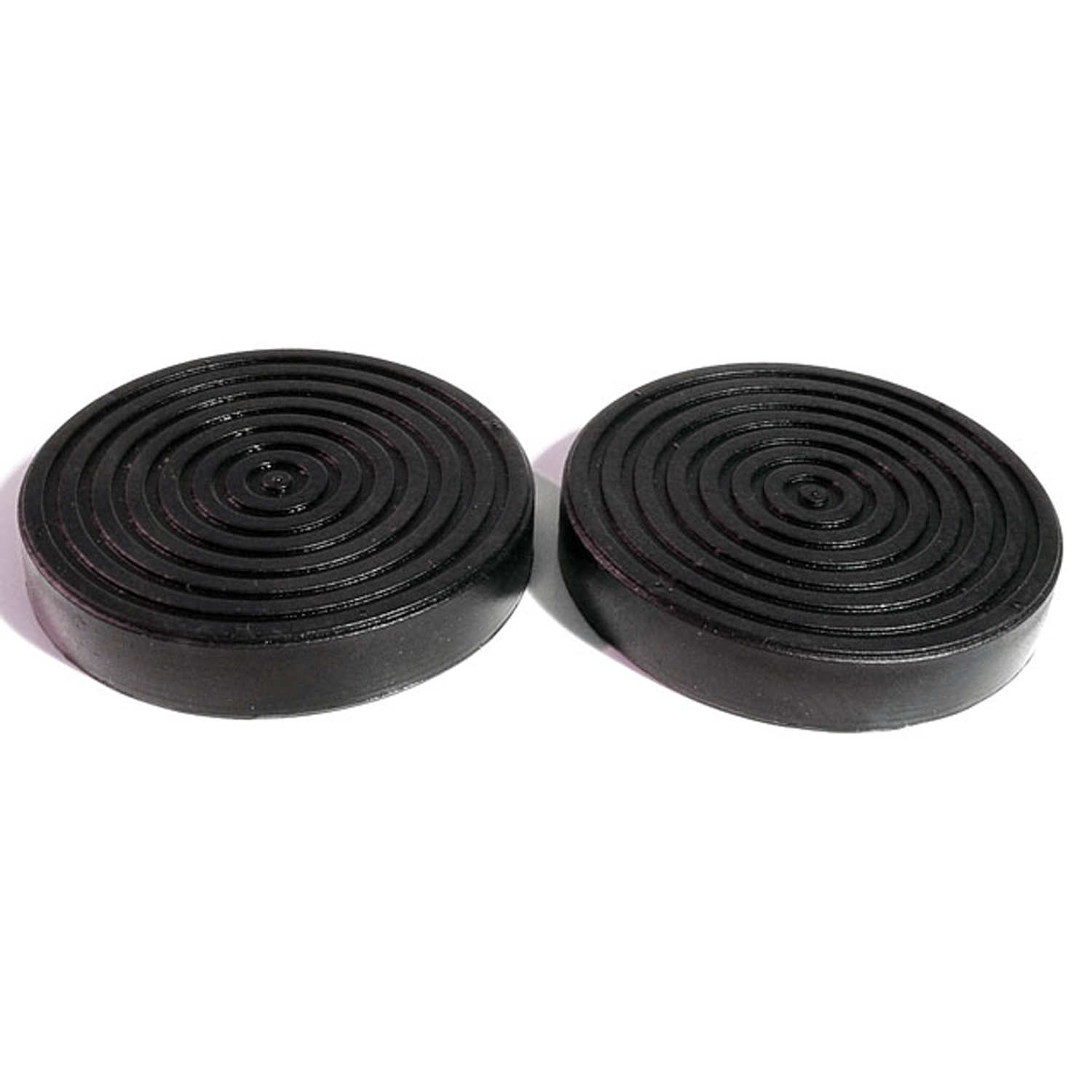 1951 Jeep Willys Clutch and Brake Pedal Pads. 3" Diameter. Pair-CB 61Clutch and Brake Pedal Pads. 3" Diameter. Pair
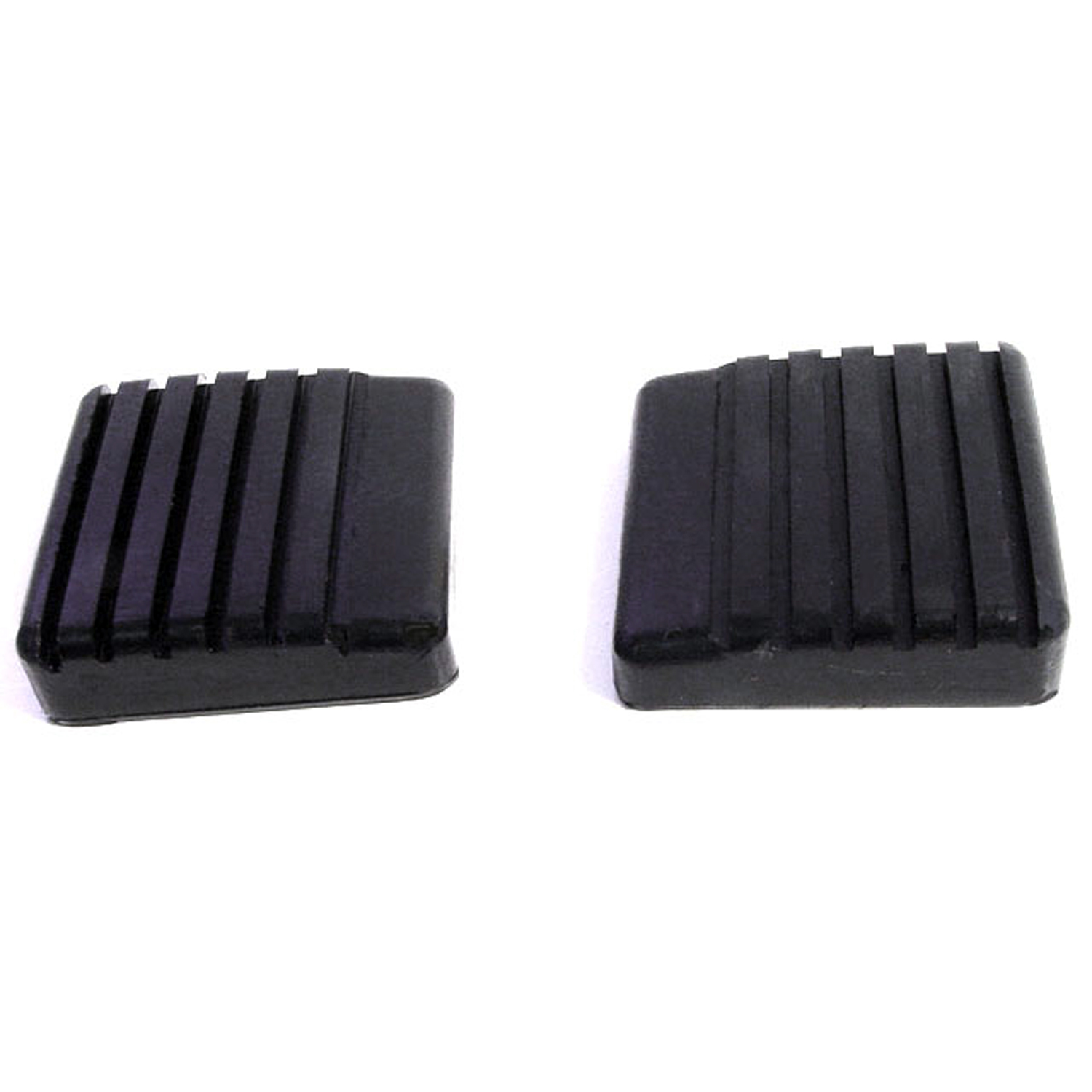 1951 Jeep Willys Clutch and Brake Pedal Pads. Pair-CB 61-BClutch and Brake Pedal Pads. Pair
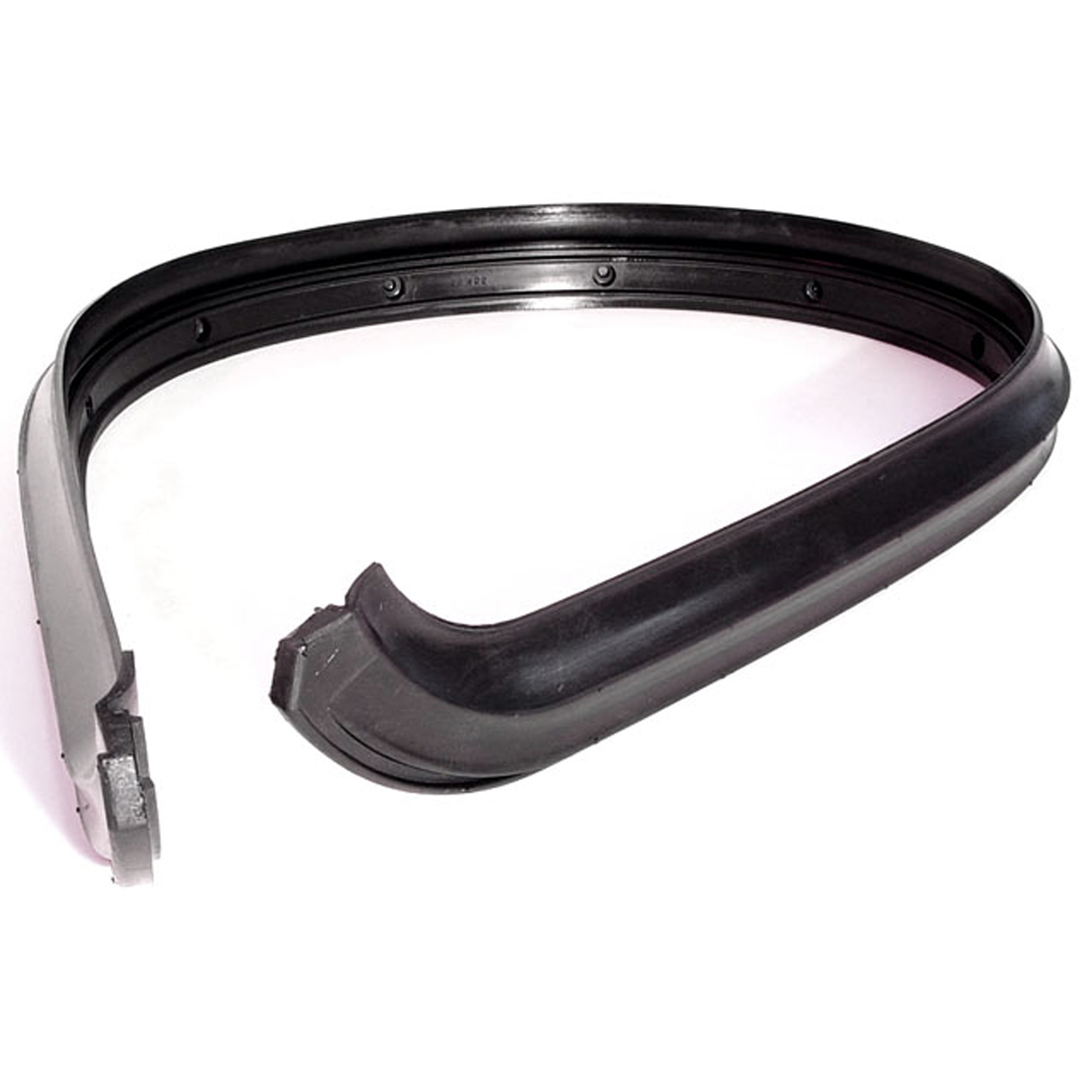 1951 Jeep Willys Windshield to Cowl Seal. 55-1/2" long. Each-CS 102Windshield to Cowl Seal. 55-1/2" long. Each
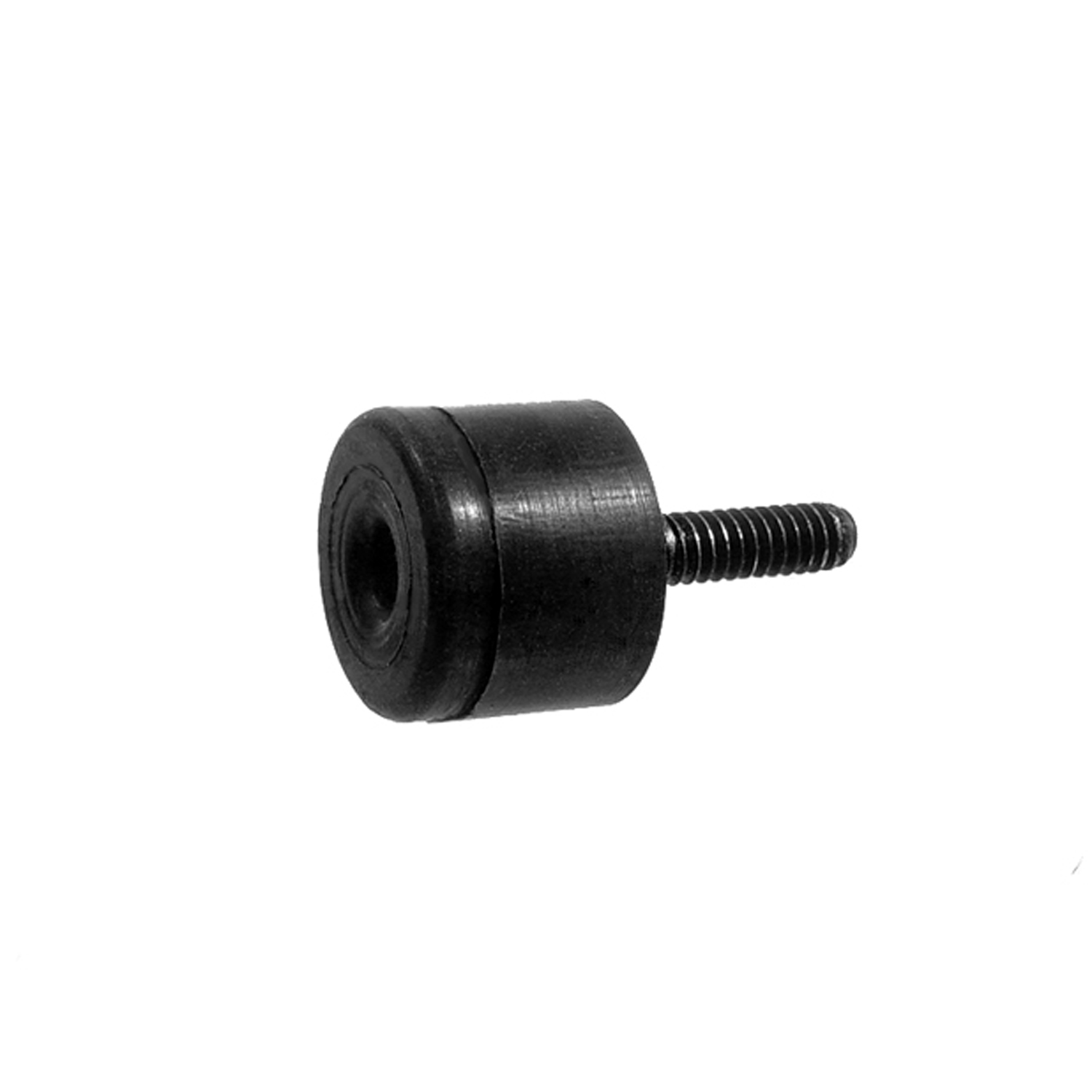 1951 Jeep Willys Accelerator Pedal Pad Link connecting Socket. 3/4" O.D-RP 43-AAccelerator Pedal Pad Link connecting Socket. 3/4" O.D., 1/4" I.D., 3/4" long screw. Each
Why Choose Metro?
For over 100 years, Metro Moulded Parts has been the pinnacle of quality in classic car restoration parts. Our commitment to precision and authenticity in every component ensures a perfect fit and an OEM-level appearance.
- Expert Craftsmanship & Quality: Each part is a testament to our dedication to reliability and perfection, crafted from original designs and thoroughly tested.
- Advanced Technology: We use cutting-edge techniques to create flawless, long-lasting parts that surpass others in performance.
- SuperSoft Sponge – The Ultimate Door Seal: Not only are our door seals 30% softer than competitors', but they're also guaranteed to never leak. They effectively reduce wind and road noise, enhancing your classic car's comfort and driving experience.
- Proudly American: Our parts are a product of American craftsmanship, made in the USA with a spirit of excellence and heritage.
- Unrivaled Warranty: We back our products with a 30-year industry-leading warranty, a testament to our confidence in their quality.
Join us in preserving the legacy of classic cars with parts that are crafted for perfection, not just made.