

Image of 1962 Jeep Utility, Note: These illustrations use artistic license and may differ from actual historical models.
Performance Metrics
Fundamental Metrics
Emotional Appeal
MMP Rating
| Engine Specifications | |
|---|---|
| Engine: | Inline 4, Inline 6 |
| Displacement: | 134-230 cubic inches |
| Horsepower: | 72-140 hp |
| Torque: | 114-210 lb-ft |
| Compression Ratio: | 7.5:1 - 8.5:1 |
| Ignition System: | Distributor and coil |
| Cooling System: | Liquid-cooled |
| Performance Specifications | |
| 0-60 Time: | Estimated 20-30 seconds |
| 1/4 Mile Time: | Estimated 20-25 seconds |
| Top Speed: | 60-70 mph |
| Transmission and Drive | |
| Drive Type: | 4WD |
| Transmission Type: | 3-speed manual |
| Fuel and Efficiency | |
| Fuel System Type: | Carburetor |
| MPG: | Estimated 10-15 mpg |
| Dimensions and Brakes | |
| Brakes: | Drum brakes |
| Wheelbase: | 81 inches |
| Weight: | 2,500-3,000 lbs |
Note: Specifications for classic cars are given to the best of our ability, considering the limited and variant data available.
1962 Jeep Utility Truck: A Compact 4x4 With a Big Job
With its upright cab, narrow hood, and unmistakable seven-slot grille, the 1962 Jeep Utility Truck looks ready to leave the pavement before the engine has even turned over. It was a hardworking pickup built for farms, job sites, and back roads, combining Jeep’s familiar four-wheel-drive ability with the useful bed of a conventional truck.
The truck grew out of the Willys-Overland company’s postwar push to turn its wartime 4x4 expertise into civilian vehicles. By 1962, it was being built under Willys Motors, part of Kaiser Industries. The model is often called the Willys Jeep Truck, Jeep Pickup, or Jeep Utility Truck. It is distinct from the Jeep Utility Wagon, a related but separate enclosed-body model.
One detail that makes the truck especially interesting is how long its basic shape lasted. Introduced in 1947, the Jeep Truck remained in production until 1965, with a practical, unmistakably postwar design that changed far less than the automotive fashions around it.
Jeep Truck Styling and Cab Details
The 1962 Jeep Truck has a purposeful, almost architectural appearance. Its upright front end, flat hood, rounded front fenders, and short, high-set cab give it a compact but sturdy stance. The grille’s vertical slots make its family connection to other Jeeps immediately recognizable, while the separate fenders and simple bumpers reflect a time when easy repairs mattered more than sculpted bodywork.
Inside, the priorities are straightforward: visibility, durability, and room for work clothes. The cab is narrow by modern pickup standards, with a simple dashboard, basic gauges, and a broad bench seat. Materials are functional rather than luxurious, generally using painted metal, practical trim, and durable upholstery. The view over the short hood is excellent, although the upright windshield and close-set controls make the truck feel decidedly vintage.
Equipment depended on the order and market. Buyers could specify useful extras such as a heater, radio, different axle ratios, or upgraded drivetrain equipment. There is no modern electronics to troubleshoot. The truck’s technology is mechanical and comparatively accessible, including a conventional manual transmission and, on four-wheel-drive models, a transfer case for selecting a lower gear range.
Factory paint choices varied by year and region. Restored examples are often seen in red, blue, green, yellow, and white, but the exact palette should be checked against the truck’s original build information where available. The most recognizable configuration is the open-bed pickup, though the chassis also served commercial and utility applications.
Body Styles and Working Options
The pickup was the signature version, with a conventional cargo bed suited to tools, feed, building supplies, or outdoor equipment. Depending on the configuration and market, the broader Jeep Truck range could also be ordered as a cab-and-chassis or fitted for uses such as a stake body or service body. These work-oriented setups were less common than the standard pickup and can be harder to identify today.
Two-wheel drive kept the truck simpler and less expensive for road and light-duty use. Four-wheel drive was the sought-after option for buyers who needed traction on muddy fields, snowy roads, or rough work sites. It is the 4x4 pickup that best captures the model’s Jeep character and is generally the most iconic version among collectors.
Why the 1962 Jeep Utility Truck Matters
The Jeep Truck did not invent the pickup or four-wheel drive, but it brought a particularly useful combination to the civilian market: compact dimensions, a practical load bed, and available 4x4 capability. Its narrower footprint made it handy where a larger truck could be awkward, while its rugged mechanical layout appealed to owners who valued function over comfort.
Compared with many contemporary pickups, the Jeep felt more like a tool than a family vehicle. Its upright cab, simple body construction, and available low-range gearing reflected its intended work. The design also helped establish a durable idea that would continue through later Jeep pickups: a truck could be relatively compact and still be genuinely capable away from paved roads.
Its influence is less about a single styling feature than about the formula it represented. The Jeep Truck helped keep the practical 4x4 pickup in view for farmers, utilities, and outdoor users, and it remains a reminder of the era when a basic truck could be repaired with ordinary mechanical skills and a good set of tools.
Engine, Speed, and 4x4 Performance
Engine availability depended on specification. A common choice was the 134-cubic-inch Hurricane four-cylinder, an overhead-valve engine rated at roughly 70 to 75 horsepower. Some trucks were available with the larger 226-cubic-inch Super Hurricane inline-six, generally rated at about 115 horsepower. Exact output and equipment can vary with model, market, and factory documentation.
Power went through a manual transmission, commonly a three-speed, with a two-speed transfer case on 4x4 versions. The gearing favored pulling and low-speed work rather than quick acceleration. A four-cylinder truck is likely to need roughly 25 to 35 seconds to reach 60 mph, while a six-cylinder example may do it in the mid-to-high 20-second range. These are period-vehicle estimates, not guaranteed factory test figures. Top speed is generally around 65 to 75 mph, depending on engine, axle gearing, condition, tires, and load.
On a rough track or muddy field, the Jeep’s short wheelbase and low-range gearing are assets. Four-wheel drive can help it find traction where a two-wheel-drive pickup would struggle. On broken pavement, however, the truck rides like an old work vehicle: the solid axles, leaf springs, and basic suspension transmit bumps into the cab. It can feel busy on corrugated roads and unsettled over sharp potholes.
On winding roads, the narrow body is easy to place, but the steering and brakes lack the lightness and precision of a modern pickup. Drivers should leave extra room, especially when carrying a load. The engine gives a steady mechanical rumble rather than a refined modern note, and the manual transmission asks for deliberate shifts. The reward is an involved driving experience: you hear the engine, feel the road, and operate the truck rather than simply pointing it down the highway.
Living With a 1962 Jeep Truck
Today, most examples are used as weekend drivers, farm and property vehicles, restoration projects, or display pieces at vintage truck and Jeep events. A well-sorted truck can still handle light local work, but busy highways and long-distance commuting are not its natural habitat. Modern traffic moves faster, and the truck offers little of the comfort, crash protection, or braking performance owners expect from a current vehicle.
Routine service is relatively approachable for an owner familiar with older vehicles. The engine bay and mechanical systems are straightforward, and many maintenance tasks do not require specialized diagnostic equipment. Parts support is available through classic Jeep suppliers, though some body panels, trim pieces, and model-specific components can take time to locate. Rust deserves close attention, particularly around the cab, floor, bed, and frame. On 4x4 trucks, inspect the transfer case, front axle, and driveline for leaks, wear, and evidence of poor repairs.
Reliability depends heavily on condition. A neglected truck can need substantial work, while a carefully maintained example can be a dependable local runabout. Before buying, check for a tired engine, worn steering or suspension, weak brakes, electrical changes, and mismatched drivetrain parts. Originality is valuable, but sound mechanical and structural condition should come first.
Jeep Utility Truck Facts and Common Criticisms
The 1962 pickup belongs to a model line that ran for nearly two decades, from 1947 through 1965. That long production life is one of its most notable distinctions. The truck also reflects the Jeep brand’s transition from a military-vehicle association to a wider range of civilian work and recreational vehicles.
There is no widely recognized speed or endurance record associated with the model, and celebrity ownership is not a defining part of its story. Its historical importance is more down-to-earth: countless examples served farms, small businesses, public utilities, and rural communities. Individual trucks may have intriguing local histories, but those stories are best verified through photographs, paperwork, or previous-owner records.
Common criticisms are easy to understand. The cab is cramped by modern standards, the ride is firm, highway speed is limited, and the controls can feel heavy. The four-cylinder engine is hardworking but not quick, while the six-cylinder adds power without transforming the truck into a modern performer. These are trade-offs of a vehicle designed to work simply and reliably, not to pamper its driver.
Collector Value and Rarity
Exact 1962 production totals are not consistently available in commonly cited model histories, so a precise figure should be treated with caution. As a broad estimate, production for the model year may have been in the range of several thousand to the low tens of thousands. Across the full 1947-to-1965 Jeep Truck run, total production is often estimated at roughly 200,000, but body style, drivetrain, and year all affect how frequently a particular version appears for sale.
As a practical 2026 market guide, a project truck or incomplete example might sell for about $5,000 to $10,000. A usable, running truck in driver-quality condition may fall around $10,000 to $20,000, while a well-restored example can bring roughly $20,000 to $35,000. Exceptional restorations, rare configurations, and documented original 4x4 trucks can exceed that range. These are broad estimates; rust, originality, mechanical condition, location, and restoration quality have a major effect on price.
Values have generally strengthened as interest in vintage 4x4s and early pickups has grown, but the market is selective. Clean, correctly restored trucks tend to attract the most attention. Poor-quality restorations and rusty projects can be expensive to finish, so they do not always rise in value at the same pace. Buyers should compare recent sales of similar trucks rather than relying on asking prices alone.
The Appeal of the 1962 Jeep Utility Truck
The 1962 Jeep Utility Truck is a compact, honest pickup from an era when simple engineering and practical capability came first. Its upright styling, available four-wheel drive, useful cargo bed, and hands-on mechanical character set it apart from more comfort-oriented trucks of the day. It is not fast, quiet, or especially forgiving on a rough road, but it offers a direct connection to the working history of the Jeep brand.
For collectors and drivers who appreciate a truck with a real job in its past, that is exactly the point. The Jeep Utility Truck does not need modern polish to make an impression. Its lasting appeal is built into its sturdy shape and purposeful spirit.
1962 Jeep Utility Catalog of Parts
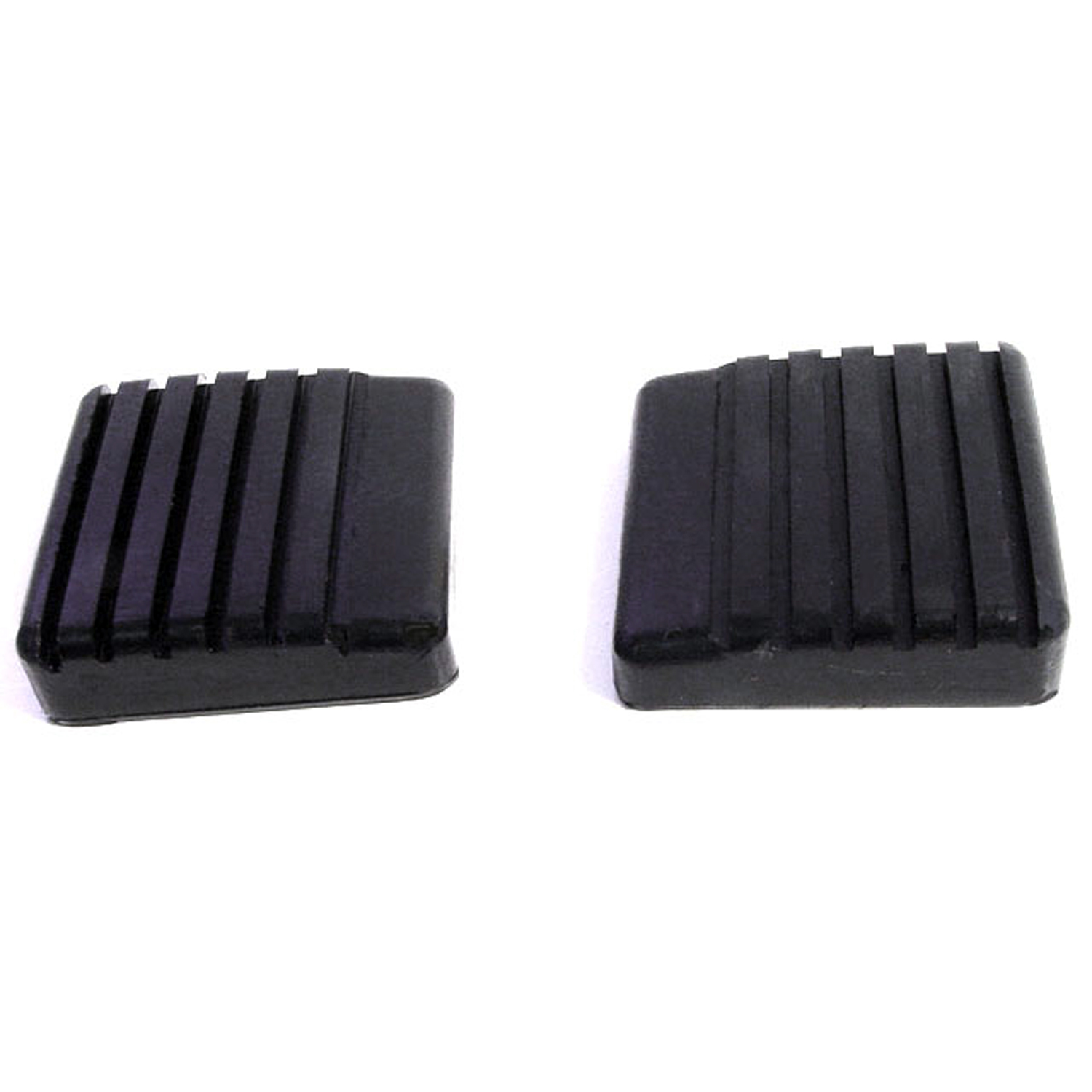 1962 Jeep Utility Clutch and Brake Pedal Pads. Pair-CB 61-BClutch and Brake Pedal Pads. Pair
Why Choose Metro?
For over 100 years, Metro Moulded Parts has been the pinnacle of quality in classic car restoration parts. Our commitment to precision and authenticity in every component ensures a perfect fit and an OEM-level appearance.
- Expert Craftsmanship & Quality: Each part is a testament to our dedication to reliability and perfection, crafted from original designs and thoroughly tested.
- Advanced Technology: We use cutting-edge techniques to create flawless, long-lasting parts that surpass others in performance.
- SuperSoft Sponge – The Ultimate Door Seal: Not only are our door seals 30% softer than competitors', but they're also guaranteed to never leak. They effectively reduce wind and road noise, enhancing your classic car's comfort and driving experience.
- Proudly American: Our parts are a product of American craftsmanship, made in the USA with a spirit of excellence and heritage.
- Unrivaled Warranty: We back our products with a 30-year industry-leading warranty, a testament to our confidence in their quality.
Join us in preserving the legacy of classic cars with parts that are crafted for perfection, not just made.