

Image of 1963 Jeep Universal, Note: These illustrations use artistic license and may differ from actual historical models.
Performance Metrics
Fundamental Metrics
Emotional Appeal
MMP Rating
| Engine Specifications | |
|---|---|
| Engine: | F-134 Hurricane Inline 4 |
| Displacement: | 134 cu in (2.2 L) |
| Horsepower: | 75 hp |
| Torque: | 114 lb-ft |
| Compression Ratio: | 6.9:1 |
| Ignition System: | Distributor and coil |
| Cooling System: | Liquid-cooled |
| Performance Specifications | |
| 0-60 Time: | Estimated 20-25 seconds |
| 1/4 Mile Time: | Not available |
| Top Speed: | 60-65 mph |
| Transmission and Drive | |
| Drive Type: | 4WD |
| Transmission Type: | T-90 3-speed manual |
| Fuel and Efficiency | |
| Fuel System Type: | Single barrel carburetor |
| MPG: | Estimated 15-20 mpg |
| Dimensions and Brakes | |
| Brakes: | Drum brakes |
| Wheelbase: | 81 in (2,057 mm) |
| Weight: | 2,423 lbs (1,100 kg) |
Note: Specifications for classic cars are given to the best of our ability, considering the limited and variant data available.
1963 Jeep Universal: The Little 4x4 Built for Big Jobs
The 1963 Jeep Universal was less a single truck than a family of compact 4x4s with one clear mission: go where ordinary cars could not. Built by Willys Motors, which became Kaiser Jeep Corporation in 1963, these rugged machines carried the Jeep name from wartime utility into farms, work sites, trails, and suburban driveways. The lineup included the CJ-3B, CJ-5, and longer-wheelbase CJ-6, each pairing a simple open body with genuine four-wheel-drive hardware.
A particularly memorable member of the family was the CJ-3B, recognizable by its unusually tall hood. The extra height made room for the F-head engine, whose intake valves sat in the cylinder head while its exhaust valves remained in the block. That practical packaging solution gave the 3B its distinctive high-hood profile and earned it the nickname “High Hood.”
Jeep Universal Models and Their Origins
The Universal concept began after World War II, when Willys adapted the military Jeep into a civilian vehicle for farmers, tradespeople, and outdoor users. By 1963, the idea had matured into a versatile range. The compact CJ-3B continued the early flat-fender look, while the CJ-5 offered a more rounded body. The CJ-6 shared the CJ-5’s general styling but stretched the wheelbase to provide extra room and utility.
These were not polished passenger cars with a rugged image. Their construction, controls, and trim reflected their working purpose. A 1963 Universal could haul equipment, crawl across rough ground, and still be driven to town. Its appeal came from being an adaptable tool rather than a luxury vehicle.
High Hoods, Flat Fenders, and Open-Air Styling
The CJ-3B’s upright grille, narrow body, exposed hinges, and raised hood made it look like a direct descendant of the wartime Jeep. The CJ-5 wore softer, rounded fenders and a more curved hood, giving it a slightly friendlier appearance without losing its utilitarian character. The CJ-6 kept much of that CJ-5 styling but added length behind the front seats.
The open body was central to the Universal’s personality. Buyers could choose a soft top and side curtains, and hardtops were available through factory or dealer options depending on model and market. Accessories such as doors, heaters, and other work-oriented equipment helped tailor the Jeep to local needs. The CJ-5 became the best-known and most iconic body style in the lineup, while the CJ-6 appealed to buyers who needed more space.
Paint choices varied by model, market, and equipment. White, red, green, blue, and yellow tones were among the familiar choices seen on period Jeeps. Bright colors suited the vehicle’s outdoor image, while white and darker greens were common practical selections. Original paint codes and availability should be checked against the specific model and market, since a single universal color list does not cover every 1963 Jeep.
A Workaday Cabin with Useful Details
Inside, the 1963 Jeep Universal was deliberately plain. The cabin typically featured painted metal surfaces, simple instruments, basic switches, and durable seat upholstery rather than thick carpeting or decorative trim. Materials were chosen to tolerate mud, dust, and frequent use, not to create a plush touring experience. The simplicity also made the interior easier to clean and repair.
Its practical features included a low, upright driving position, a short dashboard, and controls that were easy to reach. Compared with a modern vehicle, the cabin offered little sound insulation or weather protection, especially with the top removed. The tradeoff was excellent visibility and a direct connection to the road, the engine, and the terrain.
Four-Wheel-Drive Technology Ahead of Its Time
The Universal’s most important technology was not electronic or complicated. It was a selectable four-wheel-drive system built around a manual transfer case. In normal conditions, the driver could use two-wheel drive, then engage four-wheel drive when traction demanded it. Low range gave the Jeep the extra leverage needed for steep slopes, deep mud, or slow, controlled trail work.
Most 1963 models used a three-speed manual transmission and a version of the 134-cubic-inch “Hurricane” four-cylinder. Exact specifications varied with model and equipment, but the familiar F-head engine produced roughly 72 to 75 horsepower. It was a compact, low-speed work engine, not a high-revving performance unit. Axle, gearing, and component details can differ between the CJ-3B, CJ-5, and CJ-6, so buyers should confirm specifications by vehicle serial number and installed parts.
Performance and Handling on Road and Trail
Period Jeeps were built for useful torque and traction rather than fast acceleration. A healthy 134-cubic-inch Universal can generally reach about 55 to 65 mph, depending on model, gearing, tires, and condition. A 0-to-60-mph run is a slow affair, often estimated at roughly 20 to 30 seconds or more. Those figures are best treated as approximate: original road-test data and modern results vary considerably, and many surviving Jeeps have been modified.
On pavement, the short wheelbase, narrow track, agricultural suspension, and tall profile make the Jeep feel busy compared with a contemporary car. It can bounce over broken surfaces and requires a steady hand on windy roads. In low range, however, its modest power becomes an advantage. The driver can ease over rocks, climb uneven ground, and make careful progress without relying on speed.
Behind the wheel, the engine sounds mechanical and purposeful, with plenty of intake and exhaust noise reaching the cabin. The ride is firm, the steering is direct but not modern-car precise, and the manual gear changes reinforce the vehicle’s hands-on character. A good Universal feels honest and capable; a worn or poorly maintained one can feel loose, noisy, and tiring over long distances.
Why the 1963 Jeep Universal Mattered
The Universal helped establish a formula that shaped generations of recreational 4x4s: compact dimensions, an open cabin, removable weather protection, a low-range transfer case, and a chassis that could handle real work. It was not the only four-wheel-drive vehicle of its era, but it made that capability approachable for civilians and adaptable to many jobs.
Its influence is especially clear in the later Jeep CJ and Wrangler families. The 1963 models kept the vehicle’s original utility at the forefront while offering distinct body sizes for different needs. The CJ-3B demonstrated how a basic platform could be adapted around its engine, the CJ-5 became a lasting design touchstone, and the CJ-6 showed that a short Jeep could also be stretched into a more practical hauler.
Ownership, Repairs, and Everyday Use
Owners commonly use a 1963 Universal for weekend trail driving, farm and property work, local cruising, restoration projects, and classic-car shows. Some are still pressed into light daily use, but their limited weather protection, modest highway pace, basic safety equipment, and noisy cabins make them less comfortable than modern commuters.
Mechanical simplicity is one of the Jeep’s strongest ownership advantages. Many routine jobs can be handled by a capable home mechanic with standard tools, and replacement parts and specialist knowledge remain available through the classic Jeep community. Before buying, inspect the frame and body for rust, check the transfer case and axles for leaks or noise, and look carefully for worn steering and suspension components. Engine condition matters, but rust repair and neglected drivetrain work can quickly outweigh the purchase price.
Reliability depends heavily on upkeep. A well-maintained, mostly stock Jeep can be dependable for the kind of driving it was designed to do. An old example with decades of modifications may need careful sorting, particularly if wiring, gearing, or engine work was done without documentation. The first gear on many three-speed transmissions is unsynchronized, so drivers need to use the clutch and shift appropriately rather than forcing it.
Jeep Universal Facts and Common Criticisms
The CJ-6 is an easy model to overlook, but its longer wheelbase made it the practical choice for people who wanted more passenger or cargo space without moving to a much larger vehicle. The CJ-3B’s high hood is another memorable detail: it was a functional response to the F-head engine, not simply a styling flourish. Together, the models show how one basic Jeep idea could be adapted into several useful forms.
There is no widely recognized 1963 Universal speed or endurance record that defines the model. Its reputation rests instead on everyday capability and the success of the civilian Jeep concept. The broader Jeep name is closely associated with wartime service, but the Universal models were civilian vehicles designed for work and recreation after the war.
Common criticisms are part of the ownership conversation: the ride can be harsh, highway performance is limited, weather sealing is rudimentary, and early safety equipment is sparse by modern standards. These are not hidden flaws so much as consequences of a design that prioritized simplicity, visibility, and access to rough terrain over comfort and speed.
Collector Values and Market Outlook
Values vary sharply with model, originality, rust, mechanical condition, and restoration quality. As a broad current-market estimate, a project-quality 1963 Universal might sell for about $3,000 to $8,000. A usable driver often falls around $10,000 to $20,000, while a well-restored example can bring roughly $25,000 to $45,000 or more. Exceptional restorations, unusual factory equipment, or especially desirable examples can exceed those ranges.
Exact production totals for all 1963 Universal models are difficult to state confidently because the lineup included different models and markets, and records are not always presented in a single comparable total. A reasonable, clearly approximate estimate for combined CJ-3B, CJ-5, and CJ-6 production in the model year is around 30,000 to 45,000 vehicles. This is a broad estimate rather than a verified factory figure, and it should not be mistaken for the number of surviving vehicles.
The CJ-5 is generally the easiest of the three to find, while the CJ-6 is less common and the CJ-3B has a distinct following because of its high-hood styling. Values for clean, authentic examples have generally strengthened as interest in early 4x4s has grown. Rusty projects and heavily modified vehicles remain more price-sensitive, while well-documented restorations attract the strongest competition.
Why the 1963 Jeep Universal Still Stands Out
The 1963 Jeep Universal combined a compact footprint, a simple cabin, a hardworking four-cylinder engine, and genuine low-range four-wheel drive. Its body styles served different buyers, but all shared the same straightforward purpose: get people and equipment through places where ordinary vehicles struggled.
More than six decades later, the Universal remains appealing because it feels like a tool you can understand, maintain, and use. It may not be quick, quiet, or comfortable, but it helped define the civilian 4x4 and gave the Jeep name a lasting place on road, trail, and farm.
1963 Jeep Universal Catalog of Parts
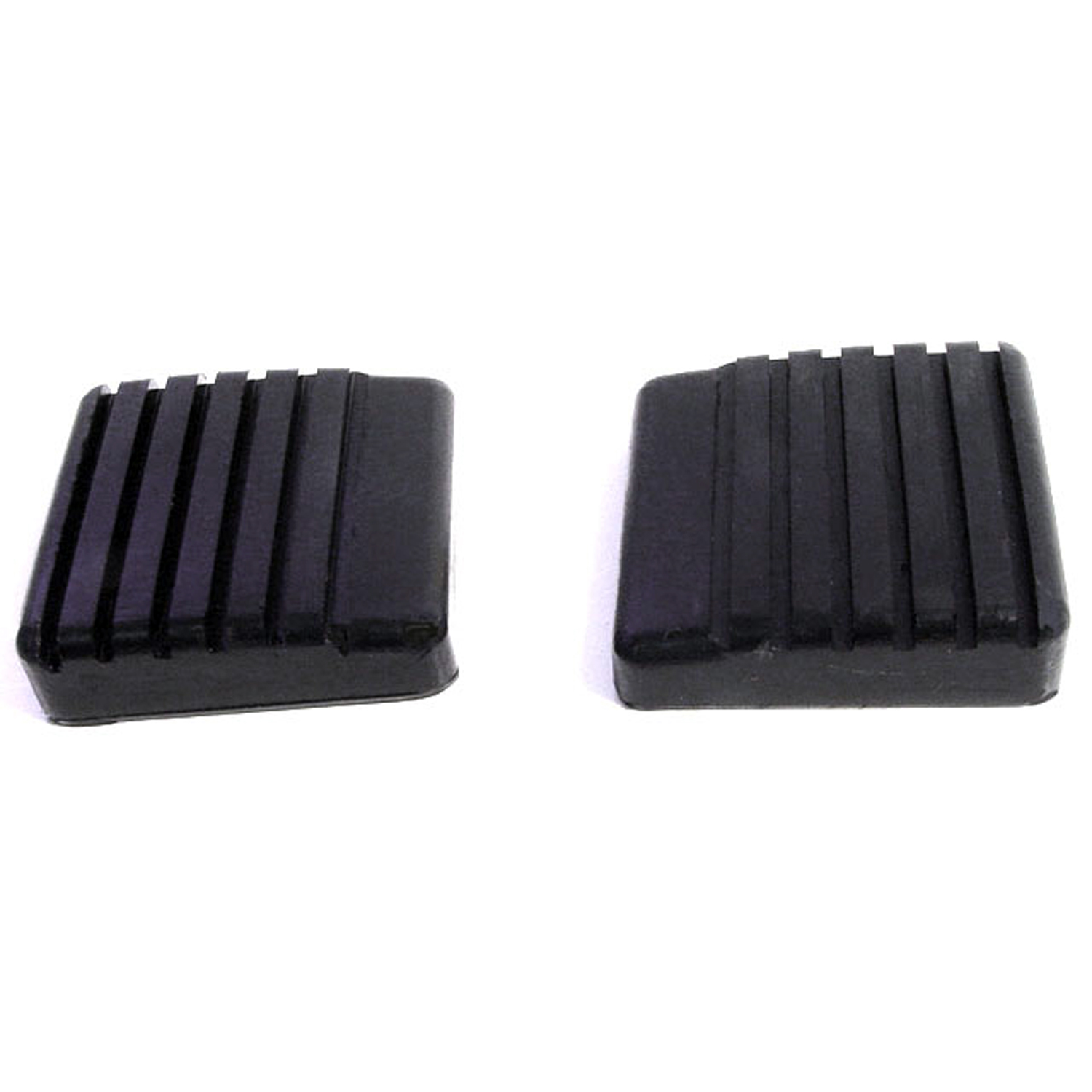 1963 Jeep Universal Clutch and Brake Pedal Pads. Pair-CB 61-BClutch and Brake Pedal Pads. Pair
Why Choose Metro?
For over 100 years, Metro Moulded Parts has been the pinnacle of quality in classic car restoration parts. Our commitment to precision and authenticity in every component ensures a perfect fit and an OEM-level appearance.
- Expert Craftsmanship & Quality: Each part is a testament to our dedication to reliability and perfection, crafted from original designs and thoroughly tested.
- Advanced Technology: We use cutting-edge techniques to create flawless, long-lasting parts that surpass others in performance.
- SuperSoft Sponge – The Ultimate Door Seal: Not only are our door seals 30% softer than competitors', but they're also guaranteed to never leak. They effectively reduce wind and road noise, enhancing your classic car's comfort and driving experience.
- Proudly American: Our parts are a product of American craftsmanship, made in the USA with a spirit of excellence and heritage.
- Unrivaled Warranty: We back our products with a 30-year industry-leading warranty, a testament to our confidence in their quality.
Join us in preserving the legacy of classic cars with parts that are crafted for perfection, not just made.