

Image of 1965 Jeep Dispatcher, Note: These illustrations use artistic license and may differ from actual historical models.
Performance Metrics
Fundamental Metrics
Emotional Appeal
MMP Rating
| Engine Specifications | |
|---|---|
| Engine: | Inline-4 |
| Displacement: | 134 cu in (2.2 L) |
| Horsepower: | 60-75 hp |
| Torque: | 114 lb-ft |
| Compression Ratio: | 7.5:1 |
| Ignition System: | Distributor and coil |
| Cooling System: | Liquid-cooled |
| Performance Specifications | |
| 0-60 Time: | Not available due to the vehicle's age and purpose |
| 1/4 Mile Time: | Not available due to the vehicle's age and purpose |
| Top Speed: | 55-60 mph |
| Transmission and Drive | |
| Drive Type: | Rear-wheel drive (4x2) |
| Transmission Type: | 3-speed manual |
| Fuel and Efficiency | |
| Fuel System Type: | Carburetor |
| MPG: | 18-20 mpg |
| Dimensions and Brakes | |
| Brakes: | Drum brakes |
| Wheelbase: | 81 in |
| Weight: | 2,200 lbs |
Note: Specifications for classic cars are given to the best of our ability, considering the limited and variant data available.
1965 Jeep Dispatcher: A Jeep Built for the Street
The 1965 Jeep Dispatcher looked ready to climb a trail, but its real assignment was often a city street, resort driveway, or delivery route. Known as the DJ-3A, it was Willys’ compact, rear-wheel-drive take on the familiar Jeep formula: simple, upright, and built to work without the cost or complexity of four-wheel drive.
The Dispatcher traced its roots to the civilian Jeep CJ-3A and was produced by Willys, later part of Kaiser Jeep. By 1965, it represented the closing chapter of the DJ-3A line. Its successor, the DJ-5, would become much more closely associated with postal delivery. One of the DJ-3A’s more surprising variations was the colorful Surrey Gala, a beach-and-resort Jeep dressed in pastel paint and striped upholstery rather than rugged military-inspired trim.
Simple Styling, With One Colorful Exception
The DJ-3A retained the classic Jeep silhouette: a short, upright body, flat fenders, a broad hood, and a vertical-slot grille. Its compact proportions made it easy to maneuver and park. The windshield could fold forward, a practical feature inherited from the Jeep’s utility roots. Unlike a four-wheel-drive CJ, however, the Dispatcher was designed for pavement and ordinary roads, with power sent to the rear wheels.
Inside, the cabin was deliberately basic. Expect painted metal surfaces, straightforward gauges, durable vinyl upholstery, and few comfort features by modern standards. The simple layout was part of the appeal: there was little trim to damage and relatively little equipment to complicate repairs. Depending on configuration, the Jeep could be open to the elements, fitted with a soft top, or equipped with a hardtop or other utility bodywork.
Most DJ-3As wore practical fleet or work-vehicle colors. The Surrey Gala was the memorable exception, commonly associated with pastel shades such as Tropical Rose, Jade Tint, and Cerulean Blue, along with coordinated striped seats and a matching canopy. The result was a Jeep aimed at vacationers and resort guests rather than farmers or contractors. The open, colorful Surrey is the most recognizable and collectible DJ-3A configuration today.
Rear-Wheel Drive for Work and Town
The Dispatcher’s defining engineering choice was what it left out: a four-wheel-drive system. Rear-wheel drive made the DJ-3A less expensive and mechanically simpler than a conventional Jeep, while preserving the short wheelbase and useful body shape. That made it well suited to local delivery, campus or resort transport, light commercial duties, and other jobs that did not require serious off-road traction.
Power came from Willys’ 134-cubic-inch (2.2-liter) F-head Hurricane four-cylinder engine. In typical specification, it produced about 72 horsepower and drove a three-speed manual transmission. The combination was modest, but the engine’s straightforward design and the Jeep’s relatively low weight suited its intended role. The DJ-3A was not a technological showpiece. Its selling points were simplicity, utility, and a purchase price that could undercut a four-wheel-drive Jeep.
It also offered a distinctly different character from contemporary vans and passenger cars. Where a van provided enclosed cargo space and a sedan favored comfort, the Dispatcher was an open, compact work tool with Jeep looks. It extended the Jeep name into everyday urban and commercial use without pretending to be a highway cruiser or a serious off-road machine.
Performance and Road Manners
Period performance figures for individual DJ-3A configurations can be difficult to pin down, and today’s vehicles may differ because of gearing, engine condition, tires, and restoration choices. As a general guide, a healthy stock example may reach roughly 60 to 65 mph. A 0-to-60-mph run is likely to take somewhere around 25 to 30 seconds. Treat those figures as estimates, not guaranteed factory test results.
On the road, the four-cylinder engine gives the Dispatcher a steady, purposeful feel rather than brisk acceleration. The engine’s mechanical clatter and exhaust note are part of the experience, as are the manual transmission and relatively direct, unassisted controls. The ride is firm and bouncy over broken pavement, reflecting the Jeep’s utility-first suspension and short wheelbase. On winding roads, it feels narrow and nimble, but its upright body and vintage tires call for measured cornering and sensible speeds.
Wind, road noise, and weather are especially noticeable in open or soft-top versions. The DJ-3A is best enjoyed at a relaxed pace, where its compact dimensions and simple controls become advantages rather than limitations. It is a memorable back-road companion, not a modern commuter built for long, fast highway journeys.
Living With a DJ-3A
Owners use the Dispatcher as a weekend classic, a show vehicle, a resort or business display piece, and a light-duty runabout. A sound example can handle local errands, but its age, modest speed, limited safety equipment, and open cabin make it less suitable for daily use in modern traffic. The two-wheel-drive layout also means it should not be mistaken for a trail-ready CJ.
Maintenance is generally approachable for a mechanically capable owner. The engine and chassis follow familiar mid-century Jeep principles, and many routine jobs can be handled with basic tools and a service manual. Parts support is available through classic Jeep suppliers, though some DJ-specific body and trim pieces can take more searching than common CJ parts. Before buying, inspect the frame, floor, body mounts, and engine carefully. Rust, worn steering or suspension parts, and incomplete trim can turn an inexpensive project into a costly restoration.
Surrey Style and Other DJ-3A Trivia
The Surrey Gala is the DJ-3A’s most famous personality shift. Its bright colors, striped upholstery, and matching canopy gave it a playful vacation look that stood out sharply from the workaday Jeep image. It was promoted for leisure and resort settings, and surviving examples are now especially sought after because they combine unusual styling with comparatively low production.
The DJ-3A also helps explain the evolution of Jeep’s delivery vehicles. It was part of the move toward purpose-built, two-wheel-drive Jeeps for fleets and urban work, while the later DJ-5 became the better-known postal Jeep. The two models are related in purpose but should not be confused: the iconic long-serving mail Jeeps most people picture are generally DJ-5-series vehicles, not DJ-3As.
There is no widely recognized DJ-3A land-speed record or major competition legacy. Its distinction is more practical: it adapted the Jeep concept for places where four-wheel drive was unnecessary. A common criticism is that the Dispatcher gives up the traction people expect from a Jeep, while still retaining a firm ride and limited comfort. That tradeoff was intentional, but it can surprise buyers who assume every Jeep is built for the trail.
Collector Values and Availability
DJ-3A production totals are not consistently documented in readily available public sources. A reasonable working estimate is roughly 20,000 to 30,000 vehicles across the model’s production run, but that should be treated as an informed estimate rather than a confirmed factory total. Surrey Gala examples were a smaller subset, and surviving, well-preserved cars are much harder to find than ordinary project vehicles.
In the current U.S. collector market, a rough DJ-3A project might sell for about $5,000 to $10,000, depending on completeness and rust. A usable, presentable example may fall around $10,000 to $20,000, while a high-quality restoration can reach roughly $20,000 to $35,000. A genuine, well-restored Surrey Gala can bring approximately $25,000 to $50,000 or more when condition, originality, and documentation are strong. These are broad estimates: unusual bodywork, missing parts, and restoration quality can move a price substantially.
Values have generally benefited from growing interest in early Jeeps and distinctive, low-volume classics. Standard DJ-3As remain more affordable than many four-wheel-drive CJ models, while Surreys command a premium for their color and rarity. As with most vintage vehicles, condition and authenticity matter more than a seller’s claim that a Jeep is “rare.” Verify the model, inspect the body and chassis, and look for evidence that special trim and paint are correct.
Why the 1965 Dispatcher Still Matters
The 1965 Jeep Dispatcher was not the fastest Jeep, the most capable off-roader, or the most comfortable vehicle of its era. Its significance lies in a different kind of usefulness: it brought Jeep’s compact, practical design to everyday paved-road work, with fewer mechanical complications than a four-wheel-drive model. The Surrey Gala added a dose of beach-town charm to that working foundation.
For collectors, the DJ-3A offers an appealing mix of recognizable Jeep character, approachable mechanics, and unusual configurations. It is a reminder that the Jeep story was never only about mud and mountain trails. Sometimes the most distinctive Jeep was the one built to get around town, carry out a delivery, or make a resort entrance in pastel pink.
1965 Jeep Dispatcher Catalog of Parts
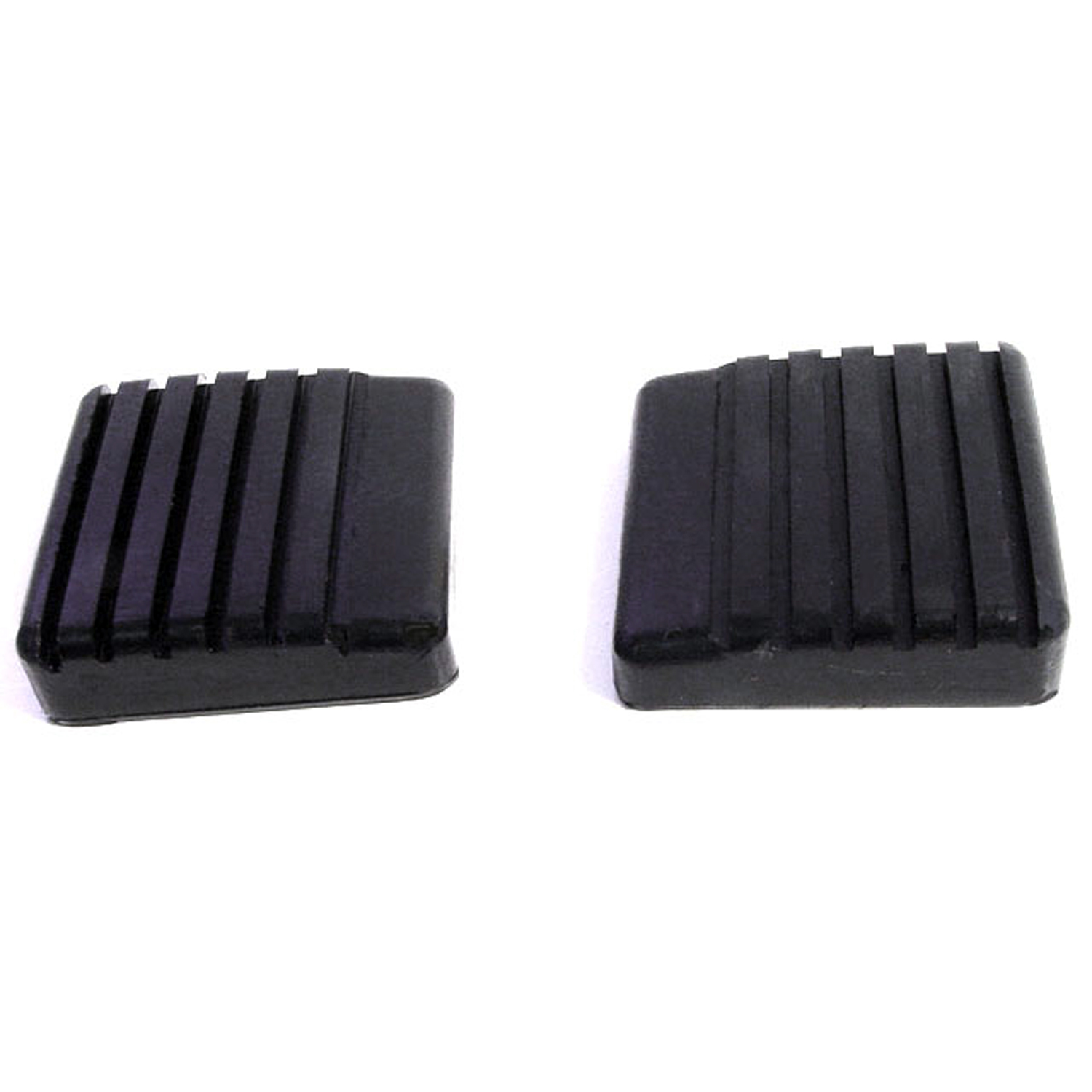 1965 Jeep Dispatcher Clutch and Brake Pedal Pads. Pair-CB 61-BClutch and Brake Pedal Pads. Pair
Why Choose Metro?
For over 100 years, Metro Moulded Parts has been the pinnacle of quality in classic car restoration parts. Our commitment to precision and authenticity in every component ensures a perfect fit and an OEM-level appearance.
- Expert Craftsmanship & Quality: Each part is a testament to our dedication to reliability and perfection, crafted from original designs and thoroughly tested.
- Advanced Technology: We use cutting-edge techniques to create flawless, long-lasting parts that surpass others in performance.
- SuperSoft Sponge – The Ultimate Door Seal: Not only are our door seals 30% softer than competitors', but they're also guaranteed to never leak. They effectively reduce wind and road noise, enhancing your classic car's comfort and driving experience.
- Proudly American: Our parts are a product of American craftsmanship, made in the USA with a spirit of excellence and heritage.
- Unrivaled Warranty: We back our products with a 30-year industry-leading warranty, a testament to our confidence in their quality.
Join us in preserving the legacy of classic cars with parts that are crafted for perfection, not just made.