
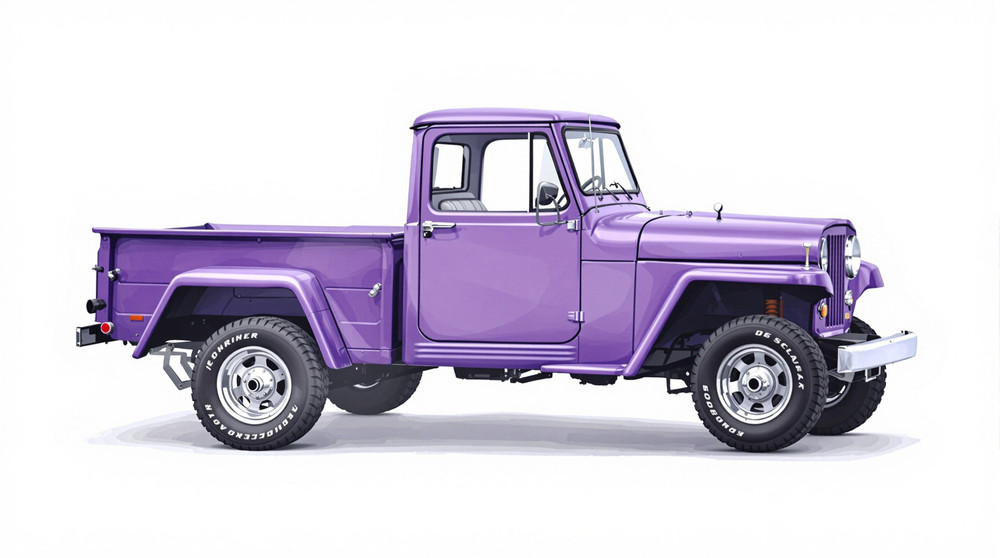
Image of 1965 Jeep J-3600, Note: These illustrations use artistic license and may differ from actual historical models.
Performance Metrics
Fundamental Metrics
Emotional Appeal
MMP Rating
| Engine Specifications | |
|---|---|
| Engine: | Tornado 230 I6 |
| Displacement: | 230 cu in (3.8 L) |
| Horsepower: | 140 hp |
| Torque: | 210 lb-ft |
| Compression Ratio: | 8.5:1 |
| Ignition System: | Conventional, distributor |
| Cooling System: | Liquid-cooled |
| Performance Specifications | |
| 0-60 Time: | Information not available |
| 1/4 Mile Time: | Information not available |
| Top Speed: | 75 mph |
| Transmission and Drive | |
| Drive Type: | 4WD |
| Transmission Type: | 3-speed manual |
| Fuel and Efficiency | |
| Fuel System Type: | Carburetor |
| MPG: | 10-12 mpg |
| Dimensions and Brakes | |
| Brakes: | Drum brakes |
| Wheelbase: | 120 in |
| Weight: | 3500 lbs |
Note: Specifications for classic cars are given to the best of our ability, considering the limited and variant data available.
1965 Jeep J-3600: The Workhorse with a Wild Side
The 1965 Jeep J-3600 brought four-wheel-drive capability to the kind of full-size pickup that was expected to haul, tow, and keep working long after the pavement ended. Built by Kaiser Jeep, it belonged to the Gladiator family, a range of pickups introduced in 1962 and closely related to the Jeep Wagoneer. The J-3600 combined truck-grade utility with a rugged 4x4 layout, giving it a distinctive place in the early history of civilian four-wheel-drive pickups.
One detail that makes the Gladiator especially interesting is its engineering connection to the Wagoneer. The two shared a frame and much of their underlying architecture, yet the pickup was designed for demanding cargo and job-site duties. In the mid-1960s, that blend of passenger-car-era engineering and serious truck hardware was unusual. The J-3600 was not just a pickup with Jeep badges; it was part of an ambitious effort to make four-wheel drive useful for everyday work.
Gladiator Styling and Cabin Details
The J-3600 has the unmistakable shape of a 1960s American truck: a tall, upright cab, broad hood, flat-sided bodywork, and a practical cargo bed. Its front end carries the period Jeep look, with a prominent grille and round headlamps framed by simple, sturdy sheet metal. The overall effect is purposeful rather than decorative. This is a truck that looks ready to leave the road, not merely pose beside it.
Cabin trim depended on how the truck was ordered, but the interior was built around function. Expect a broad bench seat, straightforward gauges, durable door panels, and hard-wearing finishes rather than luxury-car materials. The view over the hood is commanding, and the uncomplicated dashboard makes the controls easy to understand. A well-preserved example can feel surprisingly welcoming, though original upholstery, paint, and interior trim are now important parts of its collectible appeal.
Jeep offered period paint choices in a range of solid colors, with availability varying by model year, equipment, and market. White, red, blue, and green shades are common colors seen on surviving trucks, but a specific truck’s original color is best confirmed from its paint code or factory documentation. Two-tone treatments and trim choices could also change the look. Bed and equipment configurations varied, so buyers should inspect the individual truck rather than assume every J-3600 left the factory identically equipped.
Four-Wheel-Drive Technology for the Era
The J-3600’s headline feature was its available four-wheel-drive system, built for traction on snow, mud, loose gravel, and rough work sites. Depending on configuration, the truck could also be ordered with two-wheel drive. Four-wheel-drive versions used a two-speed transfer case, letting the driver select a lower range for slow, controlled work over difficult terrain. That hardware gave the Gladiator a practical advantage over many conventional pickups of the period.
Engine choices included Jeep’s 230-cubic-inch Tornado overhead-cam inline-six and, in some configurations, the 327-cubic-inch Vigilante V8. The Tornado was notable for its overhead-cam design, an unusual feature in a mainstream American truck of the time. Transmission and axle combinations varied, with manual gearboxes among the available choices. Because components could differ by drivetrain and order, a surviving truck’s engine, transmission, and axle tags are worth checking before buying.
Why the J-3600 Mattered
The J-3600 helped establish the full-size 4x4 pickup as more than a specialized farm or military-style vehicle. It offered the cargo capacity of a conventional pickup alongside four-wheel-drive capability, and it did so within a product family that also included the Wagoneer. That shared engineering helped Jeep create a coherent range of vehicles for buyers who wanted both utility and all-weather mobility.
Compared with many pickups of its era, the Gladiator stood out for its strong connection to Jeep’s four-wheel-drive heritage and its unusual overhead-cam six-cylinder engine. It was not the first civilian 4x4 truck, but it helped make the category more visible and versatile. Its long-term influence can be seen in the continuing popularity of full-size 4x4 pickups, which remain among the most capable and widely used vehicles on the road.
Road Manners, Power, and Performance
Factory performance figures for a specific 1965 J-3600 are difficult to pin down because engine, gearing, tire size, drivetrain, and load all affect the result. As a broad real-world estimate, a six-cylinder truck may take roughly 20 to 25 seconds to reach 60 mph, while a V8-equipped example could be closer to 15 to 19 seconds. Top speed is similarly configuration-dependent; figures around 75 to 90 mph are plausible estimates, not guaranteed factory ratings. These are old, heavy-duty trucks, and modern highway pace was never their main mission.
On the road, the J-3600 feels substantial and mechanical. The steering is slower and less precise than that of a modern pickup, while the solid-axle, truck-oriented suspension can transmit bumps and sharp road edges directly into the cabin. A rough surface is where its work-truck nature becomes obvious. On winding roads, drivers need to plan ahead, especially with a load in the bed or tall tires fitted.
The Tornado six has a distinctive, purposeful note, while the Vigilante V8 delivers a deeper rumble and stronger low-speed pull. Either engine rewards smooth driving more than hurried acceleration. The driver works a conventional gear lever, keeps an eye on the road, and feels the truck’s weight through the steering and brakes. In four-wheel drive, the experience becomes deliberate and controlled: low range is for crawling and traction, not speed.
Living with a Classic Jeep Pickup
Today, a J-3600 can serve as a weekend driver, a vintage work truck, a restoration project, or a show vehicle. Some owners use them for light hauling and trail access, while others preserve them as examples of Jeep’s early civilian truck history. They are capable old machines, but age, condition, and parts availability matter more than the model’s original reputation for toughness.
The mechanical layout is relatively straightforward, and many routine jobs are within reach of an experienced home mechanic. The key is finding a truck that has not suffered from years of deferred maintenance or improvised repairs. Inspect the frame for rust, especially around the suspension and body mounts, and look closely at the cab floor, bed, and lower body panels. Check the transfer case and axles for leaks or noise, and verify that four-wheel drive engages correctly. Engine parts and wear items may be obtainable through specialist suppliers, but trim, body panels, and model-specific pieces can take more patience to source.
Reliability depends heavily on upkeep. A properly maintained engine and drivetrain can be durable, but decades-old wiring, cooling systems, seals, brakes, and fuel components deserve careful attention. Before regular use, a thorough inspection and refresh of safety-critical systems is a smarter plan than assuming the truck is ready for modern traffic.
J-3600 Trivia and Common Complaints
The Gladiator’s close relationship to the Wagoneer is one of its most notable bits of trivia: the truck and the pioneering family 4x4 shared much of their basic architecture. The Tornado engine is another conversation starter. Its overhead-cam layout was technically distinctive for a truck engine of the period, although it can require more specialized knowledge than a more familiar pushrod design.
There is no widely recognized speed, sales, or endurance record associated specifically with the 1965 J-3600, and no single celebrity connection defines the model. Its significance is more practical: it helped demonstrate that a full-size pickup could combine useful payload with genuine four-wheel-drive ability. Common criticisms include slow acceleration, heavy steering, a firm ride, limited modern safety equipment, and rust-prone bodywork. Those drawbacks are part of the ownership reality, not reasons to overlook the truck’s character.
Collector Value and Availability
There is no dependable published production total for the 1965 J-3600 alone, so any unit count should be treated as an estimate rather than a factory figure. As a best guess, production was likely in the low thousands, but surviving examples are fewer because many trucks spent decades doing hard work. The J-3600 is uncommon at classic-car shows and appears less often than better-known Jeep models, though it is not generally regarded as a one-off rarity.
Condition, originality, drivetrain, and documentation have a major effect on price. In the current collector market, a rough project might sell for around $3,000 to $8,000, a usable but imperfect truck could fall near $8,000 to $18,000, and a clean, well-restored example may bring approximately $20,000 to $40,000 or more. Exceptional restorations can exceed that range, while a rusty or incomplete truck may be worth considerably less. These are broad market estimates, not a formal appraisal.
Values have generally strengthened as interest in vintage 4x4s has grown, particularly for solid, original trucks and high-quality restorations. The market is still selective: buyers tend to pay for sound structure, correct parts, and documented work, not just an appealing paint job. A carefully chosen J-3600 may appreciate over time, but restoration costs can quickly outpace the value of an ordinary example.
A Jeep Built to Earn Its Keep
The 1965 Jeep J-3600 is a compelling classic because it brings together the strength of a working pickup, the traction of a Jeep 4x4, and the mechanical character of a very different era. Its pace is modest and its ride is unmistakably truck-like, but its design tells an important story about how four-wheel drive moved into everyday civilian work. For collectors and drivers who value honest utility over polish, the J-3600 remains a memorable piece of Jeep history.
1965 Jeep J-3600 Catalog of Parts
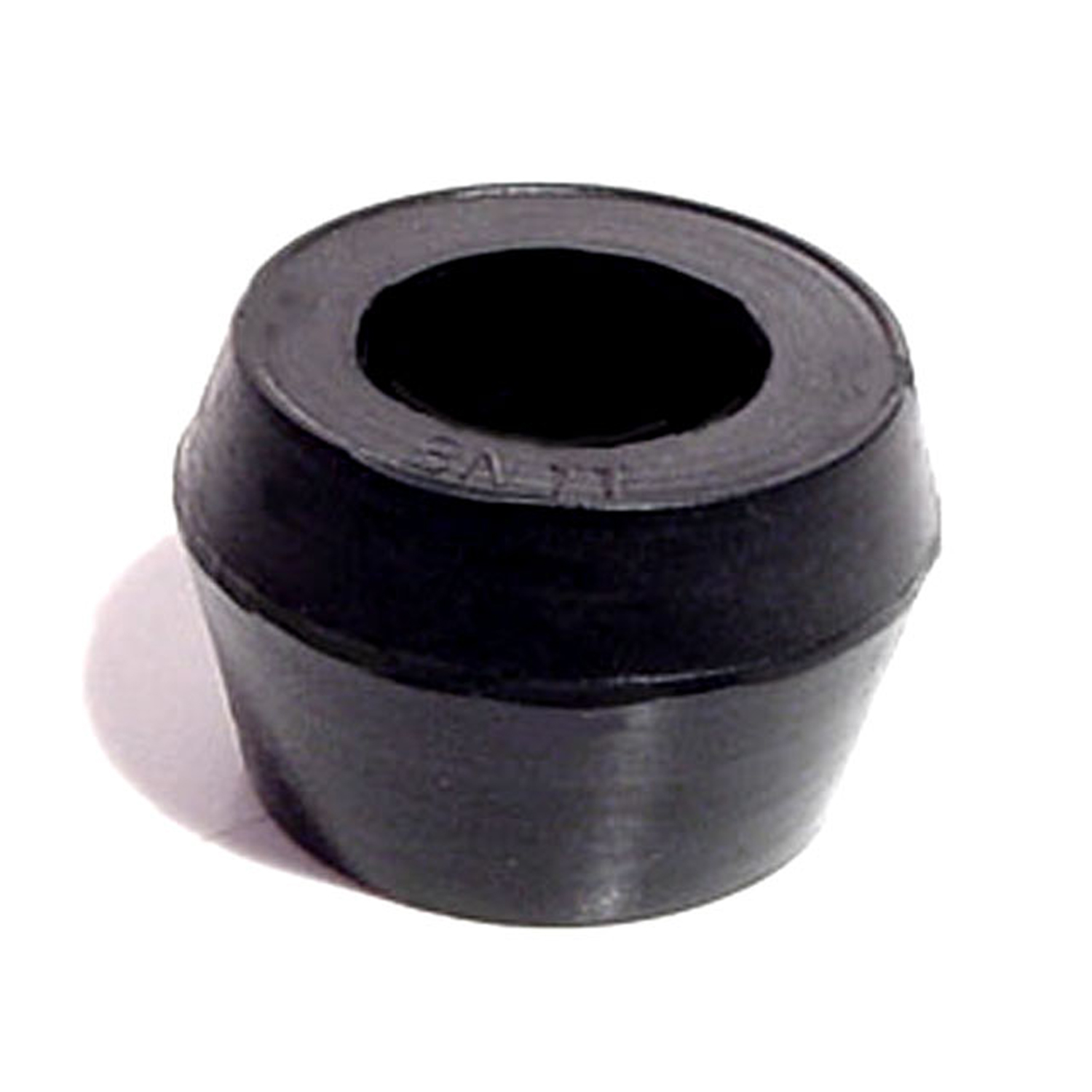 1965 Jeep J-3600 Shock Absorber Grommet. 1" bottom O.D-BN 11Shock Absorber Grommet. 1" bottom O.D., 3/4" high, with 5/8" I.D. Each
Why Choose Metro?
For over 100 years, Metro Moulded Parts has been the pinnacle of quality in classic car restoration parts. Our commitment to precision and authenticity in every component ensures a perfect fit and an OEM-level appearance.
- Expert Craftsmanship & Quality: Each part is a testament to our dedication to reliability and perfection, crafted from original designs and thoroughly tested.
- Advanced Technology: We use cutting-edge techniques to create flawless, long-lasting parts that surpass others in performance.
- SuperSoft Sponge – The Ultimate Door Seal: Not only are our door seals 30% softer than competitors', but they're also guaranteed to never leak. They effectively reduce wind and road noise, enhancing your classic car's comfort and driving experience.
- Proudly American: Our parts are a product of American craftsmanship, made in the USA with a spirit of excellence and heritage.
- Unrivaled Warranty: We back our products with a 30-year industry-leading warranty, a testament to our confidence in their quality.
Join us in preserving the legacy of classic cars with parts that are crafted for perfection, not just made.