
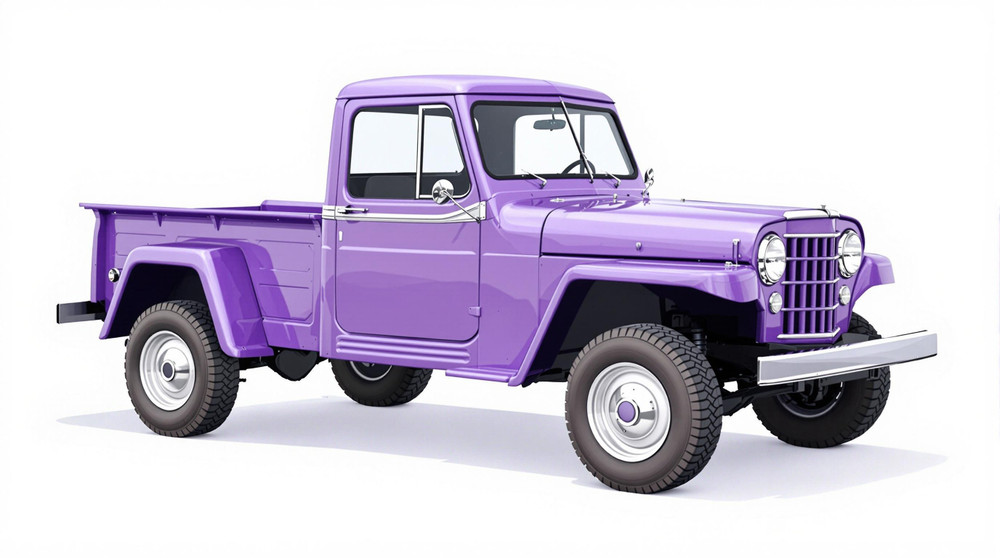
Image of 1965 Jeep J-3800, Note: These illustrations use artistic license and may differ from actual historical models.
Performance Metrics
Fundamental Metrics
Emotional Appeal
MMP Rating
| Engine Specifications | |
|---|---|
| Engine: | Tornado 230 I6 |
| Displacement: | 230 cubic inches (3.8 liters) |
| Horsepower: | 140 hp |
| Torque: | 210 lb-ft |
| Compression Ratio: | 8.5:1 |
| Ignition System: | Conventional, distributor |
| Cooling System: | Liquid-cooled |
| Performance Specifications | |
| 0-60 Time: | Estimated 20 seconds |
| 1/4 Mile Time: | Not available |
| Top Speed: | 75 mph |
| Transmission and Drive | |
| Drive Type: | 4WD |
| Transmission Type: | 3-speed manual |
| Fuel and Efficiency | |
| Fuel System Type: | Carburetor |
| MPG: | Estimated 10-12 mpg |
| Dimensions and Brakes | |
| Brakes: | Drum brakes |
| Wheelbase: | 120 inches |
| Weight: | 3,500 lbs |
Note: Specifications for classic cars are given to the best of our ability, considering the limited and variant data available.
1965 Jeep J-3800: A Workhorse With Jeep DNA
The 1965 Jeep J-3800 was built for the jobs that demanded more than a conventional pickup could offer: hauling a load, crossing rough ground, and getting home under its own power. It belonged to Jeep’s Gladiator family, a line of full-size trucks introduced for the 1963 model year by Willys Motors, then part of Kaiser Industries. With four-wheel drive available and a sturdy truck chassis, the J-3800 brought Jeep’s off-road reputation into the working-pickup market.
The J-3800 is less familiar today than names such as Ford F-Series or Chevrolet C/K, but its story reflects an important shift in Jeep history. The company was moving beyond its military-derived utility vehicles and developing a broader range of civilian machines. One intriguing detail is that the Gladiator range could be ordered with Jeep’s 230-cubic-inch Tornado six, an overhead-cam engine at a time when most American truck engines used pushrods. Exact specifications vary by configuration, so surviving examples are best identified by their factory records, serial numbers, and installed equipment.
Gladiator Styling and Cab Details
The J-3800 had the confident, square-shouldered look of a mid-1960s work truck. Its broad hood, upright windshield, simple grille, and prominent fenders gave it a purposeful appearance rather than the polished, car-like finish of some later pickups. Jeep’s design was straightforward and easy to recognize, with the Gladiator name linking the truck visually and mechanically to the Wagoneer family.
Inside, the cabin was practical and restrained. Expect a large steering wheel, simple instrumentation, a durable bench seat, and hard-wearing trim suited to muddy boots and work clothes. Materials and finish depended on equipment and condition, but the emphasis was utility, not luxury. A restored example may have crisp upholstery and a tidy painted dash, while an unrestored truck often shows the honest wear of decades of work.
Factory equipment and body availability could vary by model and market. Gladiator trucks were offered in several configurations across the range, including pickup and chassis-cab forms, with different wheelbases and load ratings. The conventional pickup was the most recognizable version, while chassis-cab models could be fitted for specialized commercial work. Buyers could also choose two-wheel or four-wheel drive on applicable configurations, along with different engine, transmission, axle, and bed combinations.
Paint choices changed with model year and trim, and surviving trucks may have been repainted more than once. Period Jeep colors included practical solid shades and brighter colors suited to private buyers. White, red, blue, and green are common colors seen on restored examples, but a truck’s original paint code is the best guide to its factory finish.
Engineering That Set the J-3800 Apart
The Gladiator’s importance came from its combination of pickup utility and Jeep off-road engineering. It shared its basic platform with the Wagoneer, allowing Jeep to develop a full-size truck alongside a family-oriented 4x4. That shared architecture helped make the Gladiator more than a rugged adaptation of a smaller utility vehicle: it was a purpose-built entry into the American full-size pickup market.
Its available four-wheel drive was a major selling point for farmers, contractors, rural residents, and drivers who regularly faced snow, mud, or unimproved roads. The Tornado six also gave the truck an unusual technical talking point. Its overhead-cam layout was advanced for a domestic work truck of the period, although complexity and service familiarity could make it less appealing to owners accustomed to simpler pushrod engines.
The J-3800 did not single-handedly dictate the direction of pickup design, but it helped establish the full-size Jeep pickup as a capable alternative to the Big Three trucks. Its combination of work capacity and genuine four-wheel-drive hardware became part of the formula later buyers expected from utility pickups. The Gladiator name itself endured, returning on a modern Jeep pickup generations later.
Engine, Speed, and Road Manners
Engine and drivetrain specifications depend on the individual truck. The 230-cubic-inch Tornado inline-six was a notable option in the early Gladiator range, rated at about 140 horsepower and 210 lb-ft of torque in commonly cited factory specifications. A 327-cubic-inch Vigilante V8 became available in the mid-1960s Gladiator line, with output commonly listed around 250 horsepower and 340 lb-ft. Not every J-3800 left the factory with the same engine, and decades of swaps make inspection essential.
Period performance testing for the exact J-3800 configuration is scarce, and a heavy truck’s gearing, tires, axle ratio, and drivetrain make a major difference. As a broad modern estimate, a six-cylinder example may take roughly 20 to 25 seconds to reach 60 mph, with a plausible top speed in the 75 to 85 mph range. A healthy V8 truck can feel substantially quicker, but it remains a work truck rather than a modern highway pickup. These figures are estimates, not guaranteed factory test results.
On pavement, the J-3800 feels substantial and direct. Its steering is slower and heavier than that of a contemporary car, and the truck’s mass is always apparent when braking or changing direction. On winding roads, a driver needs to plan ahead and avoid treating it like a modern sport utility vehicle. Over bumps, the suspension and tires deliver a firm, truck-like ride, especially when the bed is empty. Add a load and the chassis settles into its working role.
In four-wheel-drive form, the J-3800 is most at home on dirt, snow, and uneven ground, where its traction and useful low-speed control matter more than outright speed. The Tornado six has a distinctive mechanical note, while a V8 brings a deeper exhaust tone and stronger low-speed pull. The driving experience is hands-on: a large steering wheel, mechanical controls, and a clear sense of the truck’s weight connect the driver directly to the road.
Living With a J-3800
These trucks were built primarily for work, and that remains their most natural role. Today, owners use them as weekend drivers, farm and property vehicles, restoration projects, trail rigs, and show trucks. A solid, well-maintained example can handle occasional errands and local trips, but its age, fuel consumption, braking performance, and highway manners make it a less convenient daily driver than a modern pickup.
Routine service is familiar to anyone who has worked on older American trucks: oil and filter changes, ignition tune-ups, cooling-system checks, brake maintenance, and attention to driveline joints. The mechanical layout is generally accessible, and many repairs can be handled by a capable home mechanic with a shop manual and ordinary tools. The main challenge is often not the repair itself but locating the correct parts, especially model-specific trim, body panels, and drivetrain components.
Rust deserves close attention. Inspect the frame, cab corners, floorboards, bed, wheel arches, and body mounts, as well as areas where dirt and moisture can collect. On four-wheel-drive trucks, check the transfer case, front axle, hubs, and driveshafts. A thorough inspection before purchase can save far more than a low asking price on a truck with hidden structural damage.
J-3800 Facts and Common Criticisms
The J-3800 belongs to the early Gladiator era, when Jeep was expanding its civilian lineup and applying four-wheel-drive expertise to a full-size pickup. Its Tornado engine is one of the range’s most memorable technical features. The truck’s appeal today is less about a famous celebrity owner or a headline-grabbing speed record and more about its place in the development of the American 4x4 pickup.
There is no widely recognized production record or dependable, publicly available factory total for the 1965 J-3800 alone. Jeep built Gladiators in multiple configurations, and production figures are not consistently broken down by every model code, body, engine, and drivetrain combination. As a clearly labeled estimate rather than a confirmed figure, the number of J-3800s built for the 1965 model year may have been in the hundreds to low thousands. That broad range reflects the difficulty of separating this model from the larger Gladiator production totals.
Common criticisms are familiar to owners of vintage work trucks: modest acceleration, heavy steering, a firm ride, comparatively weak braking by modern standards, and rust-prone bodywork. The Tornado engine’s overhead-cam design can also be less familiar to mechanics than a conventional pushrod six. Those drawbacks are balanced by rugged character, useful low-speed traction, and a mechanical simplicity that many classic-truck enthusiasts appreciate.
Collector Value and Market Outlook
Values vary considerably with rust, originality, drivetrain, completeness, and restoration quality. As a general U.S. market guide for 2026, a project J-3800 may sell for roughly $3,000 to $8,000. A usable driver in sound condition might fall around $8,000 to $18,000, while a well-restored or especially well-preserved example can bring approximately $25,000 to $45,000. Exceptional trucks, unusual factory configurations, or high-quality restorations may exceed that range, while major rust or missing parts can pull values well below it.
The J-3800 is uncommon compared with mainstream Ford, Chevrolet, and Dodge pickups, but it is not so rare that every example commands a premium. Availability is sporadic: trucks surface through specialty dealers, online listings, auctions, and Jeep enthusiast networks, with condition often more important than mileage. Prices for clean vintage 4x4s have generally strengthened over the long term, though project trucks remain sensitive to restoration costs. The best examples are likely to hold interest, particularly when they retain documented, period-correct equipment.
Why the 1965 Jeep J-3800 Still Matters
The 1965 Jeep J-3800 combined full-size pickup utility with the traction and toughness that defined Jeep. Its squared-off styling, available four-wheel drive, and unusual overhead-cam six made it distinctive among mid-1960s trucks. It was not the fastest or most comfortable pickup of its day, but it offered a useful blend of work capability and off-road confidence.
For collectors, the J-3800 is a rewarding alternative to more familiar classic pickups: uncommon enough to stand out, practical enough to understand, and closely tied to Jeep’s evolution into a full-size truck maker. Restore one carefully, and it becomes more than an old workhorse. It is a rolling reminder of the era when Jeep began building trucks that could carry a load on Monday and head for the backcountry on Saturday.
1965 Jeep J-3800 Catalog of Parts
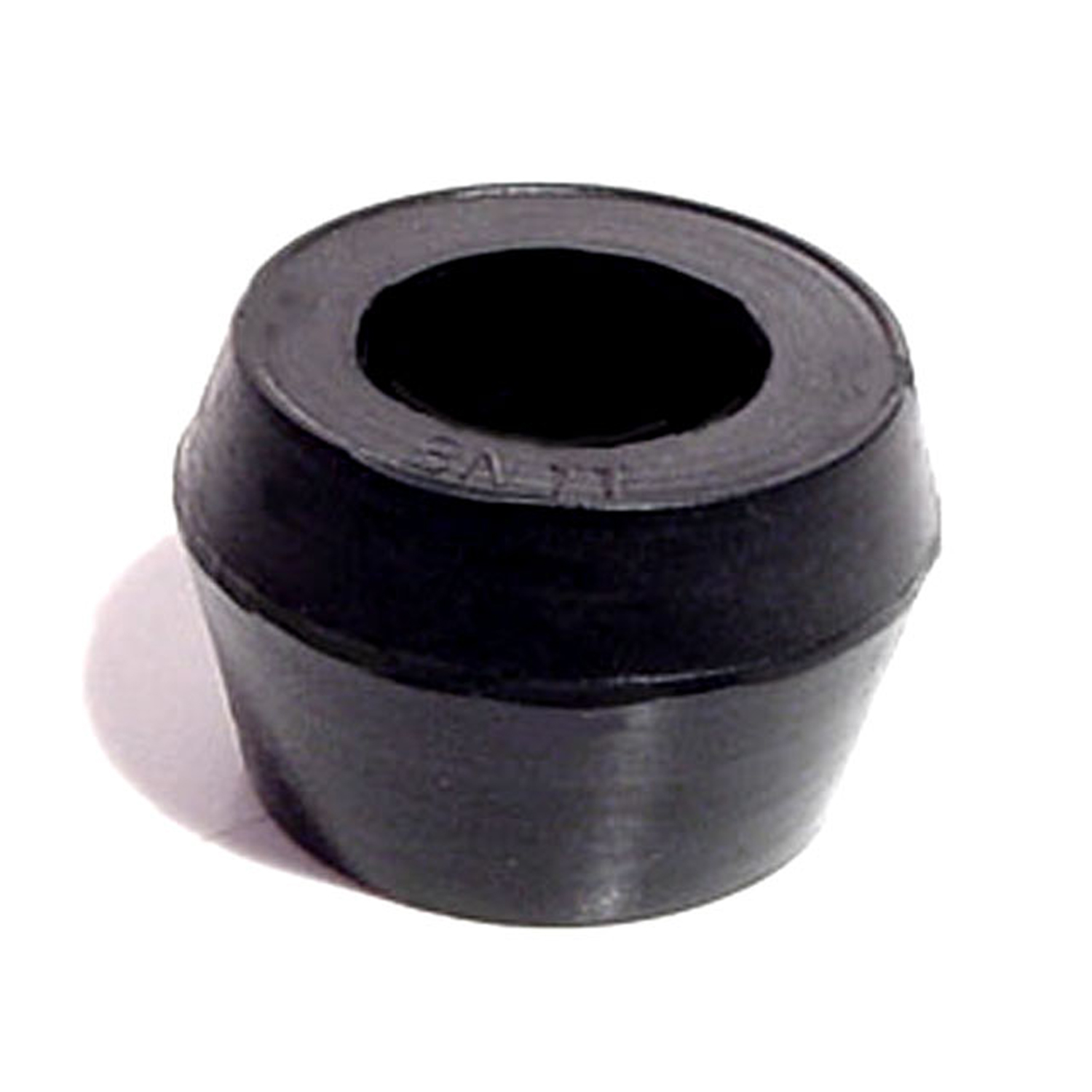 1965 Jeep J-3800 Shock Absorber Grommet. 1" bottom O.D-BN 11Shock Absorber Grommet. 1" bottom O.D., 3/4" high, with 5/8" I.D. Each
Why Choose Metro?
For over 100 years, Metro Moulded Parts has been the pinnacle of quality in classic car restoration parts. Our commitment to precision and authenticity in every component ensures a perfect fit and an OEM-level appearance.
- Expert Craftsmanship & Quality: Each part is a testament to our dedication to reliability and perfection, crafted from original designs and thoroughly tested.
- Advanced Technology: We use cutting-edge techniques to create flawless, long-lasting parts that surpass others in performance.
- SuperSoft Sponge – The Ultimate Door Seal: Not only are our door seals 30% softer than competitors', but they're also guaranteed to never leak. They effectively reduce wind and road noise, enhancing your classic car's comfort and driving experience.
- Proudly American: Our parts are a product of American craftsmanship, made in the USA with a spirit of excellence and heritage.
- Unrivaled Warranty: We back our products with a 30-year industry-leading warranty, a testament to our confidence in their quality.
Join us in preserving the legacy of classic cars with parts that are crafted for perfection, not just made.