

Image of 1966 Jeep Cj3, Note: These illustrations use artistic license and may differ from actual historical models.
Performance Metrics
Fundamental Metrics
Emotional Appeal
MMP Rating
| Engine Specifications | |
|---|---|
| Engine: | Inline 4-cylinder engine |
| Displacement: | 134 cu in (2.2 L) |
| Horsepower: | 60-75 hp |
| Torque: | 114 lb-ft |
| Compression Ratio: | 7.5:1 |
| Ignition System: | Distributor and coil |
| Cooling System: | Liquid-cooled |
| Performance Specifications | |
| 0-60 Time: | Estimated 20-25 seconds |
| 1/4 Mile Time: | Not available |
| Top Speed: | 60-65 mph |
| Transmission and Drive | |
| Drive Type: | 4WD |
| Transmission Type: | 3-speed manual |
| Fuel and Efficiency | |
| Fuel System Type: | Carburetor |
| MPG: | 15-20 mpg |
| Dimensions and Brakes | |
| Brakes: | Drum brakes |
| Wheelbase: | 80 inches |
| Weight: | 2200 lbs |
Note: Specifications for classic cars are given to the best of our ability, considering the limited and variant data available.
1966 Jeep CJ-3B: The High-Hood Jeep
The 1966 Jeep CJ-3B looks like a familiar postwar Jeep until you notice its unusually tall hood. That raised front end is more than a styling quirk: it made room for the taller F-head engine, giving this compact 4x4 a practical mechanical upgrade while preserving the simple, go-anywhere character that made the Jeep name famous.
One naming note: “CJ-3” is often used informally, but the 1966 model is the CJ-3B. Willys-Overland introduced the CJ-3B in 1953, and by 1966 it was being built under Kaiser Jeep, following Kaiser’s acquisition of Willys-Overland. The CJ-3B remained in production through 1968 in the United States, with related versions assembled under license in other countries for much longer.
The CJ-3B carried the civilian Jeep idea into a new era. Its roots reached back to the military Jeep of World War II, but it was designed for civilian work, recreation, and travel. A memorable distinction came from its engine packaging: the raised hood allowed the F-head engine’s overhead intake valves to fit, while the exhaust valves remained in the block. That small engineering change gave the 3B more breathing capacity than earlier flathead-powered CJ models.
High Hood, Honest Utility
The CJ-3B’s exterior is all function, with a little charm added by its proportions. Its upright seven-slot grille, round headlamps, flat fenders, exposed hinges, and squared-off body panels make it unmistakably Jeep. The hood rises noticeably above the fenders, giving the front end a taller profile than the CJ-3A. A fold-down windshield, simple bumpers, and exposed spare tire reinforced its utility-vehicle character.
Inside, the cabin is sparse and easy to clean. Painted steel forms much of the dash and body, while simple vinyl upholstery covers the seats. The instruments and controls are straightforward, with little in the way of trim or sound insulation. Buyers could outfit the Jeep with accessories such as a heater, windshield wipers, mirrors, and weather equipment, but the basic cabin remained intentionally uncomplicated.
Period paint choices varied by year and market. Commonly seen colors include shades of red, blue, green, yellow, white, and black. Red and bright yellow examples are especially eye-catching today, though a correct original color depends on the vehicle’s build details. As with any vintage Jeep, check the body and paint codes or reliable period documentation before assuming a color is original.
The iconic body style was the open two-door utility body, typically paired with removable soft-top equipment and side curtains. The windshield folded forward, and owners could adapt the Jeep to changing weather with available tops and other accessories. Equipment and body options varied, so not every surviving CJ-3B will have the same top, seats, or trim.
Why the CJ-3B Mattered
The CJ-3B was an important step in the evolution of the civilian Jeep because it updated the powertrain without abandoning the compact, rugged layout that defined the line. Its F-head “Hurricane” four-cylinder engine used overhead intake valves to improve breathing compared with the earlier L-head design. The higher hood was the visible result of that engineering decision.
Its basic formula also helped establish expectations for later recreational 4x4s: short wheelbase, a transfer case with low range, solid axles, simple bodywork, and a cabin that could be opened to the elements. The CJ-3B did not invent the four-wheel-drive utility vehicle, but it demonstrated how a practical workhorse could also serve as a versatile leisure vehicle. Its influence is visible throughout the later CJ family and in the broader market for compact 4x4s.
What set the 3B apart from many contemporaries was its mix of genuine off-road hardware and relatively uncomplicated construction. It was not a refined road car dressed up as an off-roader. It was a light, short, mechanically direct 4x4 designed to tackle rough ground, farm tracks, and work sites.
Engine, Speed, and Trail Manners
Most 1966 CJ-3Bs used Willys’ 134-cubic-inch (2.2-liter) F-head “Hurricane” inline-four. Period specifications commonly list output at about 75 horsepower and 114 lb-ft of torque, though published figures and equipment can differ by market. Power went through a three-speed manual transmission and a two-speed transfer case to selectable four-wheel drive. A low-range gear and solid axles made the Jeep far more capable off pavement than its modest engine figures suggest.
Expect a top speed in the neighborhood of 60 to 65 mph in a mechanically sound example with suitable gearing and tires. Acceleration was leisurely: a 0-to-60-mph run could take roughly 25 to 30 seconds, and some Jeeps may be slower depending on condition, axle ratio, tire size, and load. These are useful real-world estimates, not modern-style performance guarantees. The CJ-3B was built to pull and climb, not to win a drag race.
On rough tracks, the short wheelbase and low-range gearing are assets. The Jeep can pick its way over obstacles with a level of control that a heavier road vehicle cannot match. On pavement, the same short wheelbase, narrow stance, and simple suspension make it feel busy over bumps. Steering can demand attention, especially on worn components or rutted roads, and crosswinds can push the light body around. Winding roads are best taken at a measured pace.
Behind the wheel, the experience is direct and mechanical. The four-cylinder engine sounds purposeful rather than fast, and the driver feels the drivetrain working through the floor and controls. The ride is firm, the cabin is noisy, and shifting takes an involved hand. In return, the driver gets excellent visibility, a close connection to the terrain, and the satisfaction of operating a machine with very little between the driver and the road.
Living With a 1966 CJ-3B
Today, CJ-3Bs are used as trail rigs, farm and property vehicles, restoration projects, parade vehicles, and show cars. Some owners drive them regularly, but their modest cruising speed and limited comfort make them less suitable for long highway commutes than a modern vehicle. A well-preserved example can still be enjoyable for local trips and scenic back roads.
Mechanical simplicity is one of the Jeep’s greatest ownership advantages. The engine, gearbox, transfer case, and axles are generally understandable to an experienced home mechanic, and parts support for the CJ family remains strong. Routine jobs such as servicing the ignition, brakes, and drivetrain are relatively straightforward. However, old does not mean maintenance-free: steering and brake systems, wiring, fuel lines, cooling, and suspension all deserve careful inspection.
Rust and improvised repairs are common concerns. Check the frame, body mounts, floor, hat channels beneath the body, and areas around the windshield and fenders. Also inspect the steering play, axle seals, transfer-case leaks, and condition of the electrical system. A Jeep that has been repaired repeatedly with mismatched parts may need more work than its simple design first suggests.
Jeep CJ-3B Facts and Myths
The raised hood is the model’s signature feature and the easiest way to distinguish a CJ-3B from the lower-hood CJ-3A. It was a practical clearance solution for the F-head engine, not merely a styling flourish. The design earned the 3B the familiar “high-hood” nickname.
The CJ-3B also had a life beyond the United States. Related versions were produced or assembled overseas, including licensed Jeeps that served local civilian and military markets. The M606, for example, was a militarized export version based on the CJ-3B platform. These international derivatives extended the design’s working life well beyond the end of U.S. production.
There is no widely recognized production speed or sales record associated with the CJ-3B. Its notable achievement is durability and longevity: the design continued in production in some overseas markets after the U.S.-built model had ended. Celebrity ownership claims are often repeated online, but individual stories should be verified rather than treated as established history.
Common criticisms are easy to understand. The cabin is cramped, weather protection is limited, highway performance is modest, and the ride can be rough. Steering and braking feel dated by modern standards. Those drawbacks are part of the bargain: the CJ-3B favors mechanical simplicity and off-road usefulness over comfort, speed, and refinement.
Collector Value and Availability
Willys produced approximately 155,000 CJ-3Bs in total from 1953 through 1968. That figure covers the full U.S. production run, not just 1966, and surviving examples vary greatly in condition. A 1966 model is not exceptionally rare by classic-vehicle standards, but clean, original examples are less common than heavily modified or worn Jeeps.
As a broad U.S. market estimate, a project-grade CJ-3B may sell for around $5,000 to $12,000. A usable, presentable driver often falls in the $12,000 to $25,000 range, while a high-quality restoration or unusually original example can reach roughly $25,000 to $40,000 or more. Exceptional vehicles, unusual documented variants, and strong local demand can push prices beyond those guideposts. Condition, originality, paperwork, and the quality of the restoration matter more than the model year alone.
Values have generally strengthened as interest in early 4x4s has grown, particularly for solid, correctly restored examples. The market is not immune to changing collector tastes, and modified Jeeps may be valued differently from original ones. A well-documented CJ-3B with sound metal and correct mechanical components is usually the safer collector proposition than a shiny restoration hiding structural repairs.
A Small Jeep With a Big Legacy
The 1966 Jeep CJ-3B combines a distinctive high hood, a practical four-cylinder engine, and straightforward four-wheel-drive hardware in a package that feels unmistakably old-school. It is not fast or polished, but it is capable, repairable, and full of character. More than a compact utility vehicle, the CJ-3B is a reminder that clever engineering and honest simplicity can leave a lasting mark on automotive history.
1966 Jeep Cj3 Catalog of Parts
 1966 Jeep CJ3 Shock Absorber Grommet. 1" bottom O.D-BN 11Shock Absorber Grommet. 1" bottom O.D., 3/4" high, with 5/8" I.D. Each
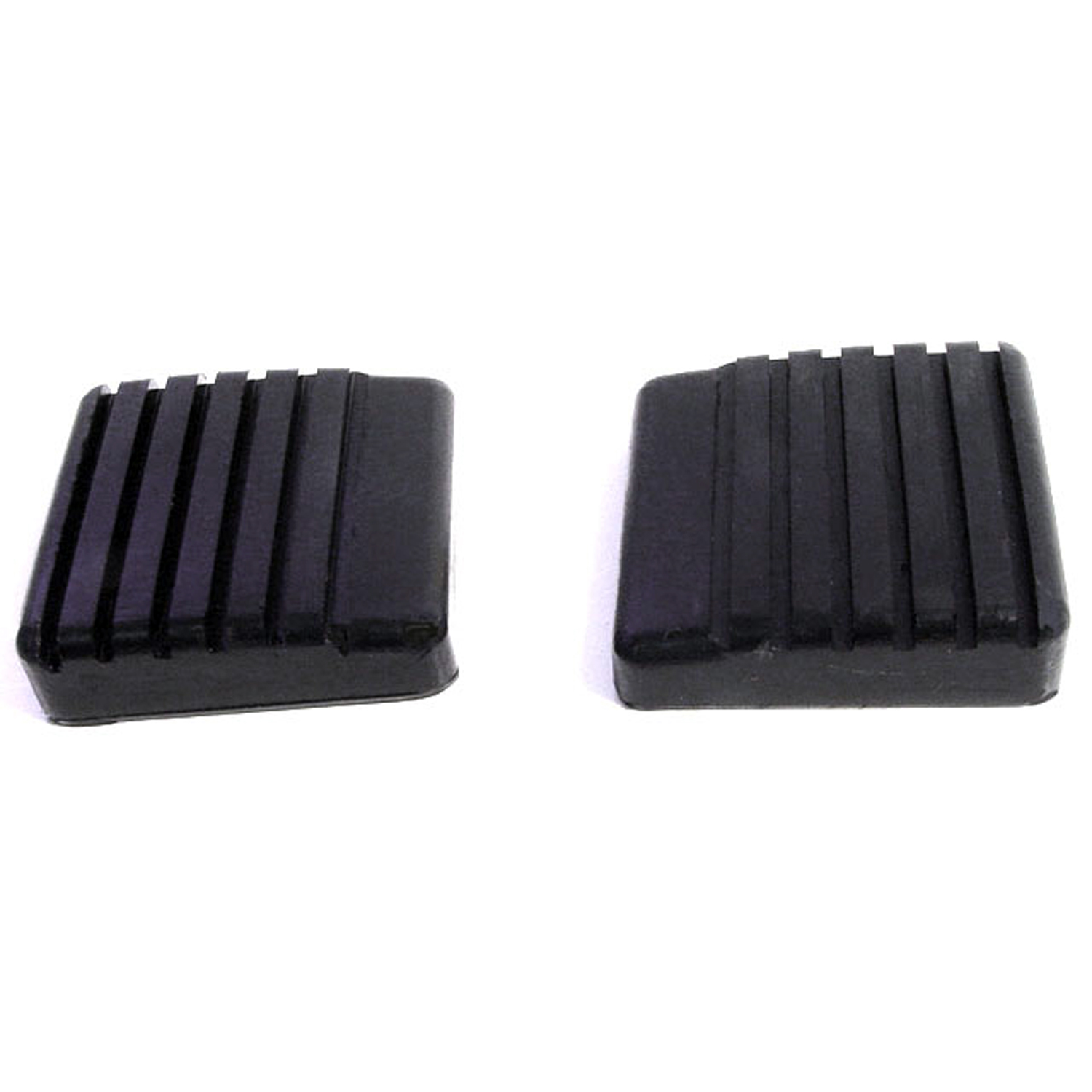 1966 Jeep CJ3 Clutch and Brake Pedal Pads. Pair-CB 61-BClutch and Brake Pedal Pads. Pair
 1966 Jeep CJ3 Dust Boot. For vehicles with power take off. Each-RP 34-JDust Boot. For vehicles with power take off. Each
Why Choose Metro?
For over 100 years, Metro Moulded Parts has been the pinnacle of quality in classic car restoration parts. Our commitment to precision and authenticity in every component ensures a perfect fit and an OEM-level appearance.
- Expert Craftsmanship & Quality: Each part is a testament to our dedication to reliability and perfection, crafted from original designs and thoroughly tested.
- Advanced Technology: We use cutting-edge techniques to create flawless, long-lasting parts that surpass others in performance.
- SuperSoft Sponge – The Ultimate Door Seal: Not only are our door seals 30% softer than competitors', but they're also guaranteed to never leak. They effectively reduce wind and road noise, enhancing your classic car's comfort and driving experience.
- Proudly American: Our parts are a product of American craftsmanship, made in the USA with a spirit of excellence and heritage.
- Unrivaled Warranty: We back our products with a 30-year industry-leading warranty, a testament to our confidence in their quality.
Join us in preserving the legacy of classic cars with parts that are crafted for perfection, not just made.