

Image of 1966 Jeep Dispatcher, Note: These illustrations use artistic license and may differ from actual historical models.
Performance Metrics
Fundamental Metrics
Emotional Appeal
MMP Rating
| Engine Specifications | |
|---|---|
| Engine: | Inline-4 |
| Displacement: | 134 cu in (2.2 L) |
| Horsepower: | 60-75 hp |
| Torque: | 114 lb-ft |
| Compression Ratio: | 7.0:1 |
| Ignition System: | Battery and Coil |
| Cooling System: | Liquid-cooled |
| Performance Specifications | |
| 0-60 Time: | Not available due to the vehicle's age and purpose |
| 1/4 Mile Time: | Not available due to the vehicle's age and purpose |
| Top Speed: | 55-60 mph |
| Transmission and Drive | |
| Drive Type: | Rear-wheel drive (4x2) |
| Transmission Type: | 3-speed manual |
| Fuel and Efficiency | |
| Fuel System Type: | Carburetor |
| MPG: | 18-20 mpg |
| Dimensions and Brakes | |
| Brakes: | Drum brakes |
| Wheelbase: | 81 in |
| Weight: | 2,337 lbs |
Note: Specifications for classic cars are given to the best of our ability, considering the limited and variant data available.
1966 Jeep Dispatcher: The Mail Jeep That Went Its Own Way
The 1966 Jeep Dispatcher looks like a small delivery van, but underneath its purposeful body is a very different kind of Jeep: rear-wheel drive, right-hand drive, and built to make frequent stops rather than climb trails. Manufactured by Kaiser Jeep, the Dispatcher was designed for commercial work, with the U.S. Postal Service as its most recognizable customer. Its distinctive role made it one of the most memorable working Jeeps of the 1960s.
The Dispatcher name covered a family of two-wheel-drive Jeeps. The 1966 DJ-5 was an early model in the DJ-5 series, which followed the smaller DJ-3A. Its most famous assignment was delivering mail from the curb, a job that favored an easy-to-reach mailbox and a compact footprint over four-wheel-drive capability. That practical brief helped give the DJ-5 its unusual right-hand-drive layout and made it a familiar sight on American streets.
Utilitarian Jeep Design
The DJ-5 has a squared-off, forward-looking shape that is all business. Its upright windshield, flat hood, round headlights, simple grille, and pronounced front fenders give it a clear family resemblance to other Jeeps of the era. The enclosed body adds a boxy cargo area behind the cab, with broad side panels that were ideal for fleet lettering and offered little distraction from the vehicle’s working purpose.
Postal versions were generally configured with the driver’s seat on the right, placing the carrier closer to the curb and mailboxes. Body details could vary with the fleet or customer specification, including window arrangements and door equipment. The signature configuration, however, was the enclosed delivery body rather than a pickup bed or open-top recreational layout.
Inside, the Dispatcher was plainly finished. Expect painted metal surfaces, basic instrumentation, durable upholstery, and controls chosen for straightforward operation rather than luxury. Vinyl seating and hard-wearing trim suited repeated daily use. The high, upright seating position and broad windows helped the driver see out while maneuvering through neighborhoods, though the cabin was not especially spacious or quiet by modern standards.
Technology was similarly practical. The DJ-5 used conventional mechanical components that could be serviced without specialized electronic equipment. Its simple dashboard and rugged construction were advantages for fleet operators, while its right-hand-drive setup was a purpose-built solution to the mail carrier’s daily routine. White was especially associated with postal service examples, often carrying official markings or blue accents. Paint choices on other commercial vehicles depended on the original buyer, so surviving examples may appear in different fleet or later-owner colors.
What Made the DJ-5 Different
The key distinction was not a breakthrough engine or luxury feature. It was the way the whole vehicle was tailored to a job. The Dispatcher combined Jeep-style toughness with a delivery van body and a curbside-friendly driving position. Unlike the familiar four-wheel-drive CJ models, the DJ-5 sent power to the rear wheels only. That reduced complexity and made sense for pavement-based mail routes, where low-speed maneuverability and ease of service mattered more than trail traction.
The DJ-5 also represents an important chapter in the shift toward purpose-built delivery vehicles. Rather than adapting an ordinary car or truck to postal work, the Dispatcher was designed around the daily needs of a carrier. Its familiar silhouette became part of the American neighborhood landscape, and its mail-service role helped establish the “mail Jeep” as a lasting image. The series continued through multiple generations before postal fleets moved on to later specialized vehicles, including the Grumman LLV.
One especially distinctive detail is that the postal layout put the steering wheel on the right even though the vehicle was built for American roads. That arrangement let a carrier reach roadside mailboxes without repeatedly climbing out. It is a small piece of engineering with a big effect on how the vehicle looks and feels today.
Engine, Speed, and Road Manners
A typical 1966 DJ-5 was powered by Jeep’s 134-cubic-inch, or 2.2-liter, F-head four-cylinder engine, commonly known as the Hurricane. It was paired with a three-speed manual transmission. Exact output figures can vary by source and specification, but the engine was designed for steady low-speed work, not quick acceleration. The two-wheel-drive layout and relatively simple drivetrain were well suited to delivery service.
Factory performance figures for individual postal configurations are difficult to pin down. As a practical estimate, a sound, lightly loaded example may reach roughly 60 to 65 mph, with some vehicles capable of more depending on gearing, condition, and setup. A 0-to-60-mph run is likely to take well over 20 seconds, and perhaps around 25 to 30 seconds. These are estimates, not guaranteed factory test results. A loaded Dispatcher or one with tired mechanicals will feel slower still.
On the road, the DJ-5 rewards patience. The engine gives a modest, hardworking four-cylinder note, while the manual gearbox asks the driver to make deliberate shifts. Steering and braking feel mechanical compared with a modern vehicle, and the upright body catches crosswinds more than a low passenger car. Its solid-axle, leaf-spring setup is durable but can feel firm over potholes and sharp bumps. On winding roads, it is best driven smoothly and at sensible speeds rather than hustled through corners.
The driving experience is part of the appeal. You sit high, look out over the flat hood, and feel closely connected to the vehicle’s simple controls. It is not quick, quiet, or especially refined. It is a compact work tool with a characterful engine note and a clear sense of purpose.
Living With a Jeep Dispatcher
Today, the DJ-5 is more likely to be a weekend classic, parade vehicle, promotional rig, or showpiece than a daily driver. Some owners still use them for light local errands or property work, but modern traffic and safety expectations make regular commuting less appealing. The right-hand-drive arrangement also takes adjustment, especially when navigating intersections or passing on two-lane roads.
Mechanical simplicity is a strong ownership advantage. The engine, transmission, and many chassis systems are conventional enough for an experienced home mechanic to understand. Routine maintenance includes keeping up with ignition and fuel-system service, checking brakes and steering components, and inspecting the body and frame for corrosion. Parts availability varies: some mechanical items are shared with other Jeep models or are obtainable through specialist suppliers, while unique body panels, trim, and postal-specific pieces can take more searching.
Condition matters more than a shiny coat of paint. Check the frame, floor, body mounts, and lower panels for rust, and inspect the steering and braking systems carefully. A former fleet vehicle may have seen years of stop-and-go use, so a thorough mechanical inspection is essential before purchase.
Mail Jeep Trivia and Common Complaints
The Dispatcher is often casually called a “mail truck,” but it is more accurately a compact delivery Jeep. Its right-hand-drive configuration is the feature most people notice first, while its rear-wheel drive is the detail that surprises Jeep enthusiasts expecting a four-wheel-drive system.
There is no widely established 1966 model-year production total that can be treated as definitive. Fleet orders and variations in how production figures are recorded make an exact count difficult to verify. A reasonable but unofficial estimate is that production for the year was in the low thousands, perhaps around 2,000 to 5,000 vehicles. That is a broad estimate, not a confirmed factory figure. Many were used hard in commercial service, which helps explain why sound examples are less common than the original production might suggest.
No widely documented speed or endurance record defines the 1966 Dispatcher. Its achievement was practical rather than glamorous: serving in large-scale delivery work with a layout purpose-built for curbside mail service. The familiar criticisms are easy to understand. Owners point to modest acceleration, limited cabin comfort, a firm ride, wind sensitivity, and the challenges of driving a right-hand-drive vehicle in modern traffic. Those drawbacks are also reminders that the DJ-5 was engineered for a specific job, not as a general-purpose family vehicle.
Collector Value and Rarity
Values depend heavily on completeness, rust, mechanical condition, and whether the vehicle retains its original postal details. As a rough current-market guide, a project or heavily worn example might sell for about $2,000 to $5,000. A usable driver could fall in the $6,000 to $12,000 range, while a well-restored, properly presented example may reach roughly $15,000 to $25,000 or more. These are estimates, and regional demand can make a substantial difference.
The DJ-5 is not rare in the sense of having been built in tiny numbers, but surviving examples in good condition are uncommon. Many spent decades in hard fleet service, and some were modified or scrapped after retirement. The market is specialized: postal-vehicle enthusiasts, Jeep collectors, and buyers drawn to unusual commercial vehicles are more likely to appreciate one than a general classic-car shopper.
Interest has generally strengthened as collectors seek distinctive vehicles with clear working histories, but the Dispatcher remains a niche collectible. Clean, original examples are likely to hold attention better than incomplete projects. Its value is tied as much to its recognizable mail-service identity as to its mechanical specification.
Why the 1966 Dispatcher Still Matters
The 1966 Jeep Dispatcher was not built to be fast, plush, or trail-ready. It was built to carry out a daily job with practical efficiency, and its right-hand-drive layout, compact dimensions, and enclosed delivery body made it unusually well suited to postal routes. Simple mechanicals helped keep it serviceable, while its distinctive profile turned an ordinary work vehicle into an American icon.
For collectors, the DJ-5 offers something different from the more familiar four-wheel-drive Jeeps: a piece of working history with a memorable shape and a story visible in every detail. It may have spent its life stopping at mailboxes, but today it delivers something else: a vivid reminder that the best-designed vehicles are often the ones built to do one job exceptionally well.
1966 Jeep Dispatcher Catalog of Parts
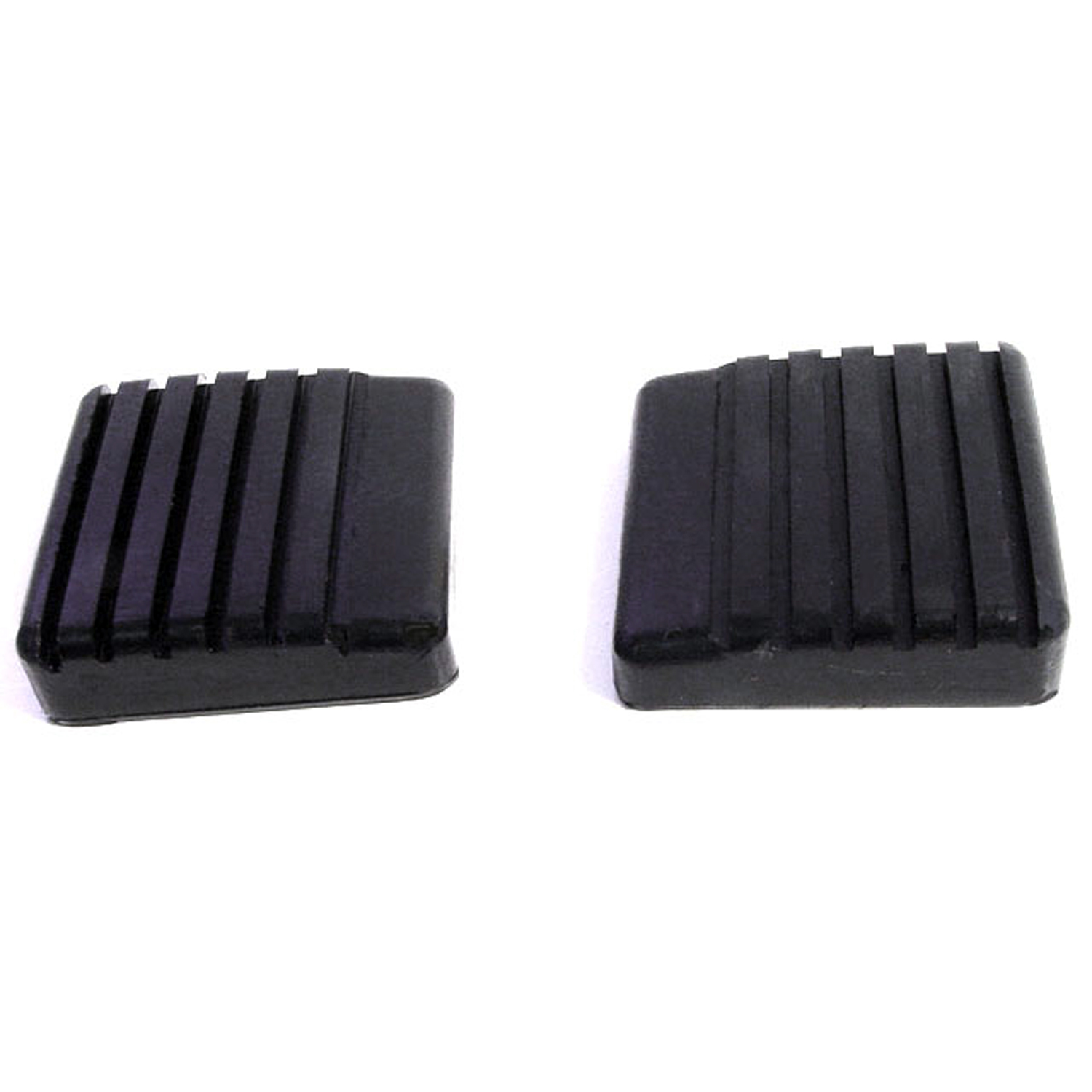 1966 Jeep Dispatcher Clutch and Brake Pedal Pads. Pair-CB 61-BClutch and Brake Pedal Pads. Pair
Why Choose Metro?
For over 100 years, Metro Moulded Parts has been the pinnacle of quality in classic car restoration parts. Our commitment to precision and authenticity in every component ensures a perfect fit and an OEM-level appearance.
- Expert Craftsmanship & Quality: Each part is a testament to our dedication to reliability and perfection, crafted from original designs and thoroughly tested.
- Advanced Technology: We use cutting-edge techniques to create flawless, long-lasting parts that surpass others in performance.
- SuperSoft Sponge – The Ultimate Door Seal: Not only are our door seals 30% softer than competitors', but they're also guaranteed to never leak. They effectively reduce wind and road noise, enhancing your classic car's comfort and driving experience.
- Proudly American: Our parts are a product of American craftsmanship, made in the USA with a spirit of excellence and heritage.
- Unrivaled Warranty: We back our products with a 30-year industry-leading warranty, a testament to our confidence in their quality.
Join us in preserving the legacy of classic cars with parts that are crafted for perfection, not just made.