

Image of 1966 Jeep Fc170, Note: These illustrations use artistic license and may differ from actual historical models.
Performance Metrics
Fundamental Metrics
Emotional Appeal
MMP Rating
| Engine Specifications | |
|---|---|
| Engine: | Super Hurricane Inline 6 |
| Displacement: | 226 cubic inches |
| Horsepower: | Estimated 105 hp |
| Torque: | 190 lb-ft |
| Compression Ratio: | Estimated 7.5:1 |
| Ignition System: | Distributor and coil |
| Cooling System: | Liquid-cooled |
| Performance Specifications | |
| 0-60 Time: | Not available due to the vehicle's age and purpose |
| 1/4 Mile Time: | Not available due to the vehicle's age and purpose |
| Top Speed: | 60-65 mph |
| Transmission and Drive | |
| Drive Type: | 4WD |
| Transmission Type: | 3-speed manual |
| Fuel and Efficiency | |
| Fuel System Type: | Carburetor |
| MPG: | Estimated 10-12 mpg |
| Dimensions and Brakes | |
| Brakes: | Drum brakes |
| Wheelbase: | 103.5 inches |
| Weight: | 3,500 lbs |
Note: Specifications for classic cars are given to the best of our ability, considering the limited and variant data available.
1966 Jeep FC-170: The Cab-Over Workhorse
With its cab perched directly above the front wheels and its short, blunt nose facing traffic, the Jeep FC-170 looks less like a conventional pickup than a miniature work truck from the future. The FC stood for “Forward Control,” a design that gave this rugged four-wheel-drive truck a surprisingly long bed without requiring a long overall body.
Built by Willys Motors, later part of Kaiser Jeep, the FC-170 was the heavier-duty member of the company’s Forward Control family. The trucks were designed by industrial designer Brooks Stevens and produced in Toledo, Ohio. They were intended for farms, utility companies, municipalities, and businesses that needed serious capability in a compact footprint.
One detail matters for anyone researching a “1966” example: FC production is generally listed as ending in 1965. A truck titled or advertised as a 1966 may have been registered that year, or its paperwork may reflect a different date convention. Check the serial number, title, and production records before treating it as a distinct 1966 model-year version.
Cab-Over Style and Practical Details
The FC-170’s shape is its calling card. The cab sits over the engine and front axle, leaving no long hood to interrupt the view ahead. A broad windshield, upright sides, rounded roof corners, and simple front panel give it a purposeful, almost industrial look. Its short front overhang also helps make the truck feel compact for its carrying capacity.
Inside, the FC-170 is work-truck simple. Expect a wide bench seat, basic gauges, large practical controls, and painted metal surfaces rather than decorative trim. Vinyl upholstery was suited to hard use and easy cleanup. The driving position is high and forward, with a commanding view of the road, though the engine cover intrudes into the cab and adds heat and noise.
Power came from a 226-cubic-inch “Super Hurricane” inline-six, a flathead engine producing roughly 115 horsepower in commonly cited specifications. A manual transmission was standard, with transmission and gearing details varying by configuration. Four-wheel drive, heavy-duty axles, and available power takeoff equipment made the FC-170 much more than a low-cost pickup. Its technology was practical rather than luxurious: the innovation lay in how its cab, chassis, and drivetrain were packaged.
Factory colors varied by year and application. Buyers could choose from period passenger-car colors, while commercial customers often ordered fleet colors suited to their business. Red, blue, green, cream, and other solid shades are frequently seen on surviving trucks, but no single color defines the FC-170. The most recognizable body style is the pickup, while chassis-cab, stake-bed, platform, dump, and other specialty configurations served commercial and municipal operators. Dual rear wheels were available for heavier-duty work.
Why Forward Control Mattered
The FC-170 was part of a mid-century push to make trucks more compact without sacrificing utility. Its cab-over layout moved the driver forward and freed up space for cargo, giving operators a useful bed in a vehicle that was shorter overall than a conventional pickup of similar capacity. That packaging made it attractive in crowded work yards, on farms, and on narrow roads.
It was not the first cab-over truck, and it did not replace traditional pickups. Its significance is in how confidently Jeep adapted the layout to a four-wheel-drive utility vehicle. The FC combined a compact cab-over body with the kind of rugged chassis and traction that had established Jeep’s reputation. Today, its influence is most visible in the continued appeal of cab-over commercial vehicles and in the classic-truck world’s appreciation for purpose-built, space-efficient designs.
Compared with its contemporaries, the FC-170 stood out for its forward driving position, short overall length, and ability to be configured for specialized work. It was less comfortable and less refined than a conventional pickup, but it offered a distinctive solution to the needs of buyers who valued access, capacity, and traction over quiet cruising.
Performance, Speed, and Road Manners
The FC-170 was built to haul and work, not to win stoplight contests. With its 226-cubic-inch six and work-oriented gearing, a healthy truck might reach roughly 60 to 65 mph. A 0-to-60-mph time of around 25 to 30 seconds is a reasonable estimate, not a guaranteed factory figure. Actual performance depends heavily on axle ratios, transmission, tire size, load, and mechanical condition. Many examples are happiest at moderate speeds.
On rough ground, the truck’s solid axles and heavy-duty suspension deliver the toughness owners expect, but the ride can feel firm and busy when the vehicle is unloaded. The high cab and upright body are more noticeable in crosswinds than a modern pickup. On winding roads, the FC-170 rewards steady inputs and sensible speeds rather than aggressive driving.
Behind the wheel, the experience is direct and unmistakably old-school. The inline-six produces a steady mechanical rumble, while engine noise and heat come through the cab because the powerplant sits beneath it. The steering, braking, and controls feel more physical than those of a modern truck. You sit close to the front of the vehicle, look out over a broad windshield, and quickly understand why the FC’s unusual layout was useful to working drivers.
Living With an FC-170
Most FC-170s today are collector trucks, restoration projects, or occasional-use workhorses. They make memorable show vehicles, and a sound example can still handle light farm or property duties. Their compact footprint and distinctive cab-over silhouette make them especially appealing to enthusiasts who want a classic Jeep that is less common than a CJ or conventional pickup.
Mechanical work is generally approachable for an experienced home mechanic. The basic engine and drivetrain use familiar mid-century technology, and many repairs do not require modern diagnostic equipment. However, access to the engine is not as convenient as it is in a conventional truck because the cab sits over it. Parts availability can also be uneven: common service components may be manageable to source, while model-specific body, cab, glass, and trim pieces can take patience.
Before buying, inspect the frame, cab mounts, floors, and lower body closely for rust or poor repairs. Check the four-wheel-drive system, transmission, steering, brakes, and axle condition, and confirm that any specialized equipment works as intended. A complete, running truck is often a better starting point than a cheap project missing hard-to-find FC-specific parts.
FC-170 Trivia and Common Criticisms
The Forward Control design was created by Brooks Stevens, a prolific American industrial designer whose work ranged from vehicles to household products. The FC-170 was also remarkably adaptable: buyers could order trucks for everything from pickup duty to fleet and specialty work. That flexibility is part of the reason surviving examples vary so much from one another.
The FC-170 is not widely associated with a single celebrity owner, major speed record, or headline-grabbing competition victory. Its story is more closely tied to everyday commercial service. That working history is also a common challenge for collectors: many trucks spent decades on job sites, so original condition can be hard to find.
Owners and admirers often praise the FC’s visibility, capability, and unmistakable styling. Common complaints include a noisy, warm cab, modest highway performance, a firm ride, and the difficulty of finding certain body parts. Those drawbacks are part of the trade-off for a compact, heavy-duty truck with such an unusual layout.
Collector Values and Rarity
Exact production totals are difficult to pin down by configuration, but the FC family is commonly estimated at roughly 30,000 trucks across its production run. A reasonable broad estimate for FC-170 production is around 15,000 to 18,000, though figures vary and should be treated as approximations. Specialty versions and trucks with unusual factory equipment are less commonly encountered than standard pickups.
As a general U.S. market estimate for 2026, a rough project might sell for about $8,000 to $15,000. A running, presentable driver could fall around $18,000 to $35,000, while a carefully restored example may bring $40,000 to $60,000 or more. Condition, originality, documentation, body style, and the quality of any restoration can move a truck outside those ranges. These are broad estimates, not appraisals.
Values have generally benefited from growing interest in unusual classic trucks, but the FC-170 remains a niche collector vehicle. Good examples can be hard to find, while poor projects may sit on the market because restoration costs add up quickly. The strongest long-term prospects are likely to belong to complete, well-documented trucks with sound bodies and correct, functional drivetrains.
A Jeep Built for a Different Kind of Work
The FC-170 brought cab-over packaging, four-wheel-drive capability, and commercial versatility together in a truck that looked unlike almost anything else on American roads. It was noisy and deliberately basic, but its design solved a real problem for buyers who needed a capable work vehicle in a compact package.
That combination of utility and bold engineering is what keeps the Forward Control memorable. More than half a century later, the FC-170 still looks ready to pull into a work yard, take on a tough job, and turn every head along the way.
1966 Jeep Fc170 Catalog of Parts
 1966 Jeep FC170 Shock Absorber Grommet. 1" bottom O.D-BN 11Shock Absorber Grommet. 1" bottom O.D., 3/4" high, with 5/8" I.D. Each
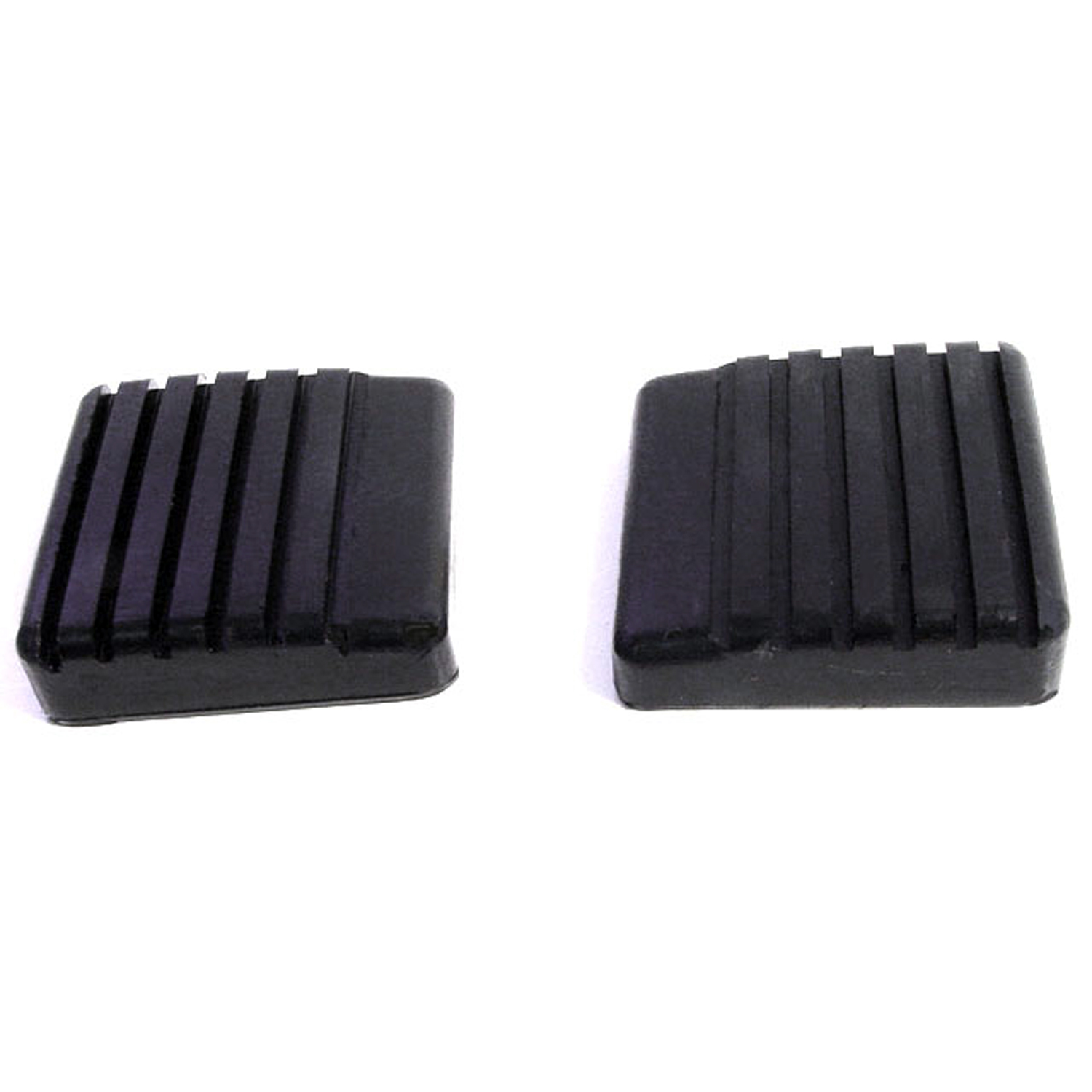 1966 Jeep FC170 Clutch and Brake Pedal Pads. Pair-CB 61-BClutch and Brake Pedal Pads. Pair
Why Choose Metro?
For over 100 years, Metro Moulded Parts has been the pinnacle of quality in classic car restoration parts. Our commitment to precision and authenticity in every component ensures a perfect fit and an OEM-level appearance.
- Expert Craftsmanship & Quality: Each part is a testament to our dedication to reliability and perfection, crafted from original designs and thoroughly tested.
- Advanced Technology: We use cutting-edge techniques to create flawless, long-lasting parts that surpass others in performance.
- SuperSoft Sponge – The Ultimate Door Seal: Not only are our door seals 30% softer than competitors', but they're also guaranteed to never leak. They effectively reduce wind and road noise, enhancing your classic car's comfort and driving experience.
- Proudly American: Our parts are a product of American craftsmanship, made in the USA with a spirit of excellence and heritage.
- Unrivaled Warranty: We back our products with a 30-year industry-leading warranty, a testament to our confidence in their quality.
Join us in preserving the legacy of classic cars with parts that are crafted for perfection, not just made.