

Image of 1966 Jeep Gladiator, Note: These illustrations use artistic license and may differ from actual historical models.
Performance Metrics
Fundamental Metrics
Emotional Appeal
MMP Rating
| Engine Specifications | |
|---|---|
| Engine Options: | Tornado 230 I6, Dauntless 350 V8 |
| Displacement Range: | 230-350 cu in (3.8-5.7 L) |
| Horsepower Range: | 140-165 hp |
| Torque: | 210-260 lb-ft |
| Compression Ratio: | 8.5:1 (I6), 8.4:1 (V8) |
| Ignition System: | Conventional, distributor |
| Cooling System: | Liquid-cooled |
| Performance Specifications | |
| 0-60 Time: | Estimated 15-20 seconds |
| 1/4 Mile Time: | Estimated 20-25 seconds |
| Top Speed: | 75-85 mph |
| Transmission and Drive | |
| Drive Type: | 4WD |
| Transmission Type: | 3-speed manual, 4-speed manual, 3-speed automatic |
| Fuel and Efficiency | |
| Fuel System Type: | Carburetor |
| MPG: | Estimated 10-15 mpg |
| Dimensions and Brakes | |
| Brakes: | Drum brakes, front and rear |
| Wheelbase: | 120 in (3,048 mm) |
| Weight: | 4,200-4,500 lbs |
Note: Specifications for classic cars are given to the best of our ability, considering the limited and variant data available.
1966 Jeep Gladiator: A Full-Size Pickup with Jeep DNA
The 1966 Jeep Gladiator brought the rugged character of a Jeep to a work-ready, full-size pickup, pairing a distinctive square-jawed design with genuine four-wheel-drive capability. Built by Kaiser Jeep, it belonged to the first generation of Gladiators introduced in 1962 and shared much of its engineering and styling with the Wagoneer SUV.
That shared foundation was a clever bit of automotive thinking. Rather than develop an entirely separate truck, Jeep adapted its new Wagoneer platform into a pickup with a broad range of wheelbases, drivetrains, and commercial configurations. One intriguing detail: the Gladiator was among the early pickups to offer independent front suspension, an unusual choice in a segment dominated by solid axles. It was a short-lived option, but it showed Jeep was willing to experiment as well as build for hard work.
Bold Lines and Practical Cab
The Gladiator’s styling is unmistakably mid-century Jeep. Its broad hood, upright windshield, flat-sided cab, and simple front grille give it a purposeful, almost architectural look. The front end closely echoes the Wagoneer, making the truck feel like part of a coordinated family rather than a conventional pickup wearing a different badge. Later enthusiasts often call the early design clean and restrained, especially compared with the more decorated trucks that followed.
Inside, the emphasis was on utility, not luxury. The cab was straightforward and roomy by truck standards, with a bench seat, durable upholstery, painted metal surfaces, and a simple instrument panel. Depending on equipment and trim, buyers could add comfort and convenience features, but the Gladiator’s cabin remained a working space. Today, that plainspoken layout is part of its appeal: there is little between the driver and the mechanical experience.
Factory paint choices varied by year, trim, and order, with period-appropriate colors including whites, reds, blues, greens, and earthy tones. White and red trucks are especially familiar in surviving examples, though original color should always be checked against the vehicle’s paint codes and documentation. A restored Gladiator in an unusual factory color can stand out at a show without looking out of place.
Buyers could choose between two-wheel drive and four-wheel drive, different wheelbases, and distinct bed designs. The Thriftside had pronounced rear fenders and a narrower, traditional pickup appearance. The Townside used a wider, smoother-sided bed. Shorter and longer chassis configurations suited different hauling needs, while cab-and-chassis versions could be fitted for commercial work. The Townside pickup is a particularly recognizable configuration, but four-wheel-drive examples in either bed style have strong enthusiast appeal.
Engineering That Mattered
The Gladiator’s significance goes beyond its handsome body. Sharing its basic platform with the Wagoneer helped Jeep create a truck that felt more integrated and modern than many pickups derived from older, separate designs. It combined passenger-car-like styling with available four-wheel drive and the tough hardware expected of a working vehicle.
Its optional independent front suspension was especially notable. Most pickups of the era used a solid front axle, valued for strength and simplicity. Independent suspension could offer a less jarring ride on suitable surfaces, although it was not the universal choice for Gladiator buyers. Jeep later returned to the more familiar solid-axle arrangement, which remains one reason restorers need to identify the exact configuration of an early truck before ordering parts.
The 1966 lineup is commonly associated with the 230-cubic-inch Tornado overhead-cam inline-six and the optional 327-cubic-inch Vigilante V8. The Tornado’s overhead-cam layout was an advanced feature for a truck engine of its day. Period power ratings were generally quoted using gross figures, so they should not be compared directly with modern net horsepower ratings.
Work-Truck Pace, Four-Wheel-Drive Grit
A Gladiator was built to carry loads and travel rough roads, not to win traffic-light contests. Exact performance depends on engine, gearing, tire size, transmission, and condition. As a broad period-style estimate, a six-cylinder truck might reach 60 mph in roughly 20 seconds or more, while a healthy V8 example could manage the run in around 15 to 18 seconds. Top speed is similarly configuration-dependent, but approximately 75 to 85 mph is a reasonable estimate for a well-maintained truck. Sustained high-speed cruising is not its natural assignment.
On pavement, the Gladiator feels substantial and deliberate. Steering is slower than in a modern pickup, and the truck’s size and solid-axle versions reward smooth inputs. Broken pavement can send a noticeable jolt through the chassis, particularly when the truck is unladen. On winding roads, its tall stance and work-truck suspension call for measured cornering rather than enthusiastic carving.
That character changes on dirt, snow, and uneven ground. Four-wheel drive gives the truck the traction to handle conditions that would stop many two-wheel-drive pickups of the period, while its straightforward mechanical layout suits remote work. From the cab, the six-cylinder has a steady, purposeful note; the V8 adds a deeper rumble. The driving experience is physical and direct: the driver feels the road, works the controls, and hears the machinery doing its job.
Living with a Gladiator
Today, 1966 Gladiators serve as weekend drivers, farm and ranch trucks, trail rigs, restoration projects, and show vehicles. Some owners keep them close to factory specification, while others upgrade brakes, steering, cooling, or drivetrain components for safer and more comfortable use. A carefully maintained example can be driven regularly, but it is still a nearly 60-year-old truck, and age-related repairs should be part of the ownership plan.
Routine mechanical work is generally approachable for an experienced home mechanic. The truck’s traditional construction is less intimidating than modern electronics-heavy vehicles, and many repairs involve familiar systems. The main challenge is often finding the correct parts for a specific year, engine, axle, suspension, or trim. Rust deserves careful inspection, especially around the cab, floor, bed, frame, and body mounts. Before buying, verify that the engine and drivetrain match the truck’s configuration or understand what has been changed.
Gladiator Facts and Common Criticisms
The Gladiator name did not last throughout the truck’s original production run. Jeep dropped the name after the early 1970s, continuing its full-size pickups under J-series designations. The original Gladiator line ultimately evolved into a long-running family of Jeep trucks, with the name later revived for the modern Jeep pickup.
There is no widely accepted record of 1966 Gladiators being used in a major speed or endurance competition. Their reputation rests instead on practical capability and their place in Jeep’s move toward a more modern, integrated utility vehicle. A frequent criticism today is that they can feel slow, noisy, and rough by current standards. That is fair: the Gladiator predates modern expectations for acceleration, ride isolation, and highway comfort. Its charm comes from being an honest working truck, not from pretending to be a contemporary one.
1966 Jeep Gladiator Values and Rarity
Model-year production figures broken down by engine, bed style, and drivetrain are not readily established in commonly available records, so any precise number should be treated cautiously. A reasonable best-guess range for total 1966 production is roughly 8,000 to 15,000 trucks, but that is an estimate, not a verified factory tally. Surviving examples are less common than mainstream pickups of the era, and unmodified, rust-free four-wheel-drive trucks are especially desirable.
As a broad 2026 collector-market guide, a project vehicle may sell for about $5,000 to $12,000, depending heavily on rust and completeness. A usable driver or older restoration often falls in the $12,000 to $30,000 range. A high-quality restoration, rare configuration, or particularly original example can bring approximately $30,000 to $60,000 or more. Exceptional trucks can exceed that range, while major rust, missing parts, or non-running condition can pull a price down sharply.
Values have generally strengthened as interest in vintage 4x4s and classic utility vehicles has grown, but condition and originality matter more than a simple year-by-year trend. Good examples are not always easy to find, and restoration costs can quickly surpass the value of a finished truck. Buyers should budget for the truck they want rather than assume every Gladiator is an inexpensive project.
A Classic Jeep Built to Earn Its Keep
The 1966 Jeep Gladiator blends Wagoneer-era styling, inventive engineering, and genuine pickup-truck usefulness. Its optional independent front suspension, distinctive cab, available Tornado six and Vigilante V8, and capable four-wheel-drive hardware set it apart from many rivals. It may not be quick or plush, but it has the proportions, mechanical honesty, and rugged personality that make a classic truck memorable. The Gladiator was built to work, and decades later, that remains its strongest selling point.
1966 Jeep Gladiator Catalog of Parts
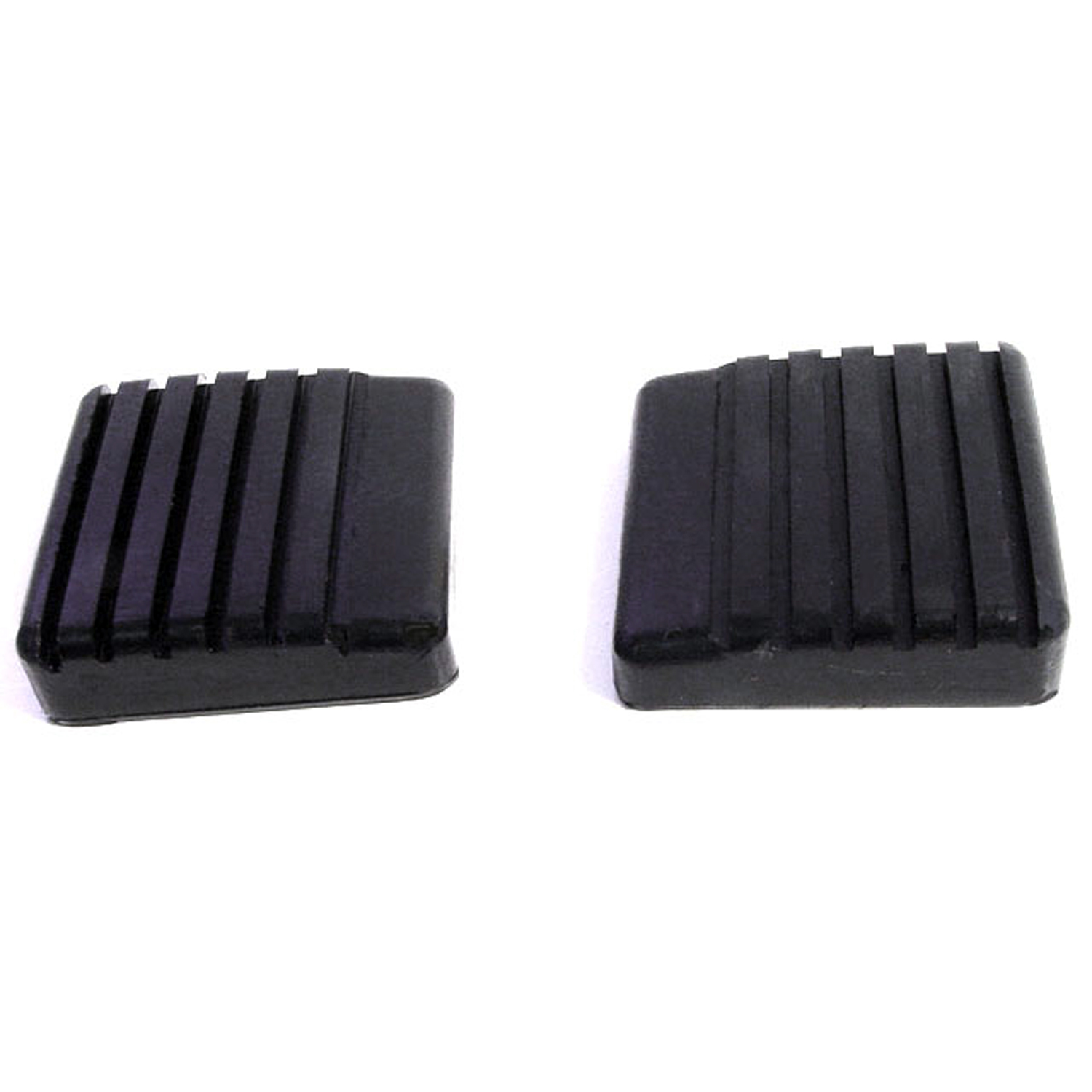 1966 Jeep Gladiator Clutch and Brake Pedal Pads. Pair-CB 61-BClutch and Brake Pedal Pads. Pair
Why Choose Metro?
For over 100 years, Metro Moulded Parts has been the pinnacle of quality in classic car restoration parts. Our commitment to precision and authenticity in every component ensures a perfect fit and an OEM-level appearance.
- Expert Craftsmanship & Quality: Each part is a testament to our dedication to reliability and perfection, crafted from original designs and thoroughly tested.
- Advanced Technology: We use cutting-edge techniques to create flawless, long-lasting parts that surpass others in performance.
- SuperSoft Sponge – The Ultimate Door Seal: Not only are our door seals 30% softer than competitors', but they're also guaranteed to never leak. They effectively reduce wind and road noise, enhancing your classic car's comfort and driving experience.
- Proudly American: Our parts are a product of American craftsmanship, made in the USA with a spirit of excellence and heritage.
- Unrivaled Warranty: We back our products with a 30-year industry-leading warranty, a testament to our confidence in their quality.
Join us in preserving the legacy of classic cars with parts that are crafted for perfection, not just made.