

Image of 1966 Jeep J-100, Note: These illustrations use artistic license and may differ from actual historical models.
Performance Metrics
Fundamental Metrics
Emotional Appeal
MMP Rating
| Engine Specifications | |
|---|---|
| Engine: | AMC 327 cu in (5.4 L) V8 |
| Displacement: | 327 cu in (5.4 L) |
| Horsepower: | 250 hp |
| Torque: | 340 lb-ft |
| Compression Ratio: | 8.7:1 |
| Ignition System: | Conventional, distributor |
| Cooling System: | Liquid-cooled |
| Performance Specifications | |
| 0-60 Time: | Estimated 10 seconds |
| 1/4 Mile Time: | Estimated 17 seconds |
| Top Speed: | 100 mph |
| Transmission and Drive | |
| Drive Type: | 4WD |
| Transmission Type: | 3-speed manual, 4-speed manual, 3-speed automatic |
| Fuel and Efficiency | |
| Fuel System Type: | Carburetor |
| MPG: | Estimated 10-12 mpg |
| Dimensions and Brakes | |
| Brakes: | Drum brakes |
| Wheelbase: | 119 in (3,023 mm) |
| Weight: | 3,500 lbs |
Note: Specifications for classic cars are given to the best of our ability, considering the limited and variant data available.
1966 Jeep J-100: The Full-Size 4x4 That Worked for a Living
The 1966 Jeep J-100 was built for the kind of work that could end a lesser truck’s day: hauling a load, crawling across a rough jobsite, and heading home through weather that made the road disappear. It belonged to Jeep’s full-size Gladiator pickup family, introduced in 1962 by Willys Motors and continued under Kaiser Jeep. With rugged truck hardware and styling related to the Jeep Wagoneer, the J-series offered a distinctive mix of utility and comfort.
One detail worth knowing before shopping is that “J-100” is a less familiar designation in surviving period references than names such as J-200 and J-300. Jeep’s model names and series numbers changed over time, and modern listings sometimes apply them inconsistently. For a specific truck, check the identification plate, title, wheelbase, and original sales literature rather than relying on a badge or an online description alone.
The Gladiator’s unusual claim to fame was its engineering pedigree. It shared its basic platform with the Wagoneer, Jeep’s influential full-size sport utility vehicle, and offered the advanced-for-its-day Tornado overhead-cam six-cylinder engine. That combination made the truck more than a simple utility vehicle: it was a serious workhorse with some unusually modern thinking under its hood.
Gladiator Styling and Cabin Details
The J-100 wears the confident, squared-off shape that defines a classic American pickup. Its broad, nearly flat hood meets a wide front grille, while the upright windshield and tall cab give it a purposeful, easy-to-read silhouette. The proportions are substantial without being flashy. From the side, a long hood, straight beltline, and open cargo bed make the truck’s working purpose immediately clear.
Inside, the design is straightforward and durable. Expect a broad dashboard, simple gauges, a large steering wheel, and controls laid out for use with work gloves rather than for decoration. Materials were functional by modern standards, with painted metal and hard-wearing trim doing most of the work. A well-preserved example can feel charmingly honest, though age, sun exposure, and years of hard use often leave the upholstery, door panels, and dash showing their history.
Equipment varied with the original order. Buyers could find practical upgrades such as a heater, radio, upgraded trim, and, depending on configuration, power steering or power brakes. Four-wheel drive was a major draw, but not every truck was equipped the same way. Verify the drivetrain and options on the individual vehicle instead of assuming every J-series pickup is a 4x4.
Factory color availability depended on the year and trim, and today’s surviving trucks may have been repainted. Period Jeep pickups commonly appeared in work-friendly solid colors, including shades of white, blue, green, red, and earth tones. White and light colors are especially familiar on surviving examples, partly because fleet and commercial buyers favored practical finishes. Original paint codes and protected areas, such as the firewall or inside the cab, can help identify a truck’s first color.
The most recognizable body style is the conventional single-cab pickup with an open bed. Depending on the model and market, Jeep also offered different bed configurations and work-oriented equipment, while commercial buyers could order chassis-cab or specialized setups. The regular pickup is the version most collectors picture when they hear “Jeep Gladiator,” but a period-correct utility body or work conversion can be just as compelling.
Engineering That Set the J-Series Apart
The J-series stood apart from many pickups of its era by sharing its basic architecture with the Wagoneer. That gave Jeep a versatile platform that could serve as a family vehicle, a commercial truck, or a four-wheel-drive machine. The connection helped establish a template that became central to the modern SUV and pickup market: one robust vehicle family serving both everyday transport and demanding off-road use.
The Tornado 230-cubic-inch inline-six was a particularly notable feature. Its overhead-cam layout was unusual in an American truck of the period and reflected Jeep’s willingness to pursue engineering beyond the most conventional pushrod designs. A 327-cubic-inch Vigilante V8 was also available in the period J-series range, giving buyers a stronger option for hauling and highway work. Exact availability and specifications should be confirmed for the truck’s build date and market.
Jeep’s approach was not about plushness or speed. It was about offering useful capability in a full-size package, with four-wheel drive available for buyers who needed traction beyond paved roads. The J-series helped build Jeep’s reputation as a maker of practical, go-anywhere vehicles and anticipated the later popularity of pickups that combine everyday usability with off-road credentials.
Performance, Ride, and Road Manners
There is no single dependable factory 0-to-60-mph figure for every 1966 J-100 configuration. Engine, transmission, axle gearing, tire size, and vehicle condition all make a substantial difference. As a broad modern estimate, a six-cylinder truck might take roughly 18 to 22 seconds to reach 60 mph, while a healthy V8 example could be quicker, perhaps in the mid-teens. Those are estimates, not guaranteed period test results. Top speed is similarly configuration-dependent, but roughly 75 to 90 mph is a more realistic range than sports-car territory. These trucks are happiest at moderate cruising speeds.
On smooth pavement, the J-100 feels large, upright, and deliberate. The steering is less precise than that of a modern pickup, and the brakes and suspension need to be judged by the standards of a 1960s work truck. Over bumps, the solid, truck-focused setup can deliver a firm ride, especially when the bed is empty. Add a useful load and the truck often settles into its job more comfortably.
On winding roads, its tall stance and substantial body encourage a measured pace. A driver needs to plan braking, leave room for the truck’s size, and avoid expecting modern cornering manners. In rough conditions, however, a properly maintained four-wheel-drive example can feel reassuringly capable. The mechanical controls and straightforward layout make the driver part of the experience rather than a passenger in a computer-managed vehicle.
The sounds are part of the appeal: an unhurried six-cylinder rumble, the deeper note of the V8, and the mechanical clank of an old truck doing its work. The cabin is not isolated from the road, so engine noise, tire sound, and wind are all present. For enthusiasts, that is character. For someone expecting modern refinement, it can be a surprise.
Living With a 1966 Jeep Pickup
Today, most J-series pickups are weekend drivers, restoration projects, show vehicles, or occasional work trucks. A carefully maintained example can handle local errands and relaxed drives, but using a nearly 60-year-old vehicle as a daily driver means accepting slower acceleration, less modern safety equipment, and the possibility of age-related repairs. A restored truck can be a head-turner at a local show without needing to be polished into a museum piece.
Routine maintenance is refreshingly mechanical: oil and filter changes, ignition tune-ups, cooling-system checks, brake service, and regular attention to steering and suspension components. Many basic repairs are within reach of an experienced home mechanic, especially when working with common service items. The larger challenge is often locating the right parts, identifying which components have been swapped over the decades, and finding a specialist familiar with early Jeep full-size trucks.
Rust deserves close inspection. Check the frame, cab floors, rocker panels, bed, wheel arches, and body mounts. Also inspect the transfer case, axle housings, and drivetrain for leaks or signs of neglected repairs. A truck that runs well is not automatically a sound buy if its frame or cab structure is badly corroded. Before committing, confirm the engine, transmission, axle, and four-wheel-drive equipment against the vehicle’s paperwork and physical details.
J-100 Facts and Common Criticisms
The Tornado six is one of the most memorable pieces of J-series trivia. Its overhead-cam design was a striking choice for a 1960s American truck, and it helps explain why these pickups appeal to enthusiasts who enjoy unusual engineering as much as vintage styling. Another point of interest is the Gladiator’s close relationship to the Wagoneer, a connection that makes the truck part of a larger and highly influential Jeep story.
There is no widely recognized speed, sales, or endurance record associated specifically with the 1966 J-100. These were built as practical vehicles, not headline-grabbing record breakers. Nor is there a well-established celebrity ownership story that defines the model. Their significance lies instead in the day-to-day work they performed for farms, businesses, public agencies, and outdoor users.
Common criticisms are familiar to anyone who has driven an old work truck: modest performance, heavy controls, substantial cabin noise, and a ride that can feel stiff when unloaded. Parts availability can also be uneven, particularly for model-specific trim and body pieces. Buyers should be wary of vague model descriptions, too, because J-series designations and components can be confused across years. A careful inspection and accurate identification are essential.
Collector Values and Market Outlook
Values vary widely with condition, originality, drivetrain, and documentation. As a broad 2026 estimate in the U.S. market, a rough project may sell for about $4,000 to $10,000. A running, usable driver could fall around $12,000 to $25,000, while a well-restored or unusually original truck may bring approximately $30,000 to $50,000. Exceptional restorations, rare factory equipment, or a particularly desirable configuration can exceed that range, but such sales are the exception rather than the rule.
Production figures specifically for a 1966 J-100 are difficult to establish, especially given the inconsistent use of model designations in modern records. A cautious estimate would be several thousand examples if the J-100 label is applied to a distinct 1966 configuration, with substantially more trucks produced across the broader J-series family. Treat any precise production claim with skepticism unless it is backed by factory documentation or reliable registry data.
The market has generally strengthened as interest in vintage 4x4s and classic pickups has grown. Clean, correctly identified trucks are more likely to appreciate than rough projects, but values remain condition-sensitive and can vary by region. Restoration costs can quickly exceed the value of an ordinary finished example, so the best buy is often a structurally solid truck with complete parts and a clear history.
Why the 1966 Jeep J-100 Still Matters
The 1966 Jeep J-100 brings together the qualities that made early Jeep pickups distinctive: practical full-size proportions, available four-wheel drive, an unusual overhead-cam six-cylinder option, and a design connected to the pioneering Wagoneer. It is not quick, quiet, or effortless by modern standards. Its appeal is that it feels like a genuine tool, built with a clear purpose and shaped by an era when mechanical simplicity mattered.
For collectors, the J-100 is a rewarding alternative to more familiar classic pickups, provided its exact identity and condition are carefully verified. For anyone who appreciates a truck with honest character, a little mechanical noise, and a story rooted in American work and exploration, this old Jeep still has plenty to say.
1966 Jeep J-100 Catalog of Parts
 1966 Jeep J-100 Shock Absorber Grommet. 1" bottom O.D-BN 11Shock Absorber Grommet. 1" bottom O.D., 3/4" high, with 5/8" I.D. Each
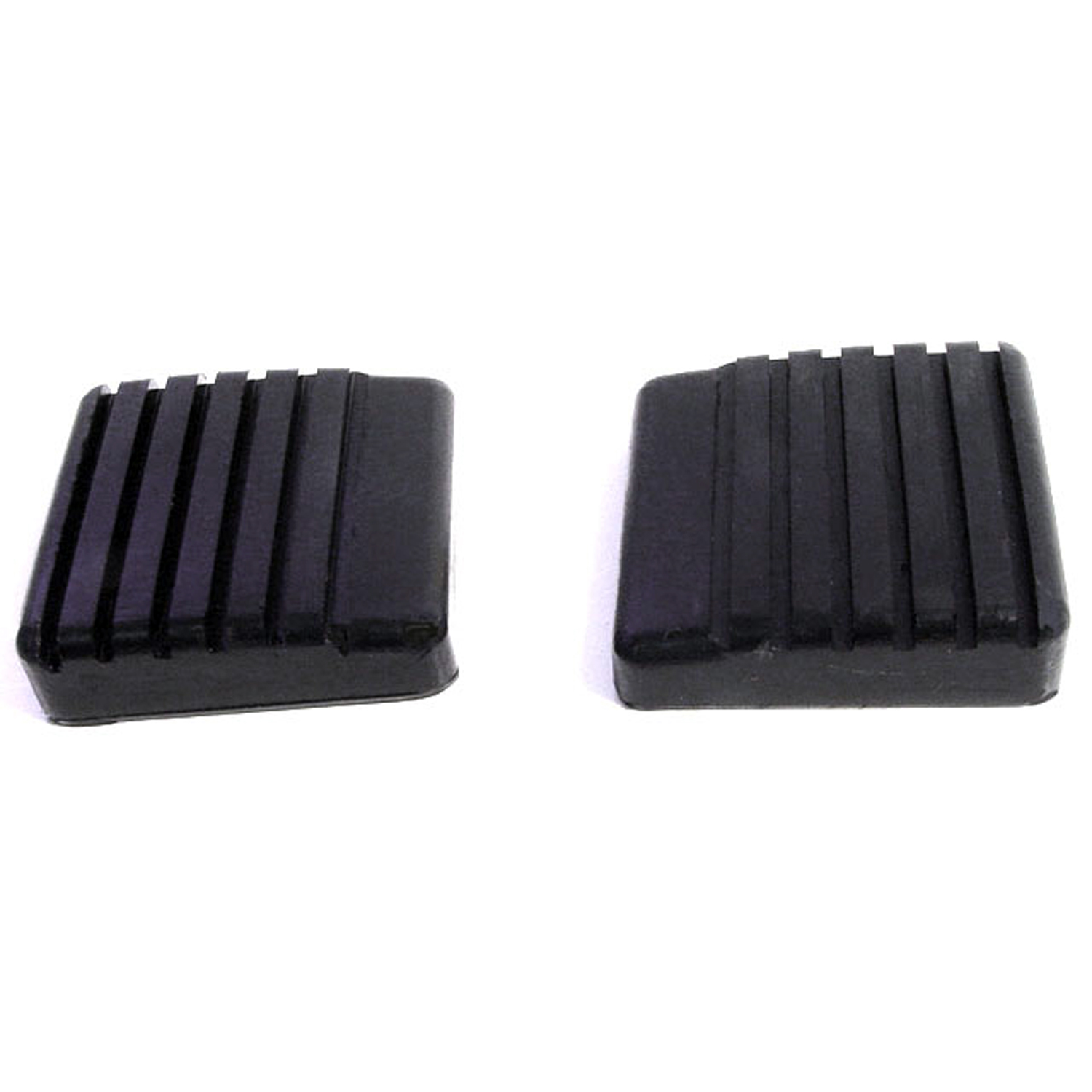 1966 Jeep J-100 Clutch and Brake Pedal Pads. Pair-CB 61-BClutch and Brake Pedal Pads. Pair
Why Choose Metro?
For over 100 years, Metro Moulded Parts has been the pinnacle of quality in classic car restoration parts. Our commitment to precision and authenticity in every component ensures a perfect fit and an OEM-level appearance.
- Expert Craftsmanship & Quality: Each part is a testament to our dedication to reliability and perfection, crafted from original designs and thoroughly tested.
- Advanced Technology: We use cutting-edge techniques to create flawless, long-lasting parts that surpass others in performance.
- SuperSoft Sponge – The Ultimate Door Seal: Not only are our door seals 30% softer than competitors', but they're also guaranteed to never leak. They effectively reduce wind and road noise, enhancing your classic car's comfort and driving experience.
- Proudly American: Our parts are a product of American craftsmanship, made in the USA with a spirit of excellence and heritage.
- Unrivaled Warranty: We back our products with a 30-year industry-leading warranty, a testament to our confidence in their quality.
Join us in preserving the legacy of classic cars with parts that are crafted for perfection, not just made.