
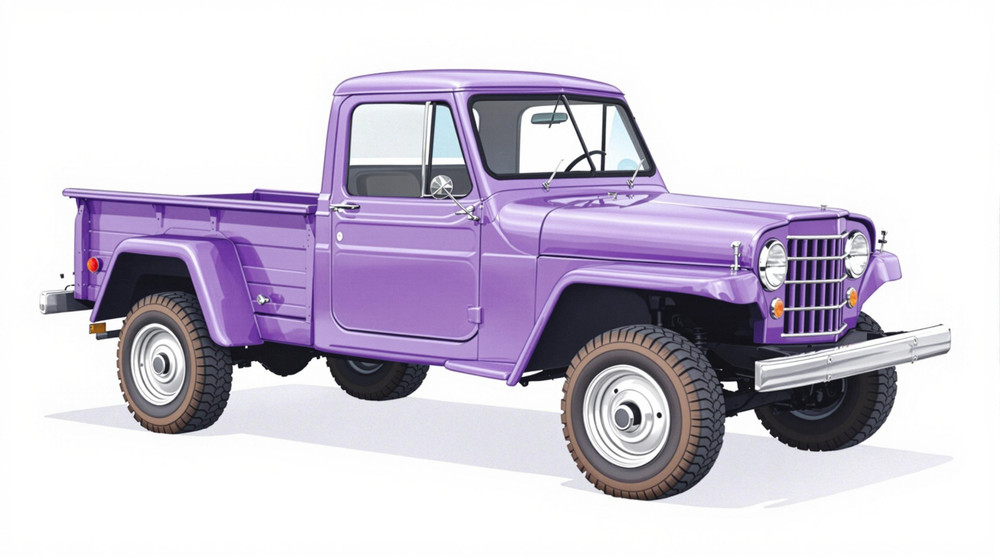
Image of 1966 Jeep J-3500, Note: These illustrations use artistic license and may differ from actual historical models.
Performance Metrics
Fundamental Metrics
Emotional Appeal
MMP Rating
| Engine Specifications | |
|---|---|
| Engine: | Inline 6, V8 |
| Displacement: | 232-401 cu in. |
| Horsepower: | 100-255 hp |
| Torque: | 210-345 lb-ft |
| Compression Ratio: | 8.5:1 - 9.5:1 |
| Ignition System: | Conventional, distributor |
| Cooling System: | Liquid-cooled |
| Performance Specifications | |
| 0-60 Time: | 10-15 seconds |
| 1/4 Mile Time: | 17-20 seconds |
| Top Speed: | 80-90 mph |
| Transmission and Drive | |
| Drive Type: | 4WD |
| Transmission Type: | 3-speed manual, 4-speed manual, 3-speed automatic |
| Fuel and Efficiency | |
| Fuel System Type: | Carburetor |
| MPG: | 10-15 mpg |
| Dimensions and Brakes | |
| Brakes: | Drum brakes |
| Wheelbase: | 120 inches |
| Weight: | 3500-4500 lbs |
Note: Specifications for classic cars are given to the best of our ability, considering the limited and variant data available.
1966 Jeep J-3500: A One-Ton Gladiator With Real Work to Do
The 1966 Jeep J-3500 looks ready to leave the pavement behind, but its story begins with a practical idea: build a pickup with the toughness of a Jeep and the working capacity of a full-size truck. Made by Kaiser Jeep Corporation, the J-3500 was part of the Gladiator pickup family, introduced for 1963. It combined a rugged truck chassis with styling and engineering related to Jeep’s Wagoneer, giving buyers a useful alternative to the more conventional pickups of the era.
The “3500” badge identified a heavy-duty, one-ton-class model, not a promise that every truck could carry exactly 3,500 pounds. Actual payload depended on the truck’s configuration, axle ratings, tires, and equipment. In 1966, buyers could order a J-3500 for farm work, construction, towing, or serious off-road use. One detail that makes this truck especially interesting is its engine choice: it could be ordered with Jeep’s overhead-cam Tornado six or the uncommon 327-cubic-inch Vigilante V8.
Gladiator Styling and Working-Class Cabin
The J-3500 has the upright, purposeful proportions that define a classic American pickup. Its long, flat hood leads to a broad front end with round headlamps and Jeep’s seven-slot grille. High, squared fenders frame the front wheels, while a tall cab and wide cargo bed give the truck a strong, planted stance. The design is more functional than decorative, but its simple lines have aged well. The result is unmistakably a Jeep without looking like a civilian version of a military vehicle.
Inside, the cabin is straightforward and durable. The dashboard prioritizes clear, easy-to-read gauges and simple controls over soft-touch trim or elaborate instrumentation. Depending on specification, the truck could have a bench seat, vinyl upholstery, and practical rubber floor coverings. Better-equipped examples may have more comfortable trim and added convenience features, but the J-3500 remained a work truck at heart. Expect a driving position and finish quality that feel utilitarian by modern standards, not a luxury-car experience.
Factory paint choices varied by year, equipment, and ordering market. Period colors commonly associated with Jeep trucks include white, red, blue, green, and earthier shades, while commercial buyers often chose fleet colors. Bright red and classic white are especially familiar on surviving examples, but an original color should be verified using the truck’s documentation or paint codes rather than guessed from appearance alone.
Engines, Equipment, and Body Choices
The standard engine was generally the 230-cubic-inch Tornado inline-six, an overhead-cam design rated at about 140 horsepower. That was a notable bit of engineering for a work truck in the 1960s: many competitors relied on more conventional pushrod sixes. Buyers wanting more power could choose the 327-cubic-inch Vigilante V8, rated at roughly 250 horsepower in period specifications. Exact figures can vary with the rating method and equipment fitted to an individual truck.
A manual transmission was the expected choice, with three-speed and available four-speed arrangements depending on configuration. Automatic transmission availability and other equipment options varied by model and build. Four-wheel drive was a major part of the J-3500’s appeal, though drivetrain configurations differed across the broader J-series range. Power steering, power brakes, and heavy-duty work equipment could also be specified on some trucks.
The J-3500 was offered in pickup form as well as in work-oriented configurations such as chassis-cab setups, which could be fitted with commercial bodies. The pickup bed is the best-known version today, especially in four-wheel drive, but a cab-and-chassis truck could be the more useful choice for a business or farm. The exact mix of cab, bed, drivetrain, and equipment is why two J-3500s can feel like very different trucks.
Why the 1966 J-3500 Matters
The Gladiator helped establish a distinctly Jeep take on the full-size pickup. Its connection to the Wagoneer gave it a more integrated, modern look than many truck designs built around a separate, more visibly utilitarian front end. More importantly, it paired that relatively polished design with serious work capability and available four-wheel drive.
The J-3500 was not a sales-volume leader that transformed the whole pickup market. Its significance is more specific: it showed that a truck could serve as a heavy-duty hauler and a genuine off-road vehicle without being based on a military design. That combination helped shape the broader identity of Jeep trucks. The Gladiator name later disappeared from the classic J-series lineup, then returned decades later on Jeep’s modern midsize pickup.
Jeep’s early Gladiator range also explored engineering ideas beyond the conventional pickup formula, including an independent-front-suspension option on some early models. That feature should not be assumed on a 1966 J-3500, which is best understood as a traditional, rugged truck whose particular equipment depends on its factory build.
Road Manners and Performance
Period performance figures for individual J-3500 configurations are not consistent enough to treat as universal. As a practical estimate, a six-cylinder truck may take roughly 20 seconds or more to reach 60 mph, while a healthy V8 version could be quicker, perhaps in the high-teens depending on gearing, tires, load, and transmission. A reasonable top-speed estimate is around 75 to 85 mph, but these trucks were built to work, not to cruise at high speed. Tire condition, axle ratio, and mechanical health matter as much as the original engine rating.
On the road, the J-3500 feels substantial. Its steering is slower and heavier than a modern pickup’s, particularly without power assistance, and the truck’s size is obvious on narrow roads or in tight parking lots. A solid-axle setup and heavy-duty springs help it carry loads, but an unloaded truck can ride firmly and react sharply to potholes and broken pavement. On a winding road, it rewards smooth inputs rather than fast cornering.
The engine character is part of the appeal. The Tornado six has a distinctive, mechanical sound, while the Vigilante V8 delivers a deeper note and stronger low-speed pull. The cabin lets in more engine, road, and wind noise than a contemporary vehicle. From the driver’s seat, the J-3500 feels like a machine with a clear purpose: you operate it directly, sense the weight of its chassis, and feel the road rather than being isolated from it.
Living With a J-3500
Today, a 1966 J-3500 is most often a hobby truck, occasional driver, farm vehicle, or show-and-shine classic. A well-maintained example can still do useful work, but regular highway commuting may be tiring, and fuel economy is modest by modern standards. A four-wheel-drive truck with sound axles and transfer-case components can be a capable trail and property vehicle, though its age and size call for careful driving.
Routine maintenance is generally familiar to an experienced classic-truck owner: fluids, ignition components, brakes, steering parts, cooling-system service, and attention to rust. The simpler mechanical layout can make many repairs approachable for a home mechanic with a shop manual and suitable tools. Parts availability is more mixed than for a popular Ford or Chevrolet pickup, so some trim, body, and model-specific components may take patience to locate. Before buying, inspect the frame, cab corners, floors, bed, suspension mounting points, and drivetrain carefully. Rust and neglected four-wheel-drive hardware can turn an affordable project into an expensive one.
J-3500 Facts and Common Complaints
The J-3500’s 327 Vigilante V8 is a talking point because it is less common than the familiar small-block engines found in many American pickups. Jeep’s overhead-cam Tornado six is another unusual feature for the period. And while the classic Gladiator name has been revived for a modern Jeep pickup, a 1966 J-3500 belongs to a different era of truck design, with heavier controls, simpler equipment, and a much more direct driving feel.
There is no widely cited production total for the 1966 J-3500 alone, so any precise figure should be treated with caution. As a broad estimate, production was likely in the low thousands for the model year, with surviving examples much scarcer today than common half-ton pickups. Its rarity comes from its original heavy-duty niche, age, and the fact that many trucks spent decades working rather than being preserved.
Common criticisms are straightforward: the ride can be stiff, the cabin is noisy, fuel consumption is high, and parts can require extra searching. It also lacks the speed, braking feel, and safety equipment expected of a modern truck. Those shortcomings are part of the ownership calculation, not surprises to discover after purchase.
Collector Value and Market Outlook
Values vary widely with condition, originality, drivetrain, and completeness. As a rough current-market guide, a project truck may sell for around $5,000 to $10,000. A usable driver in solid condition might bring approximately $12,000 to $25,000, while a carefully restored or unusually well-preserved example could reach $30,000 to $50,000 or more. Exceptional trucks with desirable equipment and strong documentation may exceed that range, but condition and buyer interest matter more than a badge alone.
The J-3500 has benefited from growing interest in vintage 4x4s and early Jeep pickups. Values have generally strengthened for clean, original trucks, though the market remains specialized and prices can vary sharply by region. Rough, incomplete examples are less likely to appreciate quickly because restoration costs can exceed the value of the finished truck. For collectors, the best prospects are usually trucks with sound frames, credible history, original components, and a configuration that is easy to enjoy.
A Heavy-Duty Jeep With Its Own Character
The 1966 Jeep J-3500 brings together a distinctive Jeep identity, genuine one-ton-class intent, and engineering that stands apart from the more familiar pickups of its day. It is not the quietest, quickest, or easiest classic truck to own, but it offers a compelling mix of work-truck toughness, vintage 4x4 capability, and uncommon character. For enthusiasts who want a classic pickup with more to its story than a familiar badge, the J-3500 is a Gladiator worth seeking out.
1966 Jeep J-3500 Catalog of Parts
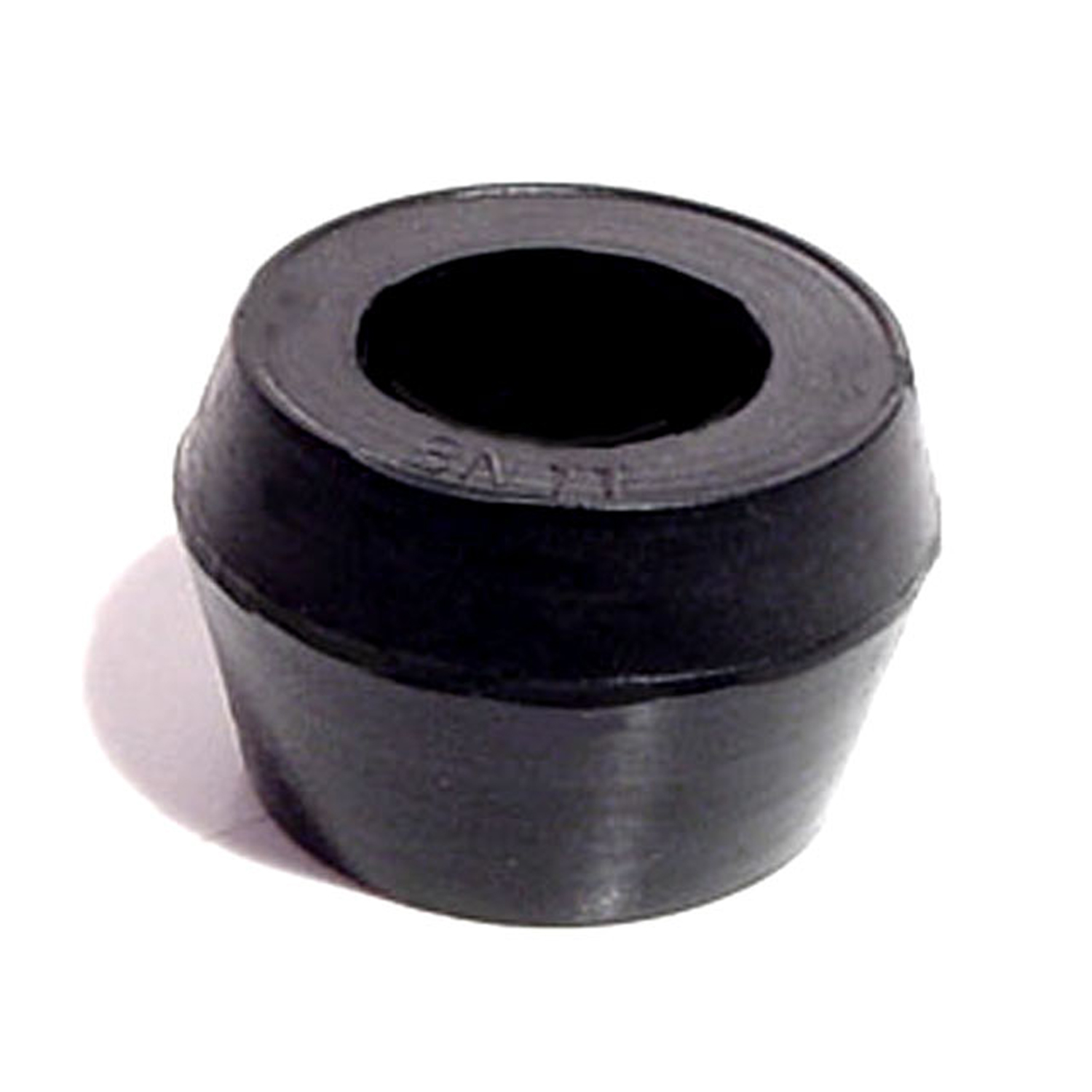 1966 Jeep J-3500 Shock Absorber Grommet. 1" bottom O.D-BN 11Shock Absorber Grommet. 1" bottom O.D., 3/4" high, with 5/8" I.D. Each
Why Choose Metro?
For over 100 years, Metro Moulded Parts has been the pinnacle of quality in classic car restoration parts. Our commitment to precision and authenticity in every component ensures a perfect fit and an OEM-level appearance.
- Expert Craftsmanship & Quality: Each part is a testament to our dedication to reliability and perfection, crafted from original designs and thoroughly tested.
- Advanced Technology: We use cutting-edge techniques to create flawless, long-lasting parts that surpass others in performance.
- SuperSoft Sponge – The Ultimate Door Seal: Not only are our door seals 30% softer than competitors', but they're also guaranteed to never leak. They effectively reduce wind and road noise, enhancing your classic car's comfort and driving experience.
- Proudly American: Our parts are a product of American craftsmanship, made in the USA with a spirit of excellence and heritage.
- Unrivaled Warranty: We back our products with a 30-year industry-leading warranty, a testament to our confidence in their quality.
Join us in preserving the legacy of classic cars with parts that are crafted for perfection, not just made.