

Image of 1967 Jeep Dispatcher, Note: These illustrations use artistic license and may differ from actual historical models.
Performance Metrics
Fundamental Metrics
Emotional Appeal
MMP Rating
| Engine Specifications | |
|---|---|
| Engine: | Inline-4 |
| Displacement: | 134 cu in (2.2 L) |
| Horsepower: | 60-75 hp |
| Torque: | 114 lb-ft |
| Compression Ratio: | 7.5:1 |
| Ignition System: | Distributor and coil |
| Cooling System: | Liquid-cooled |
| Performance Specifications | |
| 0-60 Time: | Estimated 20-25 seconds |
| 1/4 Mile Time: | Not available |
| Top Speed: | 55-60 mph |
| Transmission and Drive | |
| Drive Type: | Rear-wheel drive (4x2) |
| Transmission Type: | 3-speed manual |
| Fuel and Efficiency | |
| Fuel System Type: | Carburetor |
| MPG: | Estimated 15-20 mpg |
| Dimensions and Brakes | |
| Brakes: | Drum brakes |
| Wheelbase: | 81 in |
| Weight: | 2,200 lbs |
Note: Specifications for classic cars are given to the best of our ability, considering the limited and variant data available.
1967 Jeep Dispatcher (DJ-5A): The Mail Jeep With a Job to Do
With its upright grille, boxy steel body, and steering wheel on the right, the 1967 Jeep Dispatcher looks less like a weekend 4x4 and more like a rolling tool designed to put in a shift. Built by Kaiser Jeep, the Dispatcher belonged to the DJ series, a family of rear-wheel-drive Jeeps developed for delivery work and other commercial duties. The DJ-5A is the version most often associated with this period, although a particular truck’s serial number and build records are the best way to confirm its exact model.
The Dispatcher’s most famous assignment was carrying mail. Its compact dimensions, upright seating position, and right-hand-drive layout suited drivers who needed to reach roadside mailboxes without repeatedly stepping into traffic. A Jeep with no four-wheel drive may sound like an oddity, but that was precisely the point: the Dispatcher was a practical urban work vehicle, not a trail rig.
One detail that makes the 1967 model especially interesting is how different it could be from a civilian Jeep despite its familiar family resemblance. Postal-service vehicles were ordered to meet fleet needs, while commercial Dispatchers could be configured for other delivery and utility jobs. The result is a classic Jeep that tells a story about workaday America as much as it does about off-road motoring.
Simple, Purpose-Built Jeep Styling
The DJ-5A wears a blunt, nearly vertical nose, a narrow-slot Jeep grille, round headlamps, and flat body panels that favor easy access and repair over decoration. Its short wheelbase and tall roof give it a distinctive, compact delivery-van profile. The squared-off body also leaves a useful cargo area behind the front seats, with a low step-in height that makes frequent stops less of a chore.
Unlike a CJ-5, the Dispatcher was generally enclosed in an all-steel delivery body. Fleet layouts could vary, but right-hand drive was a defining feature of many postal examples. Depending on the order and body configuration, access to the cargo compartment was arranged for loading and delivery rather than passenger comfort. It is worth checking any individual vehicle carefully, since doors, fittings, and other equipment may have changed during decades of service.
The cabin is straightforward and workmanlike. Expect painted metal, durable vinyl, simple gauges, and hard-wearing surfaces rather than carpet, polished trim, or plush upholstery. The high seating position gives a clear view of the road and curb, while the upright windshield and generous glass make it easy to judge the vehicle’s corners. Comfort equipment and trim varied, but the general brief was durability and function.
Postal Jeeps are most closely associated with white fleet paint, often carrying government or postal markings during their working lives. Other commercial buyers could choose different finishes, and many surviving examples have been repainted. Period paint choices and exact availability depended on the model year and order, so a factory color claim is best verified with documentation rather than inferred from an old coat of paint.
Technology for a Working Fleet
The Dispatcher was not packed with gadgets, but its layout was a kind of practical innovation. Right-hand drive put the driver on the curb side for mail delivery, reducing the need to cross traffic at each stop. Its compact footprint helped it maneuver around residential streets, and the enclosed body protected both driver and cargo from the weather.
The DJ-5A is commonly associated with AMC’s 232-cubic-inch inline-six and an automatic transmission. Exact equipment can depend on production details and fleet specification, so check the vehicle’s identification plate and drivetrain before ordering parts. The key distinction from many familiar Jeep models is that the Dispatcher was rear-wheel drive, not a four-wheel-drive trail vehicle.
Why the Dispatcher Mattered
The DJ-5’s importance lies less in introducing a revolutionary engine or suspension design than in showing how a familiar automotive platform could be adapted to a specific job. Jeep’s small footprint and tough, simple construction made sense for local delivery. Right-hand drive turned the vehicle into a particularly effective tool for postal routes, where the driver’s position mattered every time a mailbox came into reach.
That focus set the Dispatcher apart from contemporaries such as the civilian CJ-5. The CJ was aimed at private buyers and off-road use; the DJ-5 was a fleet vehicle built around repetitive stops, cargo access, and ease of operation. Its long association with mail delivery also helped create the enduring image of the small American postal Jeep, a role later filled by newer vehicles such as the Grumman LLV.
The Dispatcher did not transform the whole automotive industry, but it became an influential example of purpose-built light delivery transport. Its legacy is visible in the broader idea that a commercial vehicle should be designed around a route and a task, not merely adapted from a passenger car.
Performance and Road Manners
With the 232 inline-six, the DJ-5A had useful low- and midrange pulling power for a small delivery vehicle. Period horsepower ratings can vary according to how they were measured, and factory performance figures are not consistently available. As a realistic guide, expect a top speed in the neighborhood of 70 to 75 mph and a 0-to-60-mph time around 20 to 25 seconds, depending on condition, gearing, load, and transmission. Those are estimates, not a promise of factory-tested numbers.
On the road, the Dispatcher feels upright, narrow, and unmistakably old-school. Its short wheelbase makes it handy at low speeds, but broken pavement can produce a choppy ride, especially when the vehicle is empty. Leaf-spring suspension and a solid-axle layout are durable and straightforward, but they do not smooth out bumps like a modern delivery van. On winding roads, it rewards moderate speeds and deliberate steering rather than quick changes of direction.
Wind and passing trucks can have a noticeable effect on a tall, lightweight vehicle. Braking and steering feel depend greatly on the condition of the individual truck and its equipment. A well-maintained example can be an engaging local driver, but it should not be expected to offer modern levels of handling, stopping distance, or occupant protection.
The inline-six provides a familiar mechanical soundtrack: a steady, lightly throaty rumble rather than a high-revving performance-car howl. The driver sits high, looks out over a short hood, and works with simple controls. In an automatic DJ-5A, stop-and-go routes are easier than in a manual delivery vehicle, but the overall experience remains tactile and mechanical. It feels like operating a piece of equipment, which is exactly what it was built to do.
Living With a 1967 Dispatcher
Most Dispatchers today serve as preservation projects, local show vehicles, promotional vehicles, or occasional drivers. Some still handle light delivery duties, but daily use requires realistic expectations. Highway commuting is possible for a sound example, yet the modest performance, limited safety equipment, and vintage ride make slower roads a more natural home.
Mechanical work is generally approachable for an owner with basic tools and a repair manual. The inline-six is a conventional engine, and many routine service tasks are straightforward. The harder part can be finding correct body pieces, trim, and model-specific components. Postal vehicles may also have been modified over their working lives, so inspect wiring, doors, floor panels, and previous repairs as carefully as the engine.
Rust deserves particular attention. Check the floors, body seams, lower panels, wheel openings, and the structure around doors and cargo access. Also inspect the brakes, steering joints, suspension bushings, cooling system, and automatic transmission. Because the Dispatcher was a working vehicle, a rough-looking example may have a solid mechanical core, while a freshly painted one may conceal corrosion or hurried repairs.
Mail-Truck Trivia and Common Complaints
The letters in “DJ” identify the Dispatcher line, distinguishing it from Jeep’s four-wheel-drive CJ models. The DJ-5’s rear-wheel-drive layout was a deliberate cost-and-purpose choice, not a missing feature. Many postal examples were right-hand drive so carriers could approach roadside mailboxes from the curb side.
There is no widely accepted public production tally for the 1967 DJ-5A alone. That makes claims about an exact surviving population difficult to verify. The broader Dispatcher family was built in meaningful fleet quantities, so the model is not exceptionally rare overall, but an original, documented 1967 example with its correct equipment can be considerably harder to find.
There is no well-established speed, sales, or endurance record that defines the DJ-5A. Its notable achievement was practical longevity: postal and commercial Jeeps often stayed in service for years because their simple layout suited local routes and could be maintained by fleet mechanics. Its association with everyday mail delivery is the more enduring claim to fame.
The criticisms are easy to understand. The ride can be harsh, the cabin is noisy, highway performance is modest, and safety equipment is limited by modern standards. Rust and hard fleet use can also make restoration a challenge. Those shortcomings are part of the trade-off for a compact vehicle that was designed to be simple, accessible, and useful.
Collector Values and Availability
Values vary sharply with rust, mechanical condition, originality, and whether a vehicle retains documented postal or commercial equipment. As a broad current-market estimate, a project may bring about $3,000 to $7,000. A usable driver often falls around $8,000 to $15,000, while a well-restored or unusually original example could reach roughly $18,000 to $30,000 or more. Exceptional restorations can exceed that range, but they are the exception rather than the rule.
Because year-by-year production figures are difficult to confirm, any estimate for 1967 should be treated as a reasoned guess. Given the DJ-5A’s multi-year production and fleet use, a plausible estimate is several thousand examples for the model year, perhaps around 5,000 to 10,000, but that is not an official factory figure. Surviving examples are available from time to time, especially in the United States, though clean, unmodified trucks are less common than former fleet vehicles with extensive wear.
Interest in postal Jeeps and vintage utility vehicles has helped good examples attract more attention than they once did. Values appear strongest for solid, authentic trucks with clear histories, but the Dispatcher remains a niche collectible rather than a high-dollar investment car. Condition and provenance matter more than simply having a 1967 title.
A Small Jeep With a Big Working-Life Story
The 1967 Jeep Dispatcher is a compact, utilitarian vehicle built around a clear purpose: move a driver and cargo efficiently through local routes. Its upright steel body, practical cabin, inline-six power, and postal-friendly right-hand-drive layout set it apart from the more familiar four-wheel-drive Jeep. It is not fast, luxurious, or especially refined, but it is memorable because its design makes its job obvious.
For collectors, the DJ-5A offers an appealing mix of Jeep character and American working history. Find a solid one, preserve its honest details, and every trip becomes a reminder that some of the most distinctive classic vehicles were built not for the spotlight, but for the daily route.
1967 Jeep Dispatcher Catalog of Parts
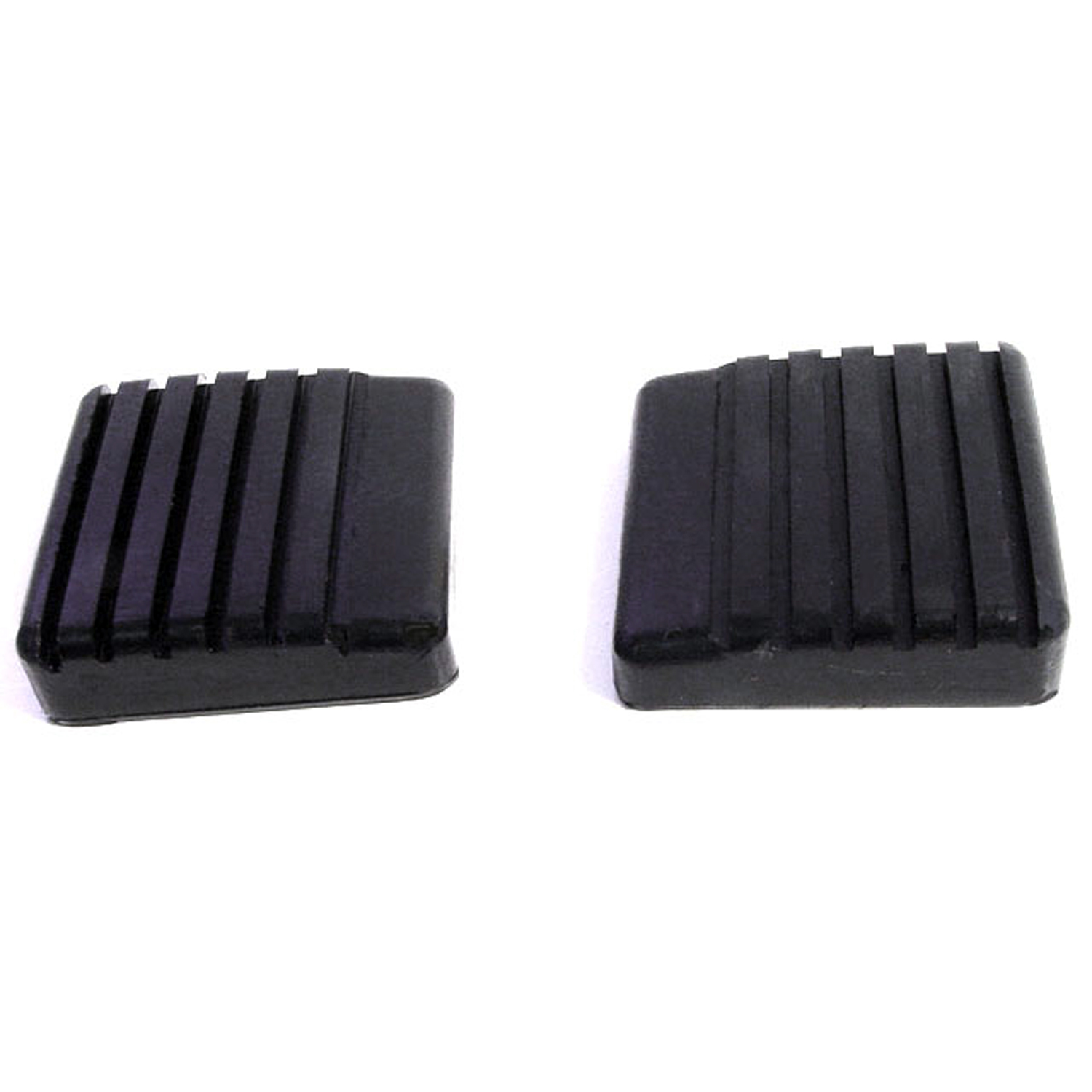 1967 Jeep Dispatcher Clutch and Brake Pedal Pads. Pair-CB 61-BClutch and Brake Pedal Pads. Pair
Why Choose Metro?
For over 100 years, Metro Moulded Parts has been the pinnacle of quality in classic car restoration parts. Our commitment to precision and authenticity in every component ensures a perfect fit and an OEM-level appearance.
- Expert Craftsmanship & Quality: Each part is a testament to our dedication to reliability and perfection, crafted from original designs and thoroughly tested.
- Advanced Technology: We use cutting-edge techniques to create flawless, long-lasting parts that surpass others in performance.
- SuperSoft Sponge – The Ultimate Door Seal: Not only are our door seals 30% softer than competitors', but they're also guaranteed to never leak. They effectively reduce wind and road noise, enhancing your classic car's comfort and driving experience.
- Proudly American: Our parts are a product of American craftsmanship, made in the USA with a spirit of excellence and heritage.
- Unrivaled Warranty: We back our products with a 30-year industry-leading warranty, a testament to our confidence in their quality.
Join us in preserving the legacy of classic cars with parts that are crafted for perfection, not just made.