
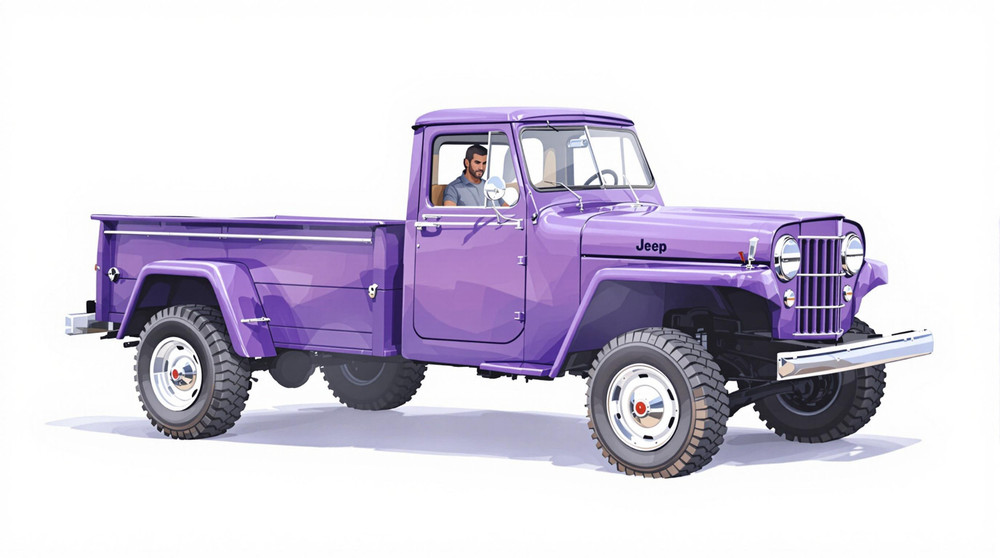
Image of 1967 Jeep J-2800, Note: These illustrations use artistic license and may differ from actual historical models.
Performance Metrics
Fundamental Metrics
Emotional Appeal
MMP Rating
| Engine Specifications | |
|---|---|
| Engine: | AMC 327 V8 |
| Displacement: | 327 cubic inches |
| Horsepower: | 250 HP |
| Torque: | 340 lb-ft |
| Compression Ratio: | 8.7:1 |
| Ignition System: | Conventional points ignition system |
| Cooling System: | Liquid-cooled |
| Performance Specifications | |
| 0-60 Time: | Estimated 10-12 seconds |
| 1/4 Mile Time: | Estimated 17-19 seconds |
| Top Speed: | 100 mph |
| Transmission and Drive | |
| Drive Type: | 4WD |
| Transmission Type: | 3-speed manual |
| Fuel and Efficiency | |
| Fuel System Type: | Carburetor |
| MPG: | Estimated 10-12 MPG |
| Dimensions and Brakes | |
| Brakes: | Drum brakes |
| Wheelbase: | 120 inches |
| Weight: | 4,200 lbs |
Note: Specifications for classic cars are given to the best of our ability, considering the limited and variant data available.
1967 Jeep J-2800: A Full-Size 4x4 With Working-Class Roots
The 1967 Jeep J-2800 could haul a load, climb a muddy track, and still look at home parked outside a small-town hardware store. Built by Kaiser Jeep, it belonged to the Gladiator family of full-size pickups, a line introduced in 1962 for the 1963 model year. The Gladiator combined Jeep’s off-road know-how with the comfort and road manners of the Wagoneer, giving buyers a truck designed for both work and everyday travel.
The J-2800 sits in an interesting chapter of Jeep history. Kaiser Jeep owned the brand in 1967, before American Motors Corporation bought Jeep in 1970. One intriguing detail is that the Gladiator’s basic design proved unusually durable: the pickup family remained in production, with updates and changing names, for decades. Its boxy, confident shape was not a short-lived styling experiment. It became a familiar part of Jeep’s identity.
Gladiator Styling: Practical, Upright, and Distinctly Jeep
The J-2800 wears the purposeful proportions of a traditional American pickup, but its design is cleaner and more integrated than many work trucks of the period. A broad, nearly level hood leads to an upright front end with round headlights and a simple vertical-slot grille. The high beltline, squared-off cab, and separate cargo bed make its purpose obvious, while the restrained trim keeps the truck from looking overly ornamental.
Its dimensions and equipment could vary with configuration, but the J-2800 was a conventional full-size pickup rather than a small utility vehicle. Buyers could choose different bed and drivetrain arrangements across the broader Gladiator range. The regular cab pickup was the core, recognizable form. Depending on specification, practical options could include four-wheel drive, a more finished cab, and convenience equipment aimed at owners who expected to spend long days behind the wheel.
Inside, the emphasis was on durability. The cab featured painted metal surfaces, a straightforward dashboard, simple controls, and a broad bench seat. Vinyl upholstery and a rubber floor covering suited muddy boots and hard use better than delicate carpeting would have. Higher equipment levels could add more trim and comfort features, but the J-2800 remained a work truck at heart. Its cabin was designed to be understood quickly and cleaned without fuss.
Factory paint choices varied by year and equipment package. Period buyers could find solid colors alongside practical white and darker work-truck shades. Reds, blues, and greens are especially vivid choices on surviving trucks today, though a particular truck’s original color should be confirmed from its paint code or factory records rather than assumed from its current finish.
Engineering That Bridged Work and Travel
The Gladiator shared its basic platform with the Wagoneer, a notable choice for a pickup at the time. Two-wheel-drive versions used an independent front suspension system, which was unusual among pickups of the era and helped distinguish the line from more conventional, solid-front-axle rivals. Four-wheel-drive J-2800s used a more rugged live front axle, better suited to rough terrain and heavy-duty service.
That split captures the J-2800’s character: it was not simply a civilian body placed on an old military-style chassis. Jeep engineered the family to serve a range of owners, from those who wanted a road-friendly truck to those who needed genuine off-road traction. Its combination of a full-size pickup body, available four-wheel drive, and Wagoneer-related underpinnings helped make it a versatile alternative to the mainstream trucks of the day.
Depending on specification, power came from an overhead-valve 232-cubic-inch inline-six or an available 327-cubic-inch Vigilante V8. Period horsepower figures were generally quoted using the gross rating system, so they should not be compared directly with modern net horsepower numbers. The six-cylinder offered straightforward, useful power; the V8 brought stronger acceleration and better reserves for towing or carrying a load. Manual transmissions were common, with other transmission choices available depending on configuration.
Performance and Road Manners
There is no single dependable 0-to-60 mph figure for every 1967 J-2800. Engine, transmission, axle gearing, tire size, and vehicle condition all make a substantial difference, and period test results are not consistently available for each configuration. As a broad estimate, a V8 truck might reach 60 mph in roughly 15 to 20 seconds. A six-cylinder example, especially one carrying a load, would generally take longer.
A well-tuned truck could likely reach a top speed in the neighborhood of 80 to 90 mph, but that does not mean it was happiest cruising there. The J-2800 was built for utility, not high-speed touring. Its steering is slower and less precise than that of a modern pickup, and its tall body can feel affected by crosswinds. On winding roads, drivers benefit from planning ahead and keeping their inputs smooth.
Over bumps, the truck feels substantial and firmly connected to the road. An unloaded pickup can ride stiffly, while a load in the bed may settle it and improve its composure. The four-wheel-drive version feels most at home on loose surfaces, snow, rutted roads, and work sites, where its traction and ground clearance matter more than quick cornering.
Start the V8 and the truck answers with a deep, unhurried rumble. The inline-six is less dramatic but has the simple, mechanical sound many classic-truck enthusiasts enjoy. From the driver’s seat, the experience is direct: a large hood ahead, a commanding view of the road, and controls that ask for deliberate effort. The J-2800 rewards relaxed driving rather than hurried inputs.
Owning and Maintaining a J-2800
Today, a J-2800 is most often a restoration project, weekend driver, farm or property truck, or show vehicle. Some owners still use these pickups for light hauling, but decades-old frames, brakes, and drivetrains deserve careful inspection before any demanding work. A sound, properly maintained example can be enjoyable on local roads, though it will not offer the safety, fuel economy, or refinement of a modern truck.
Routine mechanical work is generally approachable for an owner with basic tools and repair experience. The engine bay is relatively accessible, and many repairs follow familiar principles of classic American trucks. Parts availability is mixed: common service items and some mechanical components can be sourced through classic Jeep suppliers, while model-specific trim, body panels, and certain four-wheel-drive parts may take more searching. Before buying, inspect the frame, cab corners, floors, bed, and areas around the windshield for rust or previous repairs.
Fuel economy is one of the truck’s least charming traits. The V8, four-wheel-drive hardware, older gearing, and boxy body all contribute to substantial fuel use by modern standards. Brakes, steering components, cooling systems, and old wiring also deserve close attention. A tidy-looking paint job can hide expensive structural problems, so a thorough inspection matters more than a polished presentation.
J-2800 Facts and Common Criticisms
The J-2800 is part of the Jeep Gladiator family, but production figures for that exact model designation are difficult to establish from commonly available records. Jeep did not leave a widely published, easy-to-verify total for every J-2800 configuration. As a reasonable estimate rather than a documented count, production may have been in the low thousands. That makes the truck uncommon today, though not every example is a rare, special-edition vehicle.
There is no widely recognized J-2800 speed, sales, or endurance record, and the model is not especially associated with a single celebrity owner or major historical event. Its appeal is more grounded: it represents an era when Jeep was expanding beyond its utility-vehicle roots and developing full-size trucks for a broad range of customers.
Common criticisms are straightforward. The truck can be thirsty, slow by modern standards, and tiring to drive over long distances. Rust and hard-to-find trim can make restoration expensive, while the suspension and steering feel dated compared with newer pickups. Those drawbacks are part of the ownership calculation, not reasons to dismiss the J-2800. For many fans, its rugged simplicity is precisely the point.
Collector Value and Availability
Values depend heavily on condition, originality, engine, drivetrain, and the quality of any restoration. As a general current-market guide, a rough project truck might bring about $5,000 to $12,000. A usable driver in fair to good condition could fall around $12,000 to $25,000, while a well-restored or unusually original example may reach roughly $25,000 to $40,000 or more. Exceptional trucks can exceed that range, but buyers should compare recent sales rather than relying on optimistic asking prices.
Exact J-2800 examples appear less often than more familiar classic pickups, and clean, unmodified trucks are harder to find than project vehicles. Values for vintage 4x4s and distinctive utility trucks have generally strengthened over time, but the J-2800 remains a niche collectible. Its appreciation is likely to be gradual and highly dependent on condition. Restoration costs can quickly exceed the truck’s eventual market value, so buying the best example you can afford is usually wiser than taking on a severely rusted project.
Why the 1967 Jeep J-2800 Still Matters
The 1967 Jeep J-2800 brought together full-size pickup utility, Jeep four-wheel-drive capability, and an engineering approach that included an unusual independent front suspension option for two-wheel-drive models. It was sturdy rather than flashy, comfortable enough for daily work, and capable of heading well beyond paved roads when properly equipped.
More than half a century later, the J-2800 stands as a reminder that a classic truck can be significant without setting a speed record or dominating the sales charts. Its appeal is in its honest design, its useful engineering, and the unmistakable feeling of driving a machine built to work. That combination keeps this old Jeep pickup worth seeking out.
1967 Jeep J-2800 Catalog of Parts
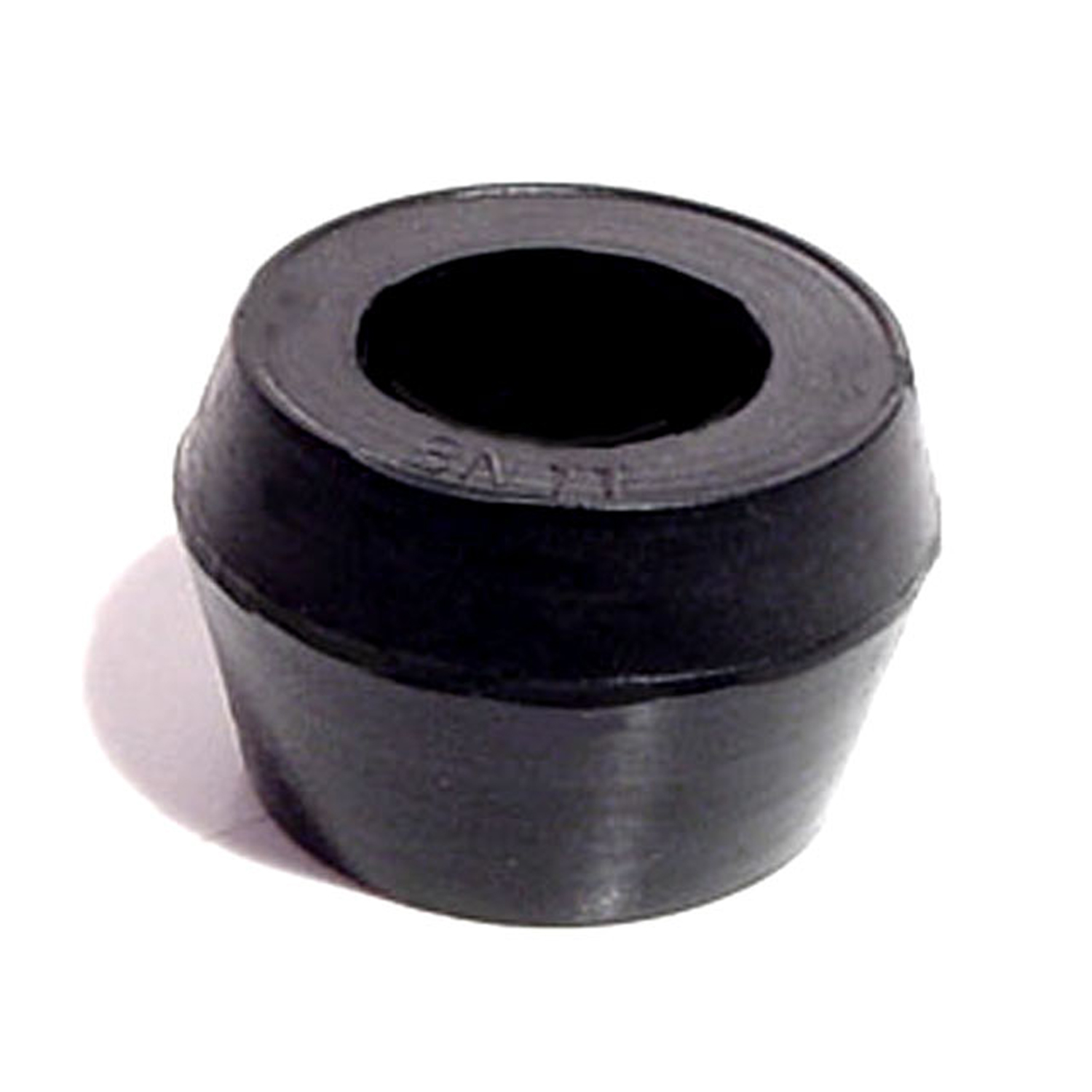 1967 Jeep J-2800 Shock Absorber Grommet. 1" bottom O.D-BN 11Shock Absorber Grommet. 1" bottom O.D., 3/4" high, with 5/8" I.D. Each
Why Choose Metro?
For over 100 years, Metro Moulded Parts has been the pinnacle of quality in classic car restoration parts. Our commitment to precision and authenticity in every component ensures a perfect fit and an OEM-level appearance.
- Expert Craftsmanship & Quality: Each part is a testament to our dedication to reliability and perfection, crafted from original designs and thoroughly tested.
- Advanced Technology: We use cutting-edge techniques to create flawless, long-lasting parts that surpass others in performance.
- SuperSoft Sponge – The Ultimate Door Seal: Not only are our door seals 30% softer than competitors', but they're also guaranteed to never leak. They effectively reduce wind and road noise, enhancing your classic car's comfort and driving experience.
- Proudly American: Our parts are a product of American craftsmanship, made in the USA with a spirit of excellence and heritage.
- Unrivaled Warranty: We back our products with a 30-year industry-leading warranty, a testament to our confidence in their quality.
Join us in preserving the legacy of classic cars with parts that are crafted for perfection, not just made.