

Image of 1968 Jeep J-2800, Note: These illustrations use artistic license and may differ from actual historical models.
Performance Metrics
Fundamental Metrics
Emotional Appeal
MMP Rating
| Engine Specifications | |
|---|---|
| Engine Options: | AMC 327 V8 |
| Displacement Range: | 327 cu in (5.4 L) |
| Horsepower Range: | 250-270 hp |
| Torque: | 340-365 lb-ft |
| Compression Ratio: | 8.7:1 |
| Ignition System: | Conventional, distributor |
| Cooling System: | Liquid-cooled |
| Performance Specifications | |
| 0-60 Time: | Estimated 10-12 seconds |
| 1/4 Mile Time: | Estimated 17-19 seconds |
| Top Speed: | 100 mph |
| Transmission and Drive | |
| Drive Type: | 4WD |
| Transmission Type: | 3-speed manual, 4-speed manual, 3-speed automatic |
| Fuel and Efficiency | |
| Fuel System Type: | Carburetor |
| MPG: | Estimated 10-12 mpg |
| Dimensions and Brakes | |
| Brakes: | Drum brakes |
| Wheelbase: | 120 in (3,048 mm) |
| Weight: | 4,200 lbs (1,905 kg) |
Note: Specifications for classic cars are given to the best of our ability, considering the limited and variant data available.
1968 Jeep J-2800: A Heavy-Duty Jeep With Real Workhorse Roots
The 1968 Jeep J-2800 brought four-wheel-drive capability and truck-duty hardware together in a package that looked ready for a job before the key even turned. Built by Kaiser Jeep Corporation in Toledo, Ohio, it belonged to the J-series pickup family descended from the Jeep Gladiator introduced in 1962. By 1968, the Gladiator name had largely given way to J-series model numbers, but the trucks kept the same rugged purpose: carry a load, reach rough ground, and keep working.
The J-2800 was positioned as a heavy-duty, three-quarter-ton truck. It was not a luxury pickup or a performance special. Its appeal was practical strength, with four-wheel drive available for owners who needed traction on muddy roads, steep grades, or remote work sites. A notable detail is how closely the J-series shared its engineering roots with the Wagoneer. Jeep developed both lines on the same basic platform, helping the company spread its passenger-vehicle and truck engineering across a versatile family of vehicles.
J-2800 Styling and Cabin Design
The J-2800 wore the unmistakable shape of a late-1960s Jeep pickup: a tall, upright cab, broad hood, near-vertical windshield, and a squared-off front end. Its grille used horizontal slots, framed by round headlights and a simple bumper. The look was less polished than that of some rival pickups, but it had a purposeful, honest quality. The high stance and substantial wheel openings also made the truck look ready for uneven ground, especially in four-wheel-drive form.
Inside, the cabin was straightforward and work-focused. The dashboard was metal, the controls were uncomplicated, and the seating and trim favored durability over luxury. Depending on equipment, buyers could add comfort and convenience features, but the basic experience was unmistakably truck-like: a large steering wheel, clear gauges, and a commanding view over the hood. Materials were sturdy rather than plush, which suited a vehicle expected to spend time hauling supplies and working outdoors.
Paint choices varied by year, equipment, and dealer availability. Period Jeep colors ranged from restrained whites and earth tones to brighter colors typical of the era. White, cream, and other practical shades were common choices for working trucks, while brighter colors could give a J-2800 more visual presence. Exact color names and combinations should be confirmed from the truck’s original documentation or paint code, since a restored example may not retain its factory finish.
The J-2800 was principally a pickup, offered with cab and bed configurations that could vary by wheelbase and equipment. Commercial buyers could also find J-series trucks adapted for utility or other work applications, though those should not be confused with a standard factory pickup configuration. For most enthusiasts, the classic J-2800 is the conventional pickup with its tall cab and open cargo bed.
Engines, Equipment, and Period Technology
Engine availability depended on the exact configuration, but 1968 J-series trucks could be equipped with an AMC 232-cubic-inch inline-six or a 327-cubic-inch Vigilante V8. The six-cylinder emphasized straightforward, useful torque, while the V8 offered more power for heavier loads and highway driving. Transmission choices varied as well, with manual gearboxes common and automatic availability dependent on specification.
By modern standards, the J-2800 was mechanically simple. Its significant technology was less about electronics and more about the useful engineering underneath: a robust chassis, truck-duty running gear, and available four-wheel drive. Buyers could select equipment to suit the job, making the J-series adaptable to farm, construction, forestry, and recreational use. As with any surviving example, the truck’s original drivetrain and options are best verified through its identification plates and factory records rather than assumed from the model badge alone.
Why the J-2800 Mattered
The J-2800 represented an important chapter in Jeep’s expansion beyond its wartime and utility-vehicle heritage. The company had already established its reputation for compact, go-anywhere vehicles. The J-series applied that identity to a full-size pickup, giving buyers a truck that could compete in practical roles while offering four-wheel drive and a distinct Jeep character.
Its shared platform with the Wagoneer was also significant. That engineering approach allowed Jeep to develop a broad range of vehicles from related foundations, rather than treating every model as an entirely separate project. The J-trucks helped establish the formula for later Jeep pickups: useful payload capacity, available four-wheel drive, and styling that remained recognizably Jeep. They were not the first pickups to offer four-wheel drive, but they helped make the idea central to Jeep’s identity as a manufacturer of versatile utility vehicles.
Compared with larger-volume competitors, the J-2800 was a more specialized choice. Jeep’s network and production scale were smaller than those of the biggest American truck makers, but the J-series offered an appealing alternative for buyers who valued off-road ability and a strong, straightforward design over extensive trim choices or car-like refinement.
1968 Jeep J-2800 Performance and Road Manners
There is no single dependable performance figure for every J-2800, since engine, transmission, axle gearing, tire size, load, and condition all make a difference. As a broad period-truck estimate, a six-cylinder example might take roughly 18 to 25 seconds to reach 60 mph, while a healthy V8 truck could be quicker, around 14 to 19 seconds. Top speed was generally in the neighborhood of 75 to 90 mph, though these trucks were not designed to cruise comfortably at their maximum for long stretches. These are estimates, not guaranteed factory test figures.
On a smooth road, the J-2800 feels substantial and deliberate. Its steering is slower and less precise than that of a modern pickup, and its body-on-frame construction gives it a firm, sometimes choppy ride when the bed is empty. Add a load, and the suspension can feel more settled. On bumps and rutted tracks, the truck’s ground clearance and available four-wheel drive are more valuable than its ride comfort.
On winding roads, drivers need to plan ahead. The J-2800 is tall, heavy, and built for utility, so it rewards smooth steering and measured cornering rather than quick inputs. Expect wind noise, noticeable engine and road sounds, and a cabin that communicates the truck’s mechanical character. A V8 adds a deeper exhaust note, while the six-cylinder delivers a steadier, more workmanlike sound. In either case, driving one feels hands-on: the driver is part of the machinery, not isolated from it.
Living With a J-2800 Today
Today, a J-2800 may serve as a classic-truck showpiece, a weekend hauler, a farm or property vehicle, or a restoration project. Some owners use them for camping and off-road travel, though a well-preserved example is often treated more gently than it would have been in its working days. It is not an ideal modern daily driver for everyone. Fuel economy, braking performance, steering effort, cabin noise, and parts availability all require realistic expectations.
Many repairs are approachable for an owner with basic mechanical skills. The truck’s conventional layout makes routine service and diagnosis more familiar than on a modern vehicle, and its mechanical systems are generally understandable to a competent home mechanic. The main challenge is often finding the right parts, especially body trim, model-specific components, and pieces for unusual factory options. Rust deserves close attention around the cab, floor, bed, frame, and body mounts. A truck that appears complete can still conceal expensive structural work.
Before buying, inspect the frame and suspension carefully, check that four-wheel drive engages properly if fitted, and confirm the engine and transmission match the seller’s description. A compression test, inspection of the cooling system, and a road test can reveal more than a fresh coat of paint. Originality, condition, and documentation matter more than a long list of claimed upgrades.
J-2800 Trivia and Common Criticisms
The J-2800 is part of the larger Jeep Gladiator and J-series story, but the name on the side can be misleading to modern buyers. “Gladiator” is commonly used today for the early trucks, while Jeep’s model naming evolved over time. The J-2800 designation identified a heavier-duty version within the pickup range, rather than a special performance edition.
There is no widely recognized speed, sales, or endurance record associated specifically with the 1968 J-2800. Its reputation was earned in ordinary work rather than headline-grabbing competition: hauling, towing, and reaching places where a two-wheel-drive truck might struggle. Nor is the model especially known for celebrity ownership or a defining appearance at a major historical event. Its strongest claim to fame is its place in Jeep’s transition from utilitarian 4x4 maker to a broader builder of trucks and passenger vehicles.
Common criticisms are familiar to anyone who has driven a vintage work truck. The ride can be stiff, handling is dated, fuel consumption is high by modern standards, and rust or worn drivetrain components can turn a bargain into a major project. Those trade-offs are part of the appeal for some owners, but they are still worth factoring into a purchase.
Collector Value and Availability
Model-specific production totals for the 1968 J-2800 are not readily established in commonly available public records. As a rough, explicitly speculative estimate, several thousand may have been built for the model year, perhaps in the low-thousands to mid-thousands range. That is a best guess, not a verified factory figure. Surviving trucks are less common than their original production might suggest, particularly in solid, mostly original condition.
As of 2026, a rough U.S. market guide might place a project or non-running truck around $3,000 to $8,000, a usable driver in the $8,000 to $18,000 range, and a well-restored example around $20,000 to $40,000. Exceptional restorations, rare configurations, or trucks with strong documentation may sell for more, while rust, missing parts, or incomplete paperwork can bring values down sharply. These estimates are broad market ranges, not appraisals, and local supply can make a significant difference.
Values for classic Jeep pickups have generally benefited from growing interest in vintage 4x4s, but the J-2800 remains a niche collector vehicle. Clean examples are likely to hold interest and may appreciate gradually, while rough projects can remain difficult to sell at a premium. Condition and authenticity are the strongest value drivers. A solid truck with a documented history is usually a safer buy than a flashy restoration with hidden structural problems.
Why the 1968 Jeep J-2800 Still Stands Out
The 1968 Jeep J-2800 combined work-truck toughness, available four-wheel drive, and a distinctive Jeep identity at a time when the company was broadening its reach beyond utility vehicles. It is not a fast or polished classic, and it does not pretend to be. Its appeal comes from its purposeful design, straightforward mechanical character, and connection to the origins of the modern Jeep pickup.
For collectors, it offers something increasingly rare: a vintage truck that feels built for a job, yet carries the unmistakable spirit of a Jeep. The J-2800 is a reminder that capability does not need to be complicated. Sometimes it comes in the form of a squared-off cab, a sturdy frame, and a truck that is still ready to head down the rough road.
1968 Jeep J-2800 Catalog of Parts
 1968 Jeep J-2800 Shock Absorber Grommet. 1" bottom O.D-BN 11Shock Absorber Grommet. 1" bottom O.D., 3/4" high, with 5/8" I.D. Each
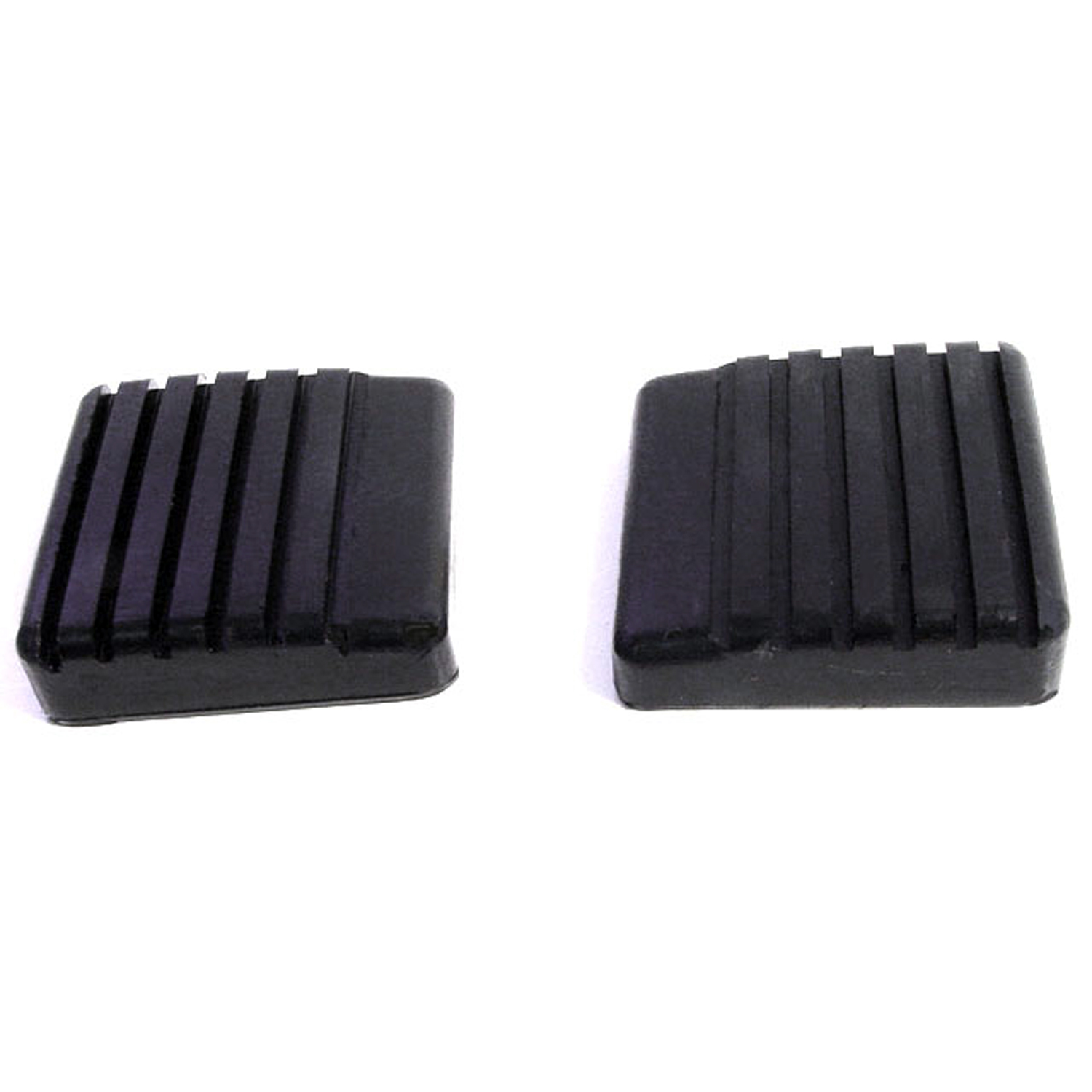 1968 Jeep J-2800 Clutch and Brake Pedal Pads. Pair-CB 61-BClutch and Brake Pedal Pads. Pair
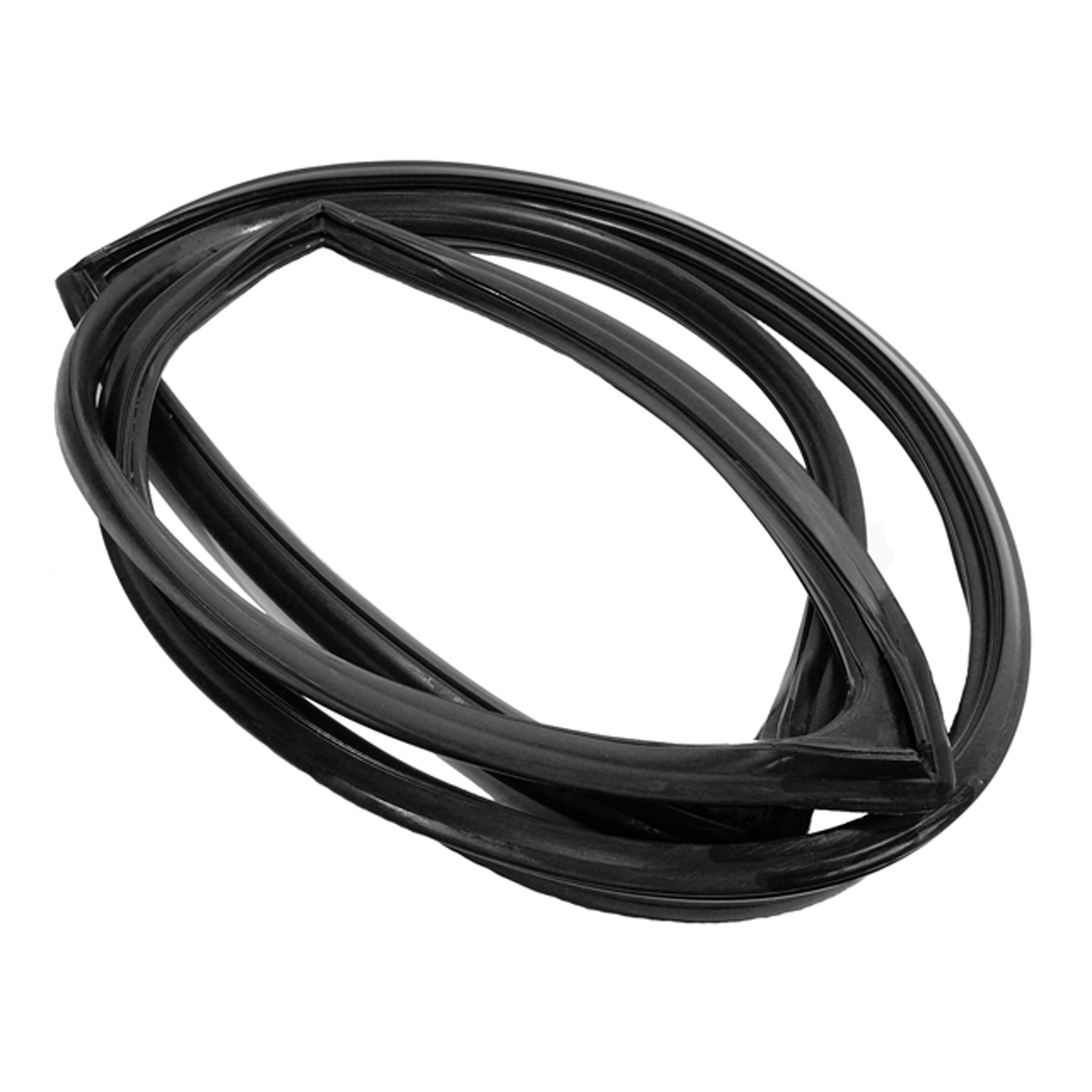 1968 Jeep J-2800 Vulcanized Windshield Seal. 164-1/4" Long. Each-VWS 0643Vulcanized Windshield Seal. 164-1/4" Long. Each
Why Choose Metro?
For over 100 years, Metro Moulded Parts has been the pinnacle of quality in classic car restoration parts. Our commitment to precision and authenticity in every component ensures a perfect fit and an OEM-level appearance.
- Expert Craftsmanship & Quality: Each part is a testament to our dedication to reliability and perfection, crafted from original designs and thoroughly tested.
- Advanced Technology: We use cutting-edge techniques to create flawless, long-lasting parts that surpass others in performance.
- SuperSoft Sponge – The Ultimate Door Seal: Not only are our door seals 30% softer than competitors', but they're also guaranteed to never leak. They effectively reduce wind and road noise, enhancing your classic car's comfort and driving experience.
- Proudly American: Our parts are a product of American craftsmanship, made in the USA with a spirit of excellence and heritage.
- Unrivaled Warranty: We back our products with a 30-year industry-leading warranty, a testament to our confidence in their quality.
Join us in preserving the legacy of classic cars with parts that are crafted for perfection, not just made.