

Image of 1968 Jeep J-3700, Note: These illustrations use artistic license and may differ from actual historical models.
Performance Metrics
Fundamental Metrics
Emotional Appeal
MMP Rating
| Engine Specifications | |
|---|---|
| Engine Options: | AMC 327 cu in (5.4 L) V8 |
| Displacement Range: | 327 cu in (5.4 L) |
| Horsepower Range: | 250 hp |
| Torque: | 340 lb-ft |
| Compression Ratio: | 8.7:1 |
| Ignition System: | Conventional breaker-point ignition system |
| Cooling System: | Liquid-cooled |
| Performance Specifications | |
| 0-60 Time: | Estimated 10-12 seconds |
| 1/4 Mile Time: | Estimated 17-19 seconds |
| Top Speed: | 100 mph |
| Transmission and Drive | |
| Drive Type: | 4WD |
| Transmission Type: | 3-speed manual, 4-speed manual, 3-speed automatic |
| Fuel and Efficiency | |
| Fuel System Type: | Carburetor |
| MPG: | Estimated 10-12 mpg |
| Dimensions and Brakes | |
| Brakes: | Drum brakes |
| Wheelbase: | 132 in |
| Weight: | 4500 lbs |
Note: Specifications for classic cars are given to the best of our ability, considering the limited and variant data available.
1968 Jeep J-3700: A Working Truck With Jeep DNA
The 1968 Jeep J-3700 was built for jobs that called for more than a handsome pickup: it paired a practical cargo bed with the rugged hardware and four-wheel-drive capability that had made Jeep famous. Produced by Kaiser Jeep Corporation, it belonged to the Jeep Gladiator family, a line of full-size pickups introduced for the 1963 model year.
By 1968, the Gladiator had become a familiar sight on farms, work sites, and back roads. It arrived during a period when American pickups were evolving from basic commercial tools into more comfortable, better-equipped vehicles. Jeep’s answer was not to abandon utility, but to add useful passenger-car touches while keeping serious off-road ability in the mix. One appealing detail of the J-3700’s story is that it came from an era when Jeep still offered a distinctive overhead-cam six-cylinder engine, the Tornado, in some earlier Gladiators. The J-3700’s 1968 engine choices reflected the changing lineup, but the truck retained the engineering-first character that set the series apart.
Gladiator Styling and Cabin Details
The J-3700 has the clean, squared-off proportions of a late-1960s American pickup, with a broad hood, upright windshield, and a substantial front end. Its face is especially recognizable: round headlights sit in a wide grille, giving the truck a straightforward, purposeful expression rather than the heavily ornamented look found on some rivals. Strong fender lines and a tall stance make it look ready for work, while the long pickup bed gives the body a balanced, useful profile.
Inside, the emphasis is on function. The dashboard is simple and easy to read, with large controls and clear instrumentation. Materials are durable rather than luxurious, typically consisting of painted metal, vinyl, and practical upholstery. Equipment varied with trim and options, so features such as upgraded seat coverings, radio, heater, and additional gauges depended on how the truck was ordered. Compared with a bare-bones work truck, a better-equipped J-3700 could feel quite comfortable, but it was still built around utility.
Period colors varied by year, trim, and order, with both restrained work-truck shades and brighter mid-century choices available across the Jeep pickup range. White, red, blue, green, and earth tones are among the kinds of colors seen on surviving trucks. Original paint codes and combinations are worth checking against the truck’s identification information, since restorations and decades of repainting can make a particular color look more common than it was.
The J-3700 was a pickup, not a separate SUV or wagon body style. Jeep’s broader J-series range included different wheelbase and equipment combinations, while buyers could choose from cab and bed configurations and a range of options. The long-bed pickup format is the most recognizable working-truck setup. As with other period pickups, four-wheel drive, trim, engine, transmission, and axle gearing could have a major effect on how a specific truck was equipped.
Engineering Ahead of the Curve
The Gladiator’s importance lies less in one headline-grabbing invention than in how it combined full-size pickup utility with genuine four-wheel-drive engineering. Jeep had decades of experience building vehicles for rough terrain, and the J-3700 brought that expertise to a truck intended to carry serious loads. Its body-on-frame construction, solid axles, and available four-wheel-drive system suited it to work where a conventional two-wheel-drive pickup might struggle.
That combination helped distinguish the J-series from many contemporary pickups. It was not simply a truck with an adventurous badge: its drivetrain and chassis were designed to make the capability real. The Gladiator family also helped establish the template for later full-size Jeep pickups, including the long-running J-series trucks that followed. Its influence is visible in the idea that a pickup can serve as both a useful work vehicle and a capable off-road machine.
Engines, Road Manners, and Performance
Engine availability depended on specification and market. The 1968 J-3700 is commonly associated with a 232-cubic-inch AMC inline-six and a 327-cubic-inch Vigilante V8, though the exact engine in any individual truck should be confirmed from its factory records, identification tags, or engine numbers. Transmission choices and axle ratios also varied. These details matter: a V8 with suitable gearing feels substantially different from a six-cylinder truck set up for steady work and economy.
Jeep did not market the J-3700 as a high-speed performer, and dependable period test figures for every engine and drivetrain combination are difficult to pin down. As a broad estimate, a V8-equipped example might reach roughly 80 to 90 mph in suitable condition, while a 0-to-60-mph run could take around 15 to 20 seconds. A six-cylinder truck, a heavily loaded pickup, or one with low gearing may be slower. These are estimates, not universal factory figures, and worn mechanical components can change them significantly.
On the road, the J-3700 feels like a truck from its time. Its solid axles and leaf springs are designed for durability and load carrying, so an empty truck can ride firmly over broken pavement. Add cargo, and the suspension settles into its intended working rhythm. On winding roads, the tall body and truck-focused steering call for measured inputs rather than sports-car enthusiasm. In four-wheel drive, it is better suited to loose surfaces, muddy tracks, and snow than to tight, fast cornering.
The driving experience has plenty of character. The inline-six gives a steady, workmanlike note, while the V8 adds a deeper rumble and stronger low-speed pull. The steering and controls feel mechanical, and the driver remains closely connected to the truck’s size, weight, and road surface. It is a satisfying experience for someone who enjoys old-school machinery, but it does not offer the quiet, light steering, or smooth ride of a modern pickup.
Owning and Maintaining a J-3700
These trucks were built to haul, tow, travel on rough roads, and reach places that demanded four-wheel drive. Today, owners use them as weekend drivers, farm and ranch vehicles, trail trucks, restoration projects, and show vehicles. A clean, original example can attract attention at classic-car events, while a mechanically sound but cosmetically rough truck may still be useful for light work.
Routine service is generally approachable for an owner comfortable with older vehicles. The mechanical layout is relatively straightforward, and many wear items can be serviced with ordinary tools and a workshop manual. Parts availability is mixed: common service components and some drivetrain parts are obtainable, but particular trim pieces, body panels, and model-specific details can take patience to locate. Before buying, inspect the frame, cab mounts, floorboards, bed, and lower body carefully for rust. Check the transfer case, axle seals, steering, brakes, and transmission as well, since neglected four-wheel-drive hardware can turn a bargain into an expensive project.
Reliability depends heavily on maintenance and restoration quality. A well-kept J-3700 can be dependable for local use, but age brings familiar concerns such as deteriorated wiring, fuel-system problems, cooling issues, worn suspension joints, and leaks. It is wise to treat a decades-old truck as a preservation project, even if it starts readily and looks presentable.
Notable Details and Common Complaints
The J-3700 belongs to the broader Gladiator family, which is often noted for its longevity and its unusual place between classic utility and early lifestyle pickup. Jeep’s long-running J-series design stayed in service through many styling and mechanical changes, a testament to the basic usefulness of the platform. There is no widely recognized speed or endurance record associated specifically with the 1968 J-3700, and celebrity ownership stories are not a defining part of its history.
Like most classic trucks, it has its critics. The ride can be stiff when unloaded, fuel consumption is modest at best, and the cabin lacks modern conveniences. Rust and parts availability can also frustrate restorers. Those drawbacks are balanced by the truck’s distinctive looks, sturdy construction, and genuine off-road ability. It is not the easiest classic pickup to own, but it offers more character than a purely ordinary work truck.
Collector Value and Availability
J-3700s are less common in the collector market than familiar pickups from the biggest American manufacturers, but they are not impossible to find. Condition, originality, drivetrain, rust, and documentation make a substantial difference in price. As a general 2026 market estimate in the United States, a project or rough driver may sell for around $5,000 to $12,000. A usable, reasonably solid truck could fall in the $12,000 to $25,000 range, while a well-restored or unusually original example may bring approximately $25,000 to $40,000 or more. Exceptional trucks can exceed that range, but such sales are not the norm.
Reliable production totals for the 1968 J-3700 alone are not readily available, so any unit count should be treated as an estimate rather than a factory-confirmed figure. A reasonable best guess is that production was in the low thousands, perhaps roughly 1,000 to 2,500 trucks, though the actual number may differ. Surviving examples are fewer because many spent decades doing hard work. Prices for desirable vintage pickups have generally strengthened over the long term, but the J-3700’s market remains selective: rust-free condition and correct, well-documented restoration matter more than simply having a Jeep badge.
Why the 1968 Jeep J-3700 Still Matters
The 1968 Jeep J-3700 blends a practical full-size pickup body with the off-road knowledge that defined Jeep. Its squared-off styling, work-ready chassis, available six-cylinder and V8 power, and four-wheel-drive capability make it a distinctive alternative to better-known period trucks. It is not fast, plush, or effortless to restore, but it has the honest character of a vehicle designed to earn its keep.
For collectors, the J-3700 offers something increasingly appealing: a classic pickup with real utility, genuine Jeep heritage, and a look that stands apart from the crowd. It was built to work in its day, and that purposeful spirit is exactly what makes it memorable now.
1968 Jeep J-3700 Catalog of Parts
 1968 Jeep J-3700 Shock Absorber Grommet. 1" bottom O.D-BN 11Shock Absorber Grommet. 1" bottom O.D., 3/4" high, with 5/8" I.D. Each
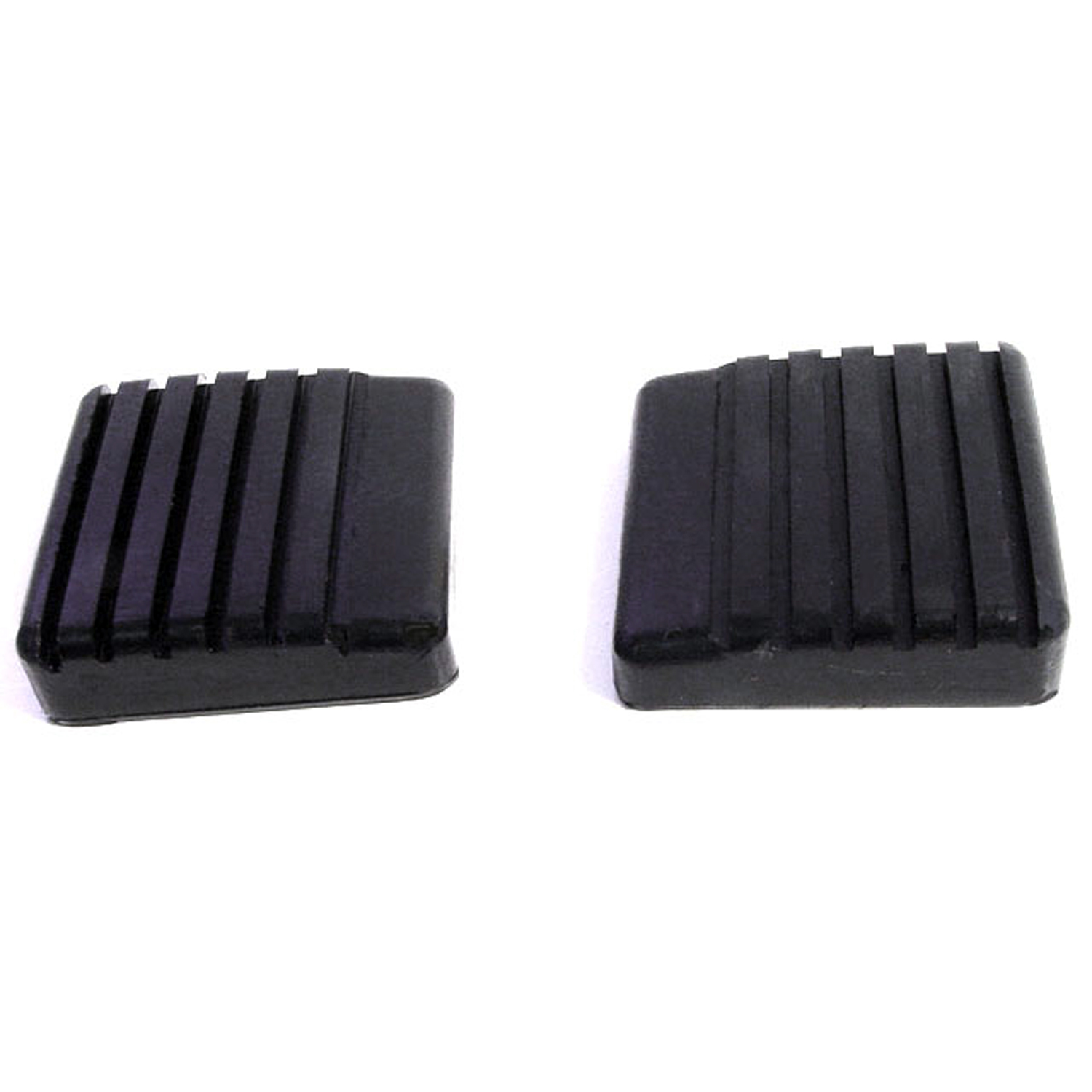 1968 Jeep J-3700 Clutch and Brake Pedal Pads. Pair-CB 61-BClutch and Brake Pedal Pads. Pair
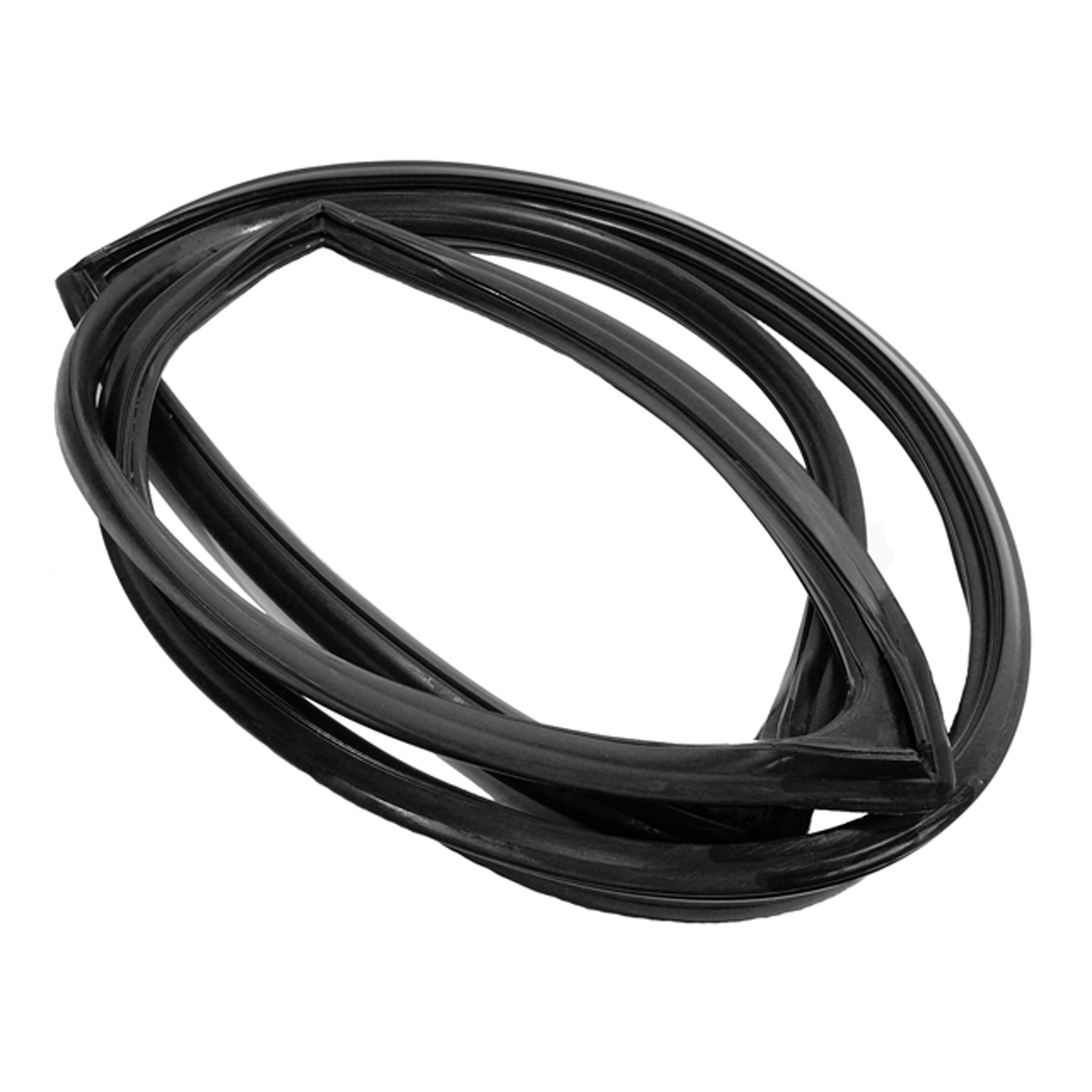 1968 Jeep J-3700 Vulcanized Windshield Seal. 164-1/4" Long. Each-VWS 0643Vulcanized Windshield Seal. 164-1/4" Long. Each
Why Choose Metro?
For over 100 years, Metro Moulded Parts has been the pinnacle of quality in classic car restoration parts. Our commitment to precision and authenticity in every component ensures a perfect fit and an OEM-level appearance.
- Expert Craftsmanship & Quality: Each part is a testament to our dedication to reliability and perfection, crafted from original designs and thoroughly tested.
- Advanced Technology: We use cutting-edge techniques to create flawless, long-lasting parts that surpass others in performance.
- SuperSoft Sponge – The Ultimate Door Seal: Not only are our door seals 30% softer than competitors', but they're also guaranteed to never leak. They effectively reduce wind and road noise, enhancing your classic car's comfort and driving experience.
- Proudly American: Our parts are a product of American craftsmanship, made in the USA with a spirit of excellence and heritage.
- Unrivaled Warranty: We back our products with a 30-year industry-leading warranty, a testament to our confidence in their quality.
Join us in preserving the legacy of classic cars with parts that are crafted for perfection, not just made.