

Image of 1969 Jeep J-3600, Note: These illustrations use artistic license and may differ from actual historical models.
Performance Metrics
Fundamental Metrics
Emotional Appeal
MMP Rating
| Engine Specifications | |
|---|---|
| Engine: | AMC 327 V8 |
| Displacement: | 327 cu in (5.4 L) |
| Horsepower: | 250 hp |
| Torque: | 340 lb-ft |
| Compression Ratio: | 8.7:1 |
| Ignition System: | Conventional, breaker point |
| Cooling System: | Liquid-cooled |
| Performance Specifications | |
| 0-60 Time: | Estimated 10-12 seconds |
| 1/4 Mile Time: | Estimated 17-19 seconds |
| Top Speed: | 100 mph |
| Transmission and Drive | |
| Drive Type: | 4WD |
| Transmission Type: | 3-speed manual, 4-speed manual, 3-speed automatic |
| Fuel and Efficiency | |
| Fuel System Type: | Carburetor |
| MPG: | Estimated 10-12 mpg |
| Dimensions and Brakes | |
| Brakes: | Drum brakes |
| Wheelbase: | 120 in (3,048 mm) |
| Weight: | 4,500 lbs |
Note: Specifications for classic cars are given to the best of our ability, considering the limited and variant data available.
1969 Jeep J-3600: A Working Classic with 4x4 Roots
The 1969 Jeep J-3600 was built for the kind of work that could take a truck from a muddy farm lane to a rocky mountain road without changing vehicles. It belonged to Jeep’s Gladiator pickup family, introduced in 1962 by Willys Motors and continued under Kaiser Jeep Corporation. By 1969, the Gladiator had become a familiar sight on job sites and rural roads, combining a useful pickup bed with Jeep’s established four-wheel-drive know-how.
The J-3600 was part of the heavier-duty J-series range and is generally identified as a four-wheel-drive, long-wheelbase pickup. Its exact equipment could vary with engine, axle, cab, and bed choices, so surviving trucks do not all share the same specification. One intriguing detail is that Gladiators were closely related to the Wagoneer, sharing much of their basic architecture. The pickup was not simply a passenger car with a bed attached: it was part of a purpose-built family of Jeep utility vehicles.
Gladiator Styling and Cabin Details
The J-3600’s exterior has the square-shouldered confidence of a late-1960s work truck. A broad hood leads to Jeep’s distinctive upright grille, flanked by round headlamps and simple rectangular marker lamps. The cab is tall and practical, with large windows that help visibility, while the long bed gives the truck a balanced, purposeful profile. Chrome and bright trim could add a little polish, but the design’s appeal lies mainly in its honest proportions and sturdy details.
Buyers could choose between different pickup-bed treatments, including the Townside, with smooth, full-width sides, and the more traditional Thriftside, whose rear fenders sit outside the bed. Availability depended on model year and configuration. The Townside’s clean profile is especially recognizable, while the stepside-style Thriftside has a more old-fashioned work-truck look.
Inside, the cabin is straightforward rather than luxurious. Painted metal surfaces, a broad dashboard, simple gauges, and durable vinyl upholstery suited a truck expected to earn its keep. A bench seat was typical, and the upright seating position gave the driver a commanding view of the road. Options such as upgraded trim, a radio, heater, and different seat finishes could make the cab more comfortable, but this was still a truck designed around utility. Materials were serviceable and easy to clean, not soft-touch or elaborate.
Exterior paint choices varied by year, trim, and order. Period Jeep trucks appeared in practical whites, creams, and muted work colors as well as brighter reds, blues, greens, and yellows. A red or blue truck with contrasting wheels and bright trim can be particularly eye-catching today, though there is no single color that defines every J-3600. For a restoration, paint codes and original documentation are more reliable guides than assumptions based on another truck.
Engines, Equipment, and Period Technology
Engine availability depended on the truck’s original market and specification. Period J-series trucks could be ordered with a six-cylinder engine or a V8, with power transmitted through a manual gearbox or, where offered, an automatic. The 232-cubic-inch inline-six was among the available Jeep engines, while V8 choices included the 327-cubic-inch Vigilante and, in some late-1960s configurations, the 350-cubic-inch Dauntless. Because engines and equipment changed during the model run, buyers should verify a particular J-3600 by its identification plates, engine numbers, and period sales literature.
Four-wheel drive was the truck’s defining capability. A two-speed transfer case allowed the driver to select a lower range for slow, demanding work, while the truck’s sturdy axles and truck-style chassis were intended to handle loads and rough roads. Power steering and power brakes were available on some configurations, making a heavy 4x4 easier to manage. These features were useful conveniences, although the J-3600 remained a largely mechanical vehicle by modern standards: no electronic traction control, anti-lock brakes, or computerized engine management.
One notable engineering point belongs to the broader Gladiator story. Jeep offered independent front suspension on certain two-wheel-drive versions, an unusual choice among pickups of the era. Four-wheel-drive trucks such as the J-3600 used a solid front axle, which was better suited to the demands of off-road use and heavy-duty service.
Why the J-3600 Mattered
The J-3600 helped establish the idea that a pickup could be both a serious work tool and a capable four-wheel-drive vehicle. In the 1960s, many pickups were still primarily rear-wheel-drive machines, with four-wheel drive often associated with specialized farm or military use. Jeep brought its off-road identity into a civilian pickup that could haul supplies during the week and tackle rough terrain when the pavement ended.
Its relationship to the Wagoneer also reflected an important design strategy: sharing a platform and components across pickups and utility vehicles. That approach helped Jeep offer a broad range of practical vehicles without making each one a completely separate engineering project. The J-3600 did not introduce modern pickup technology, but it helped strengthen the market for versatile 4x4 trucks, a category that has since become central to the North American automotive landscape.
Against rivals, the Jeep’s advantage was its combination of brand-recognized off-road ability, useful pickup dimensions, and a relatively comfortable cab. Its disadvantages were familiar too: a heavy build, modest fuel economy, and road manners that could feel agricultural beside a lighter two-wheel-drive pickup. It was a specialist with broad usefulness, rather than the smoothest or most economical truck in its class.
Performance and Road Manners
Period factory performance figures for an individual J-3600 are not consistently available, and results depend heavily on engine, gearing, transmission, tires, and vehicle condition. As a broad real-world estimate, a healthy V8-equipped example might reach 0 to 60 mph in roughly 15 to 20 seconds. A six-cylinder truck could take longer, particularly with low gearing or a load aboard. Top speed is best treated as an estimate too: many examples would be comfortable around 70 to 80 mph, with some capable of more under favorable conditions. These are not modern highway-performance figures, and sustained high-speed driving is not the truck’s natural habitat.
On pavement, the J-3600 feels substantial. The steering is slower and heavier than that of a modern pickup, especially at low speeds or without power steering. Its solid front axle is durable and well suited to rough ground, but it can transmit sharp bumps and ruts into the cab. On winding roads, the tall body and truck suspension call for measured inputs. A well-maintained truck can feel steady, but it is best driven with anticipation rather than hurried through corners.
On gravel, snow, or a muddy track, low-range gearing and four-wheel drive are the real attractions. The truck rewards a driver who chooses a sensible line and keeps momentum under control. The engine’s sound depends on the option fitted: a six-cylinder offers a steady workmanlike note, while a V8 brings a deeper growl under load. From the upright cab, the driver sits high and close to the controls, with a large steering wheel and straightforward instruments reinforcing the hands-on feel.
Living with a 1969 J-3600
Today, J-3600s are most often used as weekend drivers, farm and property trucks, restoration projects, or show vehicles. Some owners still put them to work, but a preserved classic is generally better suited to occasional hauling than constant commercial service. A good example can make a memorable local driver, though fuel consumption, braking distances, and modern traffic speeds should be considered before choosing one as a daily vehicle.
Mechanical repairs are approachable for an experienced home mechanic. The truck uses conventional, largely mechanical systems, and its engine bay is less crowded than that of a modern pickup. Routine work such as ignition service, carburetor adjustment, brake repairs, and cooling-system maintenance can be handled with standard tools and a factory service manual. Parts availability varies: common service items and some drivetrain components can be found through Jeep specialists and the vintage-parts market, while model-specific trim, sheet metal, and correct interior pieces may take patience.
Rust deserves close attention. Inspect the frame, cab mounts, floorboards, rocker areas, bed, and the metal around the windshield and rear cab window. Check the transfer case, axles, steering, and brakes for leaks or wear, and confirm that four-wheel drive engages correctly. A truck that looks tidy from ten feet away may still need expensive structural or drivetrain work. Originality also matters: swapped engines and non-original components are not necessarily deal-breakers, but they affect value and should be documented.
J-3600 Facts and Common Criticisms
The Gladiator name was used for Jeep’s pickup line from 1962 through 1971, after which the trucks continued under the J-series naming. That makes the 1969 J-3600 part of the final Gladiator-named period. Its close family connection to the Wagoneer is another appealing piece of trivia: the two vehicles shared important underlying engineering while serving very different roles.
There is no widely recognized production or speed record associated specifically with the J-3600, and celebrity ownership claims are not a defining part of its history. Nor is there a dependable published production total for the exact 1969 J-3600 configuration. Jeep built a range of J-series trucks, but model-level figures are difficult to establish from commonly available records. Claims that a particular trim or engine combination is exceptionally rare should be checked against factory documentation rather than repeated without evidence.
Common criticisms are practical rather than mysterious. The truck can be thirsty, noisy, slow by modern standards, and tiring to steer on long trips. Its ride is firm, and older brakes and tires demand more following distance than contemporary equipment. Those drawbacks are part of the classic-truck experience, but they also explain why condition and thoughtful maintenance matter so much.
Collector Value and Market Outlook
Values vary widely with rust, originality, drivetrain, restoration quality, and whether the truck runs and drives. As a broad U.S. market estimate, a project J-3600 may sell for about $5,000 to $12,000. A usable driver in decent condition might bring roughly $15,000 to $30,000, while a well-restored or especially well-preserved example could reach $30,000 to $50,000 or more. Exceptional trucks with desirable equipment and excellent documentation may exceed that range, but asking prices are not the same as completed sale prices.
Exact production totals are not readily established, so any model-specific estimate is speculative. A reasonable working guess is that surviving, identifiable 1969 J-3600s represent a small slice of Jeep’s broader truck production, with original examples likely numbering in the low thousands or fewer. That is not a factory figure or a confirmed survivor count; it is a cautious estimate reflecting the model’s age and the difficulty of separating exact configurations in historical records.
Interest in classic 4x4s has generally supported values for solid, usable examples, but the market is selective. Rust-free trucks, correct restorations, and unusual factory combinations tend to attract the strongest interest. Rough projects have not risen as reliably because restoration costs can quickly exceed the value of the finished truck. The best long-term purchase is usually the straightest, most complete example a buyer can afford, rather than the cheapest truck advertised.
A Jeep Built for the Long Way Around
The 1969 Jeep J-3600 is a capable and characterful piece of Jeep history: a full-size pickup with a working-truck attitude, a useful four-wheel-drive system, and a direct connection to the Wagoneer and early Gladiator years. It is not fast, quiet, or economical by modern standards, but it offers mechanical simplicity and genuine rough-road ability that are easy to appreciate.
For collectors, the J-3600 is a distinctive alternative to the better-known pickups of its era. For owners, it is a classic that still makes sense when the road gets rough and the job calls for more than polished chrome. It earned its place one muddy mile, loaded bed, and hard-working season at a time.
1969 Jeep J-3600 Catalog of Parts
 1969 Jeep J-3600 Shock Absorber Grommet. 1" bottom O.D-BN 11Shock Absorber Grommet. 1" bottom O.D., 3/4" high, with 5/8" I.D. Each
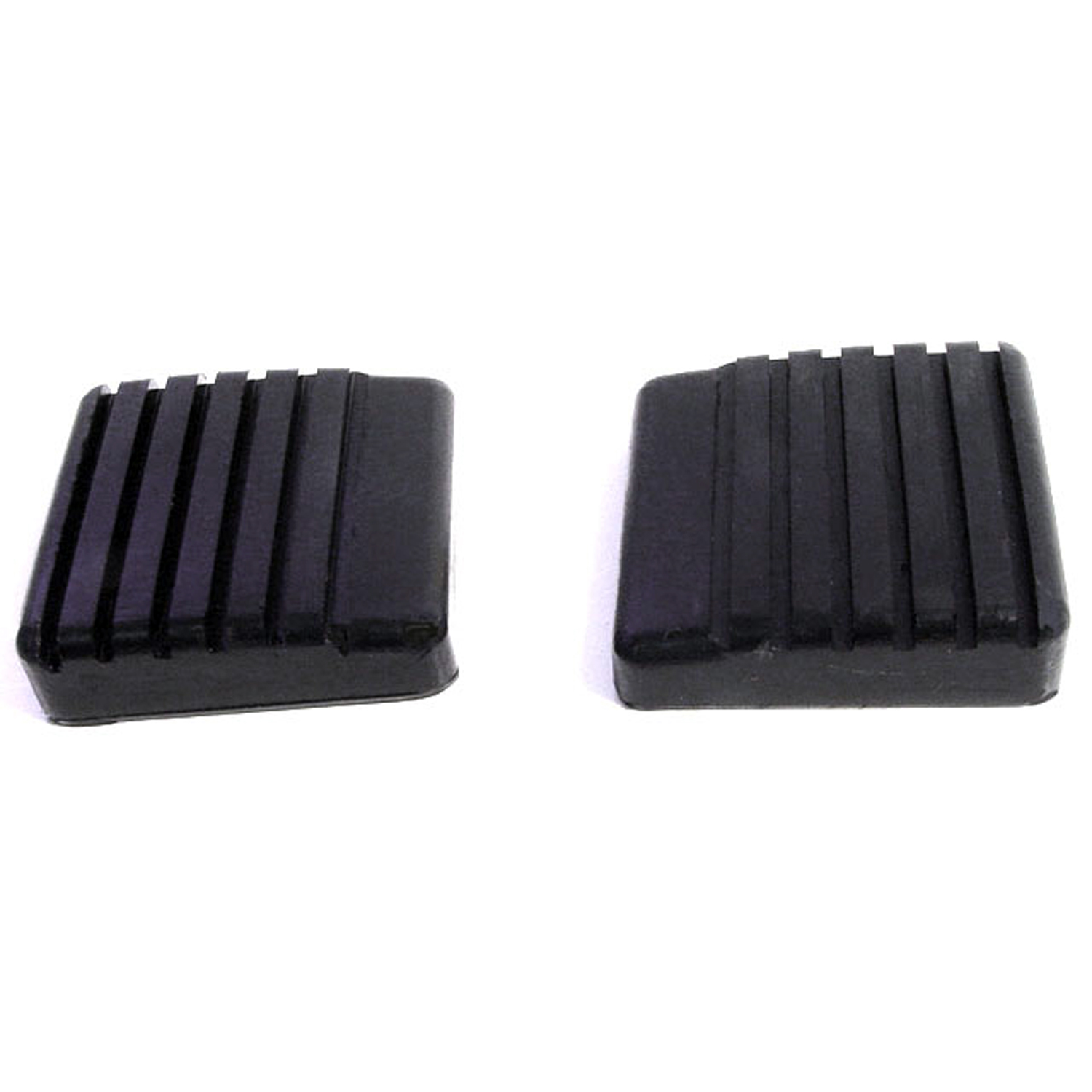 1969 Jeep J-3600 Clutch and Brake Pedal Pads. Pair-CB 61-BClutch and Brake Pedal Pads. Pair
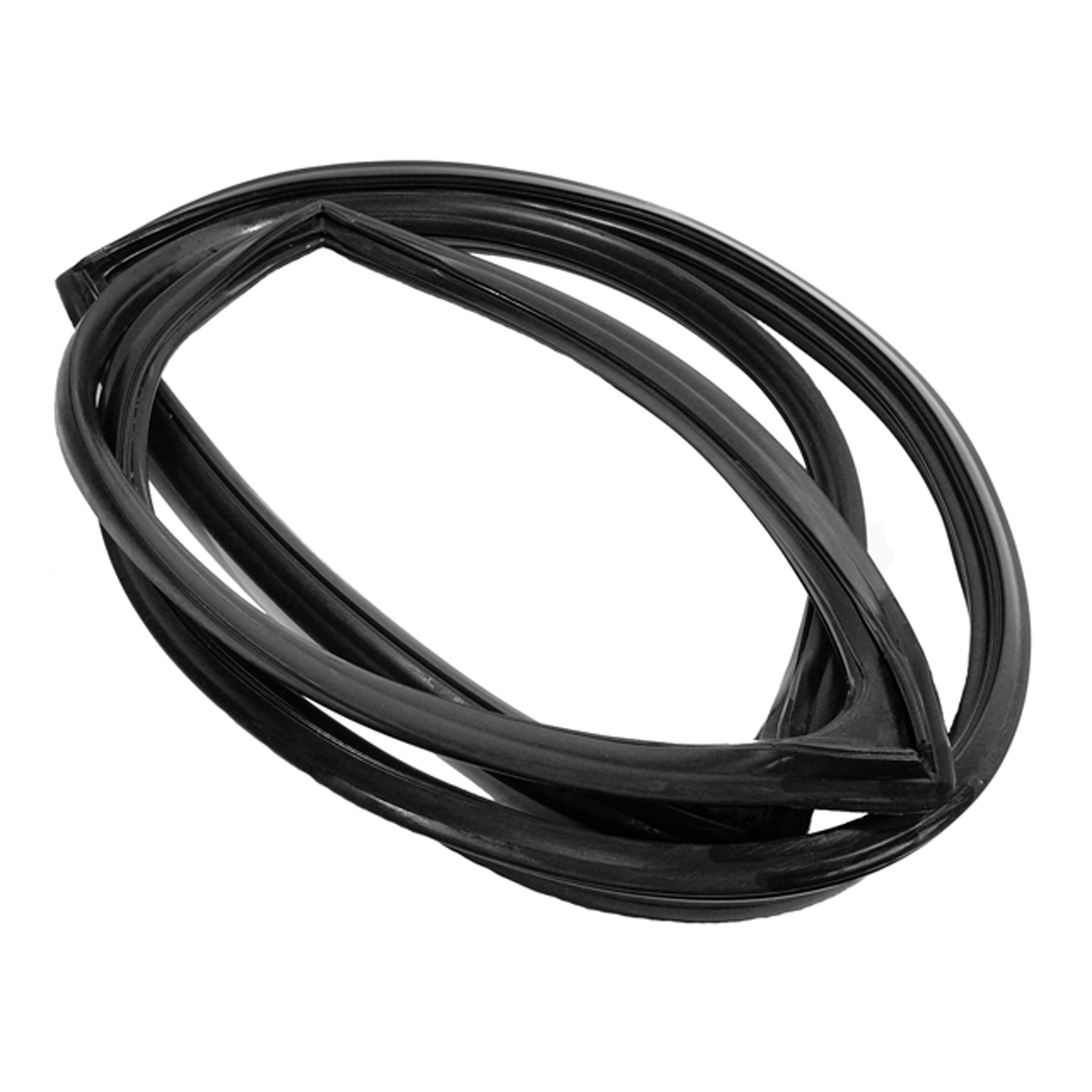 1969 Jeep J-3600 Vulcanized Windshield Seal. 164-1/4" Long. Each-VWS 0643Vulcanized Windshield Seal. 164-1/4" Long. Each
Why Choose Metro?
For over 100 years, Metro Moulded Parts has been the pinnacle of quality in classic car restoration parts. Our commitment to precision and authenticity in every component ensures a perfect fit and an OEM-level appearance.
- Expert Craftsmanship & Quality: Each part is a testament to our dedication to reliability and perfection, crafted from original designs and thoroughly tested.
- Advanced Technology: We use cutting-edge techniques to create flawless, long-lasting parts that surpass others in performance.
- SuperSoft Sponge – The Ultimate Door Seal: Not only are our door seals 30% softer than competitors', but they're also guaranteed to never leak. They effectively reduce wind and road noise, enhancing your classic car's comfort and driving experience.
- Proudly American: Our parts are a product of American craftsmanship, made in the USA with a spirit of excellence and heritage.
- Unrivaled Warranty: We back our products with a 30-year industry-leading warranty, a testament to our confidence in their quality.
Join us in preserving the legacy of classic cars with parts that are crafted for perfection, not just made.