

Image of 1970 Jeep J-2700, Note: These illustrations use artistic license and may differ from actual historical models.
Performance Metrics
Fundamental Metrics
Emotional Appeal
MMP Rating
| Engine Specifications | |
|---|---|
| Engine Options: | AMC 232, AMC 258, AMC 304, AMC 360, AMC 401 |
| Displacement Range: | 232-401 cu in |
| Horsepower Range: | 100-255 hp |
| Torque: | 185-345 lb-ft |
| Compression Ratio: | 8.0:1 - 8.5:1 |
| Ignition System: | Conventional, breaker point |
| Cooling System: | Liquid-cooled |
| Performance Specifications | |
| 0-60 Time: | Estimated 15-20 seconds |
| 1/4 Mile Time: | Estimated 20-25 seconds |
| Top Speed: | 80-90 mph |
| Transmission and Drive | |
| Drive Type: | 4WD |
| Transmission Type: | 3-speed manual, 4-speed manual, 3-speed automatic |
| Fuel and Efficiency | |
| Fuel System Type: | Carburetor |
| MPG: | Estimated 10-15 mpg |
| Dimensions and Brakes | |
| Brakes: | Front disc and rear drum brakes |
| Wheelbase: | 119 inches |
| Weight: | 3,500-4,500 lbs |
Note: Specifications for classic cars are given to the best of our ability, considering the limited and variant data available.
1970 Jeep J-2700: A Workhorse with a Wild Side
The 1970 Jeep J-2700 was built for the kind of work that sent ordinary pickups looking for an easier route. Tall, square-shouldered, and available with four-wheel drive, it belonged to Jeep’s Gladiator family of full-size trucks, a line that blended practical hauling ability with serious off-road hardware.
The Gladiator debuted in 1962 under Willys Motors, which became Kaiser Jeep in 1963. By 1970, Kaiser Jeep was building the J-2700 as part of a truck range that also included other J-series models. The exact equipment depended on the truck’s configuration, but the J-2700’s appeal was consistent: it offered a useful pickup body and the capability to venture well beyond paved roads.
One intriguing piece of Jeep truck history is that the Gladiator line was closely related to the Wagoneer, Jeep’s new-generation family wagon. The shared engineering helped make the trucks more modern than many traditional work pickups, while Jeep’s four-wheel-drive expertise gave them a distinct advantage when the road ended.
Square-Jawed Jeep Styling
The J-2700 wore a clean, upright shape that looked ready for a job. Its broad grille, round headlights, flat hood, tall cab, and straight-sided body gave it a purposeful profile. The design was more about visibility and utility than ornament, but the proportions had plenty of character. Today, that combination of a big hood, narrow cab, and unmistakably vintage Jeep face makes the truck stand out at shows and on the trail.
Inside, the cabin was straightforward and durable. Expect painted metal surfaces, simple instrumentation, sturdy vinyl upholstery, and a broad bench seat in many examples. Materials were chosen to tolerate muddy boots and daily work rather than deliver luxury-car softness. Equipment varied, and options such as upgraded trim, carpeting, and a more comfortable seat could make a truck feel considerably more civilized.
There was no modern infotainment or electronic driving aid. The notable technology was mechanical: available four-wheel drive, a transfer case, and a choice of engines and transmissions suited to different jobs. Depending on configuration, buyers could get a manual gearbox or an automatic, along with different axle and suspension equipment. For its time, the J-2700’s appeal was not gadgetry. It was having useful capability built into the truck.
Jeep offered a range of factory colors during this period, with choices varying by model year and paint code. Period trucks could be found in shades such as white, red, blue, green, and gold-toned colors, alongside more workaday finishes. White and other light colors were common on fleet and utility trucks, while brighter hues give surviving examples extra curb appeal. Original paint codes are worth checking before a restoration, since color availability could change from year to year.
The familiar pickup was the J-2700’s signature form, but Jeep’s truck range could also be ordered in work-oriented configurations such as chassis-cab and specialized commercial setups. Bed styles and equipment depended on the order. Four-wheel drive was a major draw, though two-wheel-drive versions were also part of the broader J-series lineup. For many enthusiasts, the classic four-wheel-drive pickup is the most iconic version.
Why the Gladiator Era Mattered
The J-2700 was part of a shift in how buyers thought about a pickup. It was not simply a basic farm truck with a transfer case added. The Gladiator family shared design and engineering ideas with Jeep’s Wagoneer, giving it a more integrated, modern feel while retaining the sturdy construction expected of a working vehicle.
Jeep also brought a distinctive engine story to the truck line. Earlier Gladiators could be fitted with the 230-cubic-inch Tornado inline-six, an overhead-cam engine that was unusual in American production vehicles of its era. By 1970, engine availability had changed over the years, and J-series trucks could be ordered with different six-cylinder or V8 options depending on model and equipment. Check the vehicle’s original documentation or engine identification before assuming what it left the factory with.
Compared with many contemporaries, the J-2700 stood out for combining truck utility with Jeep’s off-road identity. It helped establish the idea that a full-size pickup could serve as both a work vehicle and a serious backcountry machine. Its lasting influence is visible in the continued popularity of four-wheel-drive pickups that are expected to haul during the week and explore on the weekend.
Engine Character and Road Manners
Performance varied widely with the engine, transmission, axle ratio, tire size, and whether the truck was two- or four-wheel drive. A six-cylinder J-2700 was a steady, work-focused machine. A V8-equipped truck delivered stronger passing power and better confidence under load, though neither version was built to feel quick by modern standards.
There is no single reliable factory acceleration figure for every 1970 J-2700 configuration. As a broad estimate, a healthy example might take roughly 15 to 20 seconds to reach 60 mph, with the slower end more likely for a six-cylinder truck or one carrying heavy gearing and tires. Top speed was generally in the neighborhood of 80 to 90 mph, but gearing, condition, and engine choice could move that figure. These are estimates, not universal factory specifications, and sustained high-speed driving is not the truck’s natural habitat.
On the road, the J-2700 feels like a substantial old-school pickup. Its solid axles and leaf springs are useful for durability and load carrying, but they transmit bumps and sharp edges into the cabin. Rough pavement can produce a firm, busy ride, while winding roads call for a relaxed pace. The high seating position gives the driver a commanding view, but the truck’s size and vintage steering require more attention than a modern pickup.
Four-wheel drive is the J-2700’s advantage on loose dirt, snow, and muddy tracks. On a trail, its ground clearance and mechanical simplicity are more important than speed. Behind the wheel, expect engine noise, wind around the cab, and a direct connection to the machinery. A V8 adds a satisfying low-pitched rumble; the six-cylinder tends to sound more workmanlike. Either way, the experience is tactile and mechanical, with the driver doing the shifting, steering, and listening.
Living with a J-2700
Today, owners use these trucks as weekend drivers, farm and property vehicles, trail rigs, restoration projects, and show pieces. A well-sorted example can still handle local trips and light work, but its age, fuel consumption, braking performance, and highway manners make it less convenient as a daily driver than a modern pickup.
Maintenance is manageable for an owner comfortable with older vehicles. The engine bay is relatively accessible, and many routine jobs involve familiar mechanical systems rather than complex electronics. The bigger challenge is often finding the right parts, especially body panels, trim, model-specific pieces, and components for less common configurations. Mechanical parts may be shared across portions of the Jeep truck range, but buyers should verify fitment rather than assume every J-series part is interchangeable.
Before buying, inspect the frame, cab mounts, floorboards, bed, and lower body panels for corrosion. Check the four-wheel-drive system, transfer case, axle seals, steering play, brakes, and cooling system. A truck that has spent years working in mud, snow, or road salt may need substantial structural repairs. A clean, unmodified example with documented maintenance is often a better buy than a heavily customized truck with unknown history.
J-2700 Trivia and Common Complaints
The J-2700 belongs to the larger Gladiator and J-series story, but model-specific production totals are not consistently published. That makes it difficult to identify exactly how many 1970 J-2700s were built. There is no widely recognized speed or sales record associated with the model, and its appeal is more about rugged utility than a single headline-grabbing achievement.
As a rough estimate, production may have been in the low thousands for the J-2700 in a model year, perhaps around 2,000 to 5,000 trucks. That is an informed guess, not a verified factory figure. Surviving examples are less common than later mass-market pickups, particularly when they retain original components and have not suffered major rust or hard-use damage.
Common criticisms are familiar to anyone who has driven a vintage work truck: modest acceleration, heavy steering, a firm ride, noticeable cabin noise, and thirsty fuel consumption, especially with a V8 and four-wheel drive. Some owners also find that parts hunting takes patience. Those drawbacks are part of the deal, but they are balanced by sturdy construction, distinctive styling, and genuine off-road ability.
Collector Values and Availability
Values depend heavily on condition, drivetrain, originality, and the quality of any restoration. As a broad current-market guide, a project truck might sell for about $5,000 to $12,000. A usable driver could fall around $12,000 to $25,000, while a nicely restored or unusually well-preserved example may bring approximately $25,000 to $40,000 or more. Exceptional trucks with desirable equipment, documented history, or show-quality restoration can exceed that range, but they are the exception rather than the norm.
J-2700s are not impossible to find, but buyers may need to search specialist Jeep groups, classic-truck listings, and regional auctions. Four-wheel-drive examples in sound condition tend to attract the most attention. Values have generally strengthened as vintage 4x4s have become more collectible, though the market remains selective. Rust, incomplete restorations, and non-original modifications can limit prices, while clean, honest trucks are increasingly appreciated.
A Jeep Built for the Long Way Around
The 1970 Jeep J-2700 brings together the useful proportions of a full-size pickup and the off-road character that made Jeep famous. It is not fast, quiet, or especially comfortable by modern standards. It is sturdy, distinctive, and satisfying in the way only a hands-on vintage truck can be.
For collectors, the J-2700 offers a less familiar alternative to the best-known pickups of its era. For drivers, it delivers a reminder that a truck can be both a practical tool and an invitation to take the rough road home.
1970 Jeep J-2700 Catalog of Parts
 1970 Jeep J-2700 Shock Absorber Grommet. 1" bottom O.D-BN 11Shock Absorber Grommet. 1" bottom O.D., 3/4" high, with 5/8" I.D. Each
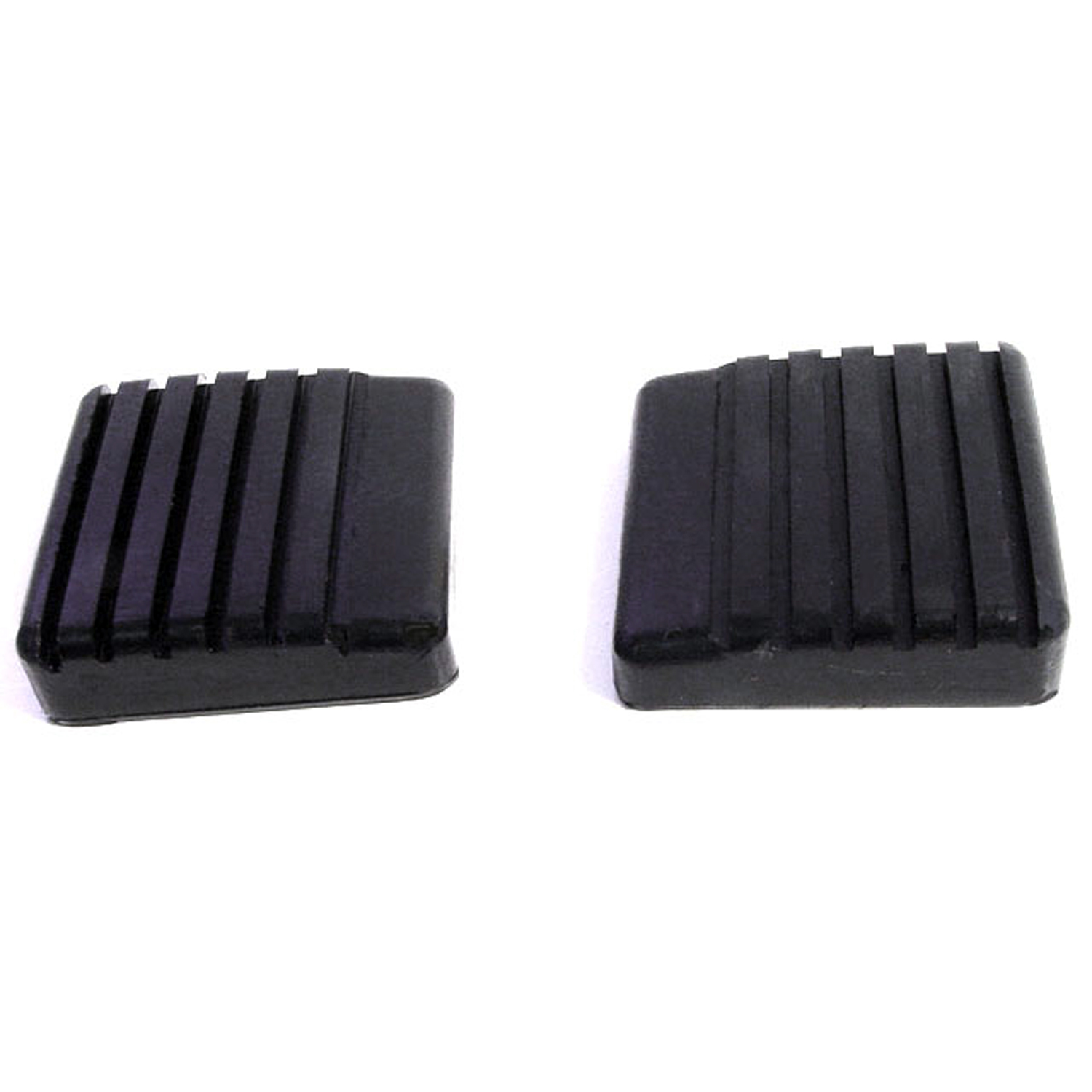 1970 Jeep J-2700 Clutch and Brake Pedal Pads. Pair-CB 61-BClutch and Brake Pedal Pads. Pair
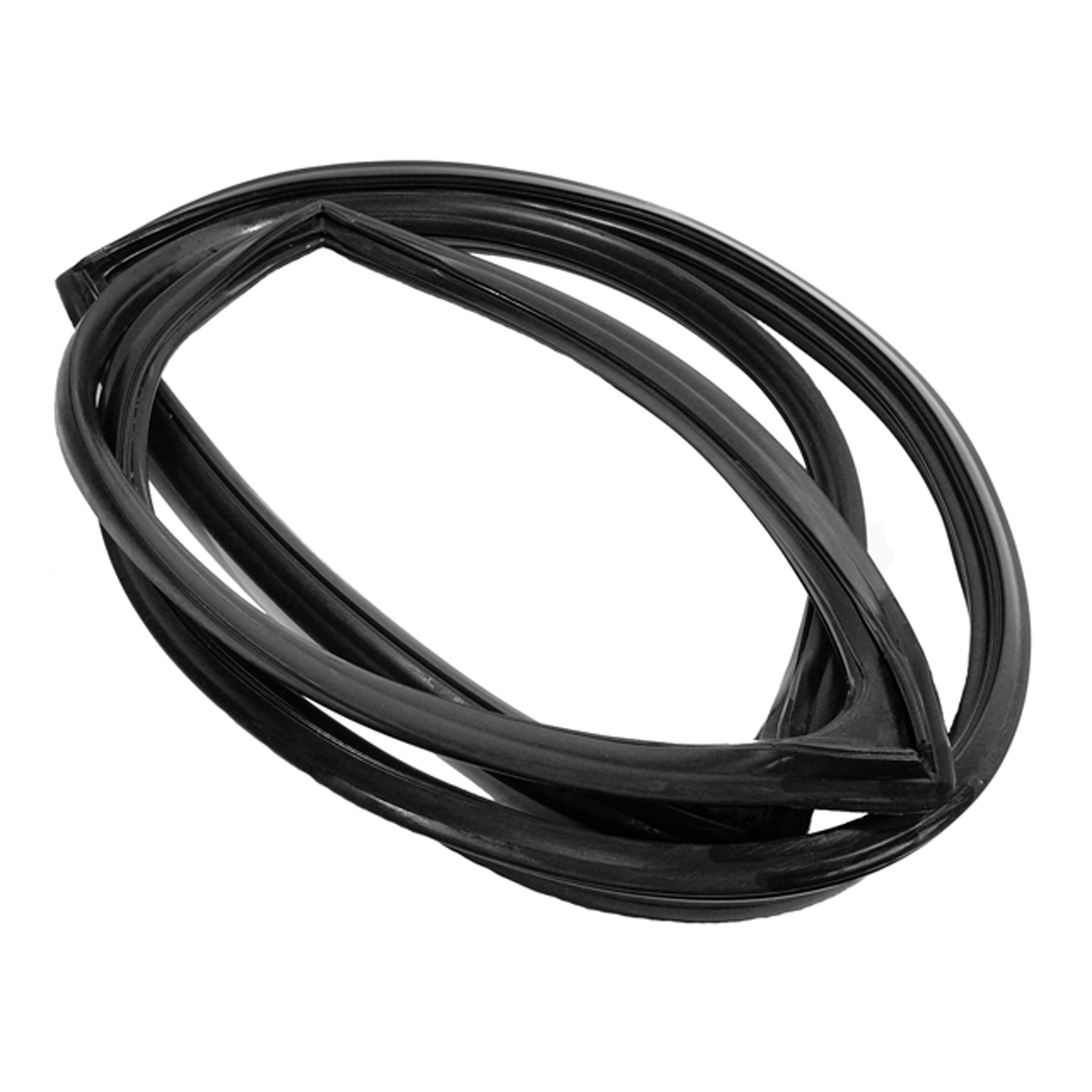 1970 Jeep J-2700 Vulcanized Windshield Seal. 164-1/4" Long. Each-VWS 0643Vulcanized Windshield Seal. 164-1/4" Long. Each
Why Choose Metro?
For over 100 years, Metro Moulded Parts has been the pinnacle of quality in classic car restoration parts. Our commitment to precision and authenticity in every component ensures a perfect fit and an OEM-level appearance.
- Expert Craftsmanship & Quality: Each part is a testament to our dedication to reliability and perfection, crafted from original designs and thoroughly tested.
- Advanced Technology: We use cutting-edge techniques to create flawless, long-lasting parts that surpass others in performance.
- SuperSoft Sponge – The Ultimate Door Seal: Not only are our door seals 30% softer than competitors', but they're also guaranteed to never leak. They effectively reduce wind and road noise, enhancing your classic car's comfort and driving experience.
- Proudly American: Our parts are a product of American craftsmanship, made in the USA with a spirit of excellence and heritage.
- Unrivaled Warranty: We back our products with a 30-year industry-leading warranty, a testament to our confidence in their quality.
Join us in preserving the legacy of classic cars with parts that are crafted for perfection, not just made.