
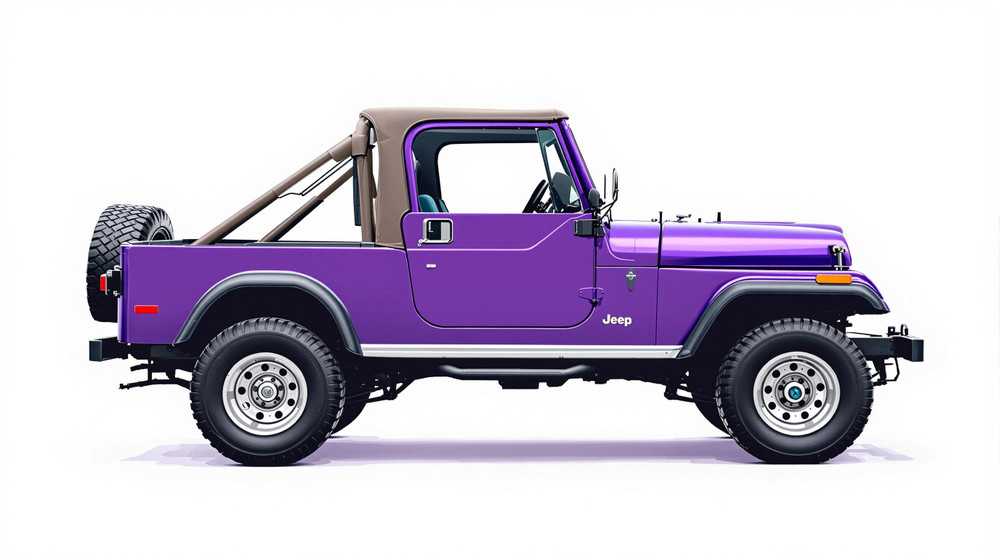
Image of 1980 Jeep Cj6, Note: These illustrations use artistic license and may differ from actual historical models.
Performance Metrics
Fundamental Metrics
Emotional Appeal
MMP Rating
| Engine Specifications | |
|---|---|
| Engine: | AMC 304 V8, AMC 258 I6 |
| Displacement: | 258-304 cu in (4.2-5.0 L) |
| Horsepower: | 95-150 hp |
| Torque: | 185-245 lb-ft |
| Compression Ratio: | 8.4:1 (I6), 8.0:1 (V8) |
| Ignition System: | Electronic Ignition |
| Cooling System: | Liquid-cooled |
| Performance Specifications | |
| 0-60 Time: | 14-16 seconds |
| 1/4 Mile Time: | 18-20 seconds |
| Top Speed: | 85 mph |
| Transmission and Drive | |
| Drive Type: | 4WD |
| Transmission Type: | 3-speed manual, 4-speed manual |
| Fuel and Efficiency | |
| Fuel System Type: | Carburetor |
| MPG: | 10-15 mpg |
| Dimensions and Brakes | |
| Brakes: | Front disc, rear drum |
| Wheelbase: | 103.5 in |
| Weight: | 3,000 lbs |
Note: Specifications for classic cars are given to the best of our ability, considering the limited and variant data available.
1980 Jeep CJ-6: The Long-Wheelbase Jeep With a Global Story
The Jeep CJ-6 is the classic CJ with an extra stretch of bodywork and a little more room for people or gear. But a vehicle described as a “1980 Jeep CJ-6” needs one important qualification: the CJ-6 had largely disappeared from the U.S. market by then, while production and assembly continued longer in some other countries. A Jeep carrying a 1980 model-year identity may therefore be a rare regional-market CJ-6, or a vehicle whose registration year differs from its actual build year. Checking its VIN, chassis plate, and local production records is essential.
The CJ-6 began as a longer-wheelbase development of the Willys CJ-5, built by Willys-Overland and later by Kaiser Jeep and American Motors Corporation. Its extra length made it more useful as a work vehicle without giving up the compact, open-air character that defined the civilian Jeep. Depending on market and era, CJ-6 production continued after the model had left the United States lineup, including in Brazil and South Africa. That international history is part of what makes a purported 1980 example so intriguing.
Long Body, unmistakable Jeep styling
The CJ-6 keeps the familiar upright grille, round headlamps, flat hood, exposed hinges, and squared-off fenders of the CJ family. Its defining feature is the longer body: the wheelbase is typically around 101 inches on earlier versions and about 104 inches on later examples. Compared with a CJ-5, the added length is most apparent between the doors and rear wheel openings. It gives the Jeep a purposeful, stretched stance rather than the compact, almost toy-like proportions of its shorter sibling.
Most CJ-6s were open utility vehicles, with removable doors, a folding windshield, and a soft top available. Hardtops and other equipment varied by market and year. The open body makes the Jeep easy to adapt for farm work, trail use, or recreation, but it also means that original tops and weather seals can be hard to find. Buyers should check that any hardtop, soft top, doors, and mounting hardware are correct for the vehicle rather than assume every CJ-6 shared the same fittings.
Inside, the cabin is straightforward and durable. Expect painted metal, simple gauges, basic switches, and seats built for utility rather than luxury. Materials and trim differ between years and markets, and a vehicle assembled outside the United States may not match the familiar American CJ-5 specification. The longer body offers more room for rear passengers or cargo, but the interior remains spartan. Period comforts such as a heater, radio, and padded trim were optional or market-dependent, not modern conveniences to take for granted.
Color choices also varied with production location and model year. Earthy greens, tans, blues, reds, and white are commonly associated with classic Jeeps, alongside fleet and military-inspired finishes. There is no single reliable “1980 CJ-6 color chart” that applies to every market. For a restoration, the original paint code or a protected area beneath trim can provide better evidence than a general color list.
Why the CJ-6 mattered
The CJ-6 addressed a practical weakness of the short-wheelbase CJ-5: limited space. By lengthening the chassis while preserving a compact overall footprint, Jeep created a vehicle that could carry more passengers, tools, or supplies on rough roads. The formula suited farms, forestry, service fleets, and remote communities, where a conventional passenger car could be impractical and a full-size truck could be too cumbersome.
The CJ-6 did not introduce the four-wheel-drive utility vehicle, but it broadened what a civilian Jeep could do. Its design showed that the simple CJ platform could be stretched to serve different jobs without losing its recognizable character. That adaptability became a lasting theme in Jeep design, from later longer-wheelbase models to modern vehicles that balance off-road ability with additional passenger and cargo space.
In the United States, the CJ-6 remained a niche choice beside the more familiar CJ-5 and the increasingly popular CJ-7. Its lower profile today is part of its appeal: it is recognizable to Jeep enthusiasts, but far less commonly seen than the best-known short- and medium-wheelbase CJs. A genuine late-market example also offers a window into how Jeep products were adapted and sold around the world.
Engine, speed, and trail manners
There is no single engine specification for every vehicle called a 1980 CJ-6. Powertrains varied by country, assembly plant, and year. Earlier CJ-6s could be fitted with four-cylinder engines, while later American-market versions were offered with AMC inline-six engines and, in some years, a V8. Regional vehicles could use different locally available engines. Verify the engine number and vehicle documentation before relying on a specification sheet or ordering parts.
For a late CJ-6 with a typical six-cylinder powertrain, a realistic period-style estimate is roughly 15 to 20 seconds from 0 to 60 mph, with top speed in the neighborhood of 70 to 85 mph. Those are broad estimates, not certified figures for every 1980 example. Engine choice, gearing, tire size, body equipment, and mechanical condition make a substantial difference. These Jeeps were built for low-speed work and off-road traction, not quick acceleration or sustained high-speed cruising.
On a trail, the CJ-6’s solid axles, low-range gearing, and short overhangs help it tackle uneven ground. The longer wheelbase can make the ride feel less busy than a CJ-5 over some bumps, but it also reduces the breakover advantage of a shorter Jeep. Deep ruts and sharp crests still demand careful line choice. On pavement, expect steering that requires more attention than a modern vehicle, noticeable body movement, and a ride that can become choppy on broken surfaces.
The driving experience is direct and mechanical. The engine’s intake and exhaust are close, the gearshift is substantial, and road texture comes through the steering wheel and seat. At speed, wind noise from the open body and soft top is part of the deal. On a winding road, the Jeep feels tall and deliberate rather than sporty. Its charms are visibility, simplicity, and the sense that the driver is operating a piece of equipment, not being insulated from the road.
Living with a classic CJ-6
A CJ-6 can serve as a weekend trail rig, farm vehicle, restoration project, parade vehicle, or show car. Some owners use them regularly, but a 1980 example deserves particular care before being treated as a daily driver. Parts support for common Jeep mechanical components is generally good, while market-specific body panels, trim, electrical pieces, and engine parts may take more research. A vehicle’s country of origin can have a major effect on how easy it is to maintain.
The basic mechanical layout is relatively accessible to a capable home mechanic. Many repairs do not require specialized diagnostic equipment, and the vehicle’s straightforward construction makes inspection and routine service approachable. That simplicity should not be confused with low maintenance. Age, previous off-road use, improvised repairs, and years of exposure can leave hidden problems in the frame, suspension mounts, steering, brakes, and drivetrain.
Rust deserves close attention, especially around the frame, body supports, floor, rocker panels, wheel openings, and the areas where the body attaches to the chassis. Inspect the four-wheel-drive system, transfer case, axle seals, clutch, cooling system, and brake condition. On a purported 1980 model, also verify that the engine, transmission, and body configuration match the vehicle’s documentation. A clean identity and sound structure are usually more valuable than an attractive fresh paint job hiding old repairs.
Rare details and common complaints
The CJ-6’s most notable “rare edition” is its long-wheelbase body itself. It was never as common as the CJ-5, and late examples associated with markets outside the United States are especially unusual in North America. Rather than assume a special trim package or celebrity connection, prospective owners should focus on verifiable provenance: factory records, import documents, original plates, and a consistent chassis identity.
There is no widely recognized speed, sales, or endurance record that defines the CJ-6. Its significance is more practical than headline-grabbing: it carried the CJ formula into work and recreation roles that needed more space. One common criticism is that the extra length does not turn it into a comfortable family vehicle. The cabin remains basic, the ride is old-school, and highway noise and steering effort can wear on drivers used to modern SUVs.
Another frequent complaint is parts uncertainty on less common export versions. Components shared with other CJs may be easy to source, but region-specific details can be challenging. That makes documentation and specialist knowledge especially valuable when evaluating a late CJ-6.
Collector value and availability
Values depend heavily on condition, originality, location, and whether the vehicle can be authenticated as a genuine CJ-6 from the stated year and market. As a broad U.S.-dollar guide, a non-running or heavily corroded project might bring about $5,000 to $12,000. A usable driver with sound structure could fall around $15,000 to $30,000, while a well-restored, documented, or unusually original example could reach roughly $30,000 to $45,000 or more. Exceptional vehicles and rare regional versions may command higher prices, but only when buyers can verify what they are purchasing.
Exact production totals are difficult to pin down across multiple countries and assembly periods. A reasonable broad estimate is that worldwide CJ-6 production reached several tens of thousands, perhaps around 50,000 over the model’s full history. That figure should be treated as an estimate, not a confirmed total. The number of genuine 1980 examples would be a much smaller subset, and their availability depends on the market in which they were built and sold.
Interest in classic Jeeps has generally supported values, particularly for clean, original, and well-documented vehicles. The CJ-6 remains less familiar to casual collectors than the CJ-5 or CJ-7, which can keep some examples more affordable. At the same time, its scarcity and unusual proportions appeal to Jeep enthusiasts. Restoration costs, rust, and uncertain provenance can quickly erase any bargain, so buy condition and documentation rather than a seller’s model-year claim alone.
The Jeep that made room for more
The CJ-6 combined classic Jeep simplicity with a longer, more useful body, creating a distinctive utility vehicle for work and adventure. Its open design, mechanical character, and off-road hardware still make it engaging to drive, while its relative rarity gives it a special place in the CJ family.
A “1980 Jeep CJ-6” is most compelling when its identity and regional history can be proven. Confirm the build details, inspect the chassis carefully, and judge the vehicle on its actual condition. Find the right one, and you get more than an uncommon old Jeep: you get a rolling reminder that the most enduring designs are often the ones adaptable enough to travel far beyond their original home.
1980 Jeep Cj6 Catalog of Parts
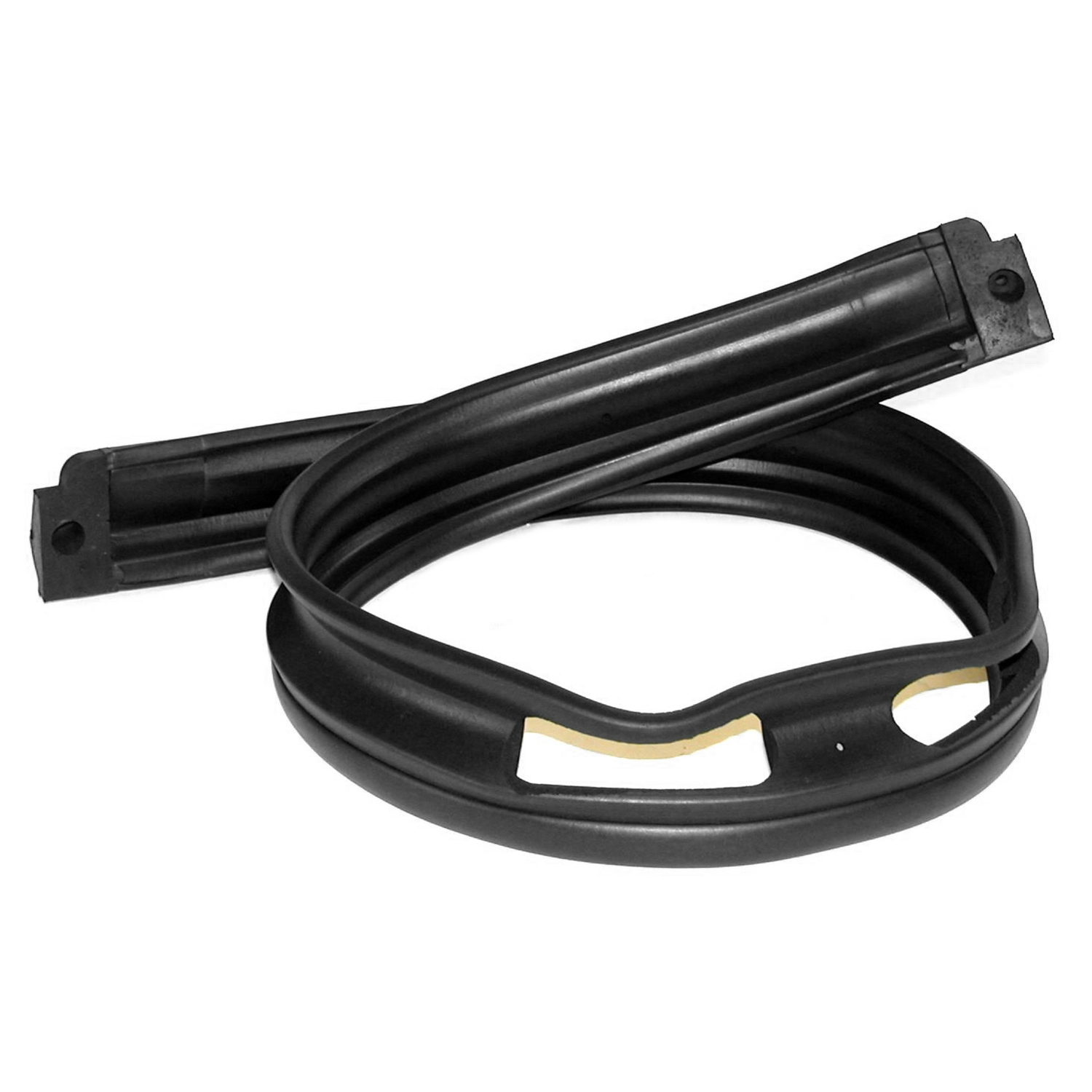 1980 Jeep CJ6 Cowl Seal, 76-86 Jeep CJ Series, With Metal Cab, Each-CS 97This weatherseal will produce a sleek, non-fade finish that adds value to your Jeep—while sealing and protecting particular sections of your vehicle from the outdoor elements. This product is made with high quality EPDM rubber for a great fit and long life.
Why Choose Metro?
For over 100 years, Metro Moulded Parts has been the pinnacle of quality in classic car restoration parts. Our commitment to precision and authenticity in every component ensures a perfect fit and an OEM-level appearance.
- Expert Craftsmanship & Quality: Each part is a testament to our dedication to reliability and perfection, crafted from original designs and thoroughly tested.
- Advanced Technology: We use cutting-edge techniques to create flawless, long-lasting parts that surpass others in performance.
- SuperSoft Sponge – The Ultimate Door Seal: Not only are our door seals 30% softer than competitors', but they're also guaranteed to never leak. They effectively reduce wind and road noise, enhancing your classic car's comfort and driving experience.
- Proudly American: Our parts are a product of American craftsmanship, made in the USA with a spirit of excellence and heritage.
- Unrivaled Warranty: We back our products with a 30-year industry-leading warranty, a testament to our confidence in their quality.
Join us in preserving the legacy of classic cars with parts that are crafted for perfection, not just made.