
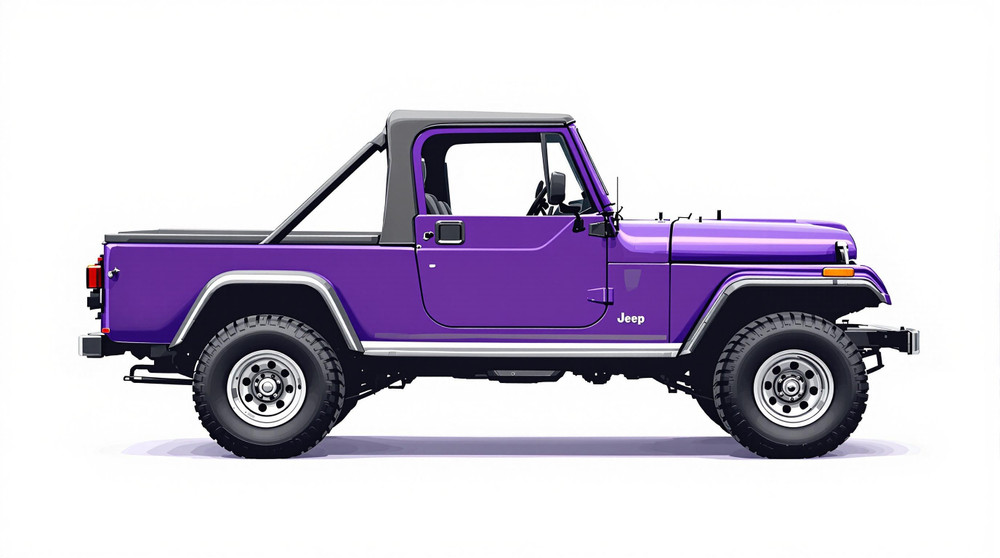
Image of 1980 Jeep Scrambler, Note: These illustrations use artistic license and may differ from actual historical models.
Performance Metrics
Fundamental Metrics
Emotional Appeal
MMP Rating
| Engine Specifications | |
|---|---|
| Engine: | AMC 150 2.5L I4, AMC 258 4.2L I6 |
| Displacement: | 150-258 cubic inches |
| Horsepower: | 82-112 hp |
| Torque: | 125-210 lb-ft |
| Compression Ratio: | 8.2:1 - 9.2:1 |
| Ignition System: | Electronic ignition |
| Cooling System: | Liquid-cooled |
| Performance Specifications | |
| 0-60 Time: | 15-20 seconds |
| 1/4 Mile Time: | 20-25 seconds |
| Top Speed: | 85 mph |
| Transmission and Drive | |
| Drive Type: | 4WD |
| Transmission Type: | 4-speed manual, 3-speed automatic |
| Fuel and Efficiency | |
| Fuel System Type: | Carburetor |
| MPG: | 15-20 mpg |
| Dimensions and Brakes | |
| Brakes: | Front disc, rear drum |
| Wheelbase: | 103.5 inches |
| Weight: | 3,000 lbs |
Note: Specifications for classic cars are given to the best of our ability, considering the limited and variant data available.
1980 Jeep Scrambler: The Model-Year Mix-Up
A Jeep Scrambler looks like a CJ that decided to bring home more than its passengers, with an open cabin up front and a useful pickup-style bed behind. But there is an important detail for anyone researching a “1980 Jeep Scrambler”: Jeep did not sell the CJ-8 Scrambler as a regular 1980 model-year vehicle. The Scrambler debuted for the 1981 model year, and production ran through 1986. A vehicle built late in calendar year 1980 may be an early 1981 model, so the VIN and title are the best way to confirm what it is.
American Motors Corporation (AMC), Jeep’s owner at the time, developed the CJ-8 as a longer-wheelbase member of the CJ family. It kept the familiar, open-sided character of the CJ-7 while adding a longer rear body and a compact cargo bed. The result was neither a conventional pickup nor simply a short-wheelbase Jeep with extra sheet metal. It was a distinctive utility vehicle that could tackle trails, carry gear, and still fit into everyday life.
The Scrambler’s brief production run makes it a notable chapter in Jeep history. A commonly cited total for the 1981–1986 run is about 27,792 vehicles. That is a small number compared with mass-market pickups, and it helps explain why clean Scramblers are now prized by Jeep fans and collectors.
Scrambler Styling and Cabin
The CJ-8’s defining feature is its 103.5-inch wheelbase, about 10 inches longer than the CJ-7’s. That extra length shows up behind the doors: the Scrambler has an extended rear body, a compact pickup bed with a tailgate, and a more stretched profile than its shorter CJ sibling. Round headlights, a seven-slot grille, exposed hinges, flat body sides, and upright glass preserve the classic Jeep look. With the top removed, the long rear section gives it a distinctive, almost beach-cruiser stance.
Buyers could choose among open-air and enclosed configurations, including soft tops, hardtops, and half-cab arrangements, depending on model year and equipment. The top and doors were removable, making the Scrambler adaptable to changing weather and recreational use. The pickup bed was a major part of its appeal, though it was not a full-size truck bed: it was best suited to camping equipment, tools, supplies, and other manageable loads.
Inside, the Scrambler was purposeful rather than plush. The cabin used durable, easy-to-clean materials, with vinyl upholstery common and trim and comfort equipment varying by package. The upright dashboard, straightforward controls, and broad view over the hood feel unmistakably old-school. Options such as power steering, power brakes, and upgraded trim could make one more comfortable, but even a well-equipped example remained a simple, open utility vehicle rather than a luxury 4x4.
Factory paint choices changed from year to year. Scramblers appeared in colors including white, black, red, blue, tan, and brighter hues, with special graphics and contrasting decals available on some packages. Red, white, and blue examples are particularly recognizable in period photos, while the Renegade package’s bold stripes and trim give it a more colorful, distinctive look. Because paint and decals can be changed during restoration, original color documentation matters to collectors.
Engines, 4WD, and Period Technology
Engine and transmission availability varied by year. Early Scramblers could be ordered with a four-cylinder engine or AMC’s 258-cubic-inch (4.2-liter) inline-six. The six-cylinder is generally the more sought-after choice for drivers who want stronger low-speed pulling power, while the four-cylinder offers simpler, more modest performance. Manual transmissions were common, with specific gearbox choices depending on the year and engine; some configurations also offered an automatic.
The Scrambler’s four-wheel-drive system was a part-time setup. In two-wheel drive, it could be used on ordinary paved roads; four-wheel drive was intended for loose or slippery surfaces. Depending on year and configuration, the truck used a Dana 300 transfer case, with solid axles and leaf springs at both ends. This was rugged, familiar hardware, not a high-tech independent suspension system.
By modern standards, its technology is basic. Do not expect anti-lock brakes, electronic stability control, airbags, or computerized engine management. The appeal was mechanical simplicity: conventional controls, accessible components, and a layout that a mechanically inclined owner could understand. Optional comfort features helped, but the Scrambler’s main innovation was its unusual combination of Jeep trail ability and open-bed utility.
Why the CJ-8 Stood Apart
The Scrambler arrived at a time when buyers were looking for vehicles that could serve more than one purpose. Compact pickups offered a cargo bed, while traditional Jeeps offered open-air driving and off-road capability. The CJ-8 joined those ideas in one vehicle. Its bed was smaller and its ride more rudimentary than a conventional pickup’s, but it offered a blend of cargo flexibility and trail access that few rivals matched.
It was not a clean-sheet technical revolution. The Scrambler borrowed heavily from the CJ-7, extending a familiar platform rather than reinventing it. Its significance lies in how effectively it occupied a niche: part recreational 4x4, part light-duty hauler, and part open-top cruiser. That formula helped establish the Scrambler as a bridge between classic Jeep utility and the increasingly lifestyle-oriented 4x4s that followed.
The CJ-8 also demonstrated that a Jeep could be longer and more useful without losing its recognizable shape. Later Jeep pickups and modern lifestyle trucks reflect a similar appetite for vehicles that combine recreational character with practical cargo space, although the Scrambler’s removable top and compact proportions remain very much its own.
Driving a Jeep Scrambler
Performance depends on the engine, gearing, transmission, tire size, and condition of the vehicle. Period-style estimates generally put top speed in the neighborhood of 80 to 90 mph, though many Scramblers are happiest cruising below that. A six-cylinder example may reach 60 mph in roughly 14 to 17 seconds, while a four-cylinder version can take longer, often around 18 to 20 seconds or more. These are approximate figures, not guarantees for every truck.
On the road, the Scrambler feels tall, narrow, and direct. Its solid axles and leaf springs can send sharp bumps through the cabin, and the longer wheelbase gives it a different rhythm from a short CJ but does not turn it into a soft-riding modern SUV. Steering can feel slow or loose by contemporary standards, especially if the front end has worn components or oversized tires.
Wind is part of the experience. With the top off, the upright windshield and open cabin catch the air, and crosswinds can push the truck around. On a winding road, it rewards smooth inputs rather than fast cornering. The vehicle’s height, narrow track, and period tires call for sensible speeds and a light touch.
The six-cylinder adds a familiar, low-pitched AMC rumble, while the four-cylinder works harder and sounds more strained under acceleration. You sit upright, shift a manual gearbox with a solid mechanical feel, and hear plenty of road, engine, and wind noise. That is not a flaw for every owner; it is a large part of the Scrambler’s character. For long-distance comfort, though, a modern SUV or pickup is a much easier companion.
Ownership, Repairs, and Common Uses
Today, Scramblers are used as weekend trail rigs, beach and camping vehicles, show cars, and occasional daily drivers. Some owners preserve them close to stock, while others add suspension lifts, larger tires, modern engines, or updated brakes. Original examples tend to attract collectors, while modified trucks are often built to be driven and enjoyed.
Mechanical repairs are generally approachable for an experienced home mechanic. The basic layout is familiar, and many service parts remain available through Jeep specialists and aftermarket suppliers. However, age, previous modifications, and decades of off-road use can turn a straightforward job into a larger project. A pre-purchase inspection by a mechanic familiar with older Jeeps is money well spent.
Rust is a key concern. Inspect the frame, body mounts, floor pans, rocker areas, windshield frame, cowl, and the bed and tailgate closely. Check for poor-quality patch repairs and misaligned body panels. On the mechanical side, examine the transfer case, axle seals, steering linkage, brakes, cooling system, and transmission. The AMC 20 rear axle is also worth investigating: many examples benefit from one-piece axle shafts, an upgrade that owners commonly make to address the original two-piece shaft design.
Reliability depends less on the nameplate than on maintenance and condition. A well-kept Scrambler can be a dependable recreational vehicle, but it is still a decades-old machine. Rubber parts, electrical connections, fuel-system components, and cooling components may need attention simply because of age. Buyers should also check that any lift, tire, or engine conversion was installed properly and does not compromise steering or braking.
Scrambler Trivia and Criticisms
One of the best-known Scrambler owners was President Ronald Reagan, who had a CJ-8 at his California ranch. The association suits the vehicle: the Scrambler was a useful, informal 4x4 that could handle ranch roads and carry gear without the scale of a full-size truck.
The Scrambler’s short production life is part of its charm, but it also means there is no single “1980 Scrambler” factory edition to hunt for. If a seller advertises one, ask whether it is an early 1981 model, a vehicle with a 1980 build date, or a title or listing error. A model-year VIN check can clear up the distinction.
Common criticisms are easy to understand. The ride is firm, cabin noise is high, cargo capacity is limited compared with a full-size pickup, and highway handling feels dated. The open body can be drafty and less weatherproof than a modern vehicle. Those drawbacks are also part of why the Scrambler feels so different from today’s polished SUVs: it asks the driver to accept compromises in exchange for mechanical simplicity and open-air personality.
Collector Values and Availability
There were no regular 1980 model-year Scramblers, so the relevant collector market is for 1981–1986 CJ-8s. About 27,792 Scramblers are commonly reported as having been built across those six model years. That makes them far less common than many mass-produced pickups, although not every example is rare in the same way. Condition, originality, engine, trim, and documentation have a major effect on value.
As a broad U.S. market guide for 2026, project vehicles may fall around $5,000 to $12,000, while usable drivers commonly land in the $15,000 to $25,000 range. Clean, well-preserved or carefully restored examples can bring roughly $25,000 to $40,000. Exceptional, highly original, or especially well-executed examples may reach $40,000 to $60,000 or more. These are estimates, not fixed prices; regional demand and the quality of the vehicle can move a sale considerably.
Good examples do not appear as frequently as ordinary CJ-7s, and rust-free, unmodified trucks are especially sought after. Values have generally strengthened over the long term as collectors recognize the Scrambler’s distinctive body style and limited production. Prices can still fluctuate, and a rough or heavily altered truck is not automatically valuable just because it wears Scrambler badges.
Why the Jeep Scrambler Still Matters
The Jeep Scrambler paired classic CJ toughness with a longer wheelbase and a compact pickup bed, creating one of the most distinctive utility vehicles of its era. It was simple, noisy, and not especially quick, but it delivered an unusual mix of trail capability, open-air fun, and useful cargo space.
If you are searching for a “1980 Jeep Scrambler,” start by confirming the model year: the CJ-8 officially began with the 1981 model year. Find a solid, well-documented example and you get more than an old Jeep with a bed. You get a rare expression of the idea that a truck can work hard, wander off-road, and still make every trip feel like an occasion.
1980 Jeep Scrambler Catalog of Parts
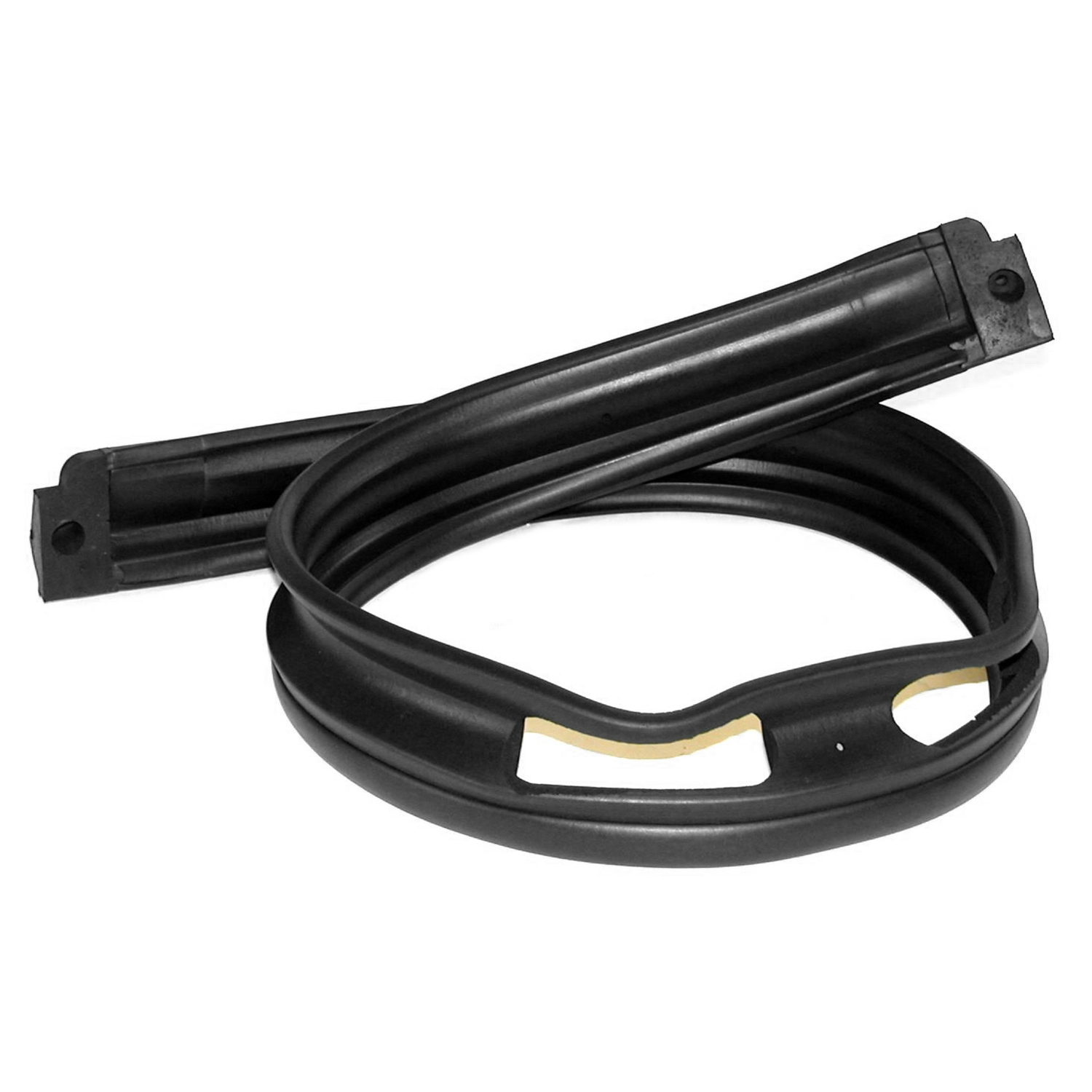 1980 Jeep Scrambler Cowl Seal, 76-86 Jeep CJ Series, With Metal Cab, Each-CS 97This weatherseal will produce a sleek, non-fade finish that adds value to your Jeep—while sealing and protecting particular sections of your vehicle from the outdoor elements. This product is made with high quality EPDM rubber for a great fit and long life.
Why Choose Metro?
For over 100 years, Metro Moulded Parts has been the pinnacle of quality in classic car restoration parts. Our commitment to precision and authenticity in every component ensures a perfect fit and an OEM-level appearance.
- Expert Craftsmanship & Quality: Each part is a testament to our dedication to reliability and perfection, crafted from original designs and thoroughly tested.
- Advanced Technology: We use cutting-edge techniques to create flawless, long-lasting parts that surpass others in performance.
- SuperSoft Sponge – The Ultimate Door Seal: Not only are our door seals 30% softer than competitors', but they're also guaranteed to never leak. They effectively reduce wind and road noise, enhancing your classic car's comfort and driving experience.
- Proudly American: Our parts are a product of American craftsmanship, made in the USA with a spirit of excellence and heritage.
- Unrivaled Warranty: We back our products with a 30-year industry-leading warranty, a testament to our confidence in their quality.
Join us in preserving the legacy of classic cars with parts that are crafted for perfection, not just made.