
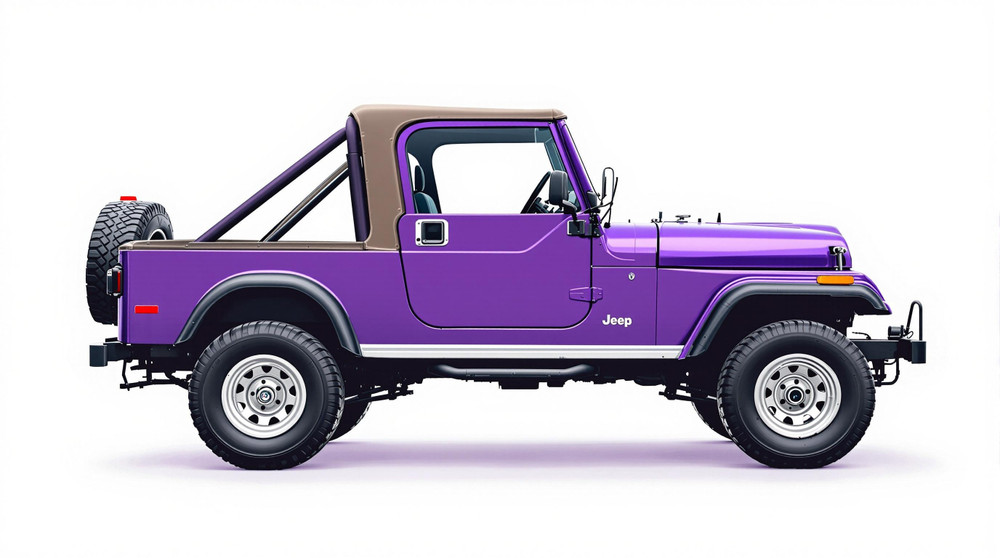
Image of 1982 Jeep Cj6, Note: These illustrations use artistic license and may differ from actual historical models.
Performance Metrics
Fundamental Metrics
Emotional Appeal
MMP Rating
| Engine Specifications | |
|---|---|
| Engine Options: | Inline 6, V8 |
| Displacement Range: | 232-304 cu in (3.8-5.0 L) |
| Horsepower Range: | 100-150 hp (approximately) |
| Torque: | 185-245 lb-ft (approximately) |
| Compression Ratio: | 8.4:1 (approximately) |
| Ignition System: | Electronic Ignition |
| Cooling System: | Liquid-cooled |
| Performance Specifications | |
| 0-60 Time: | 15-20 seconds (approximately) |
| 1/4 Mile Time: | 20-25 seconds (approximately) |
| Top Speed: | 85-95 mph (approximately) |
| Transmission and Drive | |
| Drive Type: | 4WD |
| Transmission Type: | 3-speed manual, 4-speed manual, 3-speed automatic |
| Fuel and Efficiency | |
| Fuel System Type: | Carburetor |
| MPG: | 10-15 mpg (approximately) |
| Dimensions and Brakes | |
| Brakes: | Front disc, rear drum |
| Wheelbase: | 104 inches |
| Weight: | 3000-3500 lbs (approximately) |
Note: Specifications for classic cars are given to the best of our ability, considering the limited and variant data available.
1982 Jeep CJ-6: The Long-Wheelbase Jeep That Needs a Closer Look
A Jeep CJ-6 looks like a familiar classic 4x4 until you notice the extra stretch between its wheels. That longer body gave this open-top Jeep more room for people and gear, while preserving the rugged, go-anywhere character that made the CJ name famous.
There is an important wrinkle in the name “1982 Jeep CJ-6”: Jeep did not sell a regular 1982-model-year CJ-6 in the United States. CJ-6 production ended in the U.S. in 1975, with export production generally reported to have continued into the early 1980s. A vehicle described as a 1982 CJ-6 could be an export-market example registered in 1982, a custom build, or a vehicle whose model year has been confused with its registration year. Before buying one, check its VIN, title, and production details.
The CJ-6 began as a longer-wheelbase companion to the CJ-5. Willys introduced it in 1955, and Jeep’s ownership later passed through Kaiser and American Motors Corporation (AMC). Its extended body suited rural work, military and utility duties, and buyers who wanted more carrying space than the short CJ could offer. One notable relative was the U.S. military M-170 ambulance, which used a CJ-6-based chassis.
Longer Body, Classic CJ Style
At a glance, the CJ-6 has the classic Jeep outline: upright windshield, flat hood, seven-slot grille, exposed hinges, and squared-off fenders. Its defining feature is the added length behind the front seats. The wheelbase measures about 101 inches, roughly 20 inches longer than the CJ-5’s. That extra span creates a more useful rear compartment without making the Jeep look like a full-size truck.
The CJ-6 was primarily a two-door, open-body utility vehicle rather than a range of distinct passenger-car body styles. Buyers could configure one with a folding soft top, removable doors, or, depending on market and equipment, a hardtop. Factory and aftermarket accessories varied over the model’s long life. The open soft-top setup is the most iconic, while hardtops and practical add-ons appeal to owners who use their Jeeps in colder or wetter climates.
Interior trim was functional rather than luxurious. Expect a straightforward painted-metal dash, simple instruments, durable vinyl upholstery, and easy-to-clean surfaces. Materials and equipment changed by year and market, so a supposed 1982 example may not match a U.S.-market CJ specification. Comfort is basic by modern standards, but the uncluttered cabin is part of the appeal: there is little to distract from the mechanical experience.
Paint colors depended on the model year and market. Period Jeep colors included practical whites, greens, blues, reds, and earth tones, though the exact palette varied. Today, deep greens, bright reds, and classic white are especially recognizable on vintage CJs. A factory-correct color can help a restoration feel authentic, but condition and documentation matter more than color alone.
Simple 4x4 Engineering with a Working Heritage
The CJ-6’s lasting importance is less about a single groundbreaking gadget and more about how effectively it combined compact dimensions, a useful load area, and genuine four-wheel-drive capability. Its longer wheelbase made it more practical than a CJ-5 for carrying passengers, tools, or supplies, yet it remained much smaller and more maneuverable than many conventional trucks.
Its mechanical recipe was deliberately straightforward: a separate frame, live axles, leaf springs, a two-speed transfer case, and part-time four-wheel drive. Equipment varied over the years, but later examples could be fitted with AMC inline-six engines and, in some configurations, a V8. Manual hubs and a traditional manual transmission were common features. Some later CJ equipment included front disc brakes, but the brakes and drivetrain on any individual Jeep should be verified rather than assumed.
That relatively simple construction helped establish a durable template for the recreational 4x4. Modern off-roaders are more comfortable and electronically sophisticated, but the CJ-6’s formula remains familiar: short overhangs, a strong chassis, low-range gearing, and a body designed to tolerate hard use.
Performance and Road Manners
There is no reliable factory performance figure for a “1982 CJ-6,” because it was not a standard U.S. model-year offering. As a broad guide, a late CJ-6 with the 258-cubic-inch (4.2-liter) AMC inline-six would likely reach roughly 75 to 85 mph in suitable condition, gearing, and weather. A 0-to-60-mph time in the neighborhood of 12 to 18 seconds is a reasonable estimate for a comparable six-cylinder example, but engine, transmission, axle gearing, tire size, and vehicle condition can move those numbers substantially. These are estimates, not verified specifications for a 1982 model.
On pavement, the CJ-6 feels like an old-fashioned utility vehicle, not a modern SUV. Its steering can be slow, its ride firm, and its solid axles communicate bumps directly to the cabin. The longer wheelbase generally gives it a less choppy ride than a CJ-5, although it still wanders more than a modern vehicle and deserves respect in crosswinds and during quick maneuvers.
On dirt roads and trails, the recipe makes more sense. The low-range transfer case provides controlled crawling, while the long wheelbase can help smooth out uneven ground. It can also reduce breakover clearance compared with a shorter Jeep, so a driver needs to choose lines carefully over sharp crests and rocks. The engine’s exhaust note is typically a deep, unfiltered mechanical rumble, and the driver feels connected to the vehicle through its direct controls, solid axles, and minimal sound insulation.
Owning and Maintaining a CJ-6
A CJ-6 can serve as a weekend trail rig, farm or property vehicle, vintage show entry, or occasional sunny-day driver. Its extra length makes it more useful for carrying people and gear than a CJ-5, but it is still an open, noisy vehicle with limited weather protection and modest crash protection. It is not an ideal choice for someone seeking modern commuting comfort.
Many routine repairs are within reach of a mechanically confident owner. The engine bay is relatively accessible, and the vehicle’s basic systems are less complex than those of a modern 4x4. Parts availability is generally good for common Jeep and AMC components, though CJ-6-specific body and trim pieces can take more searching than parts for the more numerous CJ-5 and CJ-7.
Before purchase, inspect the frame, body mounts, floor panels, hat channels, and areas around the windshield and cowl for rust or poorly repaired damage. Check the steering and suspension for wear, listen for drivetrain noise, and test four-wheel drive in an appropriate setting. A vehicle advertised as a 1982 CJ-6 needs an especially careful paperwork review: confirm the VIN and title, identify the actual production year, and establish whether it is an export-market model, a conversion, or a later registration.
Rare Details and CJ-6 Trivia
The CJ-6 is often remembered as the “stretched CJ,” but its longer platform also served practical and military roles. The M-170 ambulance is a particularly distinctive example of the CJ-6 family’s utility heritage. It used an extended chassis to accommodate medical and passenger needs, showing that the platform could do more than recreational trail duty.
Another collectible variation is the CJ-6A Tuxedo Park, a dressier version produced in limited numbers during the 1960s. Exact production figures can vary by source, but it is commonly described as a rare model, with roughly 450 built. Its extra trim and distinctive details make it especially appealing to Jeep collectors.
The CJ-6 is not known for a headline speed record or a major motorsport title. Its reputation was earned through service and versatility rather than competition. Common criticisms are familiar to anyone who has driven an early CJ: a busy ride, modest acceleration, limited cabin comfort, and rust-prone bodies or frames when maintenance has been neglected.
Collector Values and Availability
There is no meaningful production total for a factory 1982 CJ-6 unless a particular export-market record can be documented. For the CJ-6 line as a whole, commonly cited production estimates are around 50,000 vehicles, though totals vary by source and by which export versions are counted. That makes the CJ-6 less common than the CJ-5, and good, original examples can be difficult to find.
As a broad 2026 U.S. market estimate, a project CJ-6 might sell for about $5,000 to $12,000, depending on completeness, rust, and title status. A usable driver or solid older restoration could fall around $15,000 to $30,000. A high-quality restoration, rare special edition, or unusually original example may reach roughly $30,000 to $45,000 or more. These are general ranges, not an appraisal; location, documentation, originality, and mechanical condition make a major difference.
Classic Jeep values have generally benefited from growing interest in vintage 4x4s, and the CJ-6’s relative scarcity supports its appeal. Still, restoration costs can outrun resale value, particularly when bodywork or specialized parts are involved. A sound, well-documented Jeep is usually a stronger buy than a superficially shiny project. For any vehicle titled as a 1982 CJ-6, clear evidence of its actual identity is essential to both its value and its collectibility.
Why the CJ-6 Still Stands Out
The Jeep CJ-6 took the familiar CJ formula and made it more practical without losing its compact, open-air character. Its longer wheelbase brought extra room, its simple four-wheel-drive hardware suited demanding work, and its military and utility relatives demonstrated just how adaptable the design could be.
A “1982 Jeep CJ-6” deserves a little detective work before its story is taken at face value, since it does not match a standard U.S. model year. But once its identity is verified, the CJ-6 remains a distinctive chapter in Jeep history: a hardworking, uncommon classic that stretched the original idea without stretching its adventurous spirit.
1982 Jeep Cj6 Catalog of Parts
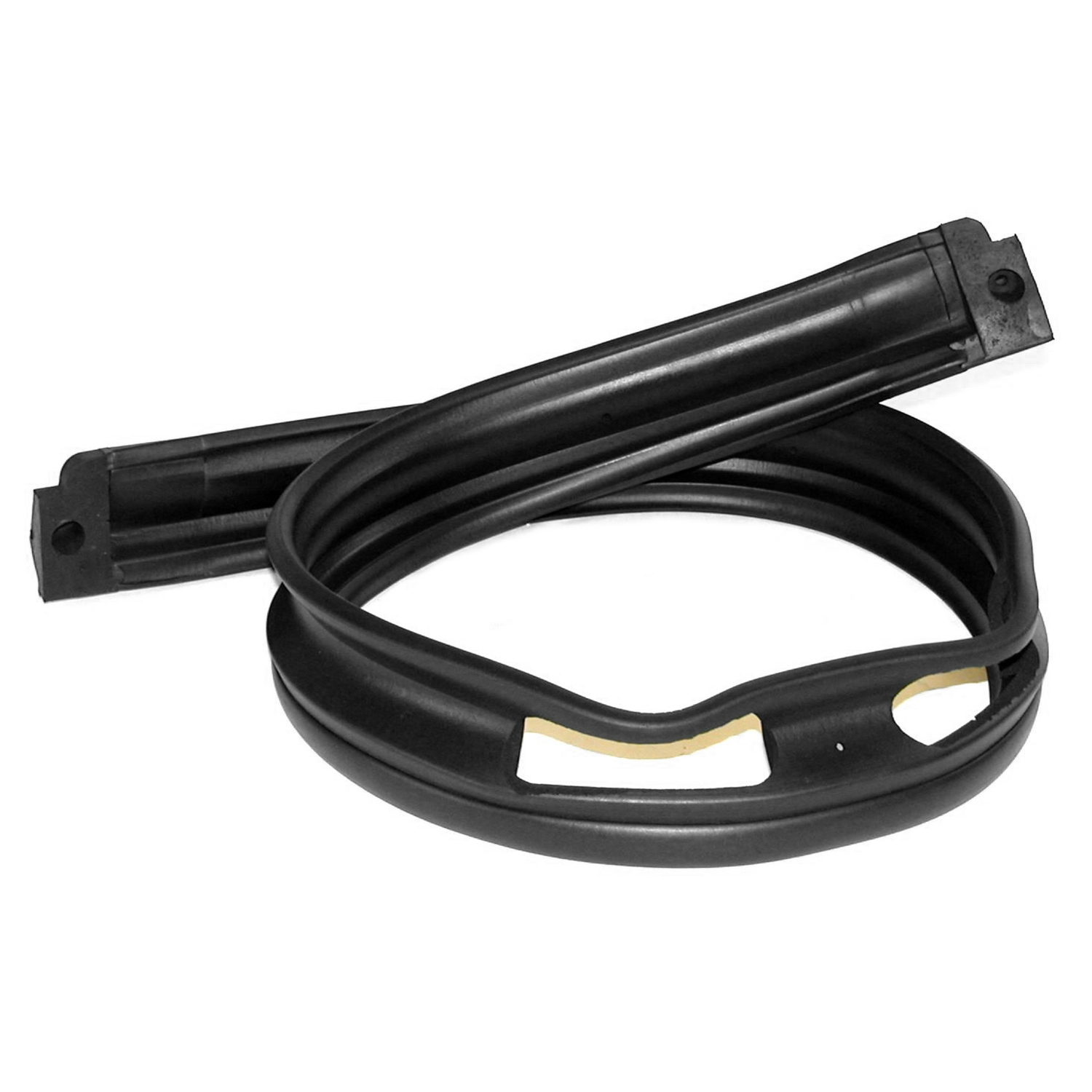 1982 Jeep CJ6 Cowl Seal, 76-86 Jeep CJ Series, With Metal Cab, Each-CS 97This weatherseal will produce a sleek, non-fade finish that adds value to your Jeep—while sealing and protecting particular sections of your vehicle from the outdoor elements. This product is made with high quality EPDM rubber for a great fit and long life.
Why Choose Metro?
For over 100 years, Metro Moulded Parts has been the pinnacle of quality in classic car restoration parts. Our commitment to precision and authenticity in every component ensures a perfect fit and an OEM-level appearance.
- Expert Craftsmanship & Quality: Each part is a testament to our dedication to reliability and perfection, crafted from original designs and thoroughly tested.
- Advanced Technology: We use cutting-edge techniques to create flawless, long-lasting parts that surpass others in performance.
- SuperSoft Sponge – The Ultimate Door Seal: Not only are our door seals 30% softer than competitors', but they're also guaranteed to never leak. They effectively reduce wind and road noise, enhancing your classic car's comfort and driving experience.
- Proudly American: Our parts are a product of American craftsmanship, made in the USA with a spirit of excellence and heritage.
- Unrivaled Warranty: We back our products with a 30-year industry-leading warranty, a testament to our confidence in their quality.
Join us in preserving the legacy of classic cars with parts that are crafted for perfection, not just made.