
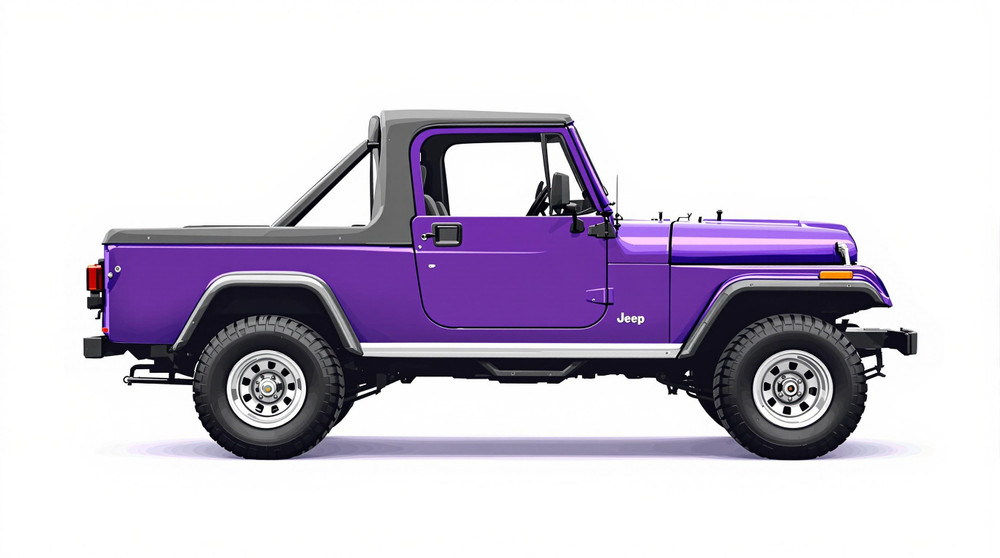
Image of 1982 Jeep Scrambler, Note: These illustrations use artistic license and may differ from actual historical models.
Performance Metrics
Fundamental Metrics
Emotional Appeal
MMP Rating
| Engine Specifications | |
|---|---|
| Engine: | AMC 150 2.5L I4, AMC 258 4.2L I6 |
| Displacement: | 150-258 cubic inches |
| Horsepower: | 82-112 hp |
| Torque: | 125-210 lb-ft |
| Compression Ratio: | 8.2:1 - 9.2:1 |
| Ignition System: | Electronic ignition |
| Cooling System: | Liquid-cooled |
| Performance Specifications | |
| 0-60 Time: | 15-20 seconds |
| 1/4 Mile Time: | 20-25 seconds |
| Top Speed: | 85 mph |
| Transmission and Drive | |
| Drive Type: | 4WD |
| Transmission Type: | 4-speed manual, 3-speed automatic |
| Fuel and Efficiency | |
| Fuel System Type: | Carburetor |
| MPG: | 15-20 mpg |
| Dimensions and Brakes | |
| Brakes: | Front disc, rear drum |
| Wheelbase: | 103.5 inches |
| Weight: | 3,000 lbs |
Note: Specifications for classic cars are given to the best of our ability, considering the limited and variant data available.
1982 Jeep Scrambler: A Jeep with a Pickup Bed
The 1982 Jeep Scrambler is what happens when a classic open-air Jeep grows a cargo bed but keeps its trail-ready attitude. Built by American Motors Corporation (AMC), the CJ-8 Scrambler combined the familiar look and off-road hardware of the CJ-7 with a longer frame and a pickup-style rear section. It was never a conventional work truck, and that was its appeal: it could haul gear during the week and head for a dirt trail with the top off on the weekend.
The Scrambler arrived for the 1981 model year, during a period when compact pickups from Japanese manufacturers were gaining popularity in the United States. Jeep’s answer was distinctly its own. Rather than build a traditional enclosed pickup, AMC stretched the CJ platform, leaving the Scrambler open, simple, and unmistakably Jeep. One memorable detail from its history is that President Ronald Reagan owned a CJ-8 Scrambler for use at his California ranch, bringing the unusual Jeep pickup into the public eye.
CJ-8 Styling and Scrambler Design
At a glance, the 1982 Scrambler is classic CJ: a flat upright grille, round headlamps, broad front fenders, a near-vertical windshield, and exposed hinges that make the doors and windshield feel almost industrial. Its defining feature is the extended rear body. The longer wheelbase and cargo area give it a stretched profile, while the tailgate makes it more useful for hauling camping equipment, tools, or weekend supplies than a short-wheelbase CJ.
The Scrambler rode on a 103.5-inch wheelbase, noticeably longer than the CJ-7’s 93.4 inches. That extra length improves straight-line composure and creates useful cargo space, though it also makes the vehicle less nimble in tight trails and parking spaces. It remains a compact vehicle by modern truck standards, but its upright body and tall stance give it a purposeful, substantial presence.
Like other CJ models, the Scrambler was designed around open-air driving. Buyers could choose a soft top, and hardtop configurations were also offered, depending on equipment and market. The top, doors, and windshield could be removed or folded down to varying degrees, making the Scrambler’s cabin part of the outdoor experience rather than a sealed-off passenger compartment.
Interior, Trim, and Color Choices
The cabin was straightforward and durable rather than luxurious. Vinyl upholstery, simple door panels, rubber flooring, and an uncomplicated dashboard suited a vehicle likely to encounter mud, dust, and work clothes. The materials were practical, but not especially plush. Owners could find optional comfort and convenience equipment such as carpeting, upgraded seating, a radio, power steering, or power brakes, depending on the particular vehicle’s specification.
Instrumentation was basic by modern standards, with conventional gauges and physical switches that are easy to understand and generally straightforward to service. There were no touchscreens, driver-assistance systems, or complex electronic controls. That simplicity is part of the Scrambler’s charm today, although it also means the driver does all the work, from steering and shifting to judging traction on a slippery trail.
Color availability varied by trim and production details, but 1982 Scramblers could be found in familiar Jeep shades such as white, black, red, blue, and earthy tan tones. Bright colors look especially at home on the Scrambler’s blocky body, while white and darker neutral colors are common sights among surviving examples. Condition, originality, and the quality of any repaint matter more to most collectors than choosing one universally “correct” favorite color.
The core body style was the open CJ-8 pickup configuration. Equipment and appearance packages, including Renegade-style trim on some examples, added visual details and convenience features. The basic Scrambler look remains the most iconic: open cabin, removable top, long rear body, and a practical tailgate.
AMC Engineering and Historical Importance
The Scrambler arrived late in the original CJ era, when Jeep was balancing its off-road heritage against changing expectations for everyday utility. It was not the first compact vehicle to blend passenger-car comfort with cargo capacity, but it offered a distinctive alternative to a conventional small pickup. Its open body and removable top made it more adventurous than a typical truck, while its rear cargo area made it more useful than a standard short-wheelbase CJ.
Mechanically, the 1982 Scrambler stayed true to the CJ formula: a separate frame, solid axles, a part-time four-wheel-drive system, and a two-speed transfer case. Many examples were equipped with a Dana 30 front axle and an AMC 20 rear axle, though exact equipment can vary. This conventional hardware made the Scrambler capable off pavement and comparatively approachable for owners who wanted to maintain or modify their own vehicle.
The Scrambler was produced through 1986, but it did not receive a direct continuation when the Wrangler replaced the CJ line for 1987. Its unusual mix of Jeep and pickup traits has since made it a standout in the brand’s history. Modern Jeep pickups, especially the open-air Jeep Gladiator, appeal to some of the same instincts, but the Scrambler remains a product of its own era rather than a direct blueprint for today’s trucks.
Engines, Speed, and Trail Performance
For 1982, engine choices included AMC’s 2.5-liter four-cylinder and 4.2-liter inline-six. The six-cylinder was the more popular choice for buyers who wanted stronger low-speed pulling power. Depending on exact configuration and rating method, period figures put the 4.2-liter at roughly 110 horsepower, while the four-cylinder produced considerably less. Four-speed and five-speed manual transmissions were available, and gearing, tires, engine, and transmission all affect how a particular Scrambler performs.
There is no single dependable factory performance figure that applies to every 1982 Scrambler. As a broad estimate, a healthy six-cylinder model may reach 60 mph in roughly 14 to 17 seconds and have a top speed in the neighborhood of 80 to 85 mph. Four-cylinder models are generally slower, with 0-to-60 times potentially around 20 seconds or longer. These are approximate figures, not promises: age, axle ratios, tire size, engine condition, and transmission choice can change the results considerably.
The Scrambler is happiest at moderate speeds. Its long wheelbase helps it feel more settled on the highway than a short CJ, but its high, boxy body is vulnerable to crosswinds, and its steering and braking feel much less precise than a modern truck’s. On winding roads, the driver needs to plan ahead and avoid treating it like a contemporary sports utility vehicle. The solid axles and leaf springs can feel choppy over sharp bumps, especially when the cargo bed is empty.
Off road, the Scrambler’s strengths are clear. Low-range gearing, a rugged frame, and solid-axle articulation make it capable on rough trails when fitted with suitable tires. Its longer wheelbase can help smooth out some uneven terrain, but it also reduces breakover clearance compared with a shorter CJ. The experience is wonderfully mechanical: the inline-six has a steady, throaty note, the manual shifter asks for deliberate inputs, and the driver feels the terrain through the steering wheel and chassis.
Living with a 1982 Scrambler
Owners use Scramblers as trail rigs, weekend cruisers, farm and property vehicles, show vehicles, and, occasionally, daily drivers. The open top and cargo bed make it easy to load equipment and enjoy fair-weather driving. On the other hand, wind noise, weather exposure, limited security, and modest highway performance make it less convenient for long daily commutes than a modern pickup.
Routine maintenance is manageable for an owner with basic mechanical skills. The engines and drivetrain are largely conventional, and replacement and restoration parts remain available through Jeep specialists and the classic 4x4 aftermarket. Common areas to inspect include frame rust, body mounts, floor panels, suspension components, steering play, brakes, cooling-system condition, and leaks from the engine, transmission, transfer case, and axles.
Rust and modifications are often bigger concerns than the basic design. A Scrambler that has spent years off road may have hidden frame damage, worn suspension, or improvised repairs. Modified examples can be capable and enjoyable, but collectors generally favor sound, well-documented vehicles with quality work and original or period-correct components.
Scrambler Trivia and Common Complaints
President Ronald Reagan’s association with a CJ-8 is among the model’s best-known stories. He used a Scrambler at his Rancho del Cielo property, helping cement its image as a rugged, leisure-oriented Jeep rather than merely a small commercial truck. The model is also sometimes confused with a conventional pickup, but its open CJ architecture and removable body equipment set it apart.
The Scrambler was not a record-setting speed or sales vehicle, and it did not establish a major production milestone. Its historical distinction is its unusual format and the enthusiasm it has earned among Jeep fans. Common criticisms are more practical: the ride can be rough, the cabin is noisy, highway acceleration is modest, and the long body is less agile on narrow trails than a CJ-5 or CJ-7.
Those compromises are part of the character. The Scrambler offers a driving experience that is direct and unfiltered, but buyers should not mistake its appealing shape for modern comfort or safety. It lacks contemporary conveniences such as airbags and anti-lock brakes, and its handling demands attention, particularly at speed.
1982 Jeep Scrambler Values and Rarity
Across its 1981-to-1986 production run, approximately 27,792 CJ-8 Scramblers were built. Published production figures can vary by source, and a precise, widely verified 1982 total is difficult to establish. A reasonable estimate for the 1982 model year is several thousand vehicles, perhaps around 6,000 to 7,000, but that should be treated as an estimate rather than a confirmed factory count. Compared with the far more familiar CJ-7, the Scrambler is relatively uncommon, and clean examples are increasingly sought after.
As a broad 2026 market guide in the United States, a project Scrambler needing substantial work might sell for roughly $8,000 to $15,000. A usable driver in fair-to-good condition may fall around $18,000 to $30,000, while a well-restored or unusually original example can bring approximately $35,000 to $55,000. Exceptional vehicles, desirable equipment, excellent documentation, and high-quality restorations can exceed that range. These are estimates, not appraisals, and regional demand can make a substantial difference.
Values have generally strengthened over the long term as classic 4x4s and vintage Jeep pickups have attracted more attention. The Scrambler’s limited production, distinctive body style, and shared mechanical parts with other CJ models support its collector appeal. Rust, poor-quality modifications, incomplete documentation, and non-original drivetrains can weigh heavily on price, while a solid frame and honest restoration history are major assets.
Why the 1982 Scrambler Still Matters
The 1982 Jeep Scrambler brought together the open-air spirit of the CJ and the everyday usefulness of a compact pickup. Its simple AMC-era engineering, solid-axle four-wheel drive, long cargo area, and removable top made it different from the trucks and SUVs around it. It was not fast, quiet, or especially refined, but it delivered a memorable blend of utility and adventure.
Today, the Scrambler stands out as one of Jeep’s most distinctive classic models. For collectors, it offers rarity and character; for owners, it offers a hands-on, open-air 4x4 experience. The CJ-8 did not need to be a conventional truck to become a lasting one. Its appeal comes from being exactly what it was: a Jeep with a bed, built for roads that do not always stay paved.
1982 Jeep Scrambler Catalog of Parts
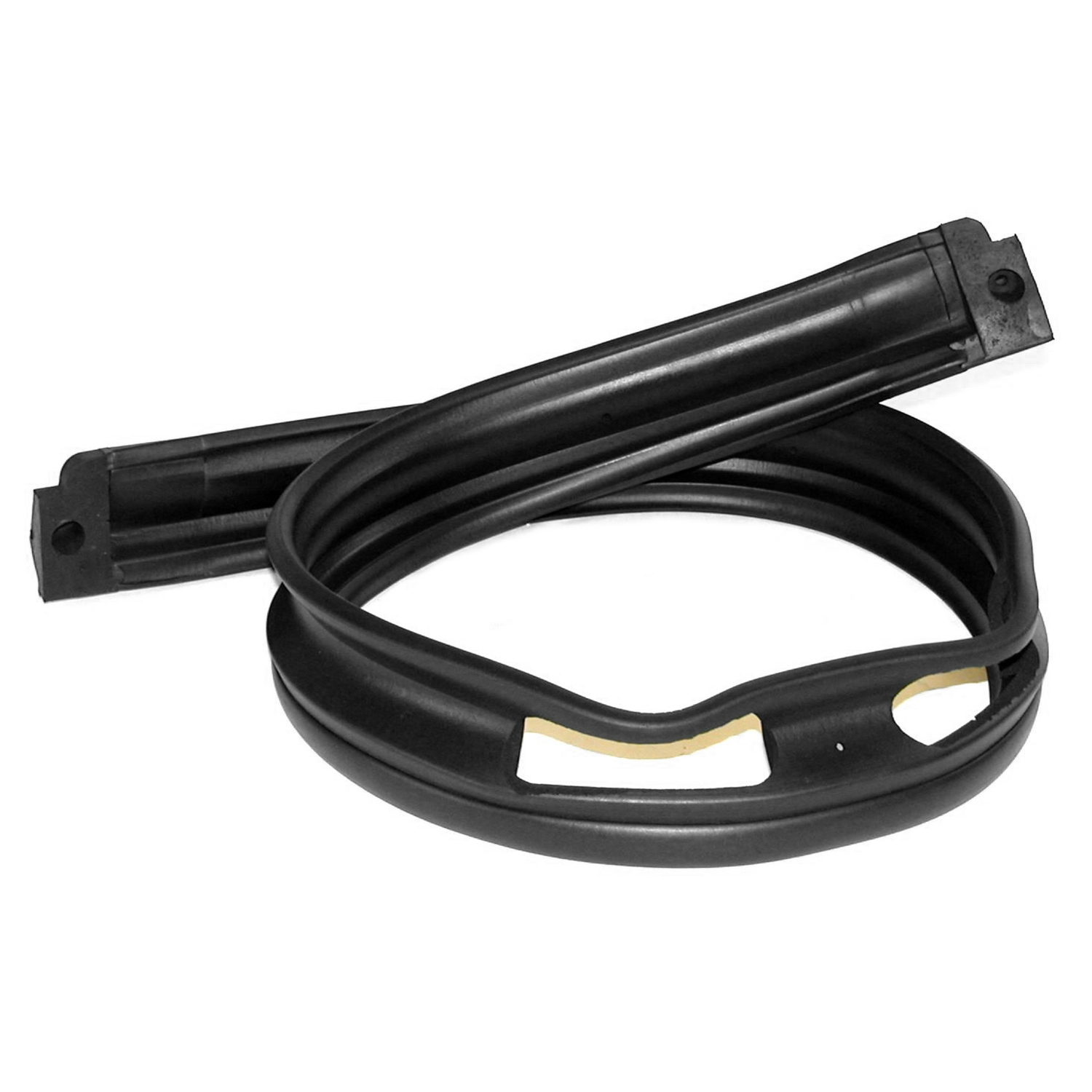 1982 Jeep Scrambler Cowl Seal, 76-86 Jeep CJ Series, With Metal Cab, Each-CS 97This weatherseal will produce a sleek, non-fade finish that adds value to your Jeep—while sealing and protecting particular sections of your vehicle from the outdoor elements. This product is made with high quality EPDM rubber for a great fit and long life.
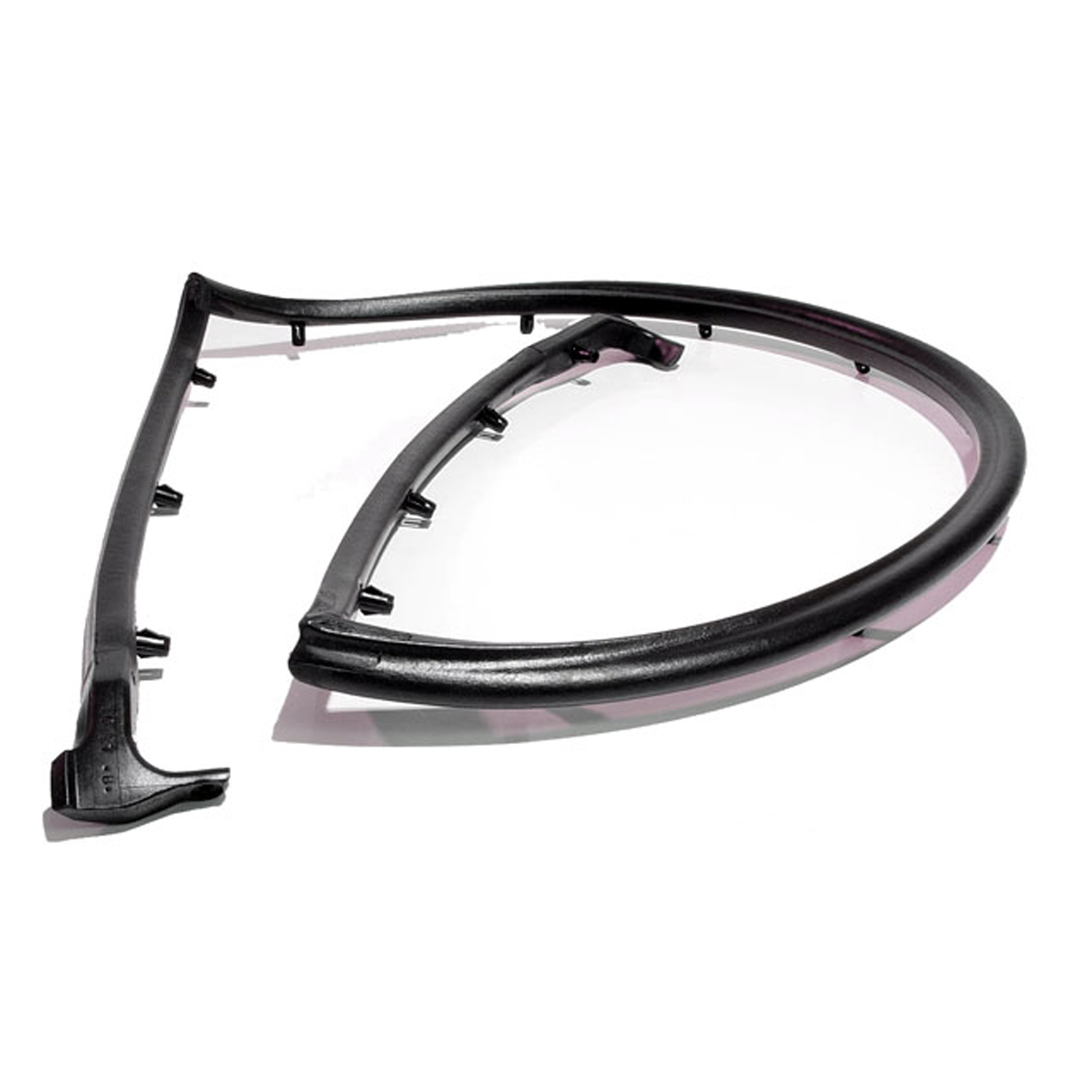 1982 Jeep Scrambler Lower Tailgate Seal. 66-5/8" long. Each-TG 97Lower Tailgate Seal. 66-5/8" long. Each
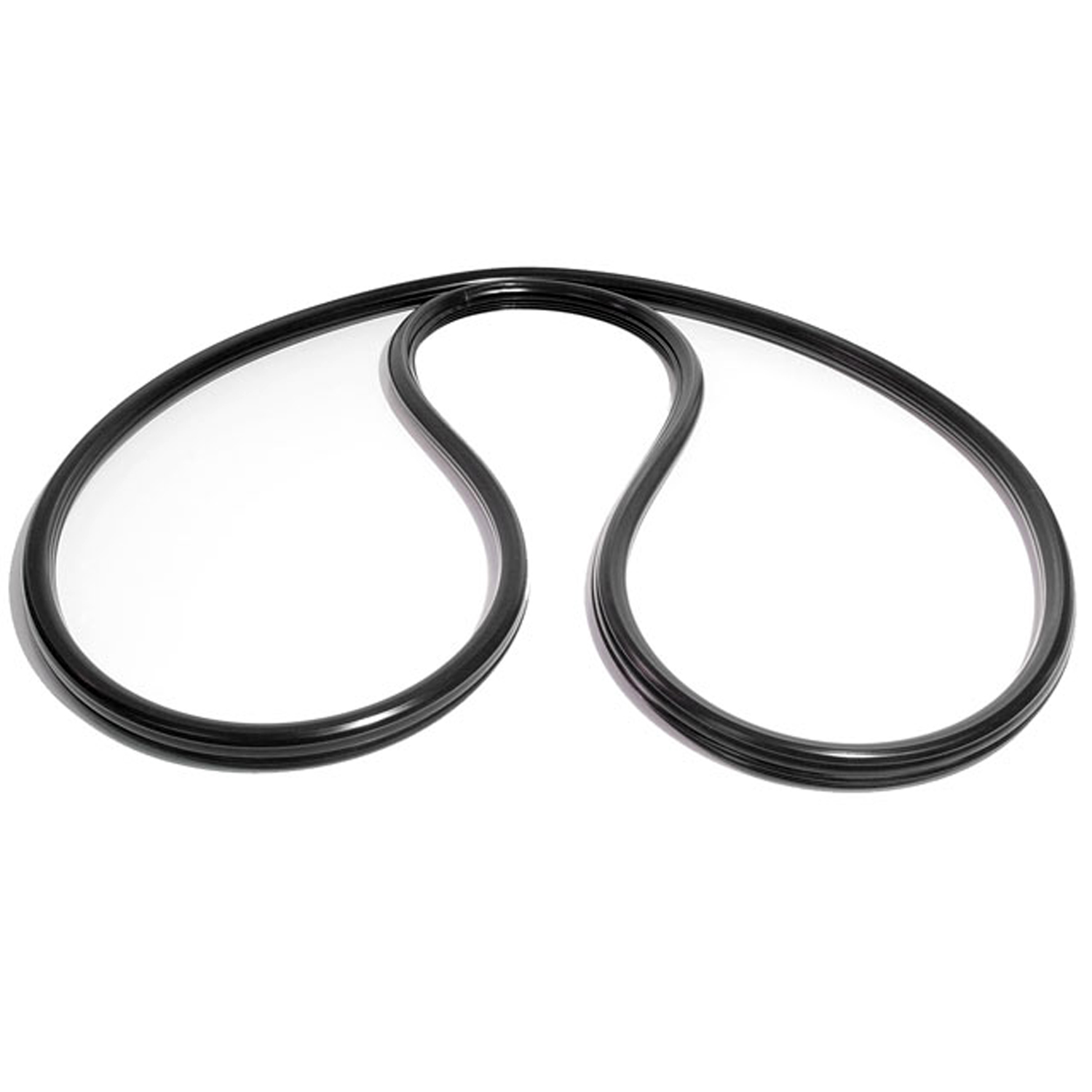 1982 Jeep Scrambler Windshield Glass Seal. Each-VWS 9600Windshield Glass Seal. Each
Why Choose Metro?
For over 100 years, Metro Moulded Parts has been the pinnacle of quality in classic car restoration parts. Our commitment to precision and authenticity in every component ensures a perfect fit and an OEM-level appearance.
- Expert Craftsmanship & Quality: Each part is a testament to our dedication to reliability and perfection, crafted from original designs and thoroughly tested.
- Advanced Technology: We use cutting-edge techniques to create flawless, long-lasting parts that surpass others in performance.
- SuperSoft Sponge – The Ultimate Door Seal: Not only are our door seals 30% softer than competitors', but they're also guaranteed to never leak. They effectively reduce wind and road noise, enhancing your classic car's comfort and driving experience.
- Proudly American: Our parts are a product of American craftsmanship, made in the USA with a spirit of excellence and heritage.
- Unrivaled Warranty: We back our products with a 30-year industry-leading warranty, a testament to our confidence in their quality.
Join us in preserving the legacy of classic cars with parts that are crafted for perfection, not just made.