
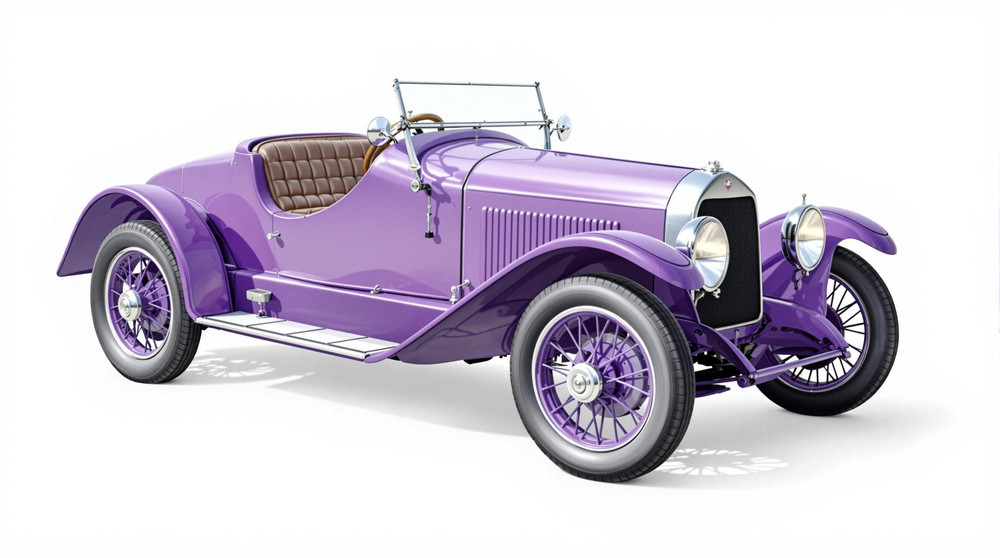
Image of 1918 Jordan Four, Note: These illustrations use artistic license and may differ from actual historical models.
Performance Metrics
Fundamental Metrics
Emotional Appeal
MMP Rating
| Engine Specifications | |
|---|---|
| Engine Options: | Inline 4 |
| Displacement Range: | 3.0L |
| Horsepower Range: | Estimated 20-30 HP |
| Torque: | Not available |
| Compression Ratio: | Not available |
| Ignition System: | Magneto |
| Cooling System: | Water-cooled |
| Performance Specifications | |
| 0-60 Time: | Not available |
| 1/4 Mile Time: | Not available |
| Top Speed: | 50 mph |
| Transmission and Drive | |
| Drive Type: | Rear-wheel drive |
| Transmission Type: | 3-speed manual |
| Fuel and Efficiency | |
| Fuel System Type: | Carburetor |
| MPG: | Not available |
| Dimensions and Brakes | |
| Brakes: | Mechanical drum brakes |
| Wheelbase: | 125 inches |
| Weight: | Estimated 2,500 lbs |
Note: Specifications for classic cars are given to the best of our ability, considering the limited and variant data available.
1918 Jordan Four: A Stylish American Classic
The 1918 Jordan Four was built for motorists who wanted more than basic transportation: it paired the useful practicality of a four-cylinder car with the confident styling of an ambitious American independent. It came from the Jordan Motor Car Company of Cleveland, Ohio, founded in 1916 by Edward S. “Ned” Jordan. The company was young, but its founder had a bold idea: a car should be sold through its character and appearance as much as through its mechanical specifications.
The Four belongs to the company’s early years, before Jordan became especially famous for the rakish Playboy of 1920. Its story is also tied to a turbulent moment in American history. The United States was nearing the end of the First World War, and the automobile market was growing quickly, with mass-market Fords competing against more expensive, better-appointed cars. Jordan aimed to stand apart from both, offering an individual look and a stronger sense of occasion.
A detail that makes the Jordan story memorable is Ned Jordan’s gift for advertising. His later “Somewhere West of Laramie” campaign for the Playboy became a landmark in automotive marketing. That famous campaign was not for the 1918 Four, but it reflects the company’s broader belief that a car could sell a lifestyle, not just an engine and chassis.
Artful Bodywork and Period Comfort
The Jordan Four’s styling belonged to the transition from brass-era ornament to the more restrained, painted-metal look of the postwar period. Its tall, upright radiator, separate front fenders, exposed running boards, and slim lamps gave it the unmistakable profile of an early automobile. Long hood lines and carefully shaped bodywork helped it look more tailored than a purely utilitarian runabout. Exact trim and details varied by body style and production specification.
Inside, the emphasis was on practical comfort rather than modern luxury. A touring model typically offered broad, bench-style seating, a simple instrument panel, and a large steering wheel. Upholstery was generally leather or durable leather-like material, with wood used for selected trim or framing depending on the body. The cabin was open to dust, wind, and weather in touring and roadster versions, so side curtains and a folding top were valuable equipment rather than decorative extras.
Four-cylinder Jordan models are commonly associated with a roughly 40-horsepower rating, though period ratings and specifications can vary between references and individual cars. The car used conventional controls for its era: a manual gearbox, mechanical braking, and a driver who had to manage engine speed and gear selection thoughtfully. These were not modern “turn the key and go” machines. Starting, shifting, and stopping all called for a little practice.
Paint and trim depended on the body and the order, and surviving examples do not establish one universal color palette for every 1918 Four. Dark greens, maroons, blues, and black were all in keeping with period tastes, often set off by contrasting upholstery or brightwork. A dark, richly finished touring car makes a particularly convincing presentation today, but buyers should check the specific car’s original finish rather than assume a color was standard.
Jordan offered its cars in multiple body configurations during its early production years. Touring cars and roadsters suited buyers who wanted open-air motoring, while closed coupes and sedans provided more protection and privacy. The touring body is arguably the most evocative choice: its open seating, folding top, and exposed running boards show off the proportions that make an early Jordan so appealing. Exact 1918 body availability could vary by model and catalog, so a car’s body should be verified against its serial number and period documentation.
Where the Jordan Four Fit in History
The Jordan Four was not a mass-production breakthrough on the scale of the Ford Model T, nor did it introduce a technology that transformed the industry. Its significance lies elsewhere. Jordan was an independent automaker competing in a market increasingly dominated by large manufacturers, and it tried to distinguish itself through design, presentation, and a strong brand identity.
That approach helped establish a recognizable Jordan personality. Instead of presenting a car as a neutral mechanical appliance, the company gave its models names, visual flair, and evocative advertising. The Four represents an early expression of that strategy. It offered a middle ground for buyers who wanted a more distinctive car than the most basic transportation but did not necessarily need a large six-cylinder automobile.
Jordan’s legacy is therefore as much about automotive culture as engineering. The company demonstrated how styling and marketing could give a smaller manufacturer a voice in a crowded industry. Its later advertising became more famous than the Four itself, but the early cars show that the company’s interest in presentation was present from the beginning.
Performance, Speed, and Road Manners
Period references commonly put the Jordan Four’s engine in the neighborhood of 40 horsepower. A precise top-speed figure for every 1918 body and mechanical specification is difficult to establish. As a reasonable guide, a well-maintained example might manage roughly 50 to 60 mph under suitable conditions, but that should be treated as an estimate, not a guaranteed factory test result. A heavy closed body, worn engine, tire condition, gearing, and road surface could all change the result substantially.
There is no reliable, standardized 0-to-60-mph figure for the 1918 Jordan Four. Acceleration testing was not conducted or reported in the modern way, and some examples may struggle to reach 60 mph at all. Rather than assigning a misleading exact time, expect leisurely acceleration that rewards anticipation. The driver needs to choose a gear before a hill or pass, not wait for a surge of power.
On a smooth road, the Jordan’s long, narrow proportions and period suspension give it a steady, deliberate rhythm. Broken pavement is a different matter. Tall tires and leaf springs absorb some roughness, but the body can pitch and bounce over sharp bumps, and the driver feels more of the road than in a modern car. On winding roads, steering takes effort and the car’s narrow tires and high seating position call for measured cornering. It is best driven with a generous margin, not hustled like a modern sports car.
The engine’s sound is mechanical and unfiltered: a steady four-cylinder beat, accompanied by the whir of gears, tire noise, and the occasional rattle of period fittings. The driving experience is hands-on. The driver listens to the engine, works the clutch and gear lever, and plans stops well ahead because braking systems of the period do not deliver modern stopping distances. That involvement is part of the appeal, but it also demands respect.
Living With a 1918 Jordan
Today, a Jordan Four is best suited to touring events, historic-car displays, and careful weekend drives rather than daily commuting. Its open bodywork makes fair-weather outings especially enjoyable, while a closed model can offer more shelter. Either way, it is a car for scenic routes and unhurried travel, not congested traffic or high-speed highways.
Maintenance is approachable for an owner with mechanical experience, but it is not identical to maintaining a modern car. Routine work may include lubrication, ignition adjustment, carburetor tuning, cooling-system checks, and attention to the mechanical brakes. Parts may need to be repaired, adapted, or sourced through specialist suppliers and antique-car networks. Before buying, inspect the engine, transmission, frame, wooden body structure where applicable, and the availability of correct lamps, trim, and instruments.
A sound example can be dependable for the kind of outings it was designed to make, but age is the central reliability issue. Seals, wiring, tires, fuel lines, and brake components can deteriorate even when a car looks polished. A careful mechanical inspection and a proper recommissioning are more valuable than fresh paint alone.
Jordan Four Facts and Folklore
The best-known Jordan advertising story belongs to the later Playboy, not the 1918 Four. Ned Jordan’s 1920 “Somewhere West of Laramie” advertisement is remembered for its vivid, romantic language and is often cited as a turning point in automotive copywriting. It helped make Jordan’s name memorable even though the company never reached the production scale of the industry’s giants.
No widely recognized speed, endurance, or sales record is associated specifically with the 1918 Jordan Four. It was a road car, not a headline-grabbing race model. Nor is there a well-established celebrity ownership story attached to this particular model that can be repeated with confidence. Its appeal today rests more on its rarity, styling, and connection to Jordan’s broader history.
Common criticisms are familiar to anyone who drives a prewar automobile: modest performance, limited weather protection in open versions, heavy controls, and braking that requires planning. Parts can also take time to find. Those drawbacks are real, but they are best understood as characteristics of the period rather than defects measured by modern expectations.
Collector Values and Availability
The 1918 Jordan Four is uncommon on today’s market. Jordan production records and surviving-car counts are not complete enough to establish an exact total for this model. As an informed estimate rather than a documented factory figure, production of the Four in 1918 may have been in the low thousands, perhaps roughly 1,000 to 3,000 cars. The number of surviving examples is much smaller, and individual body styles can be harder to locate than the model name suggests.
Values depend heavily on completeness, mechanical condition, body style, restoration quality, and provenance. As a broad 2026 market estimate in U.S. dollars, a project or incomplete car might fall around $10,000 to $25,000. A sound, usable example could bring approximately $25,000 to $50,000, while a high-quality restoration or especially desirable body may reach roughly $50,000 to $75,000 or more. These are guide ranges, not a formal appraisal, and the market for a rare Jordan can be thin enough that one sale does not set a dependable trend.
Over time, exceptional early cars have generally benefited from their scarcity and historical interest, but values do not rise in a straight line. Restoration costs can exceed the finished car’s market value, and buyers tend to favor complete, well-documented examples. A car with authentic details and a clear history may be a better long-term prospect than an attractive but heavily altered restoration.
Why the 1918 Jordan Four Still Matters
The 1918 Jordan Four combines early American engineering, graceful prewar proportions, and the independent spirit of a company that wanted its cars to stand out. It was not the fastest or most technically radical automobile of its day. Its distinction came from the way it brought practical motoring together with a more personal sense of style.
For today’s collector, the Jordan Four offers more than a polished exhibit. It is a machine to listen to, learn, and drive at the pace of another era. Its rarity and its place in the story of Jordan Motor Car Company make it a memorable survivor from a time when even a modest four-cylinder car could have a remarkably individual character.
1918 Jordan Four Catalog of Parts
 1918 Jordan Four Accessory Floor Mat - 12"X17"-AC 50Accessory Floor Mat - made of high quality black rubber with molded original emblem. Also designed to be sewn into new carpets. 12"X17", Each
Why Choose Metro?
For over 100 years, Metro Moulded Parts has been the pinnacle of quality in classic car restoration parts. Our commitment to precision and authenticity in every component ensures a perfect fit and an OEM-level appearance.
- Expert Craftsmanship & Quality: Each part is a testament to our dedication to reliability and perfection, crafted from original designs and thoroughly tested.
- Advanced Technology: We use cutting-edge techniques to create flawless, long-lasting parts that surpass others in performance.
- SuperSoft Sponge – The Ultimate Door Seal: Not only are our door seals 30% softer than competitors', but they're also guaranteed to never leak. They effectively reduce wind and road noise, enhancing your classic car's comfort and driving experience.
- Proudly American: Our parts are a product of American craftsmanship, made in the USA with a spirit of excellence and heritage.
- Unrivaled Warranty: We back our products with a 30-year industry-leading warranty, a testament to our confidence in their quality.
Join us in preserving the legacy of classic cars with parts that are crafted for perfection, not just made.