
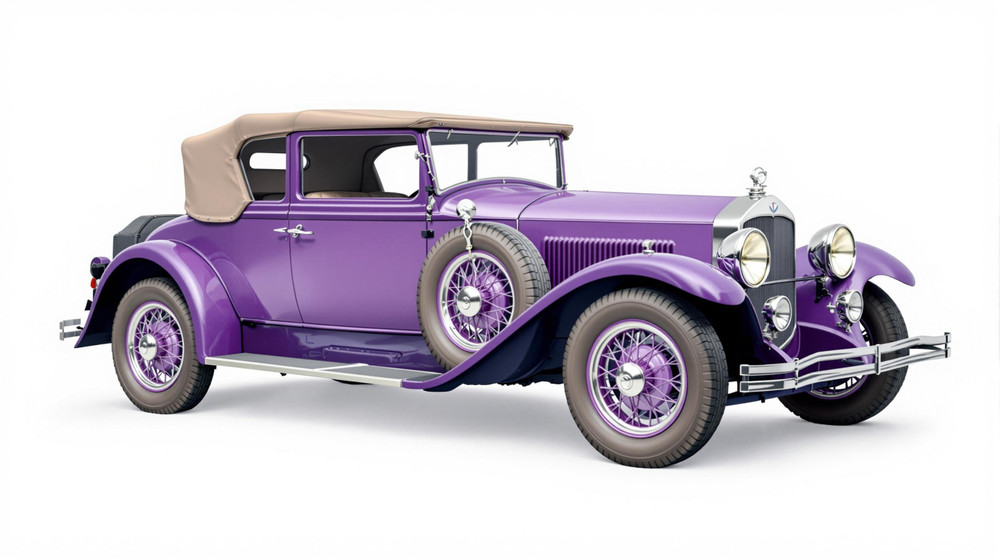
Image of 1926 Jordan Great Line Eight, Note: These illustrations use artistic license and may differ from actual historical models.
Performance Metrics
Fundamental Metrics
Emotional Appeal
MMP Rating
| Engine Specifications | |
|---|---|
| Engine Options: | Straight-8 |
| Displacement Range: | 3.2L |
| Horsepower Range: | Estimated 70-80 HP |
| Torque: | Not available |
| Compression Ratio: | Not available |
| Ignition System: | Battery and coil |
| Cooling System: | Water-cooled |
| Performance Specifications | |
| 0-60 Time: | Not available |
| 1/4 Mile Time: | Not available |
| Top Speed: | 70 mph |
| Transmission and Drive | |
| Drive Type: | Rear-wheel drive |
| Transmission Type: | 3-speed manual |
| Fuel and Efficiency | |
| Fuel System Type: | Carburetor |
| MPG: | Not available |
| Dimensions and Brakes | |
| Brakes: | Mechanical drum brakes |
| Wheelbase: | 125 inches |
| Weight: | Estimated 3500 lbs |
Note: Specifications for classic cars are given to the best of our ability, considering the limited and variant data available.
Long before “personal luxury car” became a familiar category, the 1926 Jordan Great Line Eight made a case for the automobile as a statement of style as well as transportation. It came from the Jordan Motor Car Company of Cleveland, Ohio, an independent manufacturer founded by Edward S. “Ned” Jordan. The Great Line Eight paired the prestige of an eight-cylinder engine with the company’s flair for expressive styling, setting it apart from more conservative cars of the mid-1920s.
Jordan Great Line Eight Origins
Jordan built its reputation by giving its cars memorable names and distinctive personalities. Ned Jordan believed that a car could sell not only on engineering, but also on the feeling it evoked. That approach brought the company attention in an era when many automakers relied on practical, mechanical language in their advertising.
The Great Line Eight was part of Jordan’s move into the increasingly competitive market for smooth, powerful eight-cylinder automobiles. In the 1920s, an eight was an appealing step up from the four-cylinder engines common in affordable cars and the sixes offered by many mid-priced makers. Jordan’s challenge was to combine that added refinement with the visual identity that made its products recognizable.
A notable piece of Jordan history is the company’s celebrated “Somewhere West of Laramie” advertising campaign. It helped establish Jordan as a maker with an unusually strong sense of style, though the campaign is most closely associated with the Jordan Playboy rather than the Great Line Eight itself. That distinction matters: the Great Line Eight belongs to the same image-conscious company, but it was a separate model and a more substantial luxury-oriented automobile.
Exterior Design and Styling
The Great Line Eight wore the upright, carefully proportioned look expected of a high-grade car in 1926. Its tall radiator, long hood, separate fenders, running boards, and exposed lamps gave it the classic profile of the period. The eight-cylinder engine allowed for a long hood, a feature that suggested power even when the car was standing still. Depending on body style, the overall effect could be formal and imposing or more open and sporting.
Jordan’s design language aimed to look less anonymous than that of many mass-market cars. Fine details varied by body and trim level, but buyers could expect bright metal accents, carefully shaped fenders, and a finish intended to make the car stand out in traffic. Period paint choices were not necessarily identical across every body style or production run. Dark, formal shades were common on closed cars, while richer colors and contrasting trim suited more open models. The exact original palette for an individual car is best confirmed from its build records, surviving paint, or period literature.
Cabin, Materials, and Equipment
Inside, the Great Line Eight was designed for comfort and presentation rather than bare-bones utility. Depending on the body, occupants might find upholstered seating in leather or quality cloth, finished interior panels, carpeting, and polished wood or wood-grain details. Closed models offered protection from weather and a more private, formal cabin; open cars put passengers closer to the sights and sounds of the road.
By 1926, electric starting and lighting were increasingly expected on cars in this class, and a conventional manual transmission remained the norm. The driver still had to operate a clutch and gear lever, while braking and steering demanded more physical effort than in a modern car. There were no electronic aids, power steering, or synchronized gear changes to smooth out mistakes. The Great Line Eight’s appeal was refinement by the standards of its day, not modern convenience.
Body Styles and Buyer Choices
Jordan offered its cars in a range of body configurations during this period, including open touring and roadster forms as well as closed sedans, coupes, and more formal passenger bodies. Exact availability could vary with the model year and the company’s catalog, so a surviving Great Line Eight should be identified by its body tag and period documentation rather than by appearance alone.
Closed sedans and coupes appealed to buyers who wanted year-round comfort and a more polished image. Open touring cars and roadsters offered a lighter, more sporting character and made the most of fine-weather motoring. No single body style can safely be called the universal Great Line Eight favorite without dependable production figures, but a well-preserved open car often makes the most dramatic impression at a show, while a sedan best conveys the model’s formal luxury ambitions.
Historical Significance and Rivals
The Great Line Eight arrived when eight-cylinder power was becoming an important selling point for American manufacturers. A smooth-running straight-eight could deliver a more even, refined feel than many four- and six-cylinder engines, and it gave buyers a prestigious alternative to the established luxury marques. Jordan was smaller than the industry’s giants, so personality and presentation were essential to its appeal.
The car’s significance lies less in a single world-changing technical invention than in the way it combined a fashionable powertrain with an independent maker’s design-minded approach. Jordan helped show that a car from a smaller company could compete for attention through character, styling, and a coherent brand identity. Its influence is best understood as part of the broader shift toward cars being marketed as expressions of taste, not merely as machines.
Jordan did not survive the brutal economics of the early 1930s. The company ceased operations in 1931, leaving its surviving cars as reminders of the many independent American manufacturers that flourished briefly before the Depression and industry consolidation narrowed the field.
Engine, Speed, and Road Manners
Published specifications for individual Jordan models can be difficult to reconcile, and surviving cars may have been modified over the decades. The Great Line Eight is generally described as using a straight-eight engine, but exact displacement and horsepower should be verified against a reliable period catalog or the specifications of the particular car. As a period-appropriate guide rather than a guaranteed factory figure, an output in the neighborhood of 70 to 80 horsepower is plausible for a car of this class.
There is no dependable, widely cited factory or independent test figure for the Great Line Eight’s 0-to-60 mph acceleration. A reasonable modern estimate for a restored, correctly running example is roughly 25 to 35 seconds, depending heavily on body weight, gearing, engine condition, and road surface. A top speed in the region of 65 to 75 mph is also a cautious estimate, not a promise that every car can safely or comfortably maintain those speeds today.
On the road, the straight-eight’s main virtue would have been smoothness. Its sound is more of a steady mechanical hum and exhaust pulse than the sharper note of a small four-cylinder car. The ride would feel substantial, with a tall body and period suspension moving more over bumps than a modern car. On winding roads, the driver would need to plan ahead: steering is comparatively slow, the car carries considerable momentum, and its tires and brakes are far removed from contemporary standards.
Driving one is an active experience. The driver listens to the engine, works the clutch and gear lever, judges braking distance, and makes deliberate steering inputs. That involvement is a large part of the Great Line Eight’s charm, but it also means the car is best enjoyed at a measured pace rather than treated like a modern highway cruiser.
Ownership, Maintenance, and Reliability
Today, a Great Line Eight is most at home as a show car, touring car, or occasional-use classic. It can take part in suitable vintage events, but regular commuting is rarely practical. Parts availability is more limited than for mass-produced Fords or Chevrolets, and some components may require specialist knowledge, careful sourcing, or custom fabrication.
Mechanical systems from the 1920s are often understandable to an experienced vintage-car mechanic, and many repairs do not require modern diagnostic equipment. That does not automatically make ownership easy for the average owner. Wear in the engine, transmission, steering, brakes, and cooling system can be expensive to correct, while a missing body-specific part may be difficult to replace. A pre-purchase inspection by someone familiar with early American cars is especially important.
Reliability depends less on the badge than on the quality of restoration and ongoing care. Good fuel and ignition setup, careful lubrication, correct cooling-system maintenance, and regular attention to tires and brakes matter greatly. Owners should also confirm that the car’s electrical system, charging arrangement, and any later modifications are safe and properly documented.
Jordan Facts and Common Myths
The Great Line Eight is a relatively obscure model compared with better-known luxury cars of the era, and that obscurity is part of its appeal. It represents a small independent company with big ambitions and a strong visual identity. Jordan’s best-known advertising work is frequently repeated in stories about the marque, but the famous “Somewhere West of Laramie” campaign should not be mistaken for a Great Line Eight-specific record or event.
No widely recognized speed, endurance, or sales record is firmly associated with the 1926 Great Line Eight. Nor is there a well-established celebrity ownership story that can be confidently tied to this particular model. Its historical interest comes instead from Jordan’s place in the independent-car movement and from the rarity of surviving examples.
A common criticism of cars from this period is that they can be tiring and demanding to drive by modern standards. That is fair: braking distances are long, weather protection varies by body, and parts support can be a challenge. The same traits are also part of the car’s appeal for enthusiasts who value mechanical involvement and period character.
Collector Value and Rarity
There is no reliable public production total for the 1926 Great Line Eight, so any figure should be treated as an estimate rather than a factory-confirmed count. Given Jordan’s limited scale and the age of the cars, it is reasonable to think that production was in the hundreds or low thousands rather than at mass-market levels. The number of surviving, complete examples is likely much smaller, but an exact survivor count is not established.
Collector value depends heavily on body style, originality, restoration quality, documentation, and whether the car is complete. As a broad present-day estimate, a project or incomplete example might fall around $15,000 to $30,000. A sound, usable car could be roughly $30,000 to $60,000, while a high-quality restoration or particularly desirable body could bring $60,000 to $100,000 or more. These are guide ranges, not appraisals; a rare body or exceptional provenance can move a sale outside them.
Values for lesser-known prewar independents tend to be selective rather than uniformly rising. Jordan’s strong styling and scarcity support long-term collector interest, but the specialized parts needs and smaller buyer pool can limit prices compared with famous luxury marques. Well-documented cars in excellent condition are best positioned to hold value, while poorly restored or incomplete examples may remain difficult to sell. Over time, the model’s rarity may help, but condition and provenance are likely to matter more than scarcity alone.
Why the Great Line Eight Matters
The 1926 Jordan Great Line Eight brought together the smooth prestige of an eight-cylinder engine, the varied body styles of a luxury car, and the distinctive marketing instincts of an ambitious Cleveland manufacturer. It was not a mass-produced sales champion or a single-technology breakthrough. Its importance is more human: Jordan tried to make an automobile feel individual in an era when the industry was rapidly standardizing.
For collectors, the Great Line Eight offers a chance to experience a remarkable chapter of American motoring that is often overshadowed by better-known brands. Its long hood, period craftsmanship, and purposeful straight-eight character make it more than a rare nameplate. It is a rolling reminder that, in the 1920s, even a small automaker could build a car with a big personality.
1926 Jordan Great Line Eight Catalog of Parts
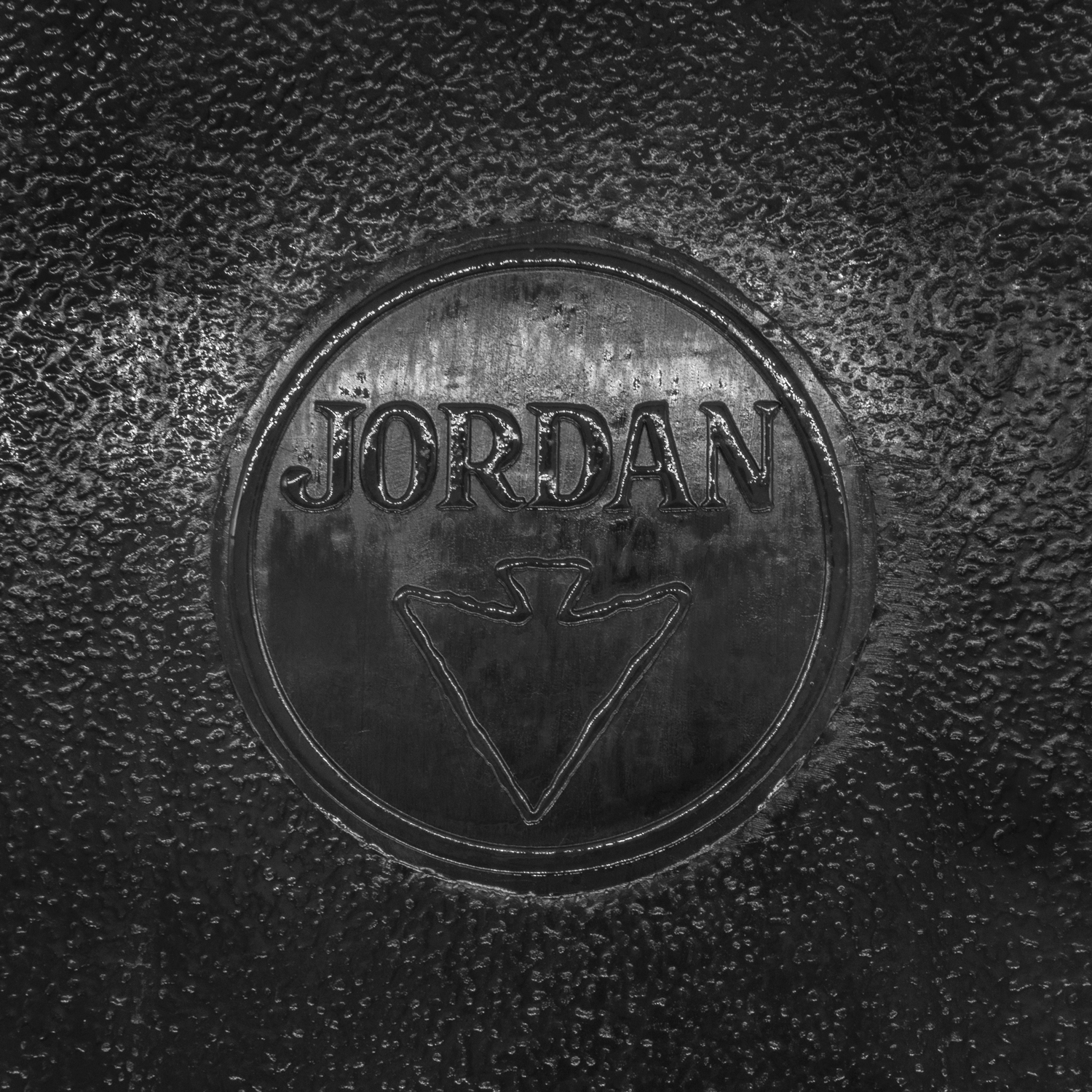 1926 Jordan Great Line Eight Accessory Floor Mat - 12"X17"-AC 50Accessory Floor Mat - made of high quality black rubber with molded original emblem. Also designed to be sewn into new carpets. 12"X17", Each
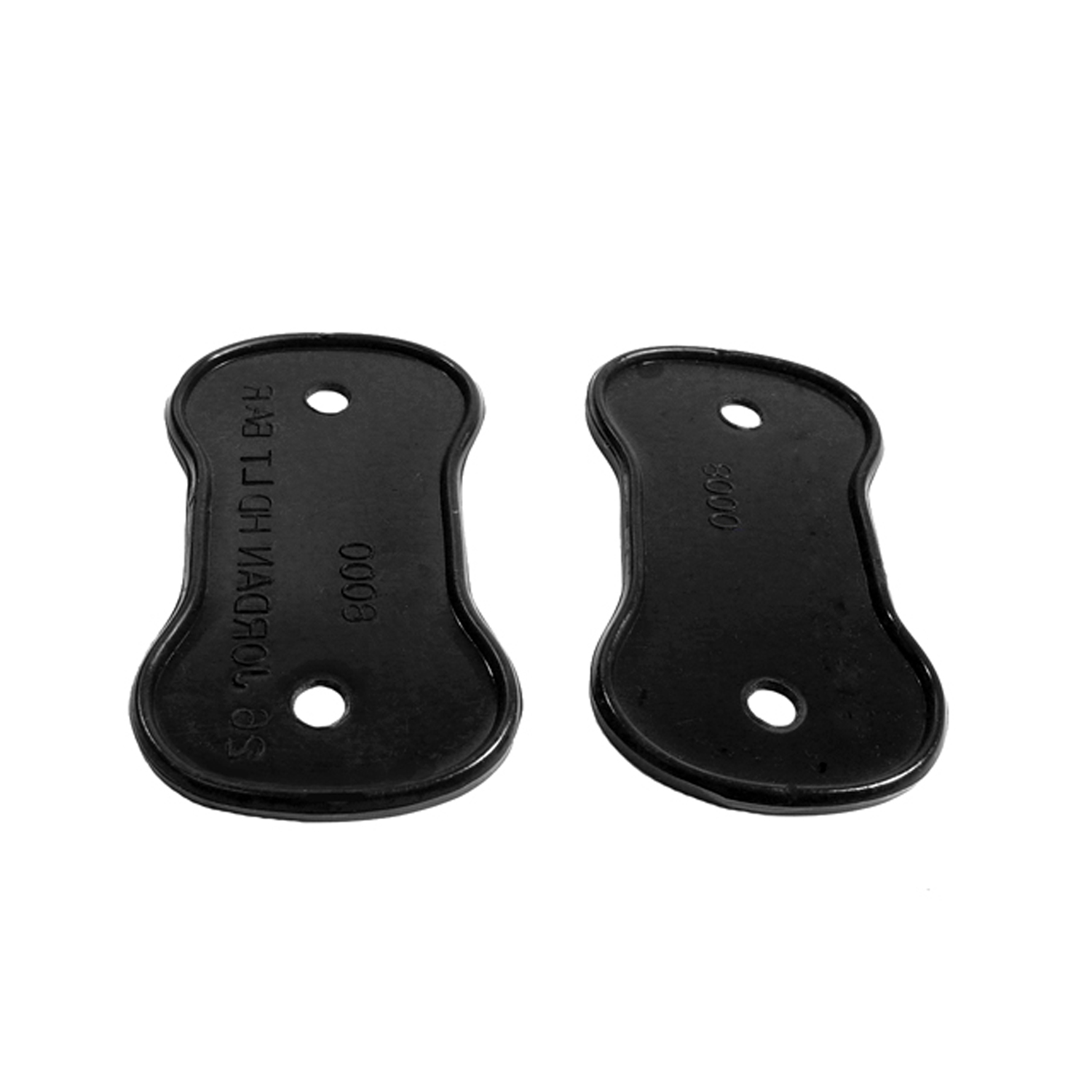 1926 Jordan Great Line Eight Headlight Bar Pads. 2-1/4" wide X 4" long. Pair-MP 8000Headlight Bar Pads. 2-1/4" wide X 4" long. Pair
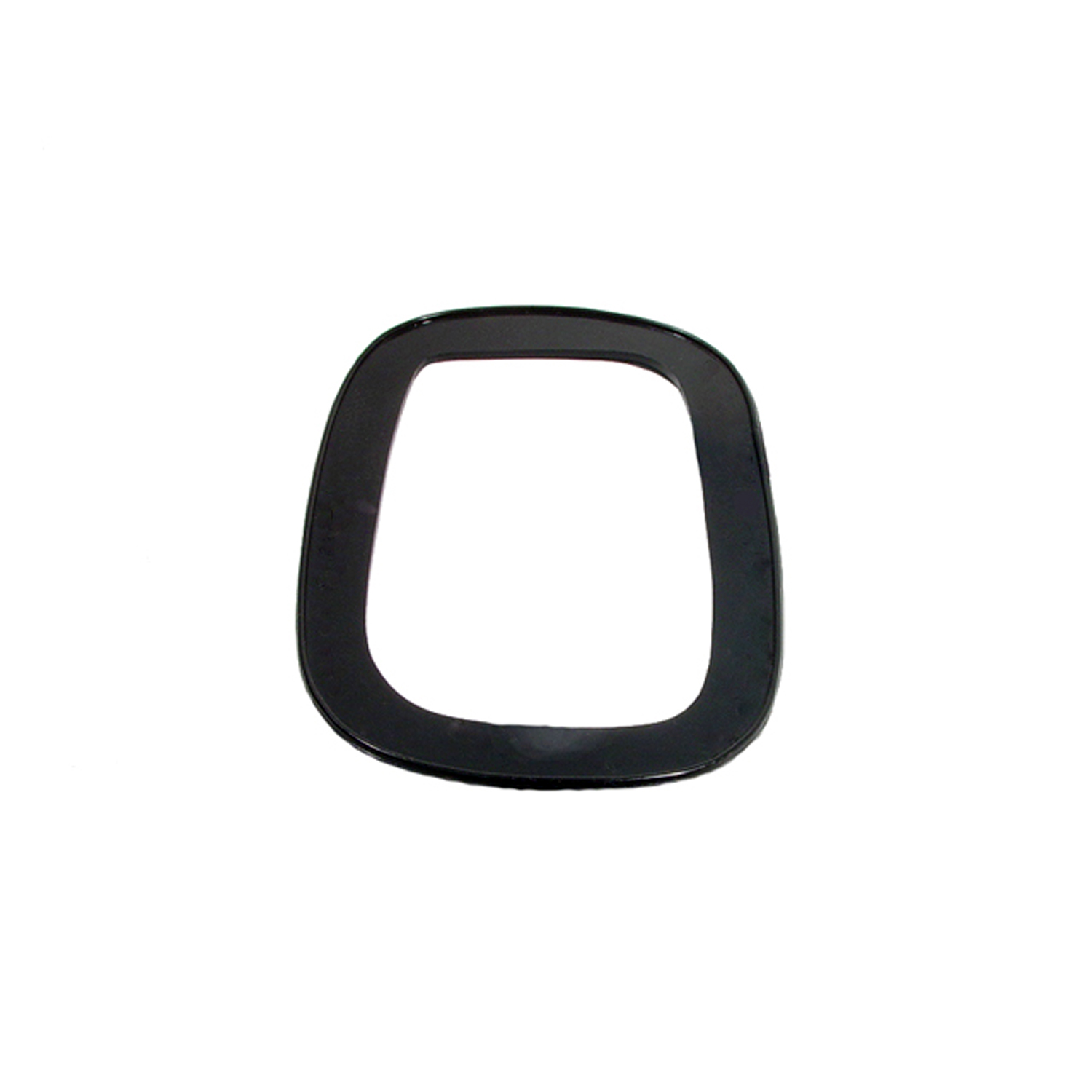 1926 Jordan Great Line Eight Instrument Bezel. 6" X 4". Each-MP 8000-AInstrument Bezel. 6" X 4". Each
Why Choose Metro?
For over 100 years, Metro Moulded Parts has been the pinnacle of quality in classic car restoration parts. Our commitment to precision and authenticity in every component ensures a perfect fit and an OEM-level appearance.
- Expert Craftsmanship & Quality: Each part is a testament to our dedication to reliability and perfection, crafted from original designs and thoroughly tested.
- Advanced Technology: We use cutting-edge techniques to create flawless, long-lasting parts that surpass others in performance.
- SuperSoft Sponge – The Ultimate Door Seal: Not only are our door seals 30% softer than competitors', but they're also guaranteed to never leak. They effectively reduce wind and road noise, enhancing your classic car's comfort and driving experience.
- Proudly American: Our parts are a product of American craftsmanship, made in the USA with a spirit of excellence and heritage.
- Unrivaled Warranty: We back our products with a 30-year industry-leading warranty, a testament to our confidence in their quality.
Join us in preserving the legacy of classic cars with parts that are crafted for perfection, not just made.