
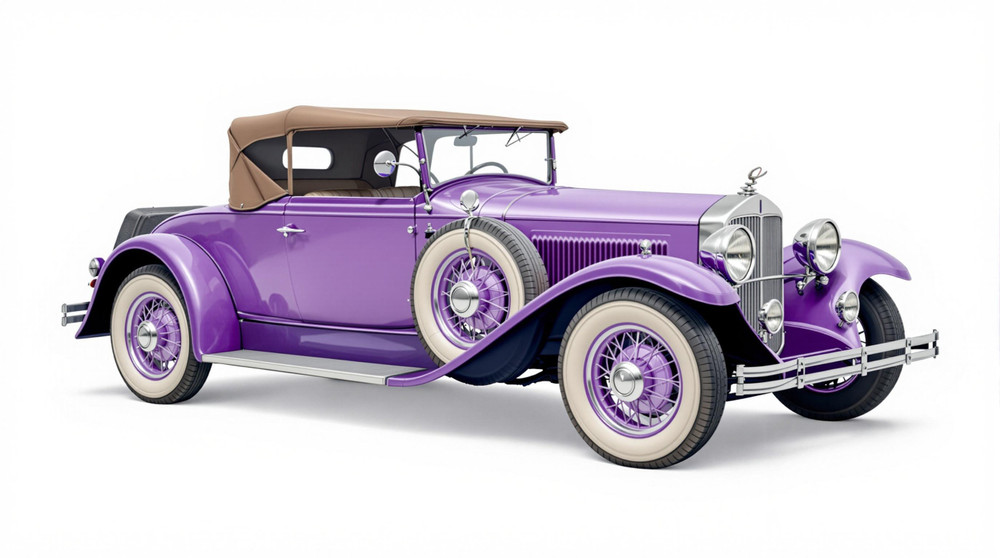
Image of 1929 Jordan Model 8je, Note: These illustrations use artistic license and may differ from actual historical models.
Performance Metrics
Fundamental Metrics
Emotional Appeal
MMP Rating
| Engine Specifications | |
|---|---|
| Engine Options: | Straight-8 |
| Displacement Range: | 4.5L |
| Horsepower Range: | Estimated 90-100 HP |
| Torque: | Not available |
| Compression Ratio: | Not available |
| Ignition System: | Distributor and coil |
| Cooling System: | Water-cooled |
| Performance Specifications | |
| 0-60 Time: | Not available |
| 1/4 Mile Time: | Not available |
| Top Speed: | 75-85 mph |
| Transmission and Drive | |
| Drive Type: | Rear-wheel drive |
| Transmission Type: | 3-speed manual |
| Fuel and Efficiency | |
| Fuel System Type: | Carburetor |
| MPG: | Not available |
| Dimensions and Brakes | |
| Brakes: | Mechanical drum brakes |
| Wheelbase: | 125 inches |
| Weight: | Estimated 3500 lbs |
Note: Specifications for classic cars are given to the best of our ability, considering the limited and variant data available.
1929 Jordan Model 8-Je: An Independent Eight-Cylinder Classic
The 1929 Jordan Model 8-Je came from a company that believed a car should be remembered for more than its price list. Built by the Jordan Motor Car Company of Cleveland, Ohio, it belonged to the era’s growing class of smooth, prestigious straight-eight automobiles. Jordan was a small independent manufacturer, and its cars stood apart from the mass-market machines of Ford and Chevrolet through distinctive styling, thoughtful advertising, and a taste for the dramatic.
Jordan’s founder, Edward S. “Ned” Jordan, had already made the company famous with the Playboy roadster and the striking 1920 advertisement “Somewhere West of Laramie.” That campaign helped establish Jordan as a style-conscious marque. The 8-Je arrived near the end of the company’s life: Jordan continued building cars into 1931, when the Great Depression and the difficulty of competing with larger manufacturers brought production to a close.
One detail makes the 8-Je especially intriguing to researchers and collectors: period and later references do not always use Jordan’s model designations consistently. Exact specifications and body availability can vary by source, so the figures below describe the 1929 Jordan straight-eight family as a guide rather than a definitive factory record for every individual 8-Je.
Jordan Styling: Long Lines and Fine Detail
The 8-Je wore the confident proportions typical of a premium American car at the end of the 1920s. Its long hood, upright radiator, separate fenders, and running boards gave it a formal, substantial presence. The tall grille and headlights framed a purposeful front end, while sweeping fender lines and bright trim added visual movement. In profile, the extended hood and cabin set well back from the front axle made the car look more expensive and powerful than an ordinary family sedan.
Jordan’s appeal was not limited to conservative luxury. The company had a reputation for fashion-forward presentation, and its advertising encouraged buyers to see a Jordan as an expression of personality. A sedan could look dignified and substantial, while an open car brought the marque’s sporty side into view. Exact body styles depended on the model and catalog offering, but Jordan’s range included closed sedans and coupes as well as open touring and roadster-style cars in various years.
Cabins were dressed in materials appropriate to a high-grade automobile of the period. Buyers could expect upholstered seating, wood or wood-finished trim, carpeting, and polished metal fittings, with the exact finish depending on body style and equipment. A closed sedan offered shelter and a more formal atmosphere; an open model put passengers closer to the sights and sounds of the road. These are hand-finished interiors by modern standards, so surviving cars can differ considerably after decades of restoration and reupholstery.
Jordan cars were often associated with attractive paint and trim combinations. Specific 8-Je color records are difficult to confirm, but period cars could be ordered in colors beyond plain black, with dark blue, maroon, green, and other rich shades fitting the era’s taste. Two-tone treatments and contrasting trim suited the body’s long lines. The most accurate color choice for a restoration is the one supported by the individual car’s original paint traces or build documentation, rather than a supposed universal 8-Je palette.
Eight-Cylinder Engineering for 1929
The defining feature of the Model 8-Je was its straight-eight layout. Arranging eight cylinders in a single row gave the engine a naturally smooth character compared with many four- and six-cylinder cars of the time. Jordan’s 1929 eight-cylinder models used conventional early-car engineering: a longitudinal front-mounted engine, rear-wheel drive, a manual transmission, and a separate chassis. Exact displacement and horsepower figures vary across references to the Jordan eight-cylinder series, so it is wise to verify the engine and chassis on a particular car before treating any one specification as universal.
For its day, the car’s conveniences were substantial. Electric starting and lighting were part of the modern automobile experience, while the driver still had to manage a clutch, gear lever, and mechanical controls with more attention than a modern motorist would need. Braking was by period mechanical systems rather than today’s power-assisted disc brakes. Jordan’s achievement was not a single futuristic gadget, but the combination of a smooth engine, upscale presentation, and contemporary equipment in an independently built car.
Why the Jordan Mattered
The 8-Je represents a distinctive chapter in American automotive history: the independent manufacturer trying to compete through character rather than sheer production scale. Jordan understood that design, color, advertising, and identity could help sell a car just as much as a list of technical specifications. The company’s memorable marketing is still discussed because it presented the automobile as part of an adventurous, stylish life, rather than simply a means of transportation.
That approach helped Jordan stand out in a crowded market, but it could not overcome the economic disadvantages faced by a smaller carmaker. Larger companies could spread development and manufacturing costs across far more vehicles, while the Depression sharply reduced demand for premium cars. Jordan’s brief history gives surviving cars extra significance: they represent an ambitious independent marque that helped make American car culture more expressive, even though it did not survive the decade.
Road Manners and Performance
Jordan did not leave the sort of standardized acceleration data that modern buyers expect. Based on the power and weight typical of 1929 straight-eight cars in this class, a reasonable estimate for a sound, correctly tuned example is a top speed in the neighborhood of 70 to 80 mph. A 0-to-60-mph run would likely take roughly 20 to 30 seconds, depending on engine condition, gearing, body style, and load. Those are informed estimates, not verified factory test figures for every 8-Je.
On the road, the straight-eight’s smoothness is the star. It produces a deep, measured mechanical note rather than the rapid, uneven beat associated with some smaller engines. Acceleration is gradual by modern standards, and the driver needs to plan overtaking and hills well ahead. The manual gearbox, clutch, steering, and brakes all demand active involvement. A Jordan rewards a calm driving style, not hurried inputs.
The separate chassis and period suspension give the car a soft, substantial ride on ordinary roads, though sharp bumps can unsettle it more than they would a modern vehicle. On a winding road, the long wheelbase and body movement encourage steady cornering rather than quick direction changes. Wind, road crown, tire condition, and brake adjustment matter greatly in an open or high-sided vintage car. A well-maintained Jordan can be enjoyable on tours and scenic drives, but it should be driven with generous following distance and respect for its age.
Living with a 1929 Jordan
Today, the 8-Je is best suited to touring, vintage-car gatherings, museum display, and careful weekend use. It is not a practical daily driver in the modern sense. Traffic speeds, limited braking performance, scarce replacement parts, and the need for regular mechanical attention make routine commuting a poor fit. Its greatest pleasure is the unhurried experience of driving a substantial prewar automobile on roads where it can be enjoyed safely.
Maintenance follows familiar principles for cars of the period: keep the lubrication system in good order, monitor cooling, inspect ignition and fuel components, and check the brakes, steering, tires, and wheel bearings frequently. Many repairs are mechanically straightforward for an experienced vintage-car owner, but parts availability is the challenge. Jordan-specific trim, body hardware, and engine components may require specialist help, careful sourcing, or custom fabrication. A pre-purchase inspection by someone familiar with prewar cars is especially valuable.
Jordan Trivia and Common Misconceptions
Jordan’s most famous advertising legacy is the “Somewhere West of Laramie” campaign, created for the earlier Playboy roadster. It is often mentioned alongside the Model 8-Je because it captures the company’s larger approach to selling style and adventure. The slogan should not be mistaken for proof that every 1929 Jordan eight-cylinder car was a Playboy or shared that model’s bodywork.
There is no widely recognized speed, endurance, or mass-production record associated specifically with the 8-Je. Its rarity is better understood through Jordan’s limited production life and the survival challenges faced by cars built nearly a century ago. Exact production totals for the 8-Je are not reliably established in commonly available references. As a broad estimate, the 1929 Jordan eight-cylinder range likely numbered in the hundreds to low thousands across its variants, while surviving examples are much rarer.
A common criticism of the car today is practical rather than historical: it is slow to accelerate, requires more driver effort than a modern vehicle, and can be difficult to keep supplied with correct parts. Those limitations are part of the ownership bargain. The Jordan is valued for its individuality, workmanship, and connection to an adventurous independent automaker, not for modern convenience.
Collector Values and Availability
Jordan cars appear infrequently on the market, and the value of an 8-Je depends heavily on condition, body style, completeness, restoration quality, and documentation. As a broad current-market estimate, a project or incomplete car might fall around $15,000 to $30,000. A sound, presentable driver could be roughly $30,000 to $60,000, while a high-quality restoration or especially desirable open-body example might bring about $60,000 to $100,000 or more. These are approximate ranges, not a formal appraisal, and a rare body style or exceptional provenance can change the result considerably.
Jordan values tend to be selective rather than driven by broad trends. The marque’s rarity and historical interest support its appeal, but its smaller collector following and limited parts supply can restrain prices compared with better-known luxury brands. Well-documented, correctly restored cars are likely to attract the strongest interest. Over time, the best examples may appreciate, but owners should buy one primarily for the experience and preservation of an unusual American classic, not as a guaranteed investment.
A Distinctive Independent Classic
The 1929 Jordan Model 8-Je brings together a smooth straight-eight engine, elegant late-1920s proportions, and the bold personality of an independent American automaker. Its performance is measured, its upkeep takes commitment, and its exact specifications deserve careful verification. Yet those very qualities make it more than another old sedan: it is a survivor from a brief, creative chapter in American motoring.
For collectors who value character as much as horsepower, the Jordan offers a memorable reminder that a great car can make its mark through style, ambition, and a voice all its own.
1929 Jordan Model 8je Catalog of Parts
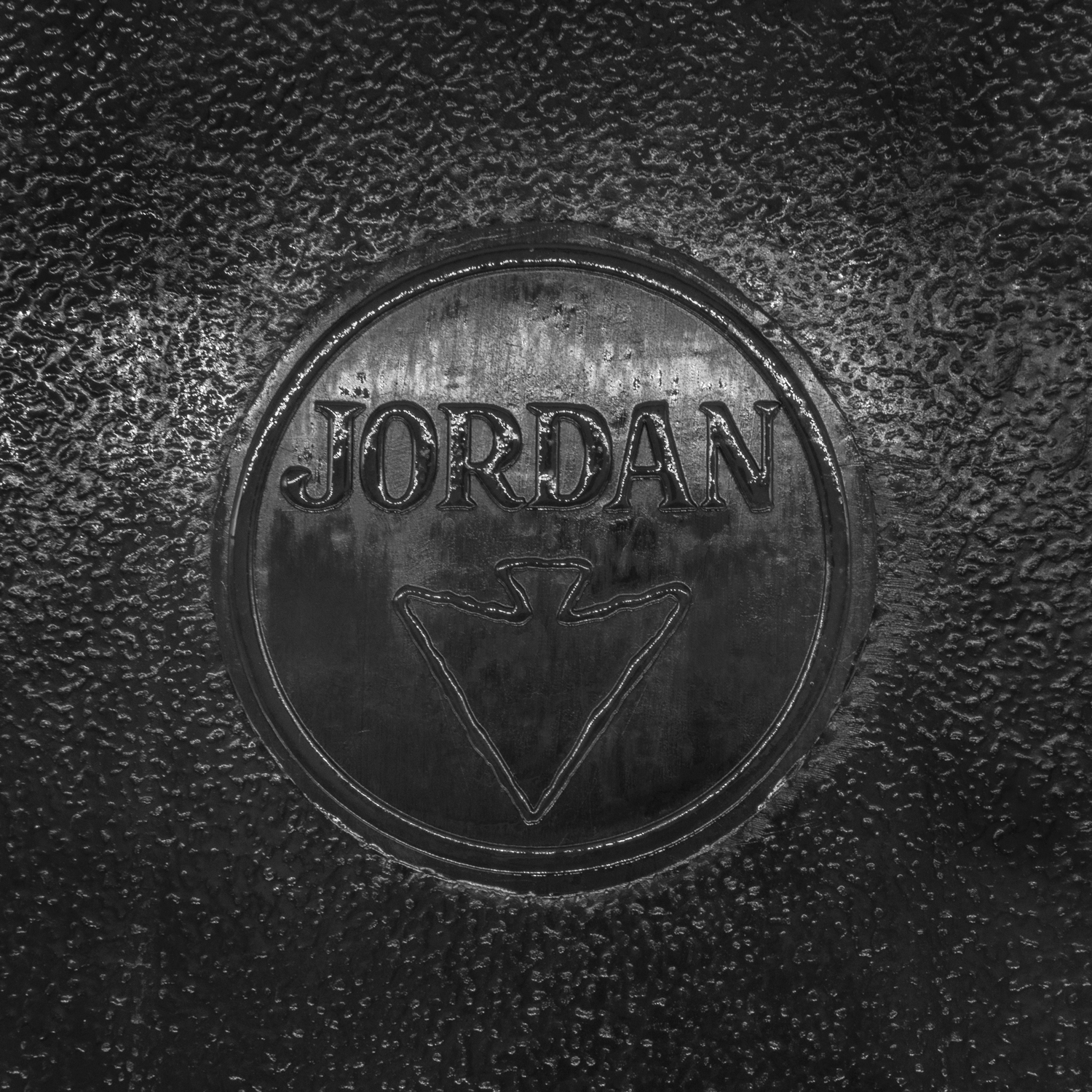 1929 Jordan Model 8JE Accessory Floor Mat - 12"X17"-AC 50Accessory Floor Mat - made of high quality black rubber with molded original emblem. Also designed to be sewn into new carpets. 12"X17", Each
Why Choose Metro?
For over 100 years, Metro Moulded Parts has been the pinnacle of quality in classic car restoration parts. Our commitment to precision and authenticity in every component ensures a perfect fit and an OEM-level appearance.
- Expert Craftsmanship & Quality: Each part is a testament to our dedication to reliability and perfection, crafted from original designs and thoroughly tested.
- Advanced Technology: We use cutting-edge techniques to create flawless, long-lasting parts that surpass others in performance.
- SuperSoft Sponge – The Ultimate Door Seal: Not only are our door seals 30% softer than competitors', but they're also guaranteed to never leak. They effectively reduce wind and road noise, enhancing your classic car's comfort and driving experience.
- Proudly American: Our parts are a product of American craftsmanship, made in the USA with a spirit of excellence and heritage.
- Unrivaled Warranty: We back our products with a 30-year industry-leading warranty, a testament to our confidence in their quality.
Join us in preserving the legacy of classic cars with parts that are crafted for perfection, not just made.