
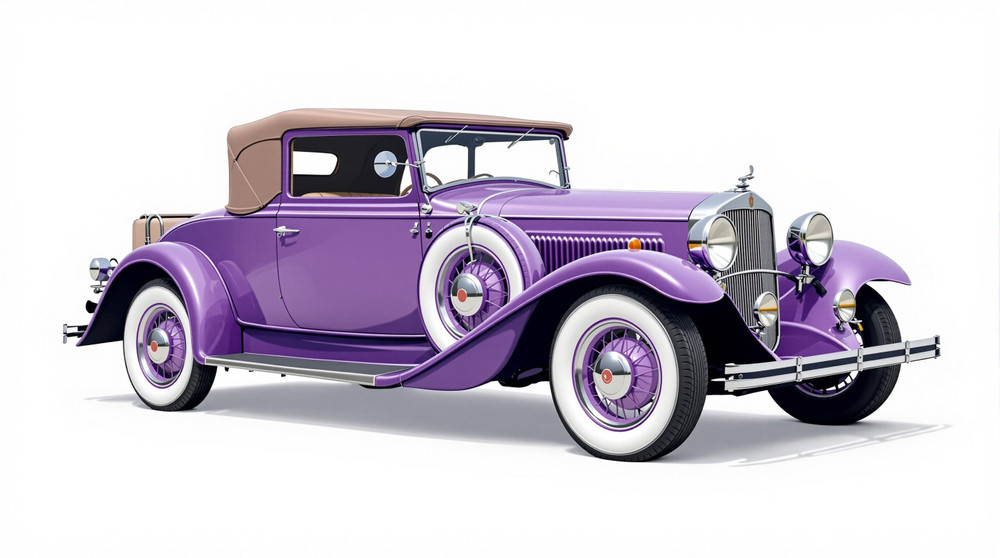
Image of 1930 Jordan Model 8g, Note: These illustrations use artistic license and may differ from actual historical models.
Performance Metrics
Fundamental Metrics
Emotional Appeal
MMP Rating
| Engine Specifications | |
|---|---|
| Engine Options: | Inline 8 |
| Displacement Range: | 3.5L |
| Horsepower Range: | Estimated 90-100 HP |
| Torque: | Not available |
| Compression Ratio: | Not available |
| Ignition System: | Battery and coil |
| Cooling System: | Water-cooled |
| Performance Specifications | |
| 0-60 Time: | Not available |
| 1/4 Mile Time: | Not available |
| Top Speed: | 75-80 mph |
| Transmission and Drive | |
| Drive Type: | Rear-wheel drive |
| Transmission Type: | 3-speed manual |
| Fuel and Efficiency | |
| Fuel System Type: | Carburetor |
| MPG: | Not available |
| Dimensions and Brakes | |
| Brakes: | Mechanical drum brakes |
| Wheelbase: | 125 inches |
| Weight: | Estimated 3500 lbs |
Note: Specifications for classic cars are given to the best of our ability, considering the limited and variant data available.
1930 Jordan Model 8G: A Style-First American Eight
The 1930 Jordan Model 8G brought the kind of visual flair usually associated with much larger luxury marques to a car from an independent American manufacturer. Its long hood, sweeping fenders and eight-cylinder power made it a distinctive choice in a crowded market, where many cars were beginning to look more alike.
The car came from the Jordan Motor Car Company of Cleveland, Ohio, founded in 1916 by Edward S. “Ned” Jordan. Jordan’s approach was unusual: rather than build a car around conservative engineering claims, he sold a sense of style and personality. His famous advertising helped make the company a household name, and the 1930 Model 8G carried that image into the late-1920s and early-1930s era of increasingly sophisticated automobiles.
One notable point for researchers and collectors is that period references do not always use the “8G” designation consistently. Model names and specifications can vary between catalogs, advertisements and surviving-car records. Buyers should confirm a car’s identity using its chassis and engine numbers, rather than relying on a badge or modern listing alone.
Long-Hood Styling and Coachwork
The Model 8G’s proportions did much of the talking. Its long engine compartment, upright radiator and gently crowned fenders gave it a purposeful, formal profile. Depending on body style, the roofline could be sleek and low or tall and accommodating. Period details such as wire wheels, running boards, spare tires mounted at the side or rear, and bright trim gave the car a carefully dressed appearance.
Jordan’s appeal was closely tied to presentation. The company understood that buyers were choosing more than transportation: they were buying a car that reflected taste and status. Paint schemes varied by body and year, and period buyers could select from several colors and trim combinations. Dark shades such as black, maroon, green and blue were common on formal cars, while two-tone combinations could make open and sporting bodies look especially lively. Exact offerings should be checked against the relevant year’s catalog, since colors were not necessarily available across every body style.
Like many manufacturers of the period, Jordan offered a range of closed and open coachwork. The broader lineup included sedan and coupe-style bodies, along with more sporting open configurations, though the precise names and availability could differ by model and catalog. A closed sedan is a practical, representative choice for the 8G; an open body, where documented, shows off the car’s sweeping fenders and long profile particularly well. Because body availability is a frequent source of confusion in surviving-car descriptions, confirm the original body style through factory literature or specialist records.
Cabin Craft and Period Technology
Inside, the 8G was designed to feel substantial rather than utilitarian. Depending on body and trim, occupants could find cloth or leather upholstery, a wood-finished dashboard, an array of clearly arranged instruments and generous use of bright metal hardware. Upholstery materials and trim quality varied with the body and price, so a restored example may not reflect the car’s original specification.
Its most important technical feature was the inline-eight engine. Eight-cylinder power was a prestige feature in 1930, promising smoother operation than the four-cylinder engines still common in less expensive cars. The Jordan also used the conventional technologies of its day, including a manual transmission, mechanical controls and a ladder-type chassis. These were not modern conveniences, but they were familiar, serviceable systems for a period mechanic.
Why the Jordan Stood Apart
Jordan’s lasting contribution was as much about automotive marketing and design as it was about mechanical invention. Ned Jordan recognized that a car could be sold through a strong identity, memorable advertising and appealing proportions. His best-known campaign, “Somewhere West of Laramie,” helped establish the company’s reputation for stylish, spirited automobiles. That lesson, that image and design can be central parts of a car’s appeal, remains familiar in the automotive industry.
The 8G arrived during a difficult transition. The late 1920s had brought growing competition, more powerful engines and increasingly polished styling, while the Great Depression sharply reduced demand for expensive cars. Independent manufacturers faced a particularly hard time competing with the production scale, dealer networks and financial strength of the largest firms. Jordan ended automobile production in 1931, making the 1930 cars part of the company’s final chapter.
Eight-Cylinder Performance on the Road
Surviving references to Jordan’s eight-cylinder cars commonly associate them with an engine in the neighborhood of 268 cubic inches and output around 90 horsepower. Because “8G” specifications can be reported differently, treat those figures as a useful general guide, not a substitute for checking the engine in a particular car. Gearing, body weight, tune and condition all affect performance.
There is no dependable factory acceleration figure for the 1930 Model 8G in widely available references. A healthy example might take roughly 25 to 30 seconds to reach 60 mph, but that is a modern estimate, not a verified period test result. A top speed in the region of 70 to 80 mph is plausible for a well-maintained car with suitable gearing, though sustained high-speed driving is unwise in a century-old vehicle. Tire condition, brakes, bearings and cooling system matter more than the number on the speedometer.
On the road, the inline eight’s main advantage is smoothness. Rather than delivering a sharp, modern surge, it builds speed with a steady, measured pull accompanied by a low mechanical hum and the sounds of carburetion and exhaust. The manual gearbox requires deliberate shifts, and the driver must plan ahead for stops. The chassis can feel composed on decent roads, but period suspension cannot erase deep potholes or broken pavement. On a winding road, the car’s size, steering effort and period tires encourage a relaxed pace rather than quick direction changes.
Living With a Jordan
Today, a Model 8G is best suited to touring, club events, historic motoring and concours displays. It is not a sensible daily driver by modern standards. Braking distances are long, traffic moves faster, and the car lacks contemporary safety equipment. Owners who use one regularly tend to choose quiet back roads, maintain conservative speeds and carry basic tools and spare parts.
Mechanical repairs can be manageable for an experienced vintage-car owner, since many systems are straightforward and some components were sourced from outside suppliers. The challenge is often finding the correct parts, confirming what is original and locating specialists familiar with Jordan cars. Bodywork, interior restoration and model-specific trim can be more difficult than routine engine or chassis service. Before buying, inspect the frame for corrosion, assess the engine’s oil pressure and compression, and verify the condition of the transmission, brakes and cooling system.
Jordan Facts, Rarity and Collector Values
The Jordan Model 8G is part of a company story that ended just as the Depression was reshaping the American car industry. Jordan’s most famous legacy is its advertising and its commitment to distinctive styling, rather than a record for racing or speed. No widely established speed, endurance or sales record is associated specifically with the 1930 8G, and claims of celebrity ownership should be supported by documentation before being repeated.
Exact production figures for the 8G are difficult to establish from commonly available model histories. As a small independent marque in its final years, Jordan did not build cars in numbers comparable with Ford, Chevrolet or Buick. A reasonable working estimate is that 8G production was likely in the hundreds to low thousands, but that is an informed estimate, not a confirmed factory total. Complete, correctly identified cars are scarce, and desirable body styles or unusually original examples are scarcer still.
As a broad market estimate, a running but older-restoration example might fall around $25,000 to $50,000. A sound, well-restored car could bring roughly $50,000 to $90,000, while exceptional, highly original or particularly desirable examples may exceed that range. These are indicative ranges, not appraisals: body style, provenance, restoration quality, mechanical condition and the strength of the specialist-car market can move prices substantially.
Jordan values are best viewed as condition-sensitive rather than guaranteed investments. Well-presented, documented cars have the strongest appeal, but the limited pool of marque specialists and buyers can make resale slower than for a more familiar Ford or Packard. Over time, a rare car may appreciate, but restoration costs can easily outpace market gains. Buy the best documented example you can find, and budget for preservation as well as purchase.
A Distinctive Last Chapter
The 1930 Jordan Model 8G combines the smooth character of an American inline eight with the confident styling and independent spirit that defined the Jordan name. Its exact specifications and production totals deserve careful verification, but its place in the story of expressive American car design is clear. More than a surviving automobile, the 8G is a reminder that a bold identity could make a small manufacturer unforgettable.
1930 Jordan Model 8g Catalog of Parts
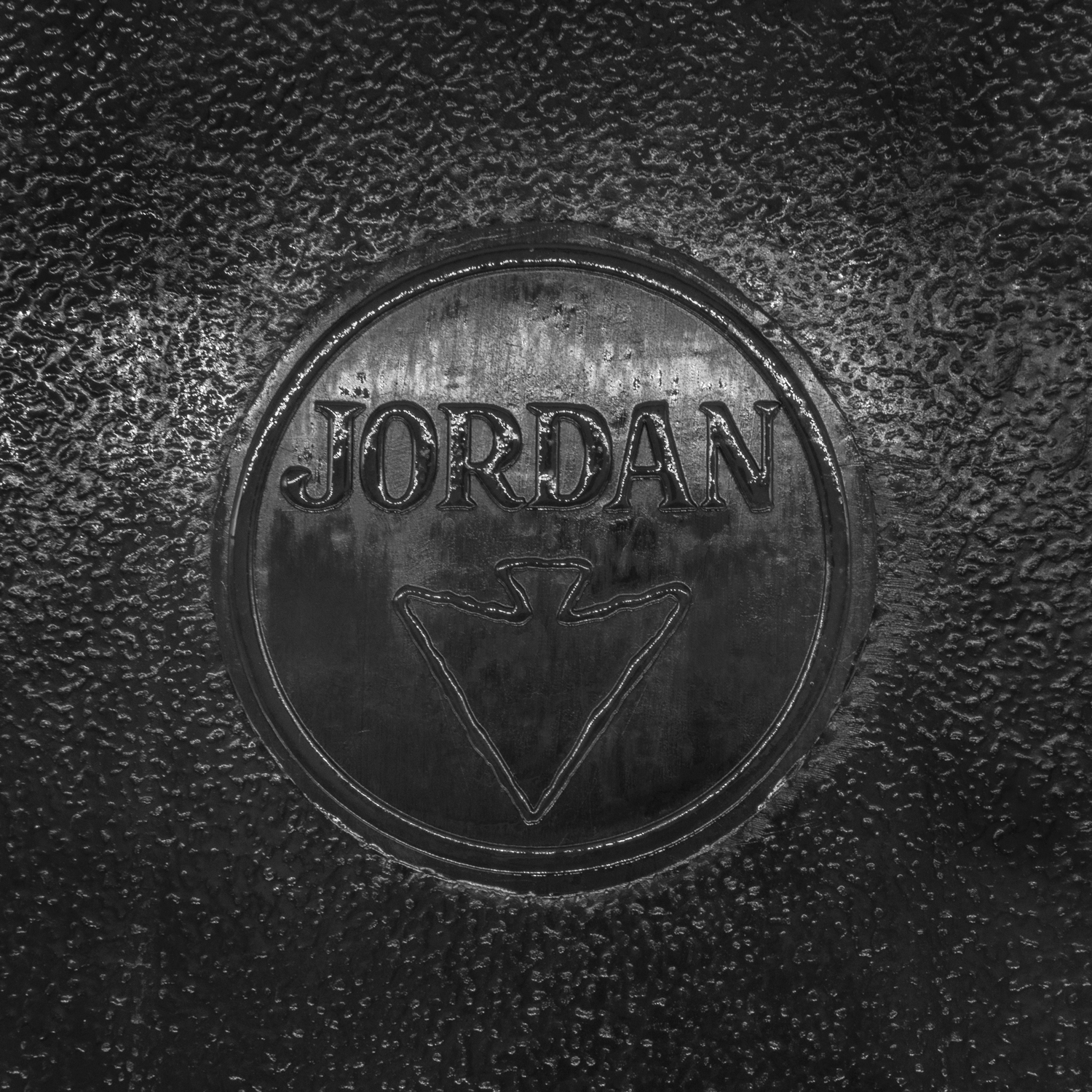 1930 Jordan Model 8G Accessory Floor Mat - 12"X17"-AC 50Accessory Floor Mat - made of high quality black rubber with molded original emblem. Also designed to be sewn into new carpets. 12"X17", Each
Why Choose Metro?
For over 100 years, Metro Moulded Parts has been the pinnacle of quality in classic car restoration parts. Our commitment to precision and authenticity in every component ensures a perfect fit and an OEM-level appearance.
- Expert Craftsmanship & Quality: Each part is a testament to our dedication to reliability and perfection, crafted from original designs and thoroughly tested.
- Advanced Technology: We use cutting-edge techniques to create flawless, long-lasting parts that surpass others in performance.
- SuperSoft Sponge – The Ultimate Door Seal: Not only are our door seals 30% softer than competitors', but they're also guaranteed to never leak. They effectively reduce wind and road noise, enhancing your classic car's comfort and driving experience.
- Proudly American: Our parts are a product of American craftsmanship, made in the USA with a spirit of excellence and heritage.
- Unrivaled Warranty: We back our products with a 30-year industry-leading warranty, a testament to our confidence in their quality.
Join us in preserving the legacy of classic cars with parts that are crafted for perfection, not just made.