
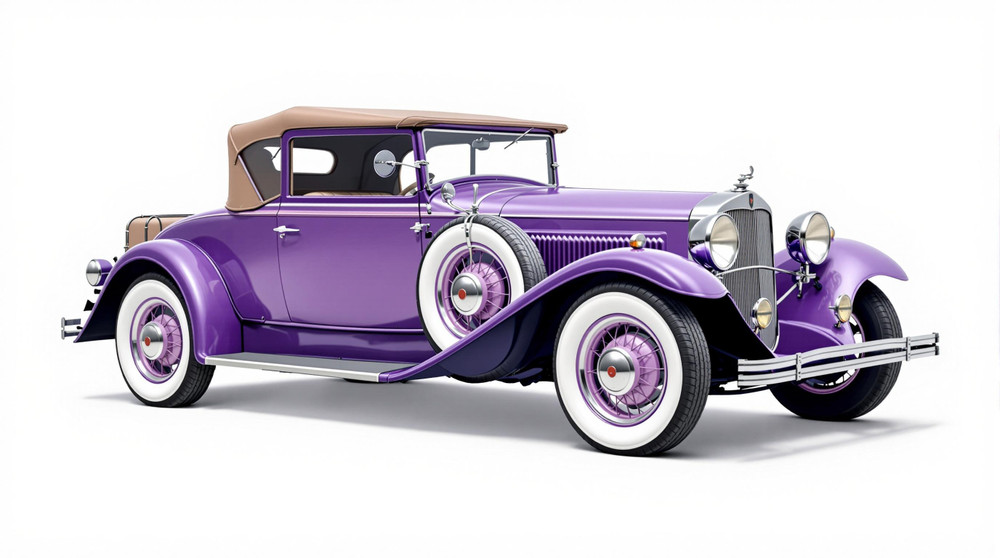
Image of 1931 Jordan Model 80, Note: These illustrations use artistic license and may differ from actual historical models.
Performance Metrics
Fundamental Metrics
Emotional Appeal
MMP Rating
| Engine Specifications | |
|---|---|
| Engine Options: | Straight-8 |
| Displacement Range: | 3.2L |
| Horsepower Range: | Estimated 90-100 HP |
| Torque: | Not available |
| Compression Ratio: | Not available |
| Ignition System: | Battery and coil |
| Cooling System: | Water-cooled |
| Performance Specifications | |
| 0-60 Time: | Not available |
| 1/4 Mile Time: | Not available |
| Top Speed: | 85 mph |
| Transmission and Drive | |
| Drive Type: | Rear-wheel drive |
| Transmission Type: | 3-speed manual |
| Fuel and Efficiency | |
| Fuel System Type: | Carburetor |
| MPG: | Not available |
| Dimensions and Brakes | |
| Brakes: | Mechanical drum brakes |
| Wheelbase: | 125 inches |
| Weight: | Estimated 3,500 lbs |
Note: Specifications for classic cars are given to the best of our ability, considering the limited and variant data available.
1931 Jordan Model 80: A Rare American Eight
The 1931 Jordan Model 80 arrived at the end of an ambitious American carmaker’s story, combining the presence of a full-size luxury automobile with the independent spirit that had made Jordan famous. Built by the Jordan Motor Car Company of Cleveland, Ohio, it belonged to a marque better remembered for expressive styling and bold advertising than for mass production. The Model 80 is now an unusually elusive classic: a substantial, carefully styled car from a company that disappeared just as the Great Depression reshaped the industry.
Jordan’s best-known advertising had urged readers to travel “Somewhere West of Laramie,” selling a mood of freedom and adventure rather than a list of mechanical specifications. That memorable campaign predated the Model 80, but it captures the company’s character. Jordan wanted its cars to feel individual, not merely practical. The 1931 Model 80 carried that independent identity into the final chapter of the marque.
Jordan’s Final Chapter
Edward S. Jordan founded the Jordan Motor Car Company in 1916. The firm built cars in Cleveland and became known for giving its products names and personalities that stood out in a market crowded with sober, functional models. The Jordan Playboy roadster and the company’s striking “Somewhere West of Laramie” campaign helped establish its reputation during the 1920s.
By 1931, however, even distinctive styling could not insulate a smaller automaker from collapsing demand, tightening credit, and competition from the much larger manufacturers. Jordan production ended that year. The Model 80 is therefore significant not only as a late-period luxury car, but as one of the last expressions of an independent company’s ambitions.
Long Lines and Formal Style
The Model 80’s appearance followed the proportions of a substantial early-1930s automobile. Its long hood, upright radiator, separate front fenders, and running boards gave it the imposing stance buyers expected from a high-end American car. The body sat high by modern standards, while large wheels and broad fenders emphasized its weight and road presence. Details such as the radiator shell, headlamps, bright trim, and hood louvers supplied visual polish without abandoning the conservative formality of the period.
As with many low-volume cars of the era, body styles and equipment could vary between catalog offerings and individual cars. Model 80 references are commonly associated with closed touring bodies such as sedans and coupes, with open-body configurations also possible in the broader Jordan range. A sedan offered a dignified, weather-protected cabin; a coupe gave the car a more personal, sporting character. Jordan’s earlier roadsters were more iconic within the company’s history, but the Model 80’s appeal lies in its role as a full-size late Jordan rather than as a revival of the Playboy.
Factory paint choices were period colors rather than today’s enormous palette of standardized finishes. Dark blues, greens, maroons, and black were typical choices for cars of this class, often paired with contrasting pinstriping or brightwork. Exact Model 80 color combinations are difficult to establish from surviving records, and an individual car’s present finish may not reflect its original specification.
A Comfortable Cabin, Built for Its Era
Inside, the Model 80 would have emphasized comfort and formal presentation. Buyers in this price and class could expect an upholstered bench seat, a substantial steering wheel, clear instrument dials, and a wood or wood-finished dashboard. Depending on body style and trim, upholstery might be cloth, leather, or a combination suited to the car’s intended use. The materials were chosen to convey quality and durability rather than the lightweight, minimalist feel of a modern sports car.
Compared with a contemporary economy car, the Model 80’s cabin was spacious and richly appointed. Compared with a modern car, it was entirely hands-on: the driver managed the controls directly, monitored the gauges, and relied on feel and experience rather than electronic assistance. Comfort was a matter of generous space, substantial upholstery, and a capable chassis, not climate control or powered convenience features.
Mechanical Character and Period Technology
The Model 80 is generally identified as an eight-cylinder Jordan, consistent with its position as a premium model. Exact specifications can be difficult to pin down because surviving factory documentation is limited and reference sources do not always agree. Period-car listings commonly place its engine in the roughly 250-cubic-inch range, with output around 80 to 90 horsepower. Treat those figures as useful working estimates rather than guaranteed specifications for every surviving example.
Its equipment reflected the technology of a well-appointed car in 1931: a conventional internal-combustion engine, manual transmission, mechanical driver controls, and a chassis designed for the roads of its day. Hydraulic brakes were becoming increasingly common in the industry, while many cars still relied on mechanical systems. The precise equipment fitted to a particular Model 80 should be verified from its components and surviving documentation.
Jordan did not introduce a mass-market technology that transformed the whole industry with this model. Its distinction was instead the combination of a relatively sophisticated multi-cylinder powertrain, substantial road-going proportions, and the styling independence that had long set the marque apart.
Road Manners: Smooth, Steady, and Mechanical
Period road tests and verified factory performance figures for the Model 80 are scarce. Based on its estimated engine output, gearing, and size, a sound example might reach roughly 70 to 80 mph under favorable conditions. Acceleration from 0 to 60 mph was likely leisurely, perhaps in the region of 25 to 35 seconds. These are modern estimates, not dependable factory claims, and actual performance depends on the car’s engine condition, gearing, body style, and tire setup.
The eight-cylinder layout would have delivered a smoother, more even rhythm than many four-cylinder cars of the period. From the driver’s seat, the experience is less about rapid acceleration than about building speed with a steady engine note, shifting deliberately, and planning ahead. The engine’s sound would be mechanical and resonant, with the exhaust and drivetrain clearly audible in the relatively lightly insulated cabin.
On a smooth road, the Model 80’s long wheelbase and weight should help it feel composed. On rough pavement, its period suspension would absorb larger undulations but transmit sharp impacts and body movement that modern drivers may find unfamiliar. On winding roads, a tall body, narrow tires, and unassisted steering call for measured inputs. This is a touring car to guide smoothly, not a sports car to hustle through corners.
What Made Jordan Different
Jordan’s lasting contribution was as much about automotive identity as engineering. At a time when many manufacturers advertised reliability, price, and practical transportation, Jordan made emotional appeal central to its brand. Its famous western-themed advertising suggested that a car could represent independence and aspiration. That approach helped establish a more lifestyle-oriented style of automobile marketing, even if the Model 80 itself was built for a more formal luxury market.
The Model 80 also illustrates the vulnerability of independent manufacturers. It could offer attractive styling and a distinctive character, but it lacked the production scale, dealer reach, and financial reserves of General Motors, Ford, and Chrysler. Its rarity today reflects both its limited production and the difficult economic circumstances surrounding its final year.
Living With a 1931 Model 80
A Model 80 today is best suited to careful touring, museum display, and concours or regional classic-car events. It is not a sensible daily driver by modern standards. Braking distances, lighting, steering effort, tire technology, and crash protection all belong to another era. On suitable roads, at moderate speeds, it can provide a memorable experience of prewar motoring.
Maintenance is manageable for an experienced vintage-car owner, but it requires patience and access to specialist knowledge. Routine service includes attention to ignition, carburetion, lubrication, cooling, brakes, tires, and the condition of the electrical system. Many mechanical repairs can be understood without modern diagnostic equipment, yet parts are not as readily available as those for high-volume classics. Body trim, glass, upholstery patterns, and model-specific components may require restoration work or careful fabrication.
Reliability depends heavily on the quality of past restoration and ongoing care. A car that has been correctly rebuilt and regularly exercised can be dependable for planned outings. An example that has sat unused may need substantial recommissioning before it is safe to drive. For the average owner, finding a knowledgeable mechanic and a supportive vintage-car community is often as important as having a well-equipped workshop.
Rare-Car Facts and Collector Notes
The Model 80’s most intriguing distinction is its timing: it represents the final year of Jordan production. It is also connected to a company whose advertising became more famous than many of its individual models. There is no widely documented Model 80 speed record, endurance victory, or celebrity ownership that defines the car’s reputation. Its appeal is quieter: a rare survivor from an independent marque with a memorable voice.
Production figures for the Model 80 are not firmly established in commonly available references. A reasonable estimate is several hundred cars, perhaps around 300 to 800, though that should be treated as a best-guess range rather than a verified factory total. The number of survivors is likely small, and cars can remain out of public view in long-term collections. Finding one on the open market is consequently unusual.
As a broad current-market estimate, a complete but tired Model 80 might fall around $20,000 to $35,000, while a sound, well-restored example could bring approximately $40,000 to $75,000. Exceptional condition, documented history, a desirable body style, and correct restoration can push a sale higher; incomplete cars or those requiring major work can sell for less. These figures are estimates, since rare cars often trade privately and condition has an outsized effect on value.
Values for unusual prewar cars have generally benefited from growing interest in independent marques, but the market is selective. A Jordan may attract passionate collectors, yet its rarity can make pricing less predictable than for a widely recognized Packard or Cadillac. Long-term value depends on provenance, authenticity, restoration quality, and the availability of buyers who appreciate the marque.
A Distinctive Farewell
The 1931 Jordan Model 80 was a substantial, finely styled car built at the close of an independent American automaker’s life. Its smooth multi-cylinder character, formal proportions, and connection to Jordan’s daring advertising make it more than an obscure prewar automobile. It is a reminder that the history of motoring was shaped not only by the giants that survived, but also by ambitious companies that dared to give their cars a personality of their own.
1931 Jordan Model 80 Catalog of Parts
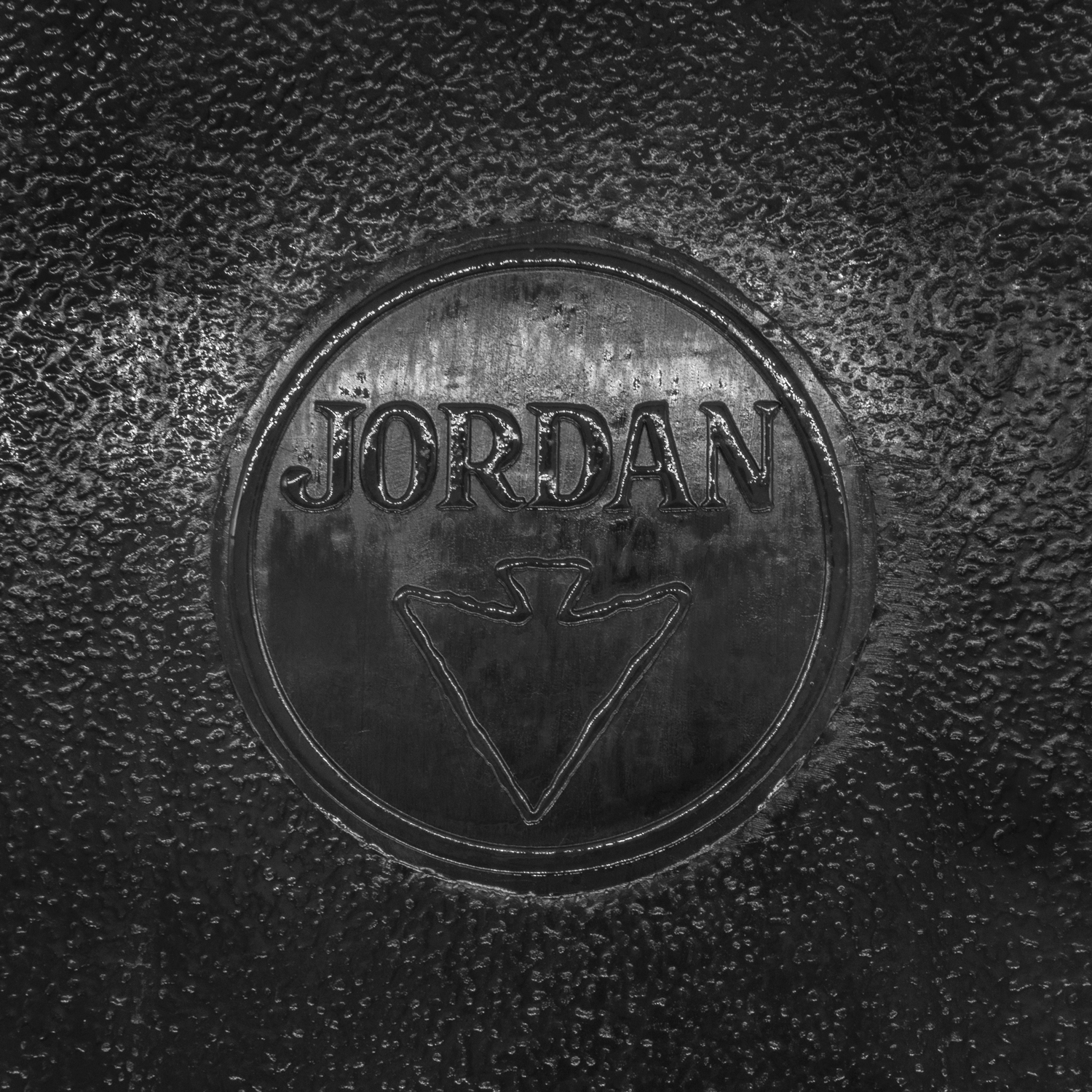 1931 Jordan Model 80 Accessory Floor Mat - 12"X17"-AC 50Accessory Floor Mat - made of high quality black rubber with molded original emblem. Also designed to be sewn into new carpets. 12"X17", Each
Why Choose Metro?
For over 100 years, Metro Moulded Parts has been the pinnacle of quality in classic car restoration parts. Our commitment to precision and authenticity in every component ensures a perfect fit and an OEM-level appearance.
- Expert Craftsmanship & Quality: Each part is a testament to our dedication to reliability and perfection, crafted from original designs and thoroughly tested.
- Advanced Technology: We use cutting-edge techniques to create flawless, long-lasting parts that surpass others in performance.
- SuperSoft Sponge – The Ultimate Door Seal: Not only are our door seals 30% softer than competitors', but they're also guaranteed to never leak. They effectively reduce wind and road noise, enhancing your classic car's comfort and driving experience.
- Proudly American: Our parts are a product of American craftsmanship, made in the USA with a spirit of excellence and heritage.
- Unrivaled Warranty: We back our products with a 30-year industry-leading warranty, a testament to our confidence in their quality.
Join us in preserving the legacy of classic cars with parts that are crafted for perfection, not just made.