
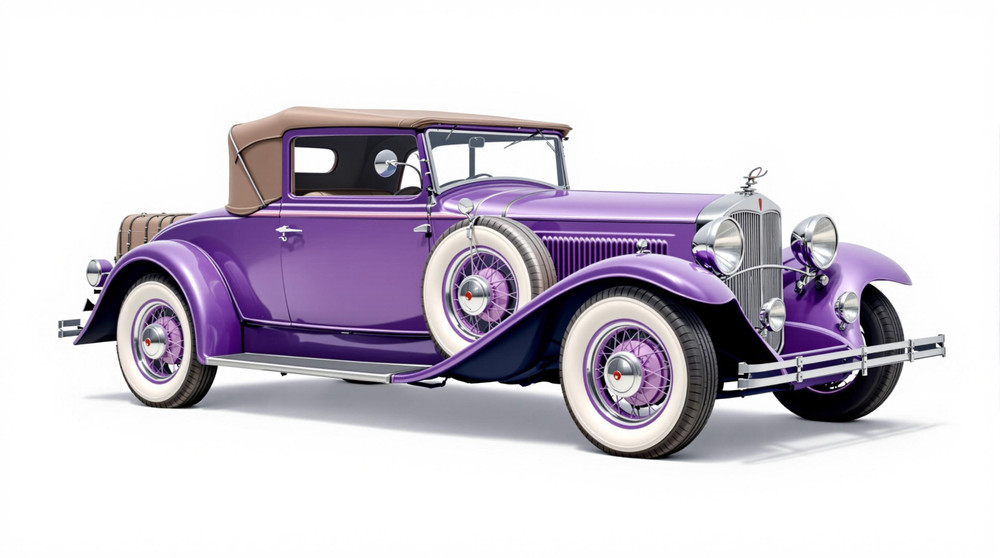
Image of 1931 Jordan Model 90, Note: These illustrations use artistic license and may differ from actual historical models.
Performance Metrics
Fundamental Metrics
Emotional Appeal
MMP Rating
| Engine Specifications | |
|---|---|
| Engine Options: | Straight-8 |
| Displacement Range: | 3.2L |
| Horsepower Range: | Estimated 90-100 HP |
| Torque: | Not available |
| Compression Ratio: | Not available |
| Ignition System: | Battery and coil |
| Cooling System: | Water-cooled |
| Performance Specifications | |
| 0-60 Time: | Not available |
| 1/4 Mile Time: | Not available |
| Top Speed: | 90 mph |
| Transmission and Drive | |
| Drive Type: | Rear-wheel drive |
| Transmission Type: | 3-speed manual |
| Fuel and Efficiency | |
| Fuel System Type: | Carburetor |
| MPG: | Not available |
| Dimensions and Brakes | |
| Brakes: | Mechanical drum brakes |
| Wheelbase: | 125 inches |
| Weight: | Estimated 3,500 lbs |
Note: Specifications for classic cars are given to the best of our ability, considering the limited and variant data available.
1931 Jordan Model 90: A Rare American Classic
The 1931 Jordan Model 90 arrived at the end of an ambitious American automaker’s story, carrying the style-conscious spirit that had made Jordan cars stand out in the 1920s. Built by the Jordan Motor Car Company of Cleveland, Ohio, it was a well-appointed, low-volume automobile for buyers who wanted something more distinctive than a mass-market sedan. Its 90-horsepower designation promised respectable performance for the day, while its rarity today makes it an intriguing find for collectors of lesser-known American marques.
Jordan was founded by Edward S. “Ned” Jordan, a gifted salesman and marketer who believed an automobile could sell an idea as much as a set of mechanical specifications. The company became famous for expressive advertising and stylish cars, especially the Jordan Playboy. A memorable 1920 advertisement began, “Somewhere west of Laramie,” presenting the car as a symbol of freedom and adventure. The Model 90 belonged to a very different era: by 1931, the Great Depression had made survival difficult for independent automakers, and Jordan’s final model year marked the close of the company’s automotive operations.
One detail makes the Model 90 particularly compelling: it was not a long-running mainstream model with plentiful records and parts. Documentation is comparatively scarce, and surviving examples are uncommon. That scarcity calls for care when evaluating exact specifications, but it also gives the car an appeal that a more familiar production sedan may lack.
Jordan Model 90 Styling and Body Options
The Model 90 reflected the transition from the upright, individually styled cars of the 1920s to the smoother, more integrated forms of the 1930s. Expect a tall radiator shell, long hood, sweeping front fenders and a substantial body set on a conventional ladder-frame chassis. Its proportions emphasized length and presence rather than the compact, tightly packaged look of a modern car. Details such as the radiator ornament, lamps, brightwork and wheel design helped give the Jordan its own identity among conservative period sedans.
Jordan offered its cars in more than one body configuration over the company’s life, and references to the Model 90 describe closed and open-body forms. Exact listings can vary by source, so an individual car’s original body should be checked against factory literature, chassis numbers and period photographs. A sedan suits the Model 90’s role as a comfortable touring car, while an open touring or convertible-style body better captures the sporting image Jordan cultivated in its earlier years.
Interior appointments were in keeping with a mid-priced car intended to feel special without competing with the most expensive luxury marques. Buyers could expect upholstered seating, a wood or wood-finished dashboard, readable instruments and substantial trim for the period. The materials were more practical than exotic: cloth was common in closed cars, while open cars could use weather-resistant upholstery. Surviving examples may have replacement trim, so originality is best judged by comparing details with period photographs and documentation.
Jordan’s color choices were part of its appeal, but a definitive Model 90 paint list is not readily established across surviving references. Period buyers could choose from traditional dark finishes and more expressive colors, sometimes with contrasting trim or body accents. Black, deep blue, maroon and green are fitting examples of the period palette, but a collector should verify a particular car’s original colors rather than assume every shade was a factory option.
Period Engineering and Equipment
The Model 90’s name is generally associated with an engine rated at about 90 horsepower. Published summaries commonly describe a conventional front-mounted six-cylinder layout, paired with a manual transmission and rear-wheel drive. Exact engine and chassis specifications should be confirmed for the individual car, because surviving historical summaries are not always consistent and factory records are limited.
That straightforward mechanical arrangement was typical of its era. The driver operated a clutch and manual gearbox, monitored the engine through a simple instrument panel and relied on mechanical brakes. The Model 90 did not depend on advanced electronics or complicated power systems. Its appeal lay in combining established engineering with attractive styling and a more personalized character than a high-volume car.
Why the Jordan Model 90 Matters
The Model 90 was not a technical revolution, and its importance is better understood through Jordan’s approach to design and marketing. Ned Jordan helped show that a car could be sold through personality, lifestyle and visual distinction, not only through price and mechanical specifications. His advertising is still discussed as a landmark in automotive promotion, and the company’s cars gave that marketing a credible physical counterpart.
Jordan also occupied a distinctive place between mass-market manufacturers and the most expensive custom-car builders. The company offered buyers a more individual-looking automobile without requiring them to enter the highest luxury bracket. That strategy became increasingly difficult as the Depression squeezed demand and large manufacturers gained advantages in production scale. The Model 90 therefore represents both Jordan’s creative confidence and the vulnerability of independent carmakers in a rapidly consolidating industry.
Its lasting influence is less about a particular mechanical feature than about the idea of the automobile as personal expression. Jordan’s strongest legacy is its ability to make a car feel like a statement. The Model 90 carried that identity into the company’s final chapter.
Performance, Speed and Road Manners
With approximately 90 horsepower, the Model 90 had useful power for a substantial early-1930s car. A precise factory-tested 0-to-60-mph figure is not well established. Based on its power, weight and period gearing, a figure in the neighborhood of 20 to 25 seconds is a reasonable modern estimate, not a verified factory specification. A sound example might reach roughly 70 to 75 mph under favorable conditions, though road surface, gearing, tire condition and mechanical health would all affect its top speed.
On a smooth open road, the Jordan would feel composed and deliberate rather than quick by modern standards. Its long chassis and period suspension help it cover distance comfortably, but broken pavement can produce body movement and a noticeable bounce. Narrow tires and a high, upright body also mean the driver should ease off on tight or windy roads. Compared with a modern car, steering requires more effort and anticipation, and mechanical brakes demand greater following distance.
The driving experience is part of the Model 90’s charm. The engine’s sound would be a steady mechanical growl rather than a high-revving performance note. Shifts require a thoughtful hand and foot, and the driver stays involved in every part of the journey. It is a car to guide along a country road, listen to and enjoy, not one to hustle through traffic as if it were a contemporary sports sedan.
Owning and Maintaining a Jordan
Today, a Model 90 is best suited to touring, club events, historic motoring gatherings and display. It is not an ideal daily driver unless the owner has a strong tolerance for period driving demands and access to specialist support. Its age, mechanical brakes and scarcity of model-specific parts make regular modern traffic a challenge.
The basic mechanical layout is approachable for a capable vintage-car owner. Routine work such as lubrication, ignition service, carburetor adjustment and brake inspection follows familiar prewar-car principles. Some engine components may be easier to source if they were shared with outside suppliers, but Jordan-specific body panels, trim, fittings and chassis pieces can be difficult to find. Repairs to original coachwork or unusual components may require a specialist or careful fabrication.
Reliability depends far more on restoration quality and maintenance than on the badge alone. Before buying, inspect the frame for corrosion or poor repairs, check the engine’s oil pressure and cooling system, and examine the brakes, steering and electrical system. A car that starts and moves is not necessarily ready for road use. A thorough mechanical inspection and a review of its restoration records are especially valuable with a rare automobile.
Rare Facts and Common Criticisms
The best-known Jordan story belongs to the company rather than to a particular Model 90: the “Somewhere west of Laramie” advertisement for the Playboy helped turn automotive advertising into vivid lifestyle storytelling. It is a useful reminder that Jordan’s cultural reputation was built as much on imagination as on engineering.
The 1931 model year was Jordan’s last, giving the Model 90 a natural end-of-the-line significance. There is no widely recognized speed or endurance record associated specifically with the Model 90, and claims of celebrity ownership should be treated cautiously unless supported by documentation. Its most notable distinction is its place in the final chapter of a creative independent manufacturer.
Common criticisms are practical rather than mysterious: parts can be scarce, exact specifications may be difficult to confirm, and the car’s performance and braking feel modest by modern standards. It also lacks the instant name recognition of better-known prewar marques. For enthusiasts, those drawbacks are balanced by its individuality and the pleasure of preserving an unusual piece of American automotive history.
Collector Value and Availability
There is no dependable production total for the 1931 Model 90 in commonly available records. As a best estimate, production was likely in the hundreds to low thousands, rather than at the scale of a major mass-market model. The number of surviving cars is smaller still, and examples may appear only occasionally through specialist auctions, marque clubs or private sales.
Condition, body style, originality, provenance and restoration quality have a major effect on value. As a broad current-market estimate, a project or incomplete car might bring roughly $10,000 to $20,000. A usable, presentable example could fall around $20,000 to $40,000, while a high-quality, correctly restored car may reach approximately $40,000 to $65,000 or more. These are guide ranges, not guaranteed sale prices; a rare body style or exceptional documented history can shift the result substantially.
Jordan values are best described as selective rather than uniformly rising. The Model 90’s rarity gives it an enduring collector interest, but its small pool of marque specialists can make prices uneven. Over time, well-restored examples may appreciate as interest in independent American manufacturers grows, though buyers should not assume rapid gains. The strongest purchases are cars with sound structure, credible documentation and sympathetic restoration.
A Fitting Farewell to Jordan
The 1931 Jordan Model 90 combines attractive period styling, straightforward prewar engineering and the story of a company that dared to give its cars a distinctive voice. It was not a record-breaker or a mass-market giant. Its significance lies in its individuality, its connection to Jordan’s memorable design and advertising legacy, and its place as a final expression of the marque.
For collectors who value character as much as name recognition, the Model 90 is a rewarding discovery: a rare American classic that makes the road feel a little less ordinary.
1931 Jordan Model 90 Catalog of Parts
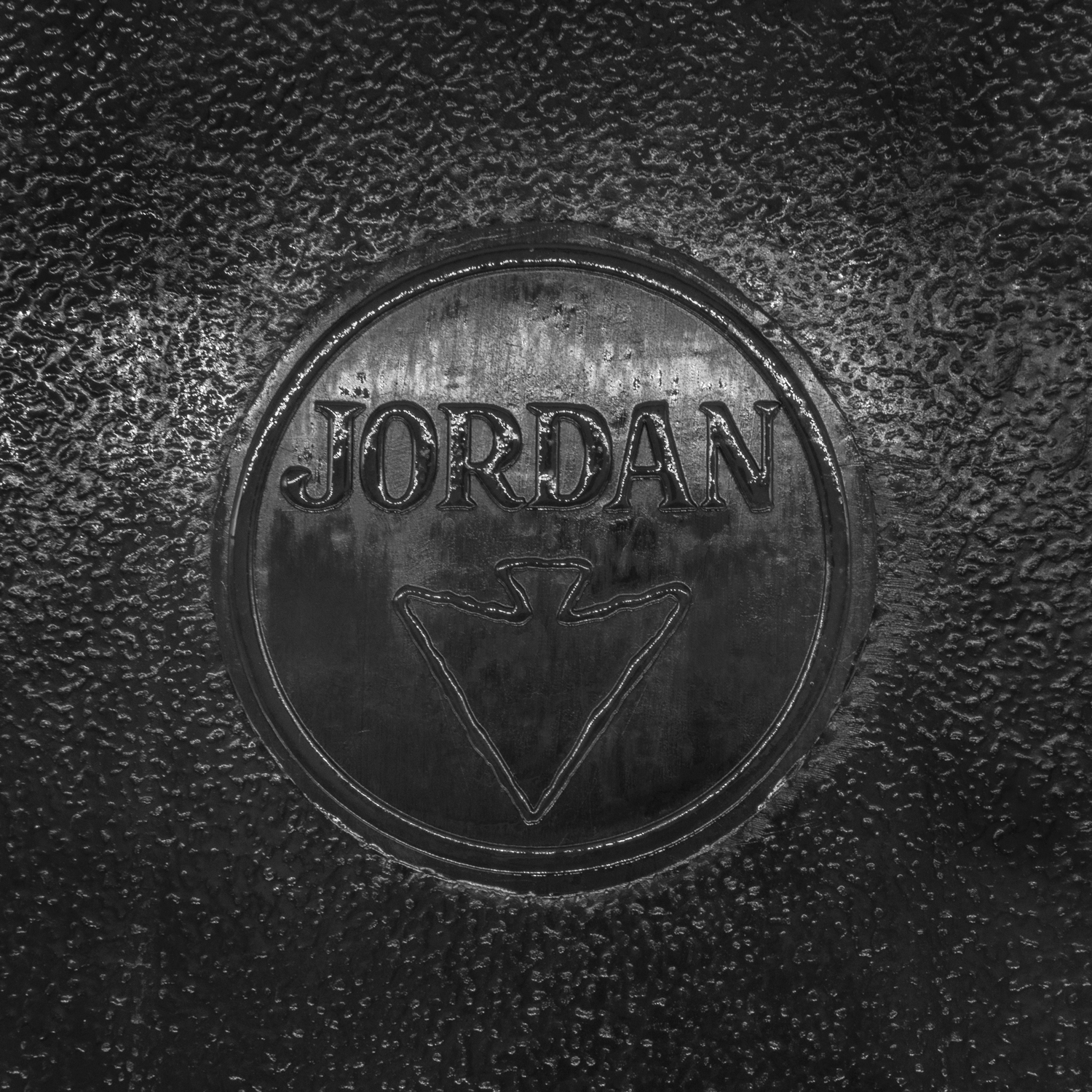 1931 Jordan Model 90 Accessory Floor Mat - 12"X17"-AC 50Accessory Floor Mat - made of high quality black rubber with molded original emblem. Also designed to be sewn into new carpets. 12"X17", Each
Why Choose Metro?
For over 100 years, Metro Moulded Parts has been the pinnacle of quality in classic car restoration parts. Our commitment to precision and authenticity in every component ensures a perfect fit and an OEM-level appearance.
- Expert Craftsmanship & Quality: Each part is a testament to our dedication to reliability and perfection, crafted from original designs and thoroughly tested.
- Advanced Technology: We use cutting-edge techniques to create flawless, long-lasting parts that surpass others in performance.
- SuperSoft Sponge – The Ultimate Door Seal: Not only are our door seals 30% softer than competitors', but they're also guaranteed to never leak. They effectively reduce wind and road noise, enhancing your classic car's comfort and driving experience.
- Proudly American: Our parts are a product of American craftsmanship, made in the USA with a spirit of excellence and heritage.
- Unrivaled Warranty: We back our products with a 30-year industry-leading warranty, a testament to our confidence in their quality.
Join us in preserving the legacy of classic cars with parts that are crafted for perfection, not just made.