
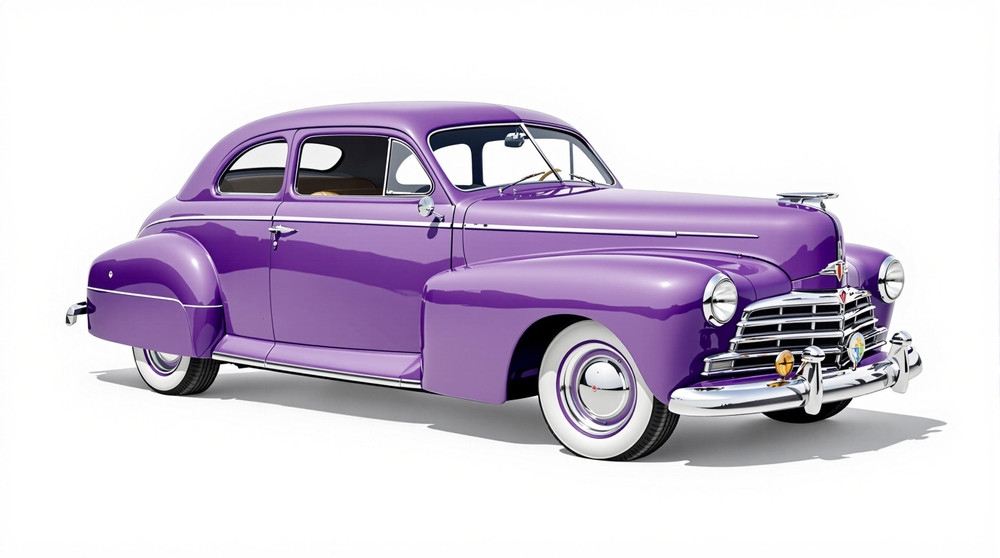
Image of 1946 Kaiser Custom, Note: These illustrations use artistic license and may differ from actual historical models.
Performance Metrics
Fundamental Metrics
Emotional Appeal
MMP Rating
| Engine Specifications | |
|---|---|
| Engine: | Inline 6 |
| Displacement: | 226 cu in (3.7 L) |
| Horsepower: | Estimated 100 hp |
| Torque: | 180 lb-ft |
| Compression Ratio: | Estimated 6.7:1 |
| Ignition System: | Distributor and coil |
| Cooling System: | Liquid-cooled |
| Performance Specifications | |
| 0-60 Time: | Information not available |
| 1/4 Mile Time: | Information not available |
| Top Speed: | 80 mph |
| Transmission and Drive | |
| Drive Type: | Rear-wheel drive |
| Transmission Type: | 3-speed manual |
| Fuel and Efficiency | |
| Fuel System Type: | Carburetor |
| MPG: | Information not available |
| Dimensions and Brakes | |
| Brakes: | Drum brakes |
| Wheelbase: | 123.5 in |
| Weight: | Estimated 3,200 lbs |
Note: Specifications for classic cars are given to the best of our ability, considering the limited and variant data available.
1946 Kaiser Custom: The Postwar Sedan That Looked Ahead
The 1946 Kaiser Custom arrived with smooth, uninterrupted bodywork and a distinctly modern attitude at a time when many American cars were still carrying prewar designs forward. The date needs a small clarification: Kaiser-Frazer began building its first cars in 1946, but these early sedans were generally sold as 1947 models. So a car described as a “1946 Kaiser Custom” is usually an early-production example of the first Kaiser generation, rather than a separately designated 1946 model year.
The company behind it was Kaiser-Frazer Corporation, founded in 1945 by industrialist Henry J. Kaiser and veteran automotive executive Joseph W. Frazer. Kaiser brought large-scale manufacturing experience, while Frazer supplied deep knowledge of the car business. Their first cars were assembled at Willow Run in Michigan, a vast former bomber plant repurposed for automobile production.
One intriguing detail is how quickly the new company moved from wartime manufacturing to building passenger cars. Production of its first vehicles began in June 1946, and the Kaiser was among the first American postwar cars designed from the outset for a new era rather than simply adapted from a prewar model.
Streamlined Styling and Custom Comfort
The Kaiser Custom made its impression through proportion and restraint. Its rounded nose flowed into broad front fenders and a long, gently curved body, with the fenders blended into the sides instead of standing apart as pronounced pods. The result was a clean “envelope” shape that looked lower and more integrated than many of its upright contemporaries. A wide grille, substantial bumpers, and modest chrome accents gave the car presence without overwhelming its smooth lines.
The Custom was the more upscale Kaiser trim, typically distinguished by richer interior appointments and additional brightwork compared with the entry-level Special. Expect a roomy cabin, bench seating, fabric upholstery, and a broad, practical dashboard. Materials and trim could vary by year and specification, but the Custom’s appeal was comfort and space rather than sports-car luxury. The flat floor and generous passenger area made it especially welcoming for families.
Paint choices varied with model year, production, and regional availability. Period Kaisers could be ordered in a range of solid colors, including dark and light shades, with two-tone combinations appearing on some cars or through later restorations. Deep blues, greens, maroons, and classic black are popular choices today, though an accurate restoration should follow the paint code and trim details for the individual car.
The early Kaiser Custom was primarily a four-door sedan. The two-door Traveler hatchback, a distinctive later Kaiser variation with a lift-up rear section, belongs to the company’s subsequent lineup and should not be mistaken for an original 1946-built Custom sedan body style. The four-door’s long roofline and broad doors remain the most recognizable form of the first Kaiser.
Engineering for a New Automotive Era
Under the hood, the early Kaiser used a 226-cubic-inch (3.7-liter) Continental-built L-head inline-six. Period specifications are commonly listed at about 100 horsepower, delivered through a three-speed manual transmission. The layout was conventional rear-wheel drive, despite the company’s interest in more radical engineering ideas. Kaiser-Frazer explored front-wheel-drive concepts, but the production Custom used a familiar, serviceable drivetrain.
That mix of modern styling and established mechanicals was central to the car’s character. The Kaiser looked fresh, but owners and mechanics did not have to learn an entirely unfamiliar system to keep it running. Its independent front suspension helped deliver a more composed ride than the solid front axles found on many older cars, while hydraulic brakes and a substantial chassis reflected the expectations of a full-size American sedan.
The Custom’s significance lies partly in how it challenged the idea that a postwar car had to be a warmed-over prewar design. Its integrated fenders and smooth body sides anticipated the cleaner, more unified styling that became increasingly common in the 1950s. It was not the only manufacturer pursuing modern forms, but Kaiser-Frazer made that forward-looking approach a defining part of its identity.
Six-Cylinder Pace and Road Manners
The Kaiser Custom was built to carry passengers comfortably, not to win drag races. With roughly 100 horsepower moving a full-size sedan, a reasonable period-performance estimate is about 18 to 20 seconds from 0 to 60 mph, with a top speed in the neighborhood of 85 to 90 mph. Exact figures vary with condition, gearing, transmission, and testing method, and surviving cars may perform quite differently from factory-new examples.
On a smooth road, the car feels substantial and relaxed. The six-cylinder engine produces a steady, low-pitched mechanical hum rather than a sharp sporting exhaust note, and the long wheelbase helps settle the ride. Over broken pavement, the suspension softens smaller jolts, though worn springs, old shocks, and bias-ply tires can make a modern-day example feel less controlled than a restored one.
On winding roads, the Kaiser is best driven with measured inputs. Its size and period steering call for planning rather than quick corrections, and the body leans more than a modern sedan. Crosswinds can be noticeable in a tall, broad-bodied car, especially with worn tires or loose steering components. From behind the wheel, the experience is all about the commanding view, bench-seat comfort, and the unhurried rhythm of an early postwar American automobile.
Living With a Kaiser Custom
Today, most Customs are used as show cars, weekend cruisers, or carefully maintained vintage drivers. A sound example can handle local trips and relaxed touring, but it is not an ideal modern commuter. Parts availability, traffic speeds, safety equipment, and the age of the car all argue for thoughtful use rather than daily-duty expectations.
The basic mechanical layout is comparatively straightforward. A competent classic-car mechanic familiar with carbureted engines, drum brakes, and older electrical systems can service the six-cylinder engine and transmission. Routine jobs such as ignition tune-ups and brake work are conventional, but parts sourcing may take more effort than it would for a high-volume Ford or Chevrolet. Body panels, trim pieces, glass, and model-specific interior details can be the real challenge.
Before buying, pay close attention to rust in the floors, rocker panels, lower body, trunk, and structural areas. Inspect the braking system, steering play, cooling system, and the condition of the engine’s oil pressure and compression. A car that has sat for years may need a full recommissioning even if it starts and moves under its own power.
Notable Kaiser Facts
Willow Run, where early Kaiser-Frazer cars were built, had been a major wartime aircraft plant. Converting the facility to automobile production linked the Kaiser story directly to the United States’ rapid shift from wartime manufacturing to civilian industry.
The Kaiser Custom also represents an unusual partnership between two very different kinds of automotive leadership. Henry Kaiser was famous for organizing enormous industrial projects, while Joseph Frazer had spent decades in the car business. Their collaboration gave the company both manufacturing ambition and experienced automotive management, even though the partnership later faced business tensions.
There is no widely recognized speed or endurance record associated with the early Custom. Its achievement was more about timing and design: it helped establish Kaiser-Frazer as a serious new American carmaker during the difficult postwar transition. A common criticism is that the car’s styling promised more performance than its modest six-cylinder engine delivered. That is fair if judged as a sports sedan, but the Kaiser was conceived as a comfortable family car, not a high-speed performance machine.
Collector Values and Availability
Early Kaiser Customs are uncommon at classic-car events and on the open market, but they are not usually as difficult to find as the rarest postwar marques. Production figures are complicated by the early cars’ 1946 build dates and 1947 model-year identities, as well as by the way surviving records and listings may group Kaiser-Frazer models. A reasonable, explicitly approximate estimate is that production of the first-year Kaiser Custom ran into the tens of thousands, perhaps around 20,000 to 30,000. That is a best-guess range, not a confirmed factory total.
Values depend heavily on completeness, rust, originality, and the quality of any restoration. As a broad current-market guide, a project car might bring roughly $5,000 to $12,000, a usable driver around $12,000 to $25,000, and a very well-restored example about $25,000 to $40,000 or more. Exceptional cars, unusual provenance, or unusually high-quality restorations can exceed that range, while a car needing major structural work may sell for less.
Like many under-the-radar postwar classics, Kaisers tend to attract enthusiasts who appreciate history and distinctive styling more than buyers seeking a blue-chip investment. Values can be firm for well-presented cars, but condition and local demand matter greatly. A complete, documented example is generally a safer purchase than a cheaper car missing hard-to-find trim and interior pieces.
Why the Early Kaiser Still Matters
The early Kaiser Custom combined a fresh, streamlined body with straightforward six-cylinder engineering and generous passenger space. Built at Willow Run by a new company led by two ambitious industry figures, it captured the optimism and uncertainty of America’s first postwar years.
It may not be the fastest or most famous sedan of its era, but it offered a clear alternative to familiar prewar designs and helped make Kaiser-Frazer one of the most intriguing independent automakers of the postwar period. For collectors, that blend of forward-looking style, industrial history, and approachable mechanics is what makes the Kaiser Custom more than just another old sedan.
1946 Kaiser Custom Catalog of Parts
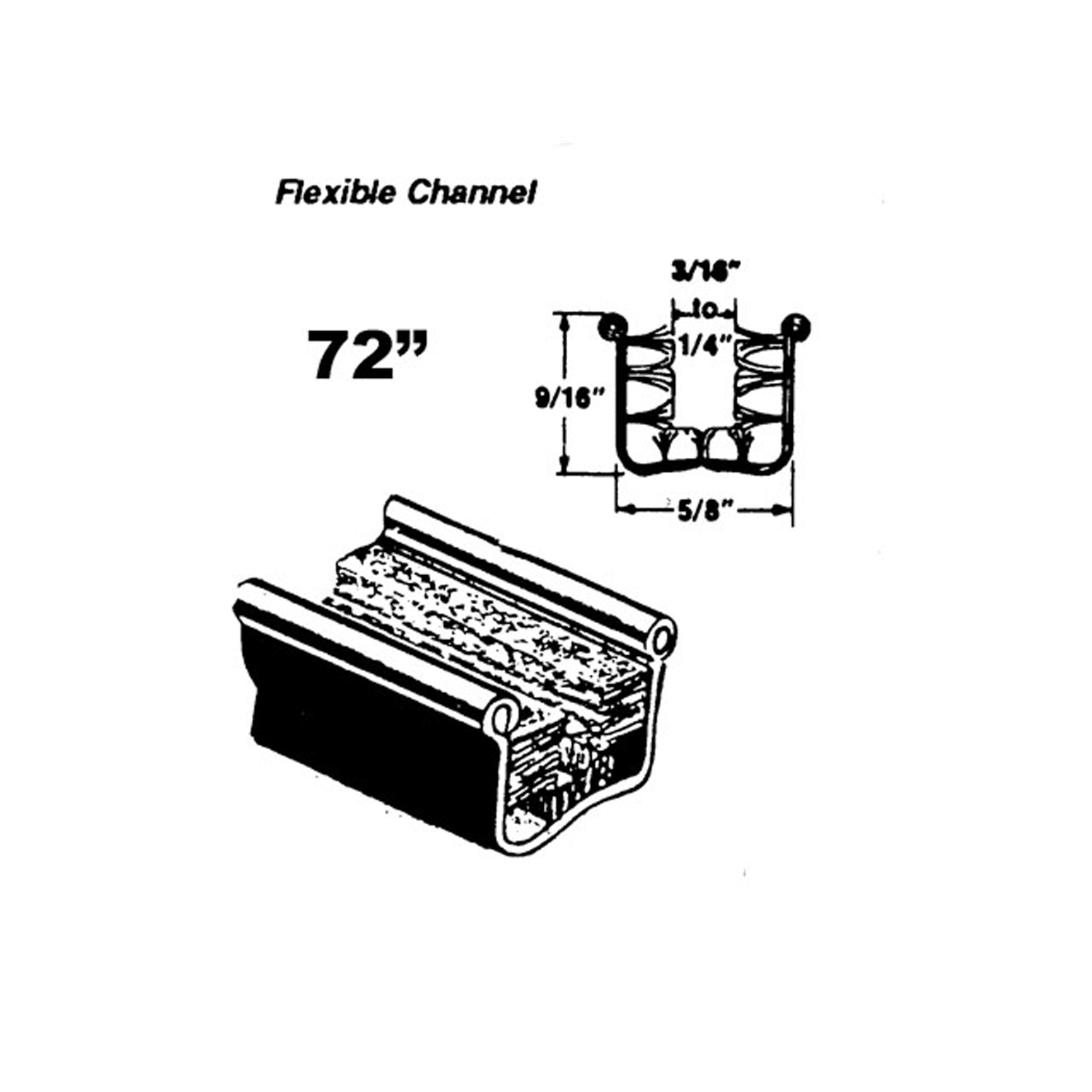 1946 Kaiser Custom Flexible glass-run channel-WC 11-72Flexible glass-run channel. Mohair lined, cloth covered with stainless steel bead. Used on side windows. 72 in. long. Each. NOTE: $20 special shipping charge applies for domestic orders. Call or email for overseas shipping costs. Part can be sectioned in two equal lengths to reduce overseas shipping costs.
Why Choose Metro?
For over 100 years, Metro Moulded Parts has been the pinnacle of quality in classic car restoration parts. Our commitment to precision and authenticity in every component ensures a perfect fit and an OEM-level appearance.
- Expert Craftsmanship & Quality: Each part is a testament to our dedication to reliability and perfection, crafted from original designs and thoroughly tested.
- Advanced Technology: We use cutting-edge techniques to create flawless, long-lasting parts that surpass others in performance.
- SuperSoft Sponge – The Ultimate Door Seal: Not only are our door seals 30% softer than competitors', but they're also guaranteed to never leak. They effectively reduce wind and road noise, enhancing your classic car's comfort and driving experience.
- Proudly American: Our parts are a product of American craftsmanship, made in the USA with a spirit of excellence and heritage.
- Unrivaled Warranty: We back our products with a 30-year industry-leading warranty, a testament to our confidence in their quality.
Join us in preserving the legacy of classic cars with parts that are crafted for perfection, not just made.