
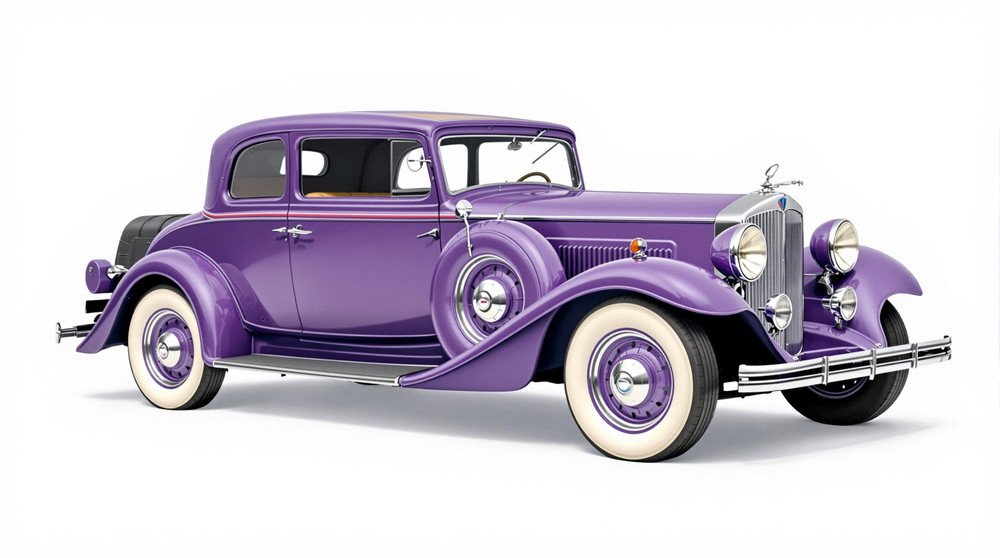
Image of 1932 Lasalle Series 345b, Note: These illustrations use artistic license and may differ from actual historical models.
Performance Metrics
Fundamental Metrics
Emotional Appeal
MMP Rating
| Engine Specifications | |
|---|---|
| Engine: | 353 cu in (5.8 L) V8 |
| Displacement: | 353 cu in (5.8 L) |
| Horsepower: | 95-105 hp |
| Torque: | Estimated 200 lb-ft |
| Compression Ratio: | 6.5:1 |
| Ignition System: | Battery and coil |
| Cooling System: | Water-cooled |
| Performance Specifications | |
| 0-60 Time: | Information not available |
| 1/4 Mile Time: | Information not available |
| Top Speed: | 85 mph |
| Transmission and Drive | |
| Drive Type: | Rear-wheel drive |
| Transmission Type: | 3-speed manual |
| Fuel and Efficiency | |
| Fuel System Type: | Carburetor |
| MPG: | Information not available |
| Dimensions and Brakes | |
| Brakes: | Mechanical drum brakes |
| Wheelbase: | 134 in (3,404 mm) |
| Weight: | 4,500 lbs |
Note: Specifications for classic cars are given to the best of our ability, considering the limited and variant data available.
1932 LaSalle Series 345-B: Cadillac Style for a Wider Audience
The 1932 LaSalle Series 345-B brought Cadillac’s design flair and V8 power to a more attainable price class, at a time when American luxury-car makers were fighting to stay in business. Built by the Cadillac Division of General Motors, the LaSalle was a companion marque: less expensive than a Cadillac, but carefully styled and engineered to feel like a proper prestige car. Its long hood, upright grille, and sweeping fenders gave it the presence of a much costlier machine.
LaSalle had been created in 1927 to fill the gap between Buick and Cadillac. Its name honored the French explorer René-Robert Cavelier, Sieur de La Salle, while its early styling was shaped by designer Harley Earl, who would go on to lead GM’s Art and Colour Section. One notable detail of the 345-B’s story is its timing. It arrived during the Great Depression, when sales of expensive cars were collapsing. The model was both a showcase for Cadillac craftsmanship and a practical effort to keep luxury-car buyers within the GM family.
Long Hood, Artful Lines, and Cabin Comfort
The 345-B has the classic proportions of an early-1930s American luxury car: a tall, narrow radiator grille, a long engine hood, separate rounded fenders, and a passenger compartment set well back from the front axle. Brightwork was used with restraint compared with some later prewar cars, allowing the body’s sweeping lines to do most of the visual work. Wire wheels, broad running boards, and side-mounted spare tires on some configurations added to its formal, well-traveled look.
LaSalle bodies were supplied through GM’s Fisher and Fleetwood operations, with equipment and finish varying by body style. Inside, buyers could expect substantial upholstery in materials such as cloth or leather, a broad dashboard with clearly arranged instruments, and polished trim. The cabin was built for comfort and formality rather than sporty minimalism. On a surviving car, the condition of the upholstery, wood or metal trim, gauges, and interior fittings can make a major difference to both its appeal and value.
Factory paint choices varied, and period buyers could choose from a range of colors and finishes, including dark, dignified shades and combinations with contrasting details. Black, deep blue, maroon, and green are among the colors often associated with cars of this class and era, but a specific car’s original paint should be confirmed through its body tag, build records, or other documentation. The 345-B’s many body configurations could include sedans, coupes, and open cars such as phaetons or convertible coupes. Closed sedans were practical and comparatively common, while open touring styles and coachbuilt Fleetwood versions tend to draw particular attention from collectors today.
V8 Engineering in a Difficult Year
Power came from a Cadillac-derived, side-valve V8 of approximately 353 cubic inches, rated at about 115 horsepower. It was paired with a three-speed manual transmission. Synchromesh helped make shifts more manageable than in earlier unsynchronized gearboxes, an important convenience in a substantial car that demanded deliberate driving. Four-wheel mechanical brakes, assisted by a vacuum booster on applicable configurations, provided stopping power by the standards of the day.
The 345-B was not simply a smaller Cadillac with different badges. LaSalle had its own position in GM’s design and marketing strategy, and its styling helped bridge the gap between mainstream cars and full Cadillac models. Its long hood and formal front-end treatment projected prestige, while its price and equipment were intended to appeal to buyers who wanted luxury without paying Cadillac’s full premium. That combination helped establish a design language that influenced later American cars: status communicated through proportion, grille treatment, and carefully finished coachwork as much as through sheer size.
Road Manners and Period Performance
With roughly 115 horsepower moving a large, heavy automobile, the 345-B favored steady progress over quick acceleration. Period performance figures are not uniform, and condition, body style, gearing, and test methods all matter. A reasonable estimate for a sound example is a top speed in the neighborhood of 80 to 85 mph, with 0-to-60-mph acceleration likely taking roughly 20 to 25 seconds. Those figures are best treated as period-style estimates, not guaranteed results for an individual car.
On the road, the V8’s low, even burble is part of the experience. The engine delivers its power in a relaxed manner, and the three-speed gearbox rewards smooth, unhurried shifts. The long wheelbase and substantial chassis help the car settle over broad, uneven roads, though it will not absorb sharp bumps like a modern luxury sedan. On winding roads, drivers need to plan ahead: the car is large, its steering and brakes require more effort than modern systems, and its narrow tires offer far less grip than contemporary rubber. The best drive is a measured one, with room to enjoy the engine note and the view over the long hood.
Living with a 345-B Today
Today, a Series 345-B is most often used for shows, club tours, historic motoring events, and occasional pleasure drives. It can be driven regularly by a committed owner, but it is not an effortless modern daily driver. Parts availability varies: routine service items and some mechanical components can be sourced through specialist suppliers or marque networks, while model-specific trim, body parts, and certain internal engine pieces may require patience, skilled repair, or careful parts-car searching.
Maintenance is manageable for an experienced vintage-car owner, but less familiar to someone accustomed only to modern vehicles. The owner should be comfortable with regular lubrication, careful cooling-system checks, brake adjustment, ignition tuning, and attention to the fuel and electrical systems. A pre-purchase inspection by a mechanic who understands prewar cars is essential. Rust, poor past repairs, missing trim, and an incomplete interior can turn an apparently affordable project into an expensive restoration.
LaSalle Trivia and Honest Caveats
LaSalle’s name came from a French explorer, and its creation reflected a distinctly GM strategy: develop a separate marque to attract buyers who wanted Cadillac character at a lower price. The 1932 car also belongs to one of the most challenging periods in American automotive history. The Depression sharply reduced demand for expensive automobiles, making the 345-B’s combination of prestige and relative value especially important.
There is no widely recognized land-speed or endurance record associated with the Series 345-B, and claims of a particular celebrity connection should be checked against reliable documentation. Its strongest claim to fame is its role in the evolution of GM’s luxury lineup and in the continuing story of Harley Earl’s influence on American automotive design. Common criticisms are practical ones: it is thirsty by modern standards, slow to accelerate, demanding to stop and steer, and dependent on parts that can be difficult to find. Those are normal trade-offs for a large prewar car, not defects that disappear with a fresh coat of paint.
Collector Value and Rarity
Exact production figures by body style can be difficult to establish, but total 1932 LaSalle production is generally placed at roughly 3,300 cars. That estimate covers the model range rather than a single body configuration, and the number of surviving Series 345-Bs is much smaller. Open cars, Fleetwood-bodied examples, and well-documented original cars are particularly scarce. A closed sedan is generally easier to find than a desirable convertible or phaeton, though condition matters more than body style alone.
As a broad 2026 market estimate, a project or rough driver might sell for about $20,000 to $40,000. A sound, presentable car could fall around $40,000 to $80,000, while a high-quality restoration or especially desirable body style may reach $80,000 to $150,000 or more. These ranges are not appraisals: originality, restoration quality, provenance, and the strength of the auction or private-sale market can shift a price considerably.
The 345-B is a niche collectible, so its market is less predictable than that of a widely recognized sports car or top-tier prewar Cadillac. Well-restored examples and rare body styles can attract strong interest, but restoration costs may exceed the increase in market value. In general, the best cars have held their appeal, while average examples tend to sell according to condition and local demand rather than following a simple, steady upward trend.
Why the 1932 LaSalle Still Matters
The 1932 LaSalle Series 345-B combined Cadillac-derived V8 power, carefully considered styling, and the comfort expected of a luxury automobile, all under a companion marque designed to reach a broader audience. It was not a sports car, and it did not pretend to be one. Its strengths were presence, craftsmanship, and relaxed road manners at a time when the car industry was under extraordinary pressure.
More than nine decades later, the 345-B remains a compelling example of how an automaker used design and engineering to define a new place in the market. Its long hood and unmistakable prewar character make it a memorable sight, but its deeper significance lies in the idea behind it: luxury could be carefully tailored, not merely made bigger.
1932 Lasalle Series 345b Catalog of Parts
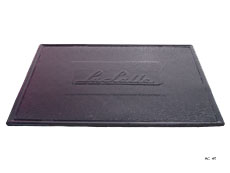 1932 LaSalle Series 345B Accessory Floor Mat - 12"X17"-AC 45Accessory Floor Mat - made of high quality black rubber with molded original emblem. Also designed to be sewn into new carpets. 12"X17", Each
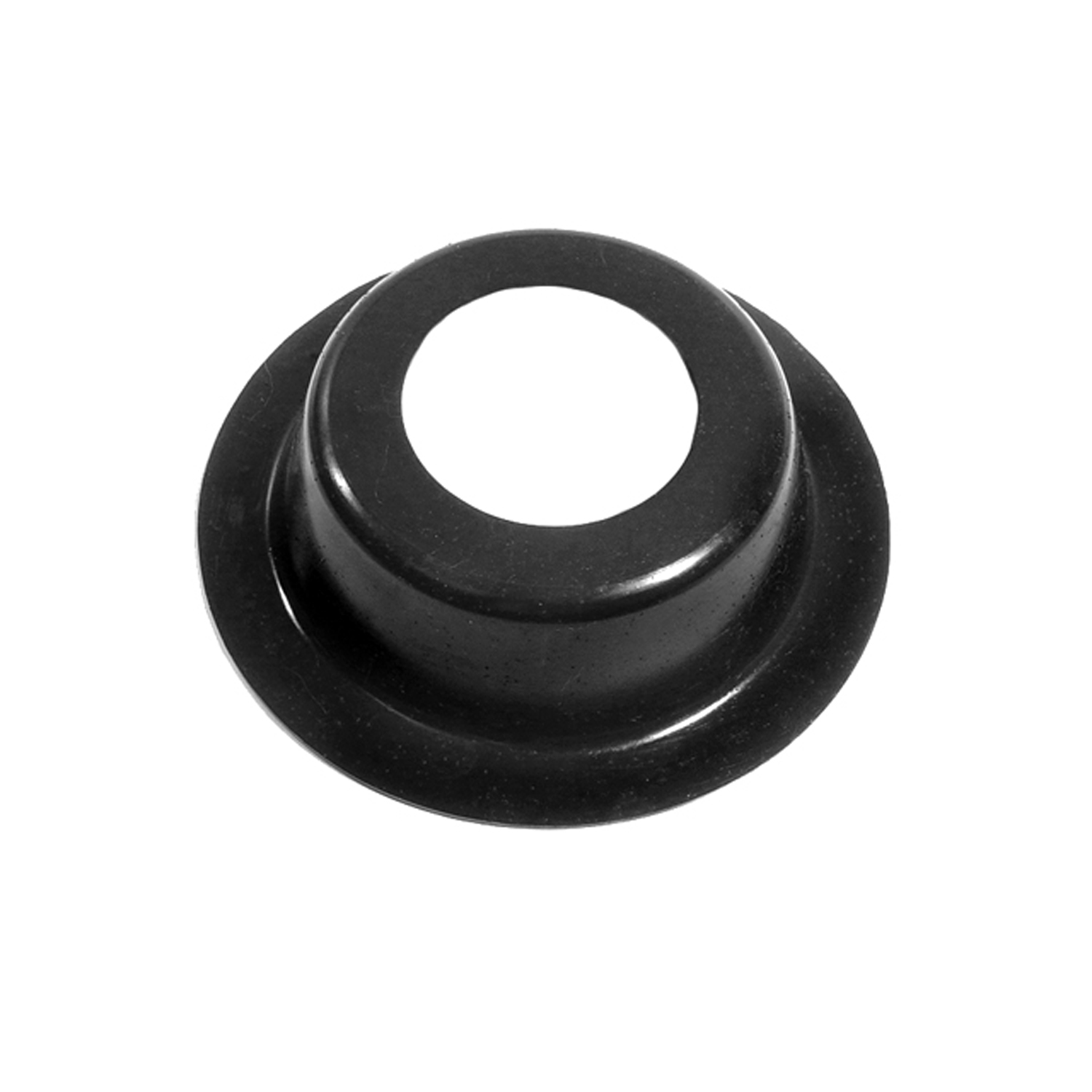 1932 LaSalle Series 345B Booster Brake Diaphragm. 7-1/2" O.D., 3" I.D., 1-7/8" deep-RP 32Booster Brake Diaphragm. 7-1/2" O.D., 3" I.D., 1-7/8" deep. Each
Why Choose Metro?
For over 100 years, Metro Moulded Parts has been the pinnacle of quality in classic car restoration parts. Our commitment to precision and authenticity in every component ensures a perfect fit and an OEM-level appearance.
- Expert Craftsmanship & Quality: Each part is a testament to our dedication to reliability and perfection, crafted from original designs and thoroughly tested.
- Advanced Technology: We use cutting-edge techniques to create flawless, long-lasting parts that surpass others in performance.
- SuperSoft Sponge – The Ultimate Door Seal: Not only are our door seals 30% softer than competitors', but they're also guaranteed to never leak. They effectively reduce wind and road noise, enhancing your classic car's comfort and driving experience.
- Proudly American: Our parts are a product of American craftsmanship, made in the USA with a spirit of excellence and heritage.
- Unrivaled Warranty: We back our products with a 30-year industry-leading warranty, a testament to our confidence in their quality.
Join us in preserving the legacy of classic cars with parts that are crafted for perfection, not just made.