
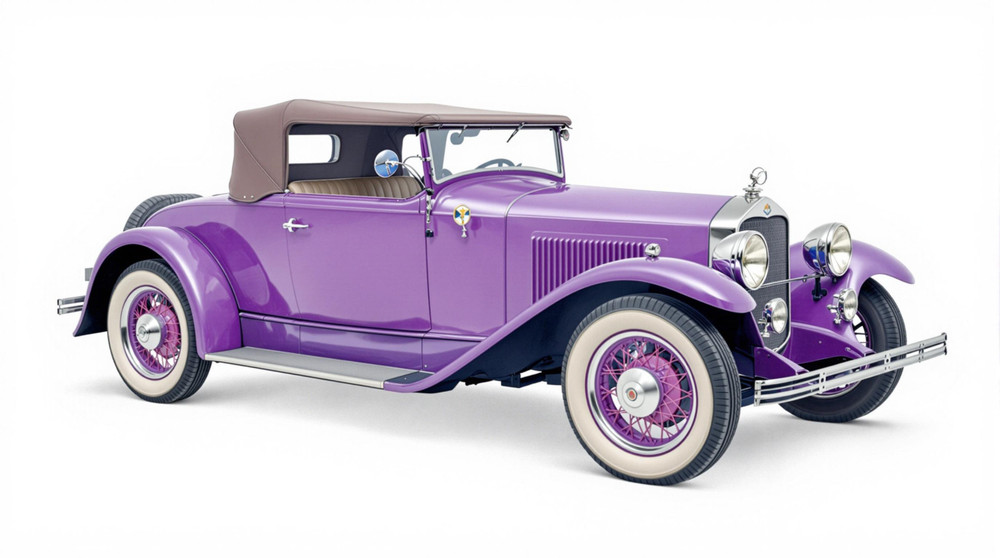
Image of 1927 Marmon Little Marmon Series, Note: These illustrations use artistic license and may differ from actual historical models.
Performance Metrics
Fundamental Metrics
Emotional Appeal
MMP Rating
| Engine Specifications | |
|---|---|
| Engine Options: | Inline 6-cylinder engine |
| Displacement Range: | 340 cubic inches |
| Horsepower Range: | Estimated 70-80 HP |
| Torque: | Not available |
| Compression Ratio: | Not available |
| Ignition System: | Battery and coil |
| Cooling System: | Water-cooled |
| Performance Specifications | |
| 0-60 Time: | Not available |
| 1/4 Mile Time: | Not available |
| Top Speed: | 70 mph |
| Transmission and Drive | |
| Drive Type: | Rear-wheel drive |
| Transmission Type: | 3-speed manual |
| Fuel and Efficiency | |
| Fuel System Type: | Carburetor |
| MPG: | Not available |
| Dimensions and Brakes | |
| Brakes: | Mechanical drum brakes |
| Wheelbase: | 125 inches |
| Weight: | Estimated 3500 lbs |
Note: Specifications for classic cars are given to the best of our ability, considering the limited and variant data available.
1927 Little Marmon: Marmon’s Smaller, Smarter Motorcar
The 1927 Little Marmon brought a taste of American luxury-car engineering to buyers who did not need, or could not afford, one of Marmon’s grandest machines. Built by the Marmon Motor Car Company of Indianapolis, Indiana, it is commonly associated with the company’s Model 68: a six-cylinder automobile intended to be more accessible than the large, prestigious Marmons that had established the marque’s reputation.
Marmon had already made its name through engineering ambition. The company’s history included substantial use of aluminum and the Marmon Wasp, winner of the first Indianapolis 500 in 1911. By the late 1920s, though, the market was changing. Well-built medium-priced cars were competing for customers who wanted refinement without a chauffeur-sized automobile. The Little Marmon was Marmon’s answer.
One appealing detail is the name itself. “Little Marmon” was a friendly, practical counterpoint to the marque’s stately reputation, not a suggestion that the car was a toy or a stripped-down economy special. It was still designed to feel like a proper Marmon, just in a more manageable package.
Distinctive 1920s Styling and Coachwork
The Little Marmon wore the familiar proportions of a quality American car of its era: a tall radiator, long hood, sweeping front fenders, running boards, and separate lamps mounted beside the grille. Its upright windshield and carefully shaped body gave it a formal air, while the shorter overall proportions made it look less imposing than the company’s larger models. Depending on the body, wire or artillery-style wheels, bright trim, and a rear-mounted spare added the expected period details.
Inside, the emphasis was on comfort and finish rather than modern convenience. Upholstery could be cloth or leather, depending on body style and specification, with carpeting, door trim, and polished hardware helping create a more substantial cabin than that of a basic low-priced car. Materials and details could differ between individual cars, and surviving examples may have been retrimmed or restored, so an interior seen today is not automatically a reliable guide to its original specification.
Factory paint choices and combinations varied by year, body, and order. Period cars commonly used solid colors or two-tone treatments, often with darker bodywork contrasted by lighter trim or wheels. Deep blue, green, maroon, and black are plausible period choices, but there is no single color combination that defines every Little Marmon. Original paint records or factory documentation are the best way to confirm a particular car’s colors.
Like other makers of the period, Marmon offered several open and closed body styles. Depending on the precise model year and catalog, buyers could find coupe, sedan, touring, or roadster-type forms. The closed sedan and coupe suited owners who wanted weather protection and year-round comfort; open touring and roadster bodies emphasized fresh air and sporting looks. Exact names and availability can differ across references, so a specific car should be identified by its body tag, serial number, and period literature where possible.
Engineering in a Changing Market
The Little Marmon’s importance lies less in introducing a revolutionary new system than in showing how a respected engineering company adapted its ideas for a broader market. Marmon brought its reputation for careful construction and mechanical sophistication to a smaller, less extravagant car. That strategy reflected a wider shift in the 1920s, when buyers increasingly expected smooth engines, enclosed bodies, electric equipment, and comfortable interiors beyond the luxury class.
Its six-cylinder powerplant gave the car a smoother character than many four-cylinder competitors, while a conventional manual transmission and rear-wheel drive kept it familiar to contemporary drivers and mechanics. The combination was a sensible middle ground: more refinement than a basic runabout, without the cost and bulk of a large straight-eight luxury car.
The Little Marmon did not transform automotive design, and it did not become a high-volume rival to Ford or Chevrolet. Its lasting significance is more specific: it represents Marmon’s effort to remain competitive as the industry consolidated and customer expectations broadened. The company continued into the early 1930s, but the Depression made the economics of independent automobile manufacturing increasingly difficult. Marmon ceased automobile production in 1933.
Six-Cylinder Performance and Road Manners
Published specifications for early Marmons can vary by model and source. The Little Marmon is generally identified as a six-cylinder car, with the “68” designation commonly associated with its approximate horsepower rating. Treat exact figures as model-specific rather than universal, especially when an individual car may have received later mechanical changes.
There is no dependable factory 0-to-60 mph figure for the 1927 car. A period automobile of this size and power would likely take roughly 20 to 30 seconds to reach 60 mph, depending on gearing, body weight, engine condition, tires, and road surface. A reasonable period-style top-speed estimate is around 65 to 75 mph in good mechanical condition, but that is an estimate, not a guaranteed specification. Sustained high-speed travel is not advisable for an unrestored or mechanically unknown example.
On a smooth road, the six-cylinder engine should feel unhurried and composed, with the driver working a manual gearbox rather than relying on modern automatic convenience. The engine’s sound is more measured mechanical hum than high-revving urgency. Steering is manual, braking technology is of its era, and the driver needs to plan well ahead, particularly in traffic or on a steep descent.
Its chassis and tall tires were designed for roads that were rougher than today’s highways. The suspension can soften bumps, but the car will still move and lean more than a modern vehicle. On a winding road, narrow tires, period steering, and limited braking call for deliberate inputs. Crosswinds can affect a tall-bodied sedan or touring car, and wet or loose surfaces demand extra care. The reward is an involving drive: the owner hears the engine, feels the road, and takes an active role in keeping the car settled.
Living With a Little Marmon
Today, the Little Marmon is best suited to touring events, local shows, heritage drives, and private collections. It can be driven on suitable roads when properly maintained, but it is not a sensible everyday commuter by modern standards. Visibility, stopping distances, lighting, tire technology, and crash protection are all substantially different from what contemporary drivers expect.
Routine service is manageable for an owner familiar with prewar cars, but parts availability can be the bigger challenge. Ignition, carburetor, cooling, lubrication, and brake systems require regular attention. Some consumables and generic components may be sourced or adapted, while model-specific trim, castings, and body fittings can take patience and specialist knowledge to locate or reproduce.
Reliability depends heavily on restoration quality and use. A well-sorted car can be dependable for measured touring, but age alone does not make a car roadworthy. Before driving one regularly, inspect the brakes, steering, wheel bearings, cooling system, fuel lines, tires, and chassis. Owners should also confirm that the engine and transmission match the car’s intended specification, since decades of repairs can leave a vehicle with a mixture of original and replacement parts.
Little Marmon Facts and Common Misconceptions
The Little Marmon belongs to a company with a remarkable racing connection: the Marmon Wasp won the inaugural Indianapolis 500 in 1911. That achievement is part of the wider Marmon story, not a competition record held by the 1927 Little Marmon itself. The Little Marmon was a road car, not a factory racing special.
There is no widely documented celebrity ownership story or major endurance record that defines the model. Its scarcity and interest among collectors come instead from its connection to an innovative independent manufacturer and from the relatively small number of surviving cars. It is also easy to confuse the Little Marmon with larger Marmon models, so the model designation and chassis details matter when researching one.
A common criticism is that the car does not have the instant name recognition or parts support enjoyed by better-known prewar marques. It is also less brisk and less easy to drive than a modern car, and surviving examples can be expensive to restore relative to their market value. For enthusiasts, however, those drawbacks are balanced by its uncommon character and the satisfaction of preserving a less familiar piece of American automotive history.
Collector Values and Availability
Reliable production totals for the Little Marmon are not consistently reported in commonly available references. A cautious estimate is that production across the short Little Marmon run may have amounted to a few thousand cars, perhaps roughly 2,000 to 5,000, with substantially fewer surviving today. This is an informed estimate rather than a confirmed factory total, and the number for the 1927 model year alone would be lower.
Little Marmons appear infrequently on the market. As a broad U.S. guide, a project car or incomplete example might fall around $10,000 to $20,000; a sound, usable driver could be roughly $20,000 to $40,000; and a high-quality restoration may bring approximately $40,000 to $70,000 or more. Body style, originality, provenance, restoration quality, and current market conditions can move the price considerably. These are estimates, not formal appraisals.
Like many uncommon prewar cars, the Little Marmon’s value tends to reward quality and documentation more than rarity alone. Over the long term, fine examples may appreciate gradually, but restoration costs can exceed resale value, and the market is narrower than for famous luxury marques. Buyers should budget for specialist work and buy the best documented, most complete car they can reasonably afford.
Why the 1927 Little Marmon Still Matters
The 1927 Little Marmon was a thoughtful attempt to make Marmon’s engineering reputation available in a more compact and attainable automobile. Its six-cylinder character, formal styling, period comfort, and connection to a celebrated American manufacturer make it more than simply a lesser-known old car.
It may not have rewritten the rulebook, but it captures a pivotal moment when established makers had to adapt to a changing market. For collectors, the Little Marmon offers something increasingly rare: the chance to experience a distinctive independent marque through a car built for the road, not just for the showroom or the racetrack.
1927 Marmon Little Marmon Series Catalog of Parts
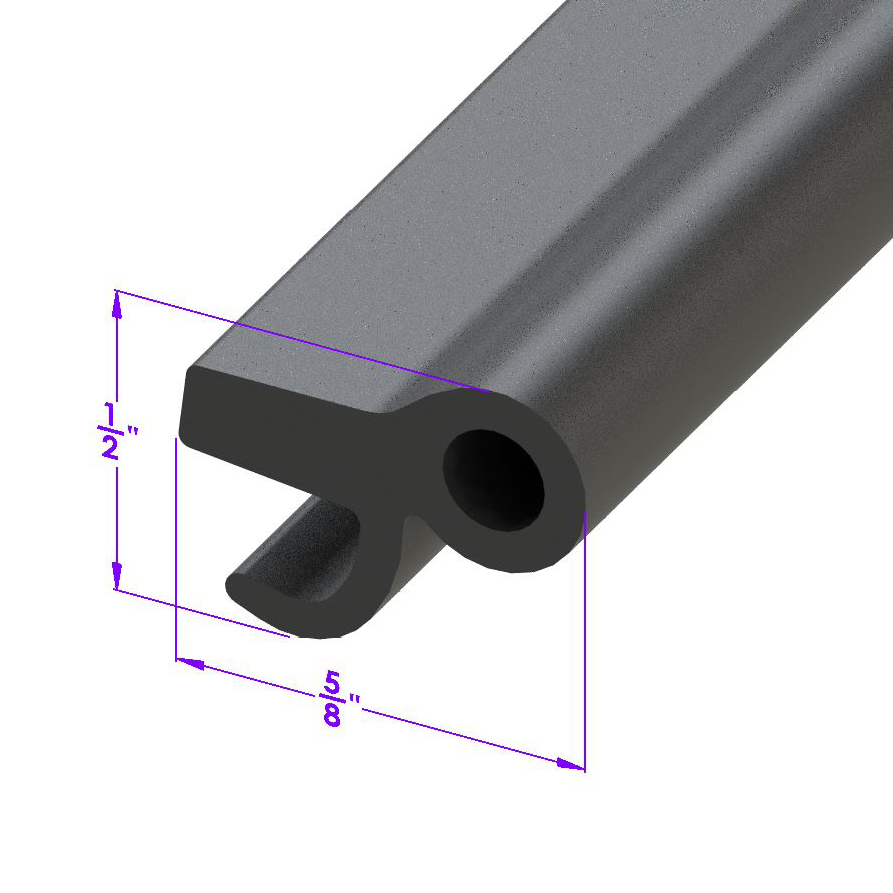 1927 Marmon Little Marmon Series Swing-Out Windshield Seal-LP 97-CSwing-Out Windshield Seal. For both one- and two-piece windshields. Sold by the foot
Why Choose Metro?
For over 100 years, Metro Moulded Parts has been the pinnacle of quality in classic car restoration parts. Our commitment to precision and authenticity in every component ensures a perfect fit and an OEM-level appearance.
- Expert Craftsmanship & Quality: Each part is a testament to our dedication to reliability and perfection, crafted from original designs and thoroughly tested.
- Advanced Technology: We use cutting-edge techniques to create flawless, long-lasting parts that surpass others in performance.
- SuperSoft Sponge – The Ultimate Door Seal: Not only are our door seals 30% softer than competitors', but they're also guaranteed to never leak. They effectively reduce wind and road noise, enhancing your classic car's comfort and driving experience.
- Proudly American: Our parts are a product of American craftsmanship, made in the USA with a spirit of excellence and heritage.
- Unrivaled Warranty: We back our products with a 30-year industry-leading warranty, a testament to our confidence in their quality.
Join us in preserving the legacy of classic cars with parts that are crafted for perfection, not just made.