
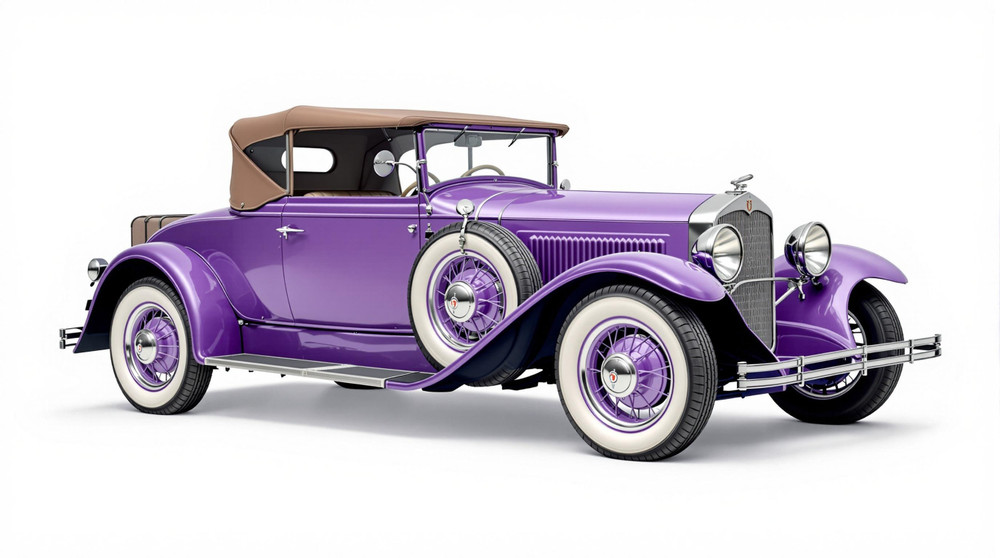
Image of 1927 Marmon Model 75, Note: These illustrations use artistic license and may differ from actual historical models.
Performance Metrics
Fundamental Metrics
Emotional Appeal
MMP Rating
| Engine Specifications | |
|---|---|
| Engine Options: | Straight-6 |
| Displacement Range: | 340 cubic inches |
| Horsepower Range: | Estimated 70-80 HP |
| Torque: | Not available |
| Compression Ratio: | Not available |
| Ignition System: | Battery and coil |
| Cooling System: | Water-cooled |
| Performance Specifications | |
| 0-60 Time: | Not available |
| 1/4 Mile Time: | Not available |
| Top Speed: | 70 mph |
| Transmission and Drive | |
| Drive Type: | Rear-wheel drive |
| Transmission Type: | 3-speed manual |
| Fuel and Efficiency | |
| Fuel System Type: | Carburetor |
| MPG: | Not available |
| Dimensions and Brakes | |
| Brakes: | Mechanical drum brakes |
| Wheelbase: | 125 inches |
| Weight: | Estimated 3500 lbs |
Note: Specifications for classic cars are given to the best of our ability, considering the limited and variant data available.
1927 Marmon Model 75: A Six-Cylinder Classic with Indianapolis Roots
The 1927 Marmon Model 75 brought the engineering ambition of an established American luxury-car maker to a more accessible six-cylinder automobile. Built in Indianapolis by the Marmon Motor Car Company, it arrived during a decade when American manufacturers were expanding their ranges beyond costly, high-powered flagships. The Model 75 was not Marmon’s legendary racing car or its later V16, but it carried the same name associated with careful engineering and a notable place in early motoring history.
One detail that adds interest is the distinction between the Model 75 and the famous Marmon Wasp. Marmon-built, the Wasp won the inaugural Indianapolis 500 in 1911, and driver Ray Harroun used a rearview mirror rather than a riding mechanic to watch traffic behind him. The Model 75 was a different car, designed for road use, but its maker’s racing heritage gave the name considerable cachet.
Indianapolis Engineering in a Changing Era
Marmon’s roots went back to Nordyke Marmon & Company, an Indianapolis manufacturer known for milling equipment before it began building automobiles in the early 1900s. Engineer Howard Marmon became central to the company’s automotive work. By the 1920s, the firm had a reputation for technically accomplished cars, though it faced intense competition from much larger manufacturers and shifting consumer expectations.
The Model 75 appeared as Marmon sought to broaden its appeal. It offered six-cylinder power and traditional American touring-car comfort at a lower level than the company’s most prestigious models. The result was a bridge between Marmon’s luxury reputation and the increasingly popular mid-priced car market.
Classic Marmon Styling and Coachwork
The Model 75’s styling followed the formal proportions of the late 1920s. A tall, upright radiator anchored the front, with a long hood leading back to a relatively compact passenger compartment. Rounded fenders framed the wheels, while running boards connected the front and rear fenders in a continuous line. Lamps mounted beside the radiator and the exposed spare tire or tires gave many examples the unmistakable silhouette of a period touring car.
Body styles varied by year and coachwork. Buyers could encounter closed bodies such as sedans and coupes, as well as open touring or roadster-style forms. A four-door sedan is an especially practical and recognizable configuration, while open cars have the strongest visual connection to the era’s leisurely touring culture. Exact combinations of body, trim and equipment can differ between surviving cars, so a specific example should be checked against its build records where available.
Inside, the Model 75 offered the straightforward, substantial feel expected of a quality 1920s automobile. The cabin typically featured a painted or wood-trimmed metal dashboard, large readable instruments, broad seating and durable upholstery. Depending on body style and specification, upholstery could be cloth, leather or a combination. Owners today may find that materials have been replaced during restoration, so originality is best judged by comparing the car with period photographs and documentation.
Period paint choices commonly included deep, conservative colors such as black, dark blue, maroon and green, with contrasting body or wheel colors possible on some cars. A surviving car’s paint scheme may reflect a later restoration rather than a factory-standard combination. Two-tone finishes were especially effective on the long bodywork, but a restrained single-color finish also suited the Model 75’s formal lines.
Six-Cylinder Power for the Open Road
The Model 75 is generally described as a six-cylinder car producing about 75 horsepower, with an L-head engine and a conventional manual transmission. Published specifications for early cars can vary, and details such as displacement, equipment and body weight should be verified for an individual vehicle. The model’s name is commonly associated with its approximate horsepower rating, but it should not be treated as a guarantee of a precise output on a century-old engine.
There is no dependable modern factory acceleration test for the 1927 Model 75. Based on its period power, gearing and likely body weight, a sound, correctly tuned example might reach roughly 65 to 75 mph in favorable conditions. A 0-to-60-mph time in the neighborhood of 25 to 35 seconds is a reasonable estimate, not a documented factory figure. Heavy passenger bodies, mechanical condition, road surface and gearing can all change the result substantially.
On the road, the Model 75 is best understood as a touring car rather than a sports car. Its engine delivers power progressively, and the driver works a manual gearbox without modern synchronizers or electronic assistance. Steering is heavier at low speeds than in a contemporary car, while the tall seating position and relatively narrow tires call for measured inputs. Leaf springs and a solid-axle layout soften ordinary road imperfections, but sharp bumps can produce the characteristic movement of a high, early automobile.
On winding roads, the driver needs to anticipate corners, brake early and avoid abrupt steering. At cruising speed, the six-cylinder engine’s mechanical rhythm, the rush of air around the windshield and the movement of the chassis are all part of the experience. The Model 75 rewards smooth driving and mechanical sympathy, not hurried modern traffic habits.
What the Model 75 Contributed
The Model 75 did not introduce a single breakthrough that transformed the industry. Its significance lies instead in how it represented Marmon’s transition into a more competitive part of the market. It combined the company’s engineering reputation with a six-cylinder format that offered smoother operation than many four-cylinder cars of the day, while remaining less imposing and costly than a top-tier luxury automobile.
Its broader design also reflects the late-1920s shift toward more standardized production and a wider choice of body styles. The Model 75 was built when customers increasingly expected comfort, usable power and dependable road manners without necessarily buying the most expensive car in a manufacturer’s catalogue. Marmon’s name and its earlier racing achievements helped distinguish the car, even as mass-production rivals gained ground.
The Model 75’s lasting influence is modest compared with the Marmon Wasp or the later Marmon Sixteen. Its appeal today is as a representative of a smaller, technically respected American maker during a pivotal period in the industry, rather than as a car that introduced a widely adopted new technology.
Living with a 1927 Marmon
A Model 75 is best suited to occasional touring, vintage-car events, museum display and private collections. It can be driven on suitable roads, but it is not a practical daily driver by modern standards. The car lacks contemporary safety features, performs best at moderate speeds and may need special consideration before entering dense traffic or traveling long distances.
Maintenance calls for patience and a mechanic familiar with prewar cars. Routine work includes checking ignition and fuel systems, lubrication, cooling, brakes, tires and wheel bearings. Many repairs are mechanically understandable, but parts availability is the larger challenge. Some items may be adapted or sourced from specialist suppliers, while correct trim, body fittings and model-specific components can require substantial searching or custom fabrication.
A mechanically sound car can be dependable for carefully planned outings, but age and condition matter more than reputation. Before buying, inspect the engine for wear, check the cooling system, assess the frame and body structure, and test the brakes and steering. Documentation, parts history and evidence of a properly completed restoration are particularly valuable.
Wasp Trivia, Production and Collecting
The best-known Marmon trivia belongs to the marque rather than the Model 75 itself. The Marmon Wasp won the first Indianapolis 500 in 1911, and its rearview mirror became part of the story of that race. The Model 75 is not known for holding a speed or endurance record, and claims of celebrity ownership should be supported by documentation rather than assumed from the Marmon name.
There is no widely cited, definitive production total for the 1927 Model 75. As a working estimate, a few thousand cars may have been built, perhaps in the range of roughly 1,000 to 3,000, but that figure should be treated as an informed approximation rather than a verified factory count. The surviving population is much smaller, and cars with original components, documented history and attractive coachwork are not commonly offered for sale.
As a broad current-market estimate, a project car might fall around $10,000 to $20,000, while a usable or partially restored example could bring roughly $20,000 to $40,000. A well-restored, complete car may reach approximately $40,000 to $70,000, with exceptional examples potentially exceeding that range depending on body style, originality, provenance and restoration quality. These are general guide figures, not a formal appraisal; condition and the availability of parts can move a sale price considerably.
The Model 75 belongs to a specialist corner of the collector market. Its rarity and Indianapolis heritage give it enduring interest, but it does not have the broad name recognition or auction demand of the most famous Marmons. Values for sound, well-presented examples appear more likely to be stable or to rise gradually than to surge. As with many prewar cars, inflation-adjusted returns are less certain, and a costly restoration may not be recovered at resale.
Why the Marmon Model 75 Still Matters
The 1927 Marmon Model 75 offers a distinctive mix of period elegance, six-cylinder touring performance and the history of an ambitious Indianapolis automaker. It was not a record-breaker or a mass-market revolution, but it captures a moment when respected independent manufacturers were trying to combine engineering quality with broader appeal.
For collectors, the Model 75 is more than an old touring car: it is a tangible link between Marmon’s early racing achievements and the changing American automobile market of the 1920s. Its upright radiator, measured six-cylinder beat and uncommon presence on today’s roads make it a quietly compelling piece of automotive history.
1927 Marmon Model 75 Catalog of Parts
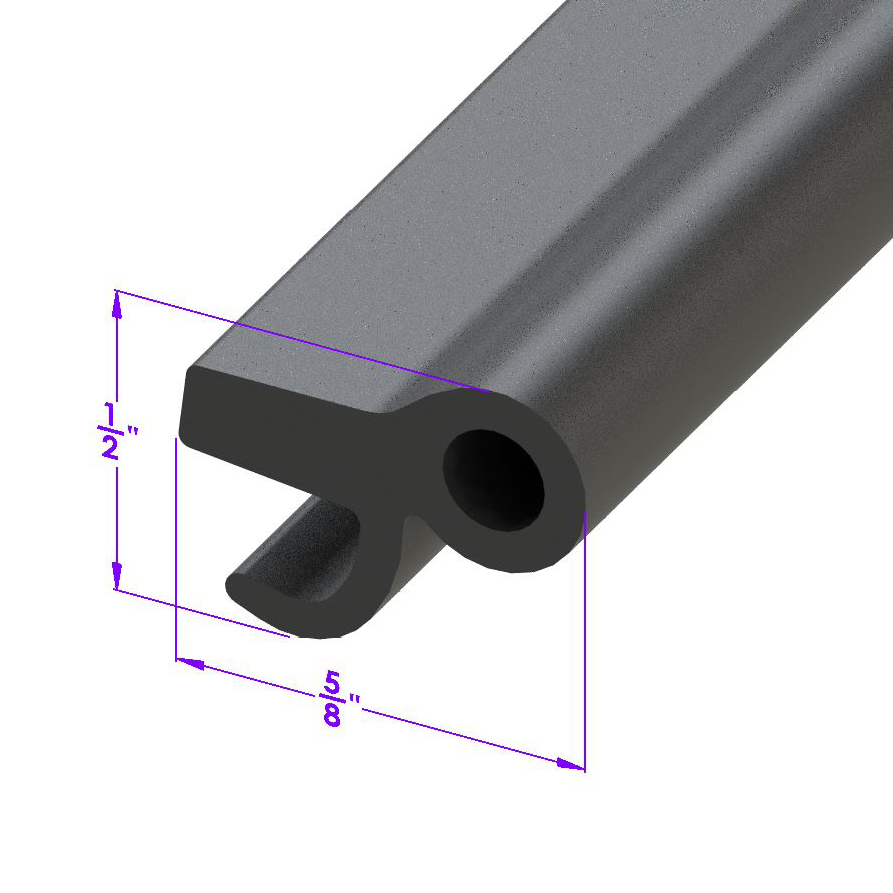 1927 Marmon MODEL 75 Swing-Out Windshield Seal-LP 97-CSwing-Out Windshield Seal. For both one- and two-piece windshields. Sold by the foot
Why Choose Metro?
For over 100 years, Metro Moulded Parts has been the pinnacle of quality in classic car restoration parts. Our commitment to precision and authenticity in every component ensures a perfect fit and an OEM-level appearance.
- Expert Craftsmanship & Quality: Each part is a testament to our dedication to reliability and perfection, crafted from original designs and thoroughly tested.
- Advanced Technology: We use cutting-edge techniques to create flawless, long-lasting parts that surpass others in performance.
- SuperSoft Sponge – The Ultimate Door Seal: Not only are our door seals 30% softer than competitors', but they're also guaranteed to never leak. They effectively reduce wind and road noise, enhancing your classic car's comfort and driving experience.
- Proudly American: Our parts are a product of American craftsmanship, made in the USA with a spirit of excellence and heritage.
- Unrivaled Warranty: We back our products with a 30-year industry-leading warranty, a testament to our confidence in their quality.
Join us in preserving the legacy of classic cars with parts that are crafted for perfection, not just made.