
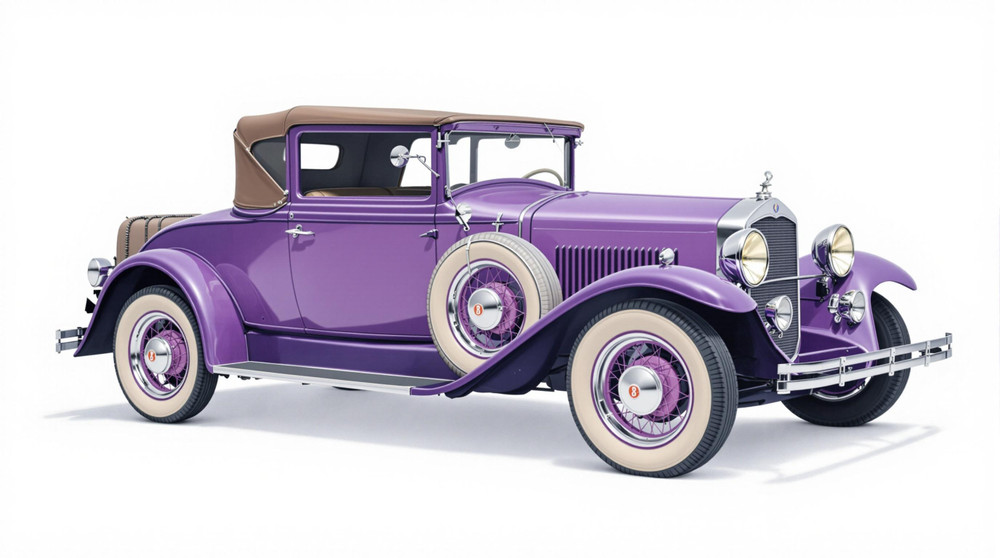
Image of 1928 Marmon Series 68, Note: These illustrations use artistic license and may differ from actual historical models.
Performance Metrics
Fundamental Metrics
Emotional Appeal
MMP Rating
| Engine Specifications | |
|---|---|
| Engine Options: | Straight-6 |
| Displacement Range: | 3400 cc |
| Horsepower Range: | Estimated 70-80 HP |
| Torque: | Not available |
| Compression Ratio: | Not available |
| Ignition System: | Distributor and coil |
| Cooling System: | Water-cooled |
| Performance Specifications | |
| 0-60 Time: | Not available |
| 1/4 Mile Time: | Not available |
| Top Speed: | 70 mph |
| Transmission and Drive | |
| Drive Type: | Rear-wheel drive |
| Transmission Type: | 3-speed manual |
| Fuel and Efficiency | |
| Fuel System Type: | Carburetor |
| MPG: | Not available |
| Dimensions and Brakes | |
| Brakes: | Mechanical drum brakes |
| Wheelbase: | 114 inches |
| Weight: | Estimated 3000 lbs |
Note: Specifications for classic cars are given to the best of our ability, considering the limited and variant data available.
1928 Marmon Series 68: The Eight-Cylinder Touring Car with Indianapolis Roots
The 1928 Marmon Series 68 offered something special for its price class: the smoothness and prestige of a straight-eight engine in a handsome, thoroughly American touring car. Built by the Marmon Motor Car Company of Indianapolis, Indiana, it came from a manufacturer already known for engineering ambition, long before its name became associated with the enormous V-16 luxury cars of the early 1930s.
The Series 68 arrived during a period when American buyers increasingly expected more power, more comfort, and more imposing styling from their cars. Marmon answered with an eight-cylinder model that was less extravagant than its most expensive offerings but still carried the company’s reputation for thoughtful engineering. Its name reflected its approximate horsepower rating, a straightforward way of advertising the performance that mattered to buyers of the day.
One piece of Marmon history gives the Series 68 an especially intriguing family connection: the company’s 1911 Wasp won the first Indianapolis 500. The Wasp was a purpose-built racing car, not a Series 68, but that famous victory helped establish Marmon as a marque willing to experiment and compete on a national stage.
Streamlined Style, Traditional Craftsmanship
The Series 68 had the upright, confidently proportioned look of a late-1920s American car. Its tall radiator, long hood, sweeping front fenders, and separate headlamps gave it a formal presence, while the body’s rounded edges and curved running boards softened the overall profile. Compared with the boxier cars of only a few years earlier, its lines looked increasingly modern, yet it retained the clear distinction between hood, cabin, and fenders that defined the period.
Inside, the experience depended on the body style and the way the car was ordered. Owners could expect a well-finished cabin with substantial upholstery, quality trim, and wood or wood-finished detailing in keeping with Marmon’s upscale ambitions. Leather was a desirable choice, particularly in open cars, while closed models could be trimmed in durable cloth or other upholstery materials. As with many cars of the era, exact materials and colors could vary by body, equipment, and special order.
There was no single paint scheme that defined every Series 68. Buyers could choose from period paint colors and contrasting trim combinations, with dark colors such as black, deep blue, and maroon among the natural choices for a dignified sedan or coupe. Open touring models could look striking in lighter body colors with contrasting fenders. Original paint availability depended on the body and year, so surviving cars do not all share one standard palette.
Body styles included closed cars such as sedans and coupes, as well as open touring or phaeton-style models. The sedan suited owners who wanted weather protection and a formal look, while the open touring body showed off the car’s long hood and made a more theatrical entrance. Exact offerings varied with production and body configuration, so surviving examples and period sales material are the best guides to a particular car’s original specification.
Eight-Cylinder Engineering in 1928
At the center of the Series 68 was a roughly 3.4-liter, or 208-cubic-inch, L-head straight-eight engine, rated at about 68 horsepower. The inline layout was an important part of its appeal. Compared with a four-cylinder engine, an eight-cylinder engine delivered more frequent power strokes and a smoother feel, particularly at steady road speeds. Marmon’s use of an eight in a more accessible model brought that refinement to buyers who could not, or did not want to, step up to the company’s larger and more expensive cars.
The car paired its engine with a conventional manual transmission and rear-wheel drive. Its controls were familiar to drivers of the period, but operation still demanded more attention than a modern car: the driver had to manage the clutch and gear changes, while steering and braking required more physical effort. The Series 68’s engineering was not about electronic aids or effortless operation. Its appeal lay in combining a refined powerplant with sound, traditional mechanical construction.
Marmon’s name also carried a broader engineering reputation. The company had long explored lightweight construction and advanced engine design, most famously with the aluminum-intensive Marmon Wasp. The Series 68 was not simply a continuation of that racing technology, but it benefited from a manufacturer that treated engineering as part of its identity rather than an afterthought.
Road Manners and Period Performance
A 1928 Series 68 in good mechanical condition could plausibly reach around 70 to 75 mph, depending on body, gearing, condition, and road surface. A factory-style 0-to-60-mph time is not firmly established in commonly available specifications. Given its power and period gearing, a reasonable modern estimate is roughly 20 to 25 seconds, though an individual car could be slower or quicker. These figures should be treated as estimates, not as guaranteed factory test results.
On a smooth road, the straight-eight would be the star of the drive. Instead of the sharp, busy note of a small four-cylinder, it would produce a deeper, more even mechanical sound as the revs rose. The ride would feel soft and substantial by modern standards, with the suspension absorbing ordinary road irregularities but allowing more body movement over large bumps and through corners.
On winding roads, the Series 68 would reward a measured pace. Its steering would be slower and heavier than modern rack-and-pinion systems, and its tall body and narrow tires would make quick direction changes feel less natural. Crosswinds could also influence a large-bodied car, especially an open model. The driver’s job was to look well ahead, choose a smooth line, and use the gearbox and brakes with care. It is a car for enjoying the journey, not for chasing modern traffic.
What Ownership Is Like Today
In 1928, a Marmon could serve as a family car, a business owner’s transport, or a comfortable touring machine. Today, a Series 68 is more likely to be a show car, a touring-club participant, or a carefully used weekend car. Some owners drive prewar cars regularly, but a Marmon of this age is best treated as a maintained historic vehicle rather than a modern daily driver.
Routine work is mechanically understandable to an experienced vintage-car owner or specialist. The engine, clutch, gearbox, ignition, and chassis use systems that can be serviced without electronic diagnostic equipment. The difficulty is often not the basic mechanical design but finding correct parts, sourcing body hardware, and locating someone familiar with prewar Marmons. A neglected car may need extensive attention to its cooling system, fuel system, wiring, brakes, tires, and wood or metal body structure.
Reliability depends heavily on restoration quality and ongoing maintenance. A properly sorted straight-eight can be a satisfying touring engine, but age, infrequent use, and improper previous repairs can create problems. Buyers should check compression, oil pressure, cooling performance, steering play, brake operation, and the condition of the chassis and body. Documentation and specialist inspection are particularly valuable for a rare make.
Marmon Trivia and Common Misconceptions
The most famous Marmon is the Wasp, winner of the inaugural Indianapolis 500 in 1911. Its racing success is a memorable part of the company’s heritage, but it should not be confused with the Series 68. The connection is the manufacturer’s history, not a claim that the production car was a competition model or a record-setter.
The Series 68’s appeal was refinement and value within the Marmon range, rather than a headline-grabbing speed record. No widely recognized production or endurance record belongs specifically to the 1928 Series 68. Its scarcity today is more notable than any record: Marmon was a small producer beside the largest American manufacturers, and prewar cars have also been lost to age, accidents, and parts shortages.
A common criticism of cars like the Series 68 is that their period comfort and performance can be romanticized. They are not quiet by modern standards, do not stop or steer like contemporary vehicles, and require deliberate driving. Their strengths are best appreciated in context: for 1928, an eight-cylinder engine, handsome coachwork, and a comfortable touring character made a compelling package.
Collector Values and Rarity
Exact production totals for the 1928 Series 68 are not consistently documented in readily available public references. A reasonable working estimate is that production was in the low thousands, perhaps around 2,000 to 4,000 cars for the model year. That is an estimate, not a confirmed factory total. Surviving examples are uncommon, and the number available for sale at any one time is usually small.
Values depend greatly on body style, originality, restoration quality, and documentation. As a broad current-market estimate, a project or incomplete example might fall around $15,000 to $30,000. A sound, usable car could be in the $30,000 to $60,000 range, while a high-quality restoration or especially desirable open body could reach roughly $60,000 to $100,000 or more. These are guide ranges, not appraisals; rare body configurations and exceptional provenance can shift a sale substantially.
Values for lesser-known prewar marques tend to be selective rather than uniformly rising. A well-restored Marmon can attract serious enthusiasts, but the buyer pool is narrower than for a Model A Ford or a major luxury marque with broad name recognition. Condition, authenticity, and specialist interest will generally matter more than a simple assumption that every old car appreciates. Before buying or selling, compare recent sales of similar Marmons and consult a marque expert.
Why the 1928 Marmon Series 68 Still Matters
The Series 68 brought Marmon’s straight-eight refinement to a more approachable corner of the market while preserving the company’s taste for engineering and distinctive presentation. Its long hood, formal bodywork, and smooth-running engine capture a moment when American manufacturers were turning the automobile into both a practical machine and a statement of progress.
It may not have the fame of the Wasp or the sheer spectacle of Marmon’s later V-16, but the 1928 Series 68 deserves its place between those milestones. It is a rare, characterful touring car that rewards patient driving and careful preservation, a reminder that automotive history was shaped not only by record-breakers, but also by ambitious cars built for the open road.
1928 Marmon Series 68 Catalog of Parts
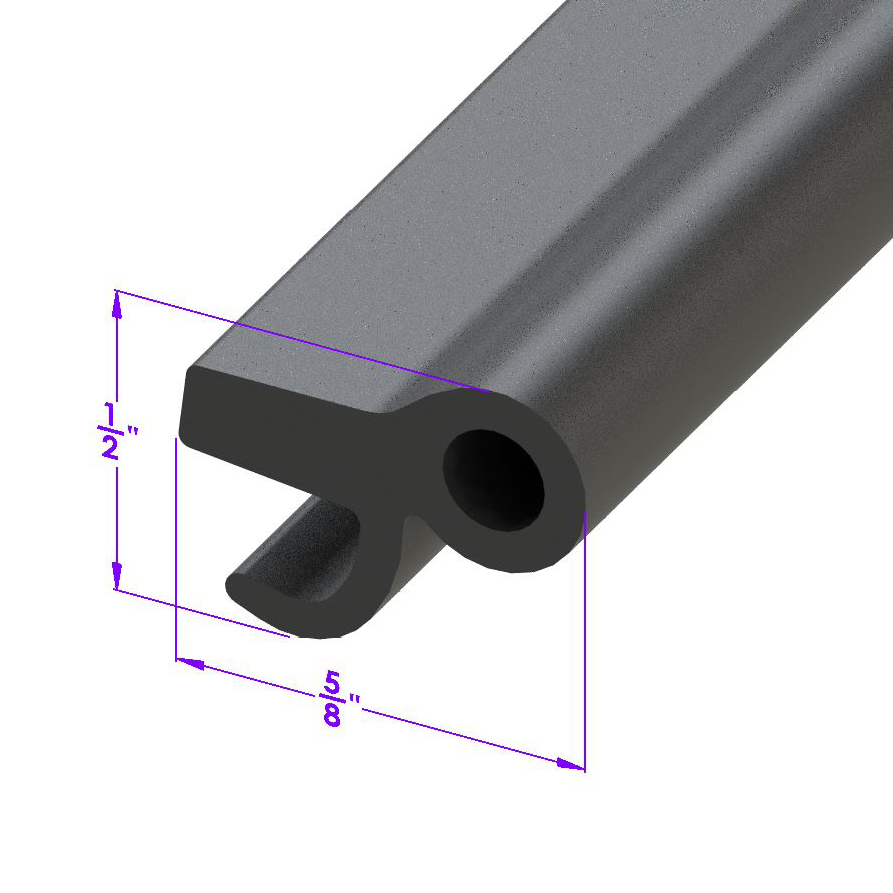 1928 Marmon Series 68 Swing-Out Windshield Seal-LP 97-CSwing-Out Windshield Seal. For both one- and two-piece windshields. Sold by the foot
Why Choose Metro?
For over 100 years, Metro Moulded Parts has been the pinnacle of quality in classic car restoration parts. Our commitment to precision and authenticity in every component ensures a perfect fit and an OEM-level appearance.
- Expert Craftsmanship & Quality: Each part is a testament to our dedication to reliability and perfection, crafted from original designs and thoroughly tested.
- Advanced Technology: We use cutting-edge techniques to create flawless, long-lasting parts that surpass others in performance.
- SuperSoft Sponge – The Ultimate Door Seal: Not only are our door seals 30% softer than competitors', but they're also guaranteed to never leak. They effectively reduce wind and road noise, enhancing your classic car's comfort and driving experience.
- Proudly American: Our parts are a product of American craftsmanship, made in the USA with a spirit of excellence and heritage.
- Unrivaled Warranty: We back our products with a 30-year industry-leading warranty, a testament to our confidence in their quality.
Join us in preserving the legacy of classic cars with parts that are crafted for perfection, not just made.