
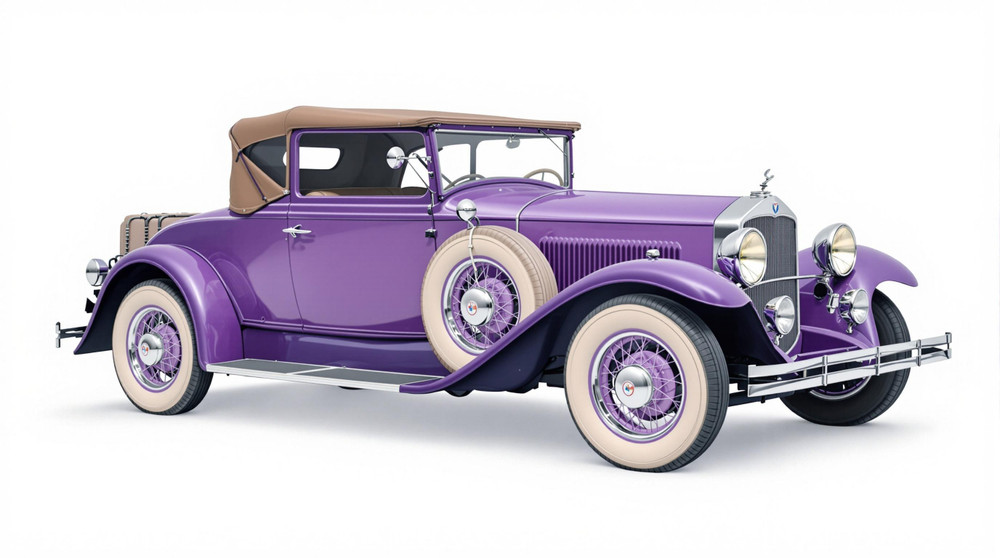
Image of 1929 Marmon Series 68, Note: These illustrations use artistic license and may differ from actual historical models.
Performance Metrics
Fundamental Metrics
Emotional Appeal
MMP Rating
| Engine Specifications | |
|---|---|
| Engine: | Straight-8 |
| Displacement: | 340 cubic inches |
| Horsepower: | Estimated 125 HP |
| Torque: | Not available |
| Compression Ratio: | Not available |
| Ignition System: | Battery Ignition |
| Cooling System: | Water-cooled |
| Performance Specifications | |
| 0-60 Time: | Not available |
| 1/4 Mile Time: | Not available |
| Top Speed: | 85 mph |
| Transmission and Drive | |
| Drive Type: | Rear-wheel drive |
| Transmission Type: | 3-speed manual |
| Fuel and Efficiency | |
| Fuel System Type: | Carburetor |
| MPG: | Not available |
| Dimensions and Brakes | |
| Brakes: | Mechanical drum brakes |
| Wheelbase: | 125 inches |
| Weight: | Estimated 3500 lbs |
Note: Specifications for classic cars are given to the best of our ability, considering the limited and variant data available.
1929 Marmon Series 68: An American Six with Luxury Ambitions
The 1929 Marmon Series 68 brought a touch of Indianapolis-built prestige to the market for six-cylinder cars. It came from the Marmon Motor Car Company, a manufacturer known for engineering ambition and a willingness to challenge the best-known luxury marques. The Series 68 was not the company’s most extravagant model, but it offered buyers a substantial, well-appointed automobile at a more accessible point in Marmon’s range.
Marmon’s roots stretched back to Nordyke Marmon & Company, an Indianapolis machinery business. The family’s automobile venture became known for technical innovation, including the celebrated Marmon Wasp, winner of the first Indianapolis 500 in 1911. By 1929, however, the company was also working to reach buyers beyond the uppermost luxury class. The Series 68 was part of that effort, combining a six-cylinder engine with the size and finish expected of a premium American car.
Its arrival coincided with a dramatic turning point in American history. The stock-market crash of October 1929 ushered in the Great Depression, sharply reducing demand for expensive automobiles. Marmon continued building cars into the 1930s, but the Series 68 belongs to the final, optimistic stretch before the market changed. A useful distinction for enthusiasts: the Model 68 was a conventional production car, not a direct mechanical descendant of the Wasp’s racing engineering or the later Marmon Sixteen.
Streamlined Style and Period Craftsmanship
The Series 68 wore the confident proportions typical of a late-1920s American automobile. Its upright radiator and tall hood gave the front end a formal, purposeful look, while sweeping front fenders, running boards, and large headlamps emphasized its length. From the side, the long bonnet and carefully separated passenger compartment made the car look substantial without the sheer scale of Marmon’s most expensive models. Wire wheels and bright exterior trim added a sporting note, depending on body style and specification.
Inside, the experience was more about comfort and finish than modern convenience. Closed cars typically used quality upholstery such as wool broadcloth or mohair, while open models could be trimmed in leather. Polished wood, metal fittings, carpeting, and a well-finished instrument panel helped create the upscale atmosphere buyers expected. Exact trim and equipment could vary by body and order, so surviving cars may not share identical details.
Factory paint and trim combinations also varied. Period colors for cars in this class included sober black as well as dark blue, green, and maroon, sometimes paired with contrasting details. Two-tone treatments suited the era’s taste for visual distinction, although the precise colors offered on a particular Series 68 should be checked against its body maker’s records or surviving documentation. Original paint evidence is especially valuable when assessing a restoration.
Like many manufacturers of the period, Marmon offered the Series 68 in multiple body configurations. Closed sedans appealed to buyers seeking weather protection and family practicality, while coupe and convertible-coupe forms offered a more personal, stylish character. Open touring or phaeton-style bodies provided the full motoring experience, with folding tops and exposed seating. Availability could vary by model year and coachwork. The sedan was the sensible choice, but an open car or convertible coupe is often the most visually striking version today.
Engineering in the Late-Twenties Marmon
The Series 68 used a straight-six engine, with the model designation commonly associated with an output of about 68 horsepower. Published specifications for vintage cars can differ according to year and source, so collectors should confirm details against the car’s engine number and period literature. The six-cylinder layout delivered smoother, more flexible power than the smaller four-cylinder engines still found in many cars, making it well suited to a substantial touring automobile.
Its controls and equipment reflected the transition era of the late 1920s. The driver operated a manual transmission, while braking and steering required more physical effort than in a modern car. Four-wheel braking was becoming an important feature in the American market, and cars of this class were designed to provide more reassuring stopping power than earlier two-wheel-brake machines. Even so, a Series 68 should be driven with period braking distances and tire grip firmly in mind.
Marmon’s larger reputation rested on engineering milestones, but the Series 68’s importance is subtler. It illustrates how a respected luxury manufacturer adapted its range to offer six-cylinder refinement to a broader audience. It did not reinvent automotive design, yet it carried Marmon’s established identity into a more competitive price bracket. That balance between marque prestige and practical positioning is what makes the model an interesting snapshot of the American industry just before the Depression.
Performance and Road Manners
There is no single reliable, standardized modern 0-to-60-mph test figure for the 1929 Series 68. Based on its approximate 68-horsepower output, weight, gearing, and period tires, a reasonable estimate is roughly 25 to 30 seconds to reach 60 mph. A healthy, correctly tuned car might reach around 65 to 75 mph in favorable conditions, though actual speed depends on body style, mechanical condition, gearing, and the driver’s willingness to push a nearly century-old automobile.
On the road, the six should feel smooth and deliberate rather than quick by modern standards. Acceleration is best understood as a steady build: select the appropriate gear, let the engine gather speed, and avoid expecting instant response. The engine’s low mechanical pulse, intake and exhaust sounds, and the faint clatter of vintage components are part of the experience. A well-maintained example should sound purposeful, not harsh or strained.
The long chassis and substantial body help the car settle over ordinary road imperfections, but its suspension and tall tires are not equivalent to modern shock control. On rough pavement, expect body movement and a little extra steering correction. On winding roads, the Series 68 rewards a measured pace. Its steering is likely to feel heavier at low speeds, and narrow period tires provide less grip than contemporary rubber. In crosswinds, a tall sedan can require attention, particularly at speed. The best driving experience comes from smooth inputs and leaving generous room to brake.
Living with a Marmon Series 68
Today, most Series 68s are best suited to touring events, local shows, museum displays, and occasional pleasure drives. A complete and carefully maintained car can be driven on suitable roads, but using one as a daily driver would be impractical. Parts supply, traffic speeds, weather protection, and the limitations of period brakes all argue for selective use.
Routine care is familiar to experienced prewar-car owners: regular lubrication, careful ignition and carburetor tuning, cooling-system attention, and inspection of the brakes, steering, tires, and fuel system. Some repairs are straightforward for a mechanically capable owner, but specialty parts and body-specific hardware can be difficult to source. Before buying, check for engine and transmission problems, cracked or poorly repaired castings, wood-frame deterioration where applicable, rust beneath running boards and fenders, and evidence of an incomplete restoration. A car that appears inexpensive can become costly if major components or coachwork need rebuilding.
Reliability depends far more on condition and maintenance than on the badge. A sorted Series 68 can be enjoyable on a planned tour, while an unrestored example may need extensive recommissioning before it is safe to drive. Modern replacement tires, professionally rebuilt brakes, and a sound cooling system are sensible priorities for any car intended for road use.
Interesting Marmon Facts
The Series 68 shares a marque with the Marmon Wasp, the single-seat racer driven by Ray Harroun to victory at the inaugural Indianapolis 500 in 1911. That connection is part of the Marmon story, but it should not be mistaken for a racing record held by the Series 68 itself. The family of cars also culminated in the remarkable Marmon Sixteen, introduced in 1931, whose advanced V16 made it one of the most technically ambitious American luxury cars of its day.
No widely recognized speed, endurance, or production record is associated specifically with the 1929 Series 68, and celebrity ownership claims are not a defining part of its documented history. Its more revealing historical moment is its timing: it was introduced as the American luxury-car market was about to be reshaped by economic crisis. Common criticisms are equally practical. The car is slow by modern standards, needs attentive maintenance, and can be challenging to support compared with more common Ford, Chevrolet, or Buick models.
Collector Value and Rarity
Exact Series 68 production figures are not consistently published, so a precise total should be treated cautiously. A reasonable working estimate is several thousand cars across the model’s production period, rather than tens of thousands. Many have disappeared through age, parts use, and the difficulty of preserving coachbuilt bodies. As a result, Series 68s are uncommon, and specific body styles can be much harder to find than the model name alone suggests.
As a broad current-market estimate, a project car might sell for roughly $8,000 to $20,000, depending on completeness and rust. A usable, presentable driver could fall around $20,000 to $40,000, while a high-quality restoration or especially desirable open body might bring approximately $40,000 to $70,000 or more. These are guide ranges, not formal appraisals. Condition, provenance, originality, restoration quality, and body style can move the price substantially.
Values for lesser-known prewar cars tend to be selective rather than uniformly rising. Exceptional, well-documented examples may attract strong interest, but a project can remain difficult to sell because restoration costs often exceed the value of the finished car. Buyers should compare recent sales of similar Marmons and similar body styles, not just asking prices. Over the long term, the Series 68’s rarity and the Marmon name support collector interest, while its size, upkeep, and limited parts network restrain demand.
Why the 1929 Marmon 68 Still Matters
The 1929 Marmon Series 68 combines six-cylinder smoothness, formal prewar styling, and the craftsmanship of a respected Indianapolis automaker. It was not a record-breaking racer or a revolutionary technical landmark, but it represents a significant chapter in Marmon’s attempt to make its quality more accessible just as the automobile industry entered a period of upheaval.
For collectors, its appeal lies in that combination of rarity, handsome period design, and connection to a marque with genuine engineering history. The Series 68 is a reminder that automotive significance is not always measured in speed records or production totals. Sometimes it lives in a beautifully proportioned touring car that captures an industry, and an era, at the edge of change.
1929 Marmon Series 68 Catalog of Parts
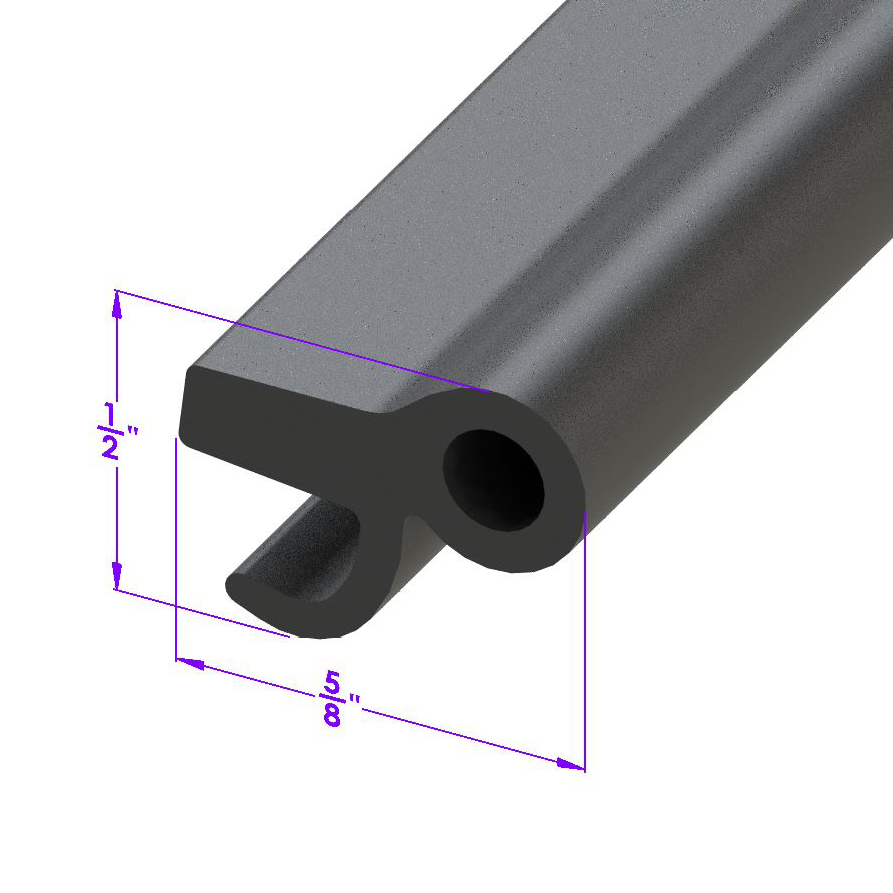 1929 Marmon Series 68 Swing-Out Windshield Seal-LP 97-CSwing-Out Windshield Seal. For both one- and two-piece windshields. Sold by the foot
Why Choose Metro?
For over 100 years, Metro Moulded Parts has been the pinnacle of quality in classic car restoration parts. Our commitment to precision and authenticity in every component ensures a perfect fit and an OEM-level appearance.
- Expert Craftsmanship & Quality: Each part is a testament to our dedication to reliability and perfection, crafted from original designs and thoroughly tested.
- Advanced Technology: We use cutting-edge techniques to create flawless, long-lasting parts that surpass others in performance.
- SuperSoft Sponge – The Ultimate Door Seal: Not only are our door seals 30% softer than competitors', but they're also guaranteed to never leak. They effectively reduce wind and road noise, enhancing your classic car's comfort and driving experience.
- Proudly American: Our parts are a product of American craftsmanship, made in the USA with a spirit of excellence and heritage.
- Unrivaled Warranty: We back our products with a 30-year industry-leading warranty, a testament to our confidence in their quality.
Join us in preserving the legacy of classic cars with parts that are crafted for perfection, not just made.