
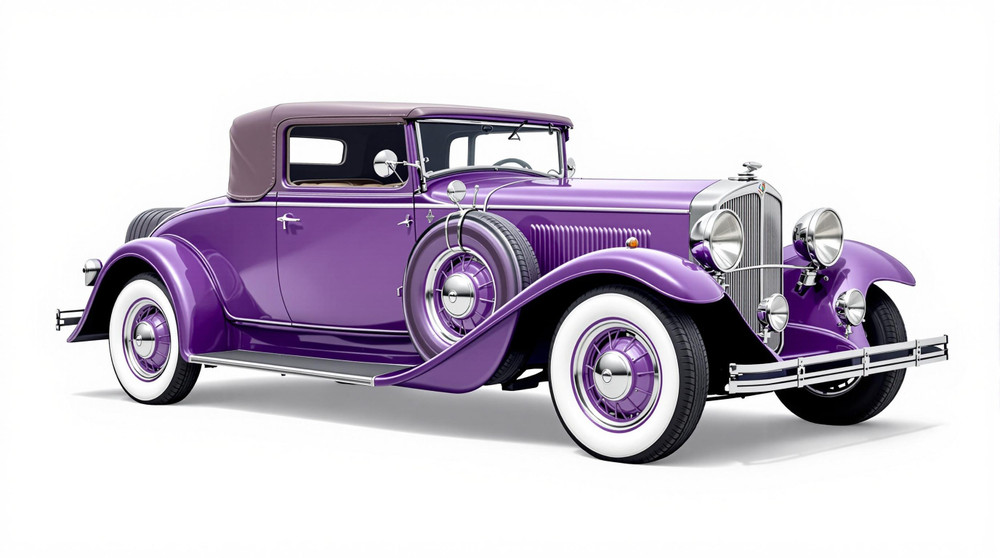
Image of 1930 Marmon Big Eight, Note: These illustrations use artistic license and may differ from actual historical models.
Performance Metrics
Fundamental Metrics
Emotional Appeal
MMP Rating
| Engine Specifications | |
|---|---|
| Engine: | Straight-8 |
| Displacement: | 315 cubic inches |
| Horsepower: | Estimated 125-130 HP |
| Torque: | Not available |
| Compression Ratio: | Not available |
| Ignition System: | Battery Ignition System |
| Cooling System: | Liquid-cooled |
| Performance Specifications | |
| 0-60 Time: | Not available |
| 1/4 Mile Time: | Not available |
| Top Speed: | 100 mph |
| Transmission and Drive | |
| Drive Type: | Rear-wheel drive |
| Transmission Type: | 3-speed manual |
| Fuel and Efficiency | |
| Fuel System Type: | Carburetor |
| MPG: | Not available |
| Dimensions and Brakes | |
| Brakes: | Mechanical drum brakes |
| Wheelbase: | 145 inches |
| Weight: | Estimated 4,500 lbs |
Note: Specifications for classic cars are given to the best of our ability, considering the limited and variant data available.
1930 Marmon Big Eight: A Luxury Straight-Eight with Indianapolis Roots
The 1930 Marmon Big Eight brought the hush and authority of a long, powerful straight-eight to America’s luxury-car market just as the Great Depression was reshaping it. Built by the Marmon Motor Car Company of Indianapolis, Indiana, it belonged to a marque known for engineering ambition, fine coachwork, and a famous connection to early motor racing.
Marmon’s story reached far beyond this model. The company’s Marmon Wasp, driven by Ray Harroun, won the inaugural Indianapolis 500 in 1911. The Big Eight was not a racing car, but it carried forward the firm’s reputation for technical ingenuity in a refined road car. One intriguing link between the two eras is their shared maker: the Indianapolis company that had helped define American racing also built carefully finished luxury cars for the open road.
Elegant Lines and Hand-Finished Comfort
The Big Eight had the imposing proportions expected of a prestige car of its time. A long hood announced the eight-cylinder engine, while a tall, upright radiator, sweeping front fenders, and substantial running boards gave the car a formal, balanced stance. Depending on body style, the rear could be a compact coupe tail or a long, dignified passenger compartment. Nickel or chrome trim, wire wheels, and a rear-mounted spare added period-correct detail, though equipment and finishes varied by body and specification.
Inside, the emphasis was on comfort and craftsmanship rather than lightweight construction. Owners could expect broad, well-upholstered seats, quality carpeting, wood trim, and an instrument panel with clear, individually arranged gauges. Exact materials and fittings differed among bodies and could be tailored to a buyer’s order. In an open model, passengers enjoyed the fresh air and style of the era, but a closed sedan or limousine offered greater protection from weather and road dust.
Factory and custom body offerings could include sedans, coupes, convertibles, phaetons, and larger passenger or chauffeur-driven bodies. The four-door sedan was the practical, recognizable choice, while open phaetons and formal coachbuilt versions made especially striking show cars. Marmon’s color choices were not one fixed palette for every body. Period luxury cars were often ordered in combinations such as dark blue, maroon, green, or black, with contrasting wheels or trim. Original paint records and surviving cars are the best guide to a specific example.
Big Eight Engineering for 1930
At the heart of the car was a straight-eight engine of about 315 cubic inches, commonly quoted at approximately 125 horsepower. It was paired with a manual transmission and rear-wheel drive. The long eight-cylinder layout delivered smoother power than the four- and six-cylinder engines found in many less expensive cars, making the Big Eight well suited to relaxed touring and highway travel.
Four-wheel braking was an important safety feature in the luxury-car class, and Big Eight specifications are commonly associated with hydraulic brakes. As with any surviving prewar vehicle, however, details can vary by production run and by later repairs or modifications. A prospective buyer should verify the braking system, engine number, and equipment on the individual car rather than assume every example is identical.
Why the Big Eight Mattered
The Big Eight represented the confident American luxury car: large, smooth, handsomely finished, and designed to cover distance with ease. Its straight-eight offered a more refined feel than the engines in ordinary family cars, while its range of body styles let customers choose between personal motoring, family transport, and formal chauffeur-driven use.
Its significance also lies in Marmon’s broader engineering culture. The company had earned attention through its racing success and its willingness to experiment with materials and vehicle design. The Big Eight was not as revolutionary as the Marmon Wasp, nor was it the brand’s later V16 flagship, but it helped bridge those chapters. In 1931, Marmon introduced its remarkable Sixteen, another expression of the company’s ambition. The Big Eight shows that Marmon’s technical reputation was not limited to headline-grabbing competition or the biggest engine in the showroom.
Road Manners and Performance
With roughly 125 horsepower, a healthy Big Eight could reach an estimated top speed in the neighborhood of 80 mph, depending on body style, gearing, condition, and road surface. A period-style 0-to-60-mph estimate is less certain: a heavy luxury car with a manual gearbox might take roughly 25 to 30 seconds. Treat that as a modern estimate, not a guaranteed factory figure. These cars were built to cruise comfortably, not to deliver sports-car acceleration.
On a smooth road, the engine’s long, even firing rhythm gives the car a calm, unhurried character. The straight-eight should sound more like a deep mechanical hum than a sharp, high-revving roar. Its mass and period suspension help it absorb ordinary road imperfections, but large potholes and broken pavement still demand care. On winding roads, the Big Eight rewards a measured driving style: its size, tall body, and steering effort make quick direction changes less natural than in a modern car.
Driving one requires attention. The driver must plan braking distances, work the manual gearbox, and account for the car’s dimensions. Steering and brake feel can vary dramatically with maintenance and restoration quality. A properly sorted example can be composed and enjoyable on a tour, but it will never feel like a contemporary sedan.
Living with a Marmon Big Eight
Today, a Big Eight is most at home on vintage-car tours, at concours events, and in private collections. Some owners may use a well-maintained example for occasional local drives, but it is not a sensible everyday vehicle. Its age, size, fuel consumption, and limited access to specialist parts make regular modern commuting impractical.
Mechanical work is manageable for an experienced vintage-car mechanic, but not necessarily easy for the average owner. The engine and chassis use familiar prewar principles, yet parts availability, specialist knowledge, and the condition of previous repairs are major factors. Before purchase, inspect the engine for oil pressure and cooling-system issues, check the transmission and rear axle, and have the brakes and steering examined by someone familiar with early cars. Body and trim restoration can be especially expensive because correct coachwork details may be difficult to source.
Notable Facts and Common Misconceptions
The Marmon name is often linked with the 1911 Indianapolis 500, but the winning car was the Marmon Wasp, not the Big Eight. The Wasp’s victory is a landmark in the company’s history, rather than a racing record held by this luxury model. No widely recognized Big Eight speed or endurance record defines the car’s reputation; its appeal rests more on engineering, craftsmanship, and rarity.
A common criticism of the Big Eight is one it shares with many large prewar cars: it is heavy, thirsty, and demanding to maneuver by modern standards. Its age also means that two cars of the same model year can differ substantially in condition and specification. A carefully maintained example is a rewarding touring car, while a neglected one can require a long and costly restoration.
Collector Values and Rarity
Exact production figures for individual Marmon Big Eight body styles and model years are difficult to establish from commonly available records. A reasonable estimate is that roughly 1,500 to 2,500 Big Eights may have been built for the 1930 model year, though that is an informed estimate rather than a confirmed factory total. Surviving cars are uncommon, and particular body styles or original coachwork can be much harder to find than the nameplate alone suggests.
As a broad current-market estimate, a project car might fall around $20,000 to $40,000, a sound driver or older restoration around $40,000 to $90,000, and an exceptional, correctly restored or especially desirable example could reach $100,000 to $175,000 or more. These are guide ranges, not appraisals. Condition, provenance, body style, originality, and the quality of restoration can move the price considerably.
The Big Eight occupies a specialist corner of the collector market. Its values can be steady rather than explosive, and top examples may appreciate over time, but restoration costs can outpace market gains. Buyers should focus on the quality and completeness of the specific car, not assume that rarity automatically makes every example a sound investment.
A Lasting Expression of Marmon’s Ambition
The 1930 Marmon Big Eight combined a smooth, powerful engine with formal styling, fine materials, and the presence of a true American luxury car. Its story is enriched by Marmon’s Indianapolis racing heritage, while its road manners capture an era when long-distance motoring called for size, mechanical stamina, and a steady hand at the wheel.
For collectors, the Big Eight is more than a handsome survivor from the prewar years. It is a reminder that the same ambitious company behind a landmark Indy 500 winner also built elegant machines for the open road, and that makes every well-preserved example a distinctive piece of American automotive history.
1930 Marmon Big Eight Catalog of Parts
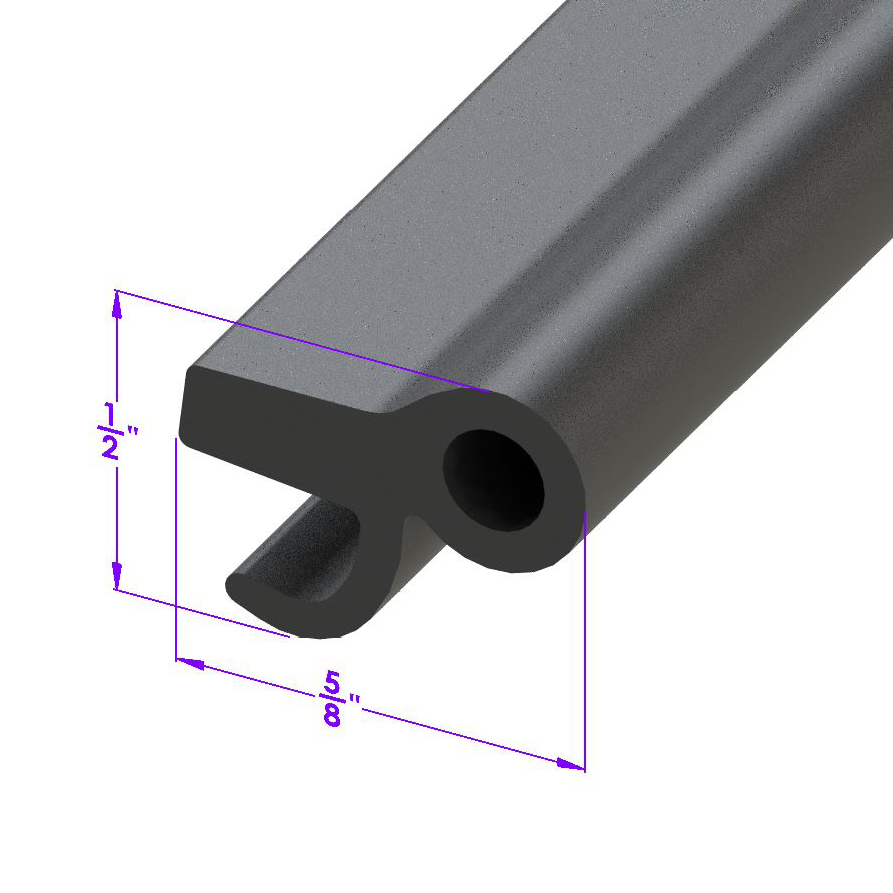 1930 Marmon Big Eight Swing-Out Windshield Seal-LP 97-CSwing-Out Windshield Seal. For both one- and two-piece windshields. Sold by the foot
Why Choose Metro?
For over 100 years, Metro Moulded Parts has been the pinnacle of quality in classic car restoration parts. Our commitment to precision and authenticity in every component ensures a perfect fit and an OEM-level appearance.
- Expert Craftsmanship & Quality: Each part is a testament to our dedication to reliability and perfection, crafted from original designs and thoroughly tested.
- Advanced Technology: We use cutting-edge techniques to create flawless, long-lasting parts that surpass others in performance.
- SuperSoft Sponge – The Ultimate Door Seal: Not only are our door seals 30% softer than competitors', but they're also guaranteed to never leak. They effectively reduce wind and road noise, enhancing your classic car's comfort and driving experience.
- Proudly American: Our parts are a product of American craftsmanship, made in the USA with a spirit of excellence and heritage.
- Unrivaled Warranty: We back our products with a 30-year industry-leading warranty, a testament to our confidence in their quality.
Join us in preserving the legacy of classic cars with parts that are crafted for perfection, not just made.