
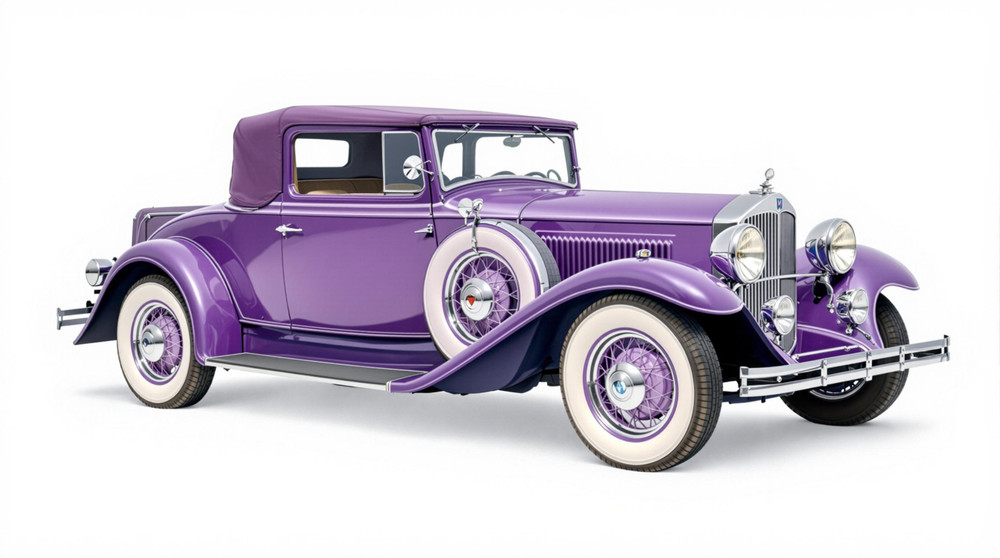
Image of 1930 Marmon Model 8-69, Note: These illustrations use artistic license and may differ from actual historical models.
Performance Metrics
Fundamental Metrics
Emotional Appeal
MMP Rating
| Engine Specifications | |
|---|---|
| Engine: | Straight-8 |
| Displacement: | 340 cubic inches (5.6 liters) |
| Horsepower: | Estimated 125-130 hp |
| Torque: | Not available |
| Compression Ratio: | Not available |
| Ignition System: | Battery and coil |
| Cooling System: | Water-cooled |
| Performance Specifications | |
| 0-60 Time: | Not available |
| 1/4 Mile Time: | Not available |
| Top Speed: | Estimated 85 mph |
| Transmission and Drive | |
| Drive Type: | Rear-wheel drive |
| Transmission Type: | 3-speed manual |
| Fuel and Efficiency | |
| Fuel System Type: | Carburetor |
| MPG: | Not available |
| Dimensions and Brakes | |
| Brakes: | Mechanical drum brakes |
| Wheelbase: | 136 inches |
| Weight: | Estimated 3,500 lbs |
Note: Specifications for classic cars are given to the best of our ability, considering the limited and variant data available.
1930 Marmon Model 8-69: A Refined American Straight-Eight
The 1930 Marmon Model 8-69 brought the smoothness and prestige of an eight-cylinder engine to a more attainable corner of the luxury-car market. Built by the Marmon Motor Car Company in Indianapolis, Indiana, it came from a manufacturer known for ambitious engineering and elegant automobiles. The 8-69 was not as extravagant as Marmon’s later V16, but it offered substantial power, careful craftsmanship, and the quiet confidence expected of a fine American car.
Its name gives a useful clue to its specification: “8” identified the cylinder count, while “69” referred to its rated horsepower. Marmon’s history also has an unexpected connection to one of racing’s most familiar pieces of equipment. The Marmon Wasp won the first Indianapolis 500 in 1911, and its driver, Ray Harroun, used a rearview mirror, an innovation that helped him see traffic behind the car. The 8-69 was built for the road rather than the track, but it came from a company with a genuine record of technical daring.
Streamlined Style and Comfortable Craftsmanship
The 8-69 had the composed, upright appearance of a late-1920s luxury car, with a long hood, tall radiator, sweeping front fenders, and a passenger cabin set well back on the chassis. Its vertical grille and bright metal trim gave the front end a formal look, while details such as the lamps, hood louvers, and curved fender lines added visual richness. The overall effect was substantial without being as imposing as the most expensive full-size classics.
Body styles varied by catalog offering and coachwork. Buyers could encounter closed sedans and coupes, as well as more open designs such as phaetons and convertible coupes. Four-door sedans suited family and chauffeur use, while open cars offered a more sporting look and are especially appealing to collectors today. The exact combination of body style and trim could differ, so a surviving car’s original build records are valuable when confirming its specification.
Inside, owners could expect period-appropriate materials chosen for comfort and appearance. Depending on the body and trim level, upholstery might be wool broadcloth, mohair, or leather, complemented by polished wood or finely finished metal on the dashboard and window surrounds. The cabin was designed for relaxed touring, with a broad bench seat, clear instruments, and the generous proportions associated with an expensive American automobile.
Paint choices were not necessarily identical across every body style or production run. Dark shades such as black, deep blue, maroon, and green were common choices for formal cars, while two-tone schemes could emphasize the separation between the body, fenders, and roof. An individual car’s factory color combination is best verified through original paperwork or careful research rather than assumed from a general model description.
Eight-Cylinder Engineering for the Open Road
The Model 8-69’s defining feature was its inline eight-cylinder engine, generally listed at about 303 cubic inches and 69 horsepower. Its long, evenly firing layout was prized for smoothness. Compared with many six-cylinder cars, an eight could deliver power with less vibration and a more relaxed mechanical character, making it well suited to long-distance driving.
Typical equipment included a three-speed manual transmission, rear-wheel drive, solid axles, leaf-spring suspension, and four-wheel mechanical brakes. Those systems were conventional for the period, but they still required active attention from the driver. Braking distances were longer than in a modern car, and mechanical brakes demanded regular adjustment to work evenly. The car’s engineering priority was not gadgetry for its own sake, but a composed, capable touring automobile.
As with many cars of its era, details can vary with production date, body configuration, and later repairs. Restored examples may also contain replacement components or upgrades. Anyone assessing an individual 8-69 should inspect its engine, chassis, brakes, and electrical system rather than relying solely on a model-year specification.
Where the 8-69 Fits in Marmon History
The 8-69 arrived during a period when American manufacturers were competing to offer more power, comfort, and prestige. Its straight eight put it in a desirable class, while its model position made it less exclusive than the costliest cars in the Marmon range. That balance is part of its appeal: it carried the character of a luxury marque without the extreme scale and expense of Marmon’s most celebrated models.
The car’s broader significance lies in what it represented. Marmon had built its reputation on engineering ambition, from early aluminum-engine experiments to competition success. The 8-69 carried that reputation into a practical road car at a moment when smooth, multi-cylinder engines were becoming an important mark of refinement. It did not reshape automotive design on its own, but it shows how established manufacturers translated engineering prestige into comfortable, well-equipped touring cars.
Its timing was challenging. The Wall Street crash of 1929 and the Great Depression that followed sharply reduced demand for expensive automobiles. Marmon continued to build cars, including the remarkable V16, but the market was turning against independent luxury manufacturers. The 8-69 is therefore a snapshot of a confident era just before economic realities made that kind of car increasingly difficult to sell.
Performance and Driving Character
Period performance figures are not as consistent as modern test data, and condition makes a major difference today. A sound Model 8-69 might reach roughly 70 to 80 mph, with a 0-to-60 mph time in the neighborhood of 25 to 30 seconds. These are estimates, not guaranteed factory test results. A heavy sedan, worn engine, incorrect gearing, or modern traffic conditions can all change the experience considerably.
On a smooth road, the straight eight’s appeal is its steady, unhurried delivery. Rather than feeling like a car that wants to be hurried, the Marmon rewards a measured throttle and well-timed gear changes. The engine produces a subdued mechanical hum, accompanied by the period sounds of a manual gearbox, narrow tires, and wind moving around a tall body.
Its suspension gives the car a comfortable touring gait, though it should not be mistaken for modern isolation. It can float over smaller road imperfections, while sharp bumps may transmit a firm jolt through the body and steering. On winding roads, the 8-69’s size, high center of gravity, and relatively narrow tires call for smooth, deliberate inputs. It feels most at home covering open miles at a steady pace, not attacking corners.
Owning and Maintaining a Marmon
Today, a Model 8-69 is best suited to touring, club events, and concours or preservation displays rather than daily transportation. A well-sorted example can participate in vintage-car outings, but its age brings practical limitations: modest braking by modern standards, a slower cruising pace, and the need for careful mechanical preparation before a long trip.
Routine service is understandable to a mechanic familiar with prewar cars, but parts availability is not comparable to that of a mass-produced Ford or Chevrolet. Engine work, brake adjustment, ignition service, and lubrication require period knowledge and, in some cases, specialist suppliers or custom fabrication. The average owner can handle basic checks, but a comprehensive restoration is a project for an experienced shop or a well-equipped enthusiast.
Reliability depends heavily on maintenance and restoration quality. A neglected car may have worn bearings, tired ignition components, aging wiring, or brake problems that are not obvious during a brief inspection. Before driving one regularly, check the cooling system, fuel delivery, tires, steering, wheel bearings, and the condition and balance of all four brakes.
Facts, Myths, and Common Criticisms
The best-known Marmon trivia belongs to the company rather than the 8-69 itself: the Marmon Wasp won the inaugural Indianapolis 500 in 1911, with Ray Harroun’s rearview mirror becoming part of racing history. The Model 8-69 is not generally associated with a major speed, endurance, or sales record, and there is no widely documented celebrity ownership story that defines the model.
One common criticism is that the 8-69 can be overshadowed by more dramatic Marmons, especially the V16, and by better-known luxury cars from larger manufacturers. Its performance is also modest by present-day expectations, while its mechanical brakes and vintage steering require patience. Those are fair limitations, but they reflect the technology and purpose of the period. The Marmon is a touring car to experience at its own pace, not a modern performance machine.
Rarity, Values, and Collector Outlook
Exact production totals for the 1930 Model 8-69 are difficult to establish from commonly available references. A cautious estimate would place production in the low thousands, perhaps around 2,000 to 4,000 cars, though that should be treated as an informed approximation rather than a confirmed factory figure. The surviving population is much smaller, and cars with documented history, sound original features, or high-quality restoration are not easy to find.
As a broad U.S. market estimate, a project car or incomplete example might fall around $10,000 to $25,000. A sound, usable sedan could bring roughly $25,000 to $50,000, while a well-restored or particularly desirable open-bodied car could reach $50,000 to $100,000 or more. These ranges are highly condition-sensitive and can shift with provenance, originality, restoration quality, and the strength of the classic-car market. They are guides, not formal appraisals.
The 8-69 has generally been a more specialized purchase than a headline-grabbing blue-chip classic. Values are likely to be strongest for rare body styles and carefully documented cars, while ordinary sedans may appreciate more gradually. As with many prewar automobiles, restoration costs can exceed market value, so buyers should judge a car on its condition and history rather than assuming that rarity automatically guarantees a large return.
Why the 1930 Marmon 8-69 Still Matters
The 1930 Marmon Model 8-69 combines a smooth straight-eight engine, graceful period styling, and the engineering heritage of an Indianapolis manufacturer with a significant place in early American motoring. It is not the most famous Marmon, nor the fastest car of its day, but it offers a compelling view of how an ambitious independent automaker built a refined touring car on the eve of the Depression.
For collectors, the 8-69’s appeal is its blend of substance and subtlety: a genuine luxury automobile with a fascinating company history, best appreciated on the open road and preserved with care. Its story reminds us that automotive greatness is not measured only by records or rarity. Sometimes it is found in the smooth note of an eight-cylinder engine carrying a beautifully made car into a new decade.
1930 Marmon Model 8-69 Catalog of Parts
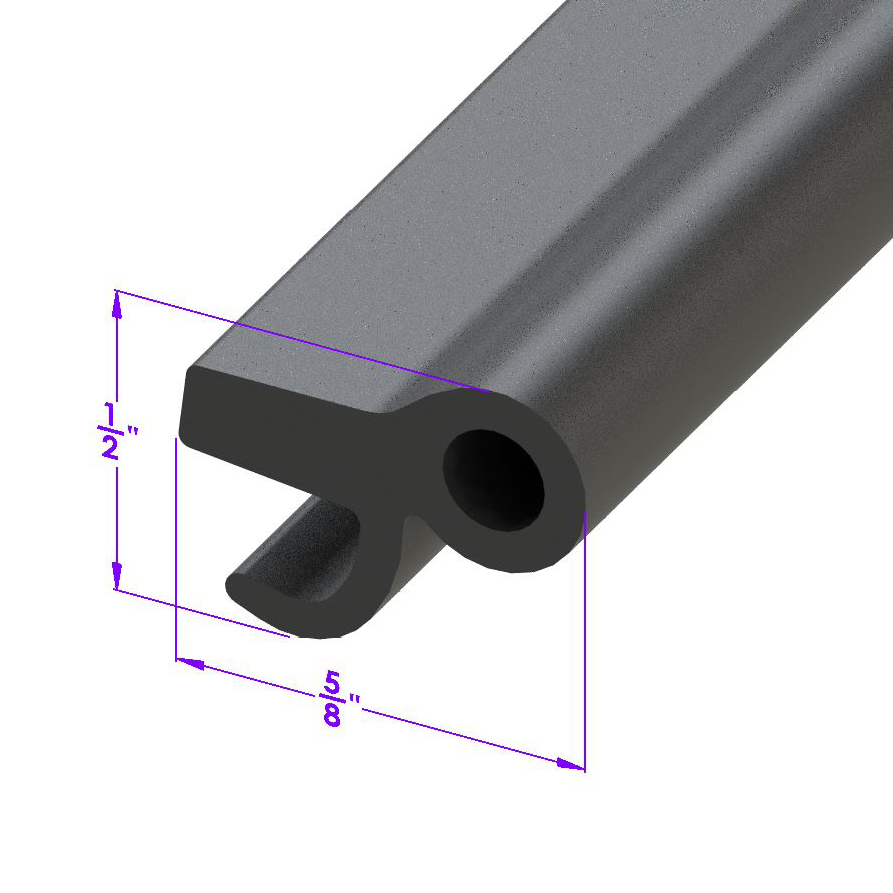 1930 Marmon Model 8-69 Swing-Out Windshield Seal-LP 97-CSwing-Out Windshield Seal. For both one- and two-piece windshields. Sold by the foot
Why Choose Metro?
For over 100 years, Metro Moulded Parts has been the pinnacle of quality in classic car restoration parts. Our commitment to precision and authenticity in every component ensures a perfect fit and an OEM-level appearance.
- Expert Craftsmanship & Quality: Each part is a testament to our dedication to reliability and perfection, crafted from original designs and thoroughly tested.
- Advanced Technology: We use cutting-edge techniques to create flawless, long-lasting parts that surpass others in performance.
- SuperSoft Sponge – The Ultimate Door Seal: Not only are our door seals 30% softer than competitors', but they're also guaranteed to never leak. They effectively reduce wind and road noise, enhancing your classic car's comfort and driving experience.
- Proudly American: Our parts are a product of American craftsmanship, made in the USA with a spirit of excellence and heritage.
- Unrivaled Warranty: We back our products with a 30-year industry-leading warranty, a testament to our confidence in their quality.
Join us in preserving the legacy of classic cars with parts that are crafted for perfection, not just made.