
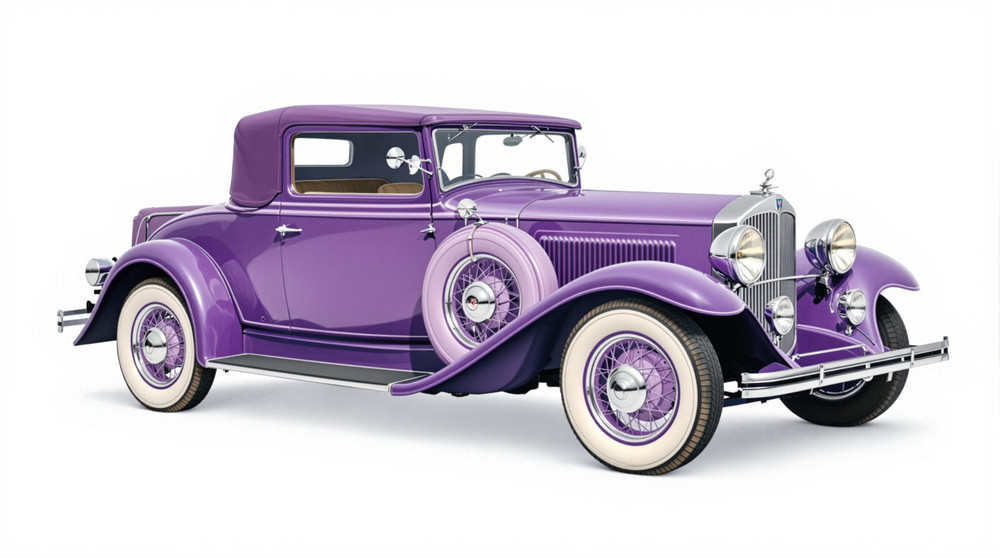
Image of 1930 Marmon Model 8-79, Note: These illustrations use artistic license and may differ from actual historical models.
Performance Metrics
Fundamental Metrics
Emotional Appeal
MMP Rating
| Engine Specifications | |
|---|---|
| Engine: | Straight-8 |
| Displacement: | 315 cubic inches |
| Horsepower: | Estimated 125-130 hp |
| Torque: | Not available |
| Compression Ratio: | Not available |
| Ignition System: | Battery and coil |
| Cooling System: | Water-cooled |
| Performance Specifications | |
| 0-60 Time: | Not available |
| 1/4 Mile Time: | Not available |
| Top Speed: | 85 mph |
| Transmission and Drive | |
| Drive Type: | Rear-wheel drive |
| Transmission Type: | 3-speed manual |
| Fuel and Efficiency | |
| Fuel System Type: | Carburetor |
| MPG: | Not available |
| Dimensions and Brakes | |
| Brakes: | Mechanical drum brakes |
| Wheelbase: | 136 inches |
| Weight: | Estimated 3,500 lbs |
Note: Specifications for classic cars are given to the best of our ability, considering the limited and variant data available.
1930 Marmon Model 8-79: An Eight-Cylinder American Classic
The 1930 Marmon Model 8-79 brought quiet confidence to an American luxury market racing toward the Great Depression. Built by the Marmon Motor Car Company of Indianapolis, Indiana, it paired a smooth straight-eight engine with substantial, carefully finished coachwork. Marmon was already known for engineering ambition: its earlier Marmon Wasp won the first Indianapolis 500 in 1911. The Model 8-79 was a very different sort of machine, designed for comfortable road travel rather than a racecourse, but it carried the same marque’s reputation for thoughtful engineering.
The model arrived at a difficult moment. The stock-market crash of 1929 was squeezing demand for expensive cars, and even prestigious manufacturers were under pressure. Marmon continued to develop its range, however, and soon introduced the celebrated V-16. The 8-79 therefore occupies an interesting place in the company’s story: a refined eight-cylinder car from the end of the 1920s, just before Marmon made one of its boldest engineering statements.
A noteworthy point of distinction is the Model 8-79’s straight-eight layout. In an era when many motorists still drove six-cylinder cars, the long, evenly firing eight promised especially smooth power delivery. That smoothness, rather than outright speed, was central to the car’s appeal.
Elegant Coachwork and a Refined Cabin
The 8-79 wore the long, upright proportions associated with fine American automobiles of the period. Its tall radiator, sweeping front fenders, running boards, generous hood and prominent headlamps gave it a formal presence. Depending on body style, the silhouette could be stately and enclosed or more open and sporting. Details such as bright trim, wire or disc-style wheels, a rear-mounted spare and a carefully shaped body helped distinguish individual examples.
Inside, the emphasis was on comfort and quality rather than modern convenience. Owners could expect a broad bench seat, substantial upholstery, well-finished wood or metal trim, and clearly arranged instruments. Exact materials and fittings varied with body style, equipment and coachwork, but a well-preserved car has the tactile richness of a hand-finished automobile: thick upholstery, polished trim and a solid-feeling dashboard. Compared with a modern car, the cabin is simple, but its craftsmanship is part of the attraction.
Period color choices were generally drawn from restrained combinations of dark blue, green, maroon, black and other deep hues, often set off by contrasting pinstriping or a lighter body accent. Exact factory color lists for a particular 8-79 can be difficult to establish, and surviving cars may have been repainted. Dark, formal colors suit the car’s luxury character, while two-tone combinations make open and sporting bodies especially striking.
Surviving examples and period descriptions associate the 8-79 with a range of closed and open body types, including sedan and coupe forms as well as more open touring or phaeton-style configurations. Availability could vary by year and production source, so not every style should be assumed to have been offered in identical numbers. The enclosed sedan is the natural choice for formal motoring, while an open touring body best displays the long hood and sweeping fenders. Individual body styles and surviving examples are much less common than the general model name suggests.
Engineering in a Changing Automotive Age
The Model 8-79’s significance lies less in one revolutionary gadget than in how it brought established luxury-car engineering together. Its straight-eight engine offered smoother operation than the more common four- and six-cylinder layouts, and its substantial chassis was intended to carry passengers comfortably over the imperfect roads of the day. Marmon’s experience building advanced automobiles gave the model a credible engineering pedigree.
That pedigree stretched back to the Marmon Wasp, the Indianapolis 500 winner associated with driver Ray Harroun and the early use of a rear-view mirror in competition. The Wasp and the 8-79 were not the same kind of vehicle, and the race car’s innovations should not be credited to the 8-79 itself. Still, the family connection helps explain Marmon’s image as a technically adventurous American manufacturer.
Against contemporaries, the 8-79 offered a combination of smooth eight-cylinder power, substantial construction and individualized bodywork. It was not a mass-market car, and it did not have the production scale of Ford or Chevrolet. Its lasting influence is best understood as part of the broader American luxury-car tradition: comfortable, powerful automobiles built to make long-distance travel feel composed and prestigious.
Road Manners and Straight-Eight Performance
The Model 8-79 is generally identified with a straight-eight engine of about 303 cubic inches and an output close to 79 horsepower. Figures can vary among references and surviving cars, so those specifications are best treated as period-model estimates rather than a guarantee for every example. A reasonable estimate for top speed is roughly 70 to 80 mph when the car is in sound mechanical condition. A modern-style 0-to-60 mph time is not consistently documented; based on its power, weight and period gearing, an estimate in the region of 25 to 30 seconds is more credible than a precise factory claim.
On the road, the engine’s character matters more than the numbers. A straight-eight typically delivers power with a smooth, steady cadence, and the 8-79 was designed to gather speed progressively rather than leap away from a stop. The driver works with a manual transmission, a large steering wheel and controls that require more physical input than those of a modern car. There is no power steering, and braking and shifting techniques reward anticipation.
Its long wheelbase and substantial chassis help the car settle into a relaxed rhythm on open roads. It can absorb ordinary road undulations better than a small, light car of its time, though modern expectations for bump isolation would be unfair. On winding roads, the car’s size, tall body and period tires call for measured cornering. In crosswinds, an open body can feel exposed, and the driver must make steady steering corrections. The best experience is unhurried touring, not aggressive driving.
From the driver’s seat, the experience is a blend of mechanical sound and physical presence: the even note of the eight-cylinder engine, the movement of the gear lever, the effort of the steering and the sense of mass responding to the road. A well-sorted 8-79 feels deliberate and composed, but it asks the driver to participate rather than simply point and go.
Living With a Marmon 8-79
Today, the Model 8-79 is principally a show car, touring car and collection centerpiece. A reliable example can take part in vintage motoring events, but its age and parts availability make it a poor choice for routine commuting. Long-distance use is possible when the car has been properly restored and maintained, with careful attention to cooling, ignition, lubrication, tires and brakes.
Maintenance is manageable for an experienced prewar-car owner, but it is not a modern do-it-yourself project with a ready supply of inexpensive replacement parts. Routine servicing calls for period knowledge, suitable tools and access to specialists familiar with early straight-eight engines and chassis systems. Some mechanical work can be handled by a capable owner, but engine rebuilding, body repairs and restoration of rare trim may require professional help. The most important buying advice is to prioritize a complete, well-documented car over an attractive but poorly repaired project.
Reliability depends heavily on condition. A carefully maintained 8-79 can be dependable for appropriate touring, while an unrestored car may need extensive work before it is safe to drive. Brakes, steering, fuel lines, wiring and tires deserve particular scrutiny because deterioration in any of these systems can turn a pleasant outing into a serious problem.
Rare-Car Trivia and Common Misconceptions
The 8-79 benefits from the Marmon name’s association with the 1911 Indianapolis 500, but it was not a competition model and did not set the Wasp’s racing records. Its own appeal was luxury and road-going smoothness. The company’s later V-16 is often the Marmon best known to collectors, which can leave the eight-cylinder 8-79 overlooked despite its place in the marque’s development.
Reliable, model-specific production totals are difficult to confirm from commonly available references. A cautious estimate is that production was in the low thousands or fewer, rather than tens of thousands, with surviving examples far rarer than that original figure suggests. This is an estimate, not a verified factory total. There is no widely cited speed or endurance record associated specifically with the Model 8-79.
One common criticism of the car is practical rather than historical: its size, fuel consumption, manual controls and limited parts supply can make ownership demanding. It is also easy to confuse the 8-79’s story with the more famous Marmon Wasp or the later Marmon Sixteen. Each belongs to a different chapter of the company’s history.
Collector Values and Availability
Values depend strongly on body style, originality, restoration quality, documentation and mechanical condition. As a broad present-day estimate, a project or incomplete example might fall around $20,000 to $40,000, while a sound, usable car could bring roughly $40,000 to $80,000. A high-quality restoration, especially in a desirable or uncommon body style, could exceed $100,000. These are guide ranges rather than formal appraisals, and exceptional cars may sell outside them.
The Model 8-79 is uncommon on the open market. A buyer may wait a long time for the right body style and condition, and cars can change hands privately rather than appear in major public auctions. Production in the low thousands or fewer is a reasonable working estimate, but no precise total should be treated as confirmed without factory records.
Like many prewar classics, the 8-79’s value is influenced more by condition and provenance than by short-term market swings. Top-quality examples have the strongest chance of holding value, while expensive restorations do not always return their full cost. In nominal terms, exceptional cars may appreciate over time, but the market is selective and ownership expenses are substantial. Buyers should purchase for historical interest and enjoyment, not assume that every restoration will be profitable.
Why the 1930 Marmon 8-79 Still Matters
The 1930 Marmon Model 8-79 combines a smooth straight-eight, imposing American styling and the craft of a luxury car built just as the industry was entering a period of upheaval. It was not a mass-market success story or a racing legend in its own right. Instead, it represents the confident engineering and road-going elegance that Marmon brought to its final years as an independent automobile manufacturer.
For collectors, the 8-79 offers more than polished brass and prewar presence. It connects the comfort-focused luxury car to a company with a genuine record of innovation, from the Marmon Wasp to the later V-16. The result is a classic that rewards patience, careful stewardship and a willingness to travel at the pace of another era.
1930 Marmon Model 8-79 Catalog of Parts
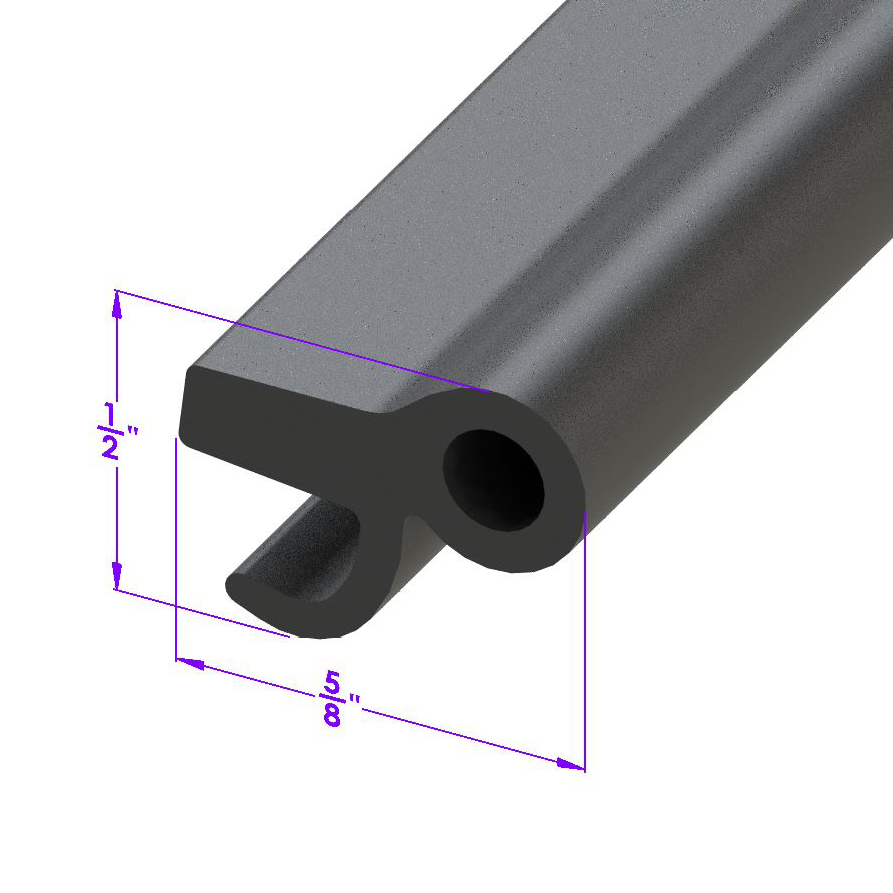 1930 Marmon Model 8-79 Swing-Out Windshield Seal-LP 97-CSwing-Out Windshield Seal. For both one- and two-piece windshields. Sold by the foot
Why Choose Metro?
For over 100 years, Metro Moulded Parts has been the pinnacle of quality in classic car restoration parts. Our commitment to precision and authenticity in every component ensures a perfect fit and an OEM-level appearance.
- Expert Craftsmanship & Quality: Each part is a testament to our dedication to reliability and perfection, crafted from original designs and thoroughly tested.
- Advanced Technology: We use cutting-edge techniques to create flawless, long-lasting parts that surpass others in performance.
- SuperSoft Sponge – The Ultimate Door Seal: Not only are our door seals 30% softer than competitors', but they're also guaranteed to never leak. They effectively reduce wind and road noise, enhancing your classic car's comfort and driving experience.
- Proudly American: Our parts are a product of American craftsmanship, made in the USA with a spirit of excellence and heritage.
- Unrivaled Warranty: We back our products with a 30-year industry-leading warranty, a testament to our confidence in their quality.
Join us in preserving the legacy of classic cars with parts that are crafted for perfection, not just made.