
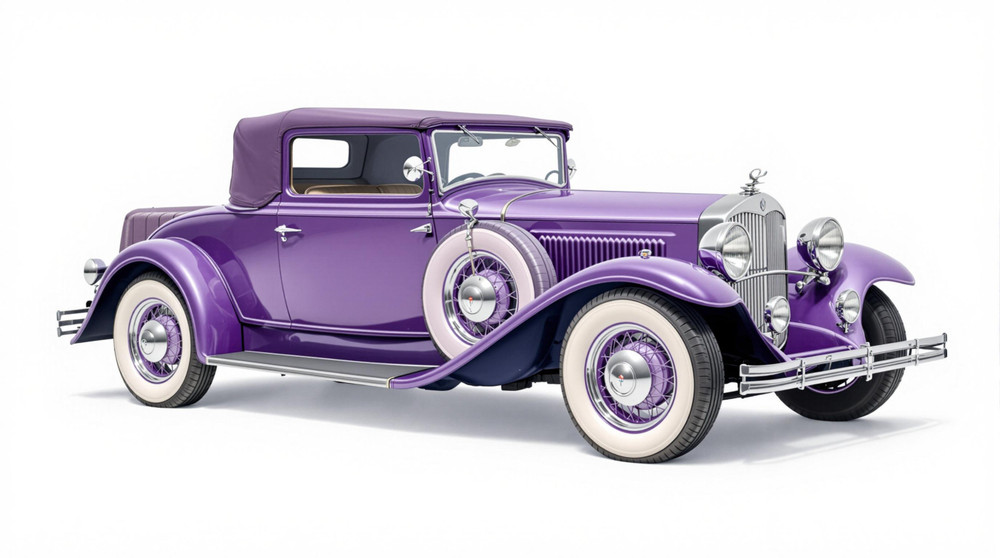
Image of 1931 Marmon Series 16, Note: These illustrations use artistic license and may differ from actual historical models.
Performance Metrics
Fundamental Metrics
Emotional Appeal
MMP Rating
| Engine Specifications | |
|---|---|
| Engine: | Straight 8 |
| Displacement: | 491 cubic inches |
| Horsepower: | Estimated 200-250 HP |
| Torque: | Not available |
| Compression Ratio: | Not available |
| Ignition System: | Battery and coil |
| Cooling System: | Water-cooled |
| Performance Specifications | |
| 0-60 Time: | Not available |
| 1/4 Mile Time: | Not available |
| Top Speed: | 100 mph |
| Transmission and Drive | |
| Drive Type: | Rear-wheel drive |
| Transmission Type: | 3-speed manual |
| Fuel and Efficiency | |
| Fuel System Type: | Carburetor |
| MPG: | Not available |
| Dimensions and Brakes | |
| Brakes: | Mechanical drum brakes |
| Wheelbase: | 145 inches |
| Weight: | Estimated 5,000 lbs |
Note: Specifications for classic cars are given to the best of our ability, considering the limited and variant data available.
1931 Marmon Series 16: A V16 Built Before Its Time
Sixteen cylinders, a hand-finished cabin, and a chassis designed for effortless high-speed travel made the 1931 Marmon Series 16 one of America’s most ambitious luxury cars. Known more commonly as the Marmon Sixteen, it came from the Indianapolis-based Marmon Motor Car Company, whose engineering-minded founder, Howard C. Marmon, had been developing advanced automobiles since the early 1900s.
The Sixteen arrived during the Great Depression, when demand for expensive automobiles was shrinking fast. Its engineering was anything but cautious: a 491-cubic-inch V16 delivered around 200 horsepower, giving the Marmon a place among the most powerful American passenger cars of its day. One intriguing detail is that Marmon had begun work on a V16 before Cadillac introduced its own celebrated V16, but Cadillac beat Marmon to the showroom. The Marmon’s later arrival did not make it less ambitious. It made it a rare alternative for buyers who wanted something extraordinary and less familiar.
Long Hood, Bespoke Coachwork
The Series 16 had the unmistakable proportions of a great prewar luxury car: a very long hood, tall radiator, sweeping fenders, and a cabin set well back on the chassis. Its nose carried a bold, upright presence, while details such as the headlamps, running boards, and polished trim gave the car a formal, carefully tailored appearance. Depending on the body, the silhouette could be stately and chauffeur-oriented or more sporting and open.
Inside, the Marmon was finished to match its price and purpose. Buyers could expect fine upholstery, polished wood trim, quality carpeting, and substantial metal fittings. Exact materials and details varied with the body and individual order, particularly on cars built with custom coachwork. This was a luxury car intended to feel refined at speed, not merely impressive while parked.
The range included closed and open body styles such as sedans, coupes, convertibles, phaetons, and formal town-car or limousine types. Coachbuilders, including LeBaron, supplied bodies for some examples. The most visually memorable cars are often the open and convertible styles, where the long hood and low, sweeping fenders are on full display. There was no single body style that defined every Series 16; the variety is part of the model’s appeal.
Paint choices were tied to the body and the customer’s preferences rather than a simple modern-style color menu. Dark, formal shades such as black, deep blue, maroon, and green suit the car’s character, but individual cars could be specified in other finishes. On a custom-bodied automobile, color was part of the commission.
V16 Engineering and Innovation
The Marmon’s central engineering achievement was its 45-degree V16 engine. Displacing approximately 491 cubic inches, it used overhead valves and an aluminum-alloy construction that helped make this huge engine more manageable than a comparable iron design. Output is commonly quoted at about 200 horsepower. In 1931, that was a remarkable figure for a road car, especially one designed to deliver smooth, quiet power rather than a sporting engine’s high-strung character.
A V16’s appeal was not just its cylinder count. With sixteen cylinders contributing power pulses, the engine could run with exceptional smoothness and pull strongly across a broad range of speeds. The Marmon paired that engine with a conventional three-speed manual transmission and a substantial luxury-car chassis. Its engineering reflected the company’s long interest in lightweight materials and advanced design, rather than a strategy of simply building the biggest possible automobile.
Why the Marmon Sixteen Matters
The Series 16 belongs to the brief American V16 era, when leading manufacturers competed to build the ultimate prestige car. Cadillac’s V16 had already established the concept in the marketplace, while Marmon offered a technically distinctive rival. The competition showed how far American manufacturers were willing to go in the pursuit of smoothness, power, and prestige just before the Depression reshaped the industry.
The Marmon did not sell in numbers large enough to transform the wider market, and its influence was less about a specific feature copied by mass-market cars than about the engineering ambition it represented. Its aluminum V16 demonstrated that a manufacturer could pursue lightness and sophistication even in an enormous luxury automobile. Today, the car stands as a reminder that American automotive innovation in the early 1930s was not limited to the best-known Detroit brands.
Performance on the Road
Period and reference figures commonly put the Marmon Sixteen’s top speed at around 100 mph, though actual performance depended on body style, gearing, condition, and road surface. A precise, verified factory 0-to-60-mph figure is difficult to establish. Given the car’s weight and period transmission, a reasonable modern estimate is roughly 15 to 20 seconds, rather than a definitive factory claim. Its strongest quality was effortless, high-speed cruising, not quick launches from a standstill.
Behind the wheel, the V16’s character would be more about smoothness than drama. The engine’s note is a deep, restrained mechanical hum, with the exhaust and intake growing more pronounced as the car works harder. The long wheelbase helps the chassis settle over rolling pavement, while its weight gives it a substantial, steady feel. On a winding road, however, a Series 16 is a large prewar automobile, not a nimble sports car. The driver must plan braking and cornering well ahead, and narrow roads can make its dimensions obvious.
Like other cars of its era, it will communicate bumps and road texture more directly than a modern luxury sedan. A well-maintained example should feel composed on ordinary roads, but tire condition, suspension wear, brake adjustment, and steering play matter greatly. Driving one is an active experience: the driver works a manual gearbox, manages a large steering wheel, and stays attentive to the car’s size and mechanical responses.
Living With a Marmon Sixteen
Today, a Series 16 is best suited to touring, concours events, historic-car gatherings, and carefully planned pleasure drives. It is not a realistic daily driver for most owners. Its size, age, fuel consumption, and need for specialist care make regular modern traffic use demanding, while its rarity makes preservation a priority.
Maintenance is a specialist undertaking. The V16’s parts and systems are far more complex than those of a common six-cylinder car, and some components may need to be repaired or fabricated rather than purchased off the shelf. Routine work is manageable for an experienced vintage-car mechanic, but the average owner should not expect easy parts-store repairs. A thorough inspection, careful lubrication, cooling-system attention, and correct ignition setup are essential. Reliability depends heavily on the quality of restoration and the skill of whoever maintains the car.
Rare Facts and Common Criticisms
The Marmon Sixteen is often associated with the high point of the American multi-cylinder luxury-car race, but it was a commercial outlier. Estimates commonly place total production at about 400 cars across its short 1931-to-1933 run. Exact totals vary among references, so that figure is best treated as an informed estimate rather than a precise factory count. Only a portion of those cars survive, and individual body styles are rarer still.
There is no widely recognized speed or endurance record that defines the Series 16, nor is there a single celebrity-owner story that overshadows its engineering. Its most notable historical circumstance is its timing: it entered the market as the Depression was making costly luxury cars increasingly difficult to sell. Marmon’s passenger-car business ended in 1933, giving the Sixteen a remarkably short production life.
Its main criticisms are practical ones. The car was expensive, large, complex, and introduced into a collapsing luxury market. Today, parts availability and specialist labor can make ownership costly. The V16 is also not a lightweight sports-car engine, and the car’s mass and period braking and handling characteristics call for a measured driving style. Those drawbacks are real, but they are inseparable from the scale and ambition that make the Marmon special.
Collector Values and Availability
The Marmon Series 16 is exceptionally rare on the open market. Cars appear infrequently, and condition, provenance, originality, restoration quality, and coachwork can create enormous differences in value. As a broad 2026 estimate, a running but less extensively restored example might fall around $400,000 to $700,000. A high-quality restoration or especially desirable body could bring roughly $700,000 to $1.2 million, with an exceptional car potentially exceeding that range at the right auction. These are estimates, not guaranteed sale prices.
Values for top-tier prewar cars can be uneven because the pool of buyers is small and each car is effectively its own case. Over the long term, the Marmon’s rarity and engineering significance support strong collector interest, but it is not a quick or predictable investment. Restoration costs are substantial, and originality or documented history can matter as much as the quality of the paint and upholstery. Prospective buyers should commission a marque specialist to inspect the engine, chassis, coachwork, and paperwork before making an offer.
A Lasting American V16
The 1931 Marmon Series 16 combined a remarkably smooth aluminum V16, imposing prewar proportions, and a choice of individual coachwork at a moment when the luxury-car market was under extraordinary pressure. Its short production run limited its reach, but its engineering ambition secured its place in automotive history. More than a rare collectible, the Marmon is a rolling expression of an era when manufacturers still believed the ultimate road car might simply need more cylinders, more craftsmanship, and the courage to build something few people could afford.
1931 Marmon Series 16 Catalog of Parts
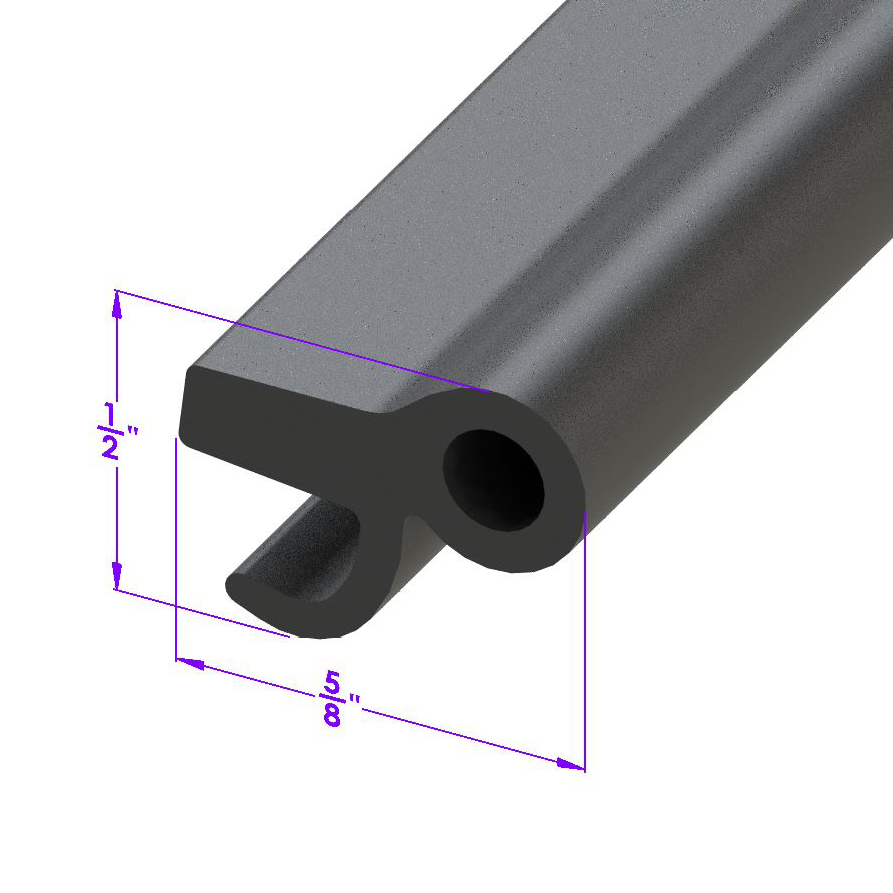 1931 Marmon Series 16 Swing-Out Windshield Seal-LP 97-CSwing-Out Windshield Seal. For both one- and two-piece windshields. Sold by the foot
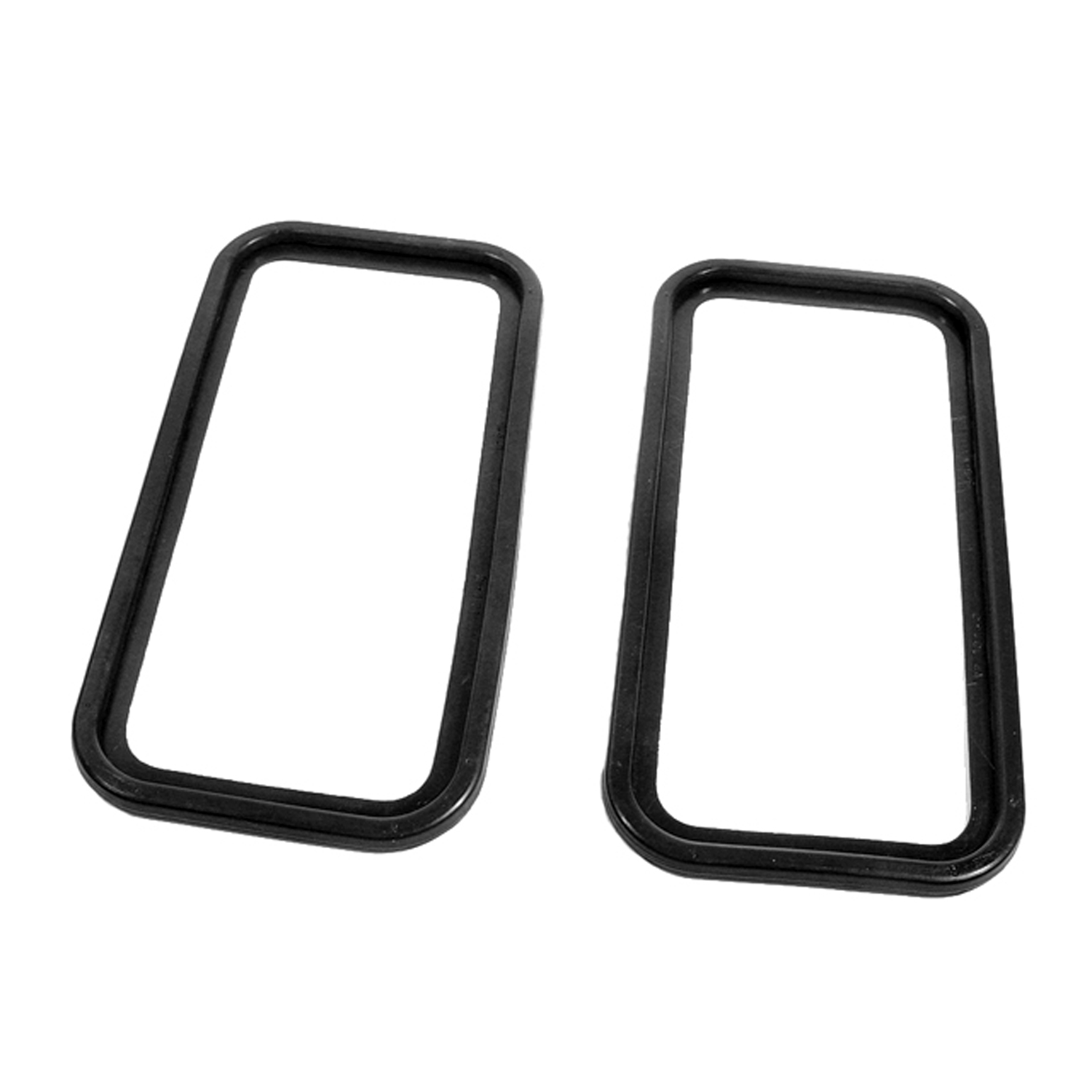 1931 Marmon Series 16 Cowl Vent Seals. 3-1/2" I.D. wide X 8-1/4" I.D. long-RP 101-CCowl Vent Seals. 3-1/2" I.D. wide X 8-1/4" I.D. long. Pair
Why Choose Metro?
For over 100 years, Metro Moulded Parts has been the pinnacle of quality in classic car restoration parts. Our commitment to precision and authenticity in every component ensures a perfect fit and an OEM-level appearance.
- Expert Craftsmanship & Quality: Each part is a testament to our dedication to reliability and perfection, crafted from original designs and thoroughly tested.
- Advanced Technology: We use cutting-edge techniques to create flawless, long-lasting parts that surpass others in performance.
- SuperSoft Sponge – The Ultimate Door Seal: Not only are our door seals 30% softer than competitors', but they're also guaranteed to never leak. They effectively reduce wind and road noise, enhancing your classic car's comfort and driving experience.
- Proudly American: Our parts are a product of American craftsmanship, made in the USA with a spirit of excellence and heritage.
- Unrivaled Warranty: We back our products with a 30-year industry-leading warranty, a testament to our confidence in their quality.
Join us in preserving the legacy of classic cars with parts that are crafted for perfection, not just made.