
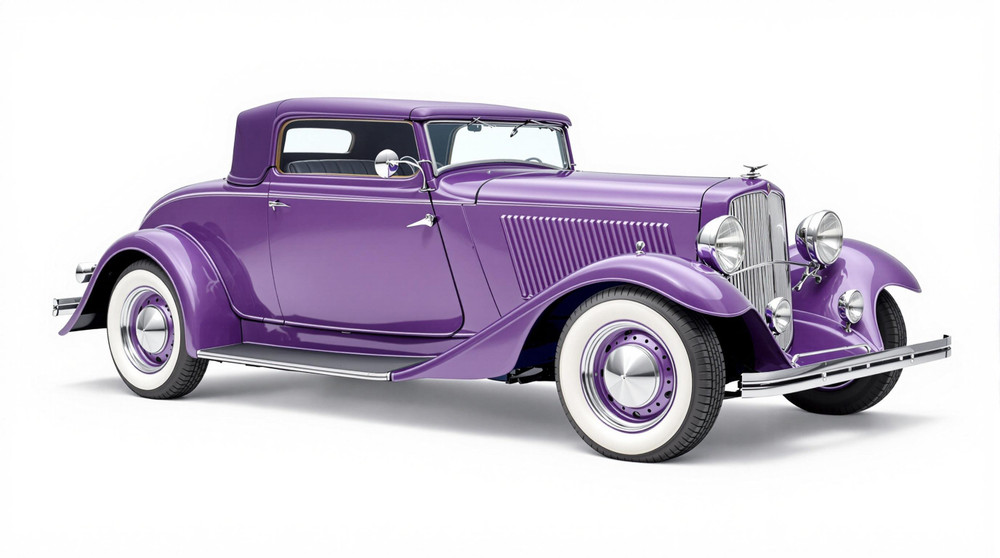
Image of 1932 Marmon Series 125, Note: These illustrations use artistic license and may differ from actual historical models.
Performance Metrics
Fundamental Metrics
Emotional Appeal
MMP Rating
| Engine Specifications | |
|---|---|
| Engine Options: | Straight-8 |
| Displacement Range: | 340 cubic inches |
| Horsepower Range: | Estimated 125-135 hp |
| Torque: | Not available |
| Compression Ratio: | Not available |
| Ignition System: | Battery and coil |
| Cooling System: | Water-cooled |
| Performance Specifications | |
| 0-60 Time: | Not available |
| 1/4 Mile Time: | Not available |
| Top Speed: | 85 mph |
| Transmission and Drive | |
| Drive Type: | Rear-wheel drive |
| Transmission Type: | 3-speed manual |
| Fuel and Efficiency | |
| Fuel System Type: | Carburetor |
| MPG: | Not available |
| Dimensions and Brakes | |
| Brakes: | Mechanical drum brakes |
| Wheelbase: | 136 inches |
| Weight: | 3,400 lbs |
Note: Specifications for classic cars are given to the best of our ability, considering the limited and variant data available.
1932 Marmon Series 125: Indianapolis Luxury in a Hard Year
The 1932 Marmon Series 125 was a big, beautifully engineered American luxury car built when the country’s appetite for expensive automobiles was collapsing. Its long hood concealed a powerful straight-eight, while its roomy cabin and tailored bodywork put it in competition with prestige names such as Packard and Cadillac. The Series 125 also carries a distinction worth clearing up: despite sharing a showroom with Marmon’s celebrated Sixteen, it was an eight-cylinder model, not a V16.
Marmon’s roots lay in Indianapolis, where the Marmon family had built machinery before entering the automobile business. The company became especially well known for engineering, and the Marmon Wasp won the 1911 Indianapolis 500. That earlier racing achievement helped establish the marque’s reputation, but the Series 125 was built for the road, not the track. Its story is especially compelling because it arrived during the Great Depression, when even wealthy buyers were reconsidering major purchases and the survival of independent luxury-car makers was uncertain.
Long Hood, Formal Lines, and Coachbuilt Style
The Series 125 had the classic proportions of a high-end American automobile of the early 1930s: a tall, upright radiator, sweeping front fenders, a long engine compartment, and a passenger cabin set well back from the front axle. Its overall effect was stately rather than sporty. Details varied with the body, but bright trim, carefully shaped lamps, a distinctive grille, and generous running boards gave the car the presence expected of a luxury chassis.
Inside, the emphasis was on space and workmanship. Depending on the body and trim specification, owners could expect broad seats, substantial upholstery, polished wood or wood-grain trim, quality carpeting, and a well-finished instrument panel. These were cars intended for comfortable long-distance travel, and the cabin was arranged to feel more like a private sitting room than a basic transport compartment. Original materials and fittings differ from car to car, particularly because some bodies were supplied or finished by specialist coachbuilders.
Paint choices could be tailored to the body and buyer, so there is no single definitive Series 125 color palette. Black and deep, formal shades such as dark blue, maroon, and green suit the car’s period character, while two-tone schemes could emphasize the division between body panels and fenders. On a surviving car, the original build record or paint evidence is more reliable than assuming a particular color was standard.
Series 125 cars appeared in several closed and open body styles, including sedan and coupe forms, with more formal or sporting configurations available depending on the year and coachwork. Exact offerings can vary across surviving catalog references. The enclosed sedan is perhaps the most familiar expression of the model: practical for its era, comfortable for passengers, and well matched to the 125’s dignified proportions. Open bodies have a different appeal, bringing the car’s long fenders and sweeping lines into full view.
Straight-Eight Engineering, Not a Marmon Sixteen
The Series 125’s central technical feature was its large inline eight-cylinder engine, generally listed at about 385 cubic inches and 125 horsepower. The engine gave the car the relaxed, low-speed pulling power expected of a luxury automobile. A conventional three-speed manual transmission sent power to the rear wheels. As with many cars of the period, the Series 125’s engineering was intended to deliver smooth, usable power rather than sharp acceleration or high-revving performance.
Marmon’s best-known engineering headline was its V16, but that engine belonged to the separate Marmon Sixteen. The distinction matters: the Series 125 offered substantial straight-eight power without the complexity and exceptional cost of the V16 flagship. Marmon’s broader engineering culture, however, is part of the 125’s appeal. The marque had long competed by treating the automobile as a complete engineering project, not simply an engine wrapped in fashionable bodywork.
How the Marmon 125 Changed the Luxury-Car Conversation
The Series 125 did not reshape automotive design on its own, but it represents an important stage in the evolution of the American luxury car. By the early 1930s, buyers expected more than size and ornament. They wanted smooth engines, comfortable cabins, confident road manners, and the choice of a body suited to their needs. The Marmon delivered that package with the understated engineering focus for which the company was known.
What set it apart from many contemporaries was the combination of a large straight-eight and Marmon’s independent-maker character. The company could offer a distinctive alternative to the dominant prestige brands, while its Indianapolis heritage gave the name genuine performance credentials. The Series 125 also illustrates the pressures facing luxury manufacturers during the Depression: excellent engineering could earn admiration, but it could not shield a small independent company from shrinking demand and high production costs.
Road Performance and Driving Feel
Period performance figures are not consistent across every body style and source, so any modern estimate should be treated as approximate. A healthy Series 125 may reach roughly 80 to 85 mph, while a 0-to-60 mph run is likely to take around 20 to 25 seconds. Body weight, gearing, engine condition, tire choice, and altitude all make a meaningful difference. These estimates describe a large 1932 luxury car, not a modern performance benchmark.
On the road, the straight-eight’s main virtue is its steady delivery. The engine should feel strongest when allowed to build speed smoothly, rather than being hurried through the gears. Expect a deep mechanical note, substantial engine presence, and a period driving rhythm that rewards anticipation. The driver must work the manual gearbox, read the road well ahead, and allow extra room for braking compared with a modern car.
The long wheelbase helps the Marmon settle into a composed ride on open roads, though its suspension cannot erase sharp bumps in the way a modern luxury car can. On winding roads, the Series 125 is best driven with measured steering inputs. Its size and weight favor a flowing pace over quick direction changes, and strong crosswinds can be noticeable on tall-bodied examples. In short, it feels most at home cruising comfortably rather than chasing a stopwatch.
Owning and Maintaining a Series 125
Today, the Series 125 is primarily a collector car, a show vehicle, or a touring car for owners comfortable with prewar machinery. It is not an easy daily driver by modern standards. Traffic, limited braking performance, period lighting, and the lack of contemporary safety equipment all require extra attention. A well-sorted example can still make enjoyable club tours and weekend drives, provided the route and pace suit the car.
Routine maintenance is familiar in principle but can be demanding in practice. The engine needs regular attention to lubrication, ignition, cooling, and fuel delivery, while the chassis and body require checks appropriate to a car of this age. Replacement parts may need to be sourced through marque specialists, rebuilt, or fabricated. The straight-eight is not automatically difficult to service, but it is not a car for an owner expecting every repair to be handled with off-the-shelf parts at a local shop.
Condition and restoration quality matter enormously. A car that has been stored poorly may need extensive work on its engine, drivetrain, wiring, brakes, upholstery, and body structure. Before buying, a specialist inspection should confirm that the engine is correct or properly documented, the chassis is sound, the body is accurately identified, and the restoration has not hidden structural problems.
Fascinating Marmon Series 125 Facts
The Series 125’s name is a useful clue to its place in the range: it is commonly associated with the engine’s 125-horsepower rating. It should not be confused with Marmon’s far rarer and more dramatic Sixteen. The two models show how the company served different luxury-car buyers, from those seeking a powerful straight-eight to those willing to pay for a flagship V16.
The Marmon Wasp’s 1911 Indy 500 victory is another memorable piece of the marque’s history. That car is famous for its streamlined body and for making early use of a rear-view mirror, but those details belong to the Wasp, not the Series 125. The connection is still meaningful: both cars reflect a company that was willing to apply engineering ideas in distinctive ways.
There is no widely accepted model-specific production total for the 1932 Series 125. A reasonable working estimate is roughly 500 to 800 cars across the relevant production period, but surviving records and sources can group Marmon output by year or model range rather than providing a definitive Series 125 count. The number of surviving, well-documented examples is smaller still.
A common criticism of the car is also part of its historical context: it was expensive, large, and introduced at a moment when the market was turning sharply against costly automobiles. Its weight and period braking and handling feel can also surprise drivers accustomed to postwar classics. The Series 125’s rarity is not evidence that it was a failure of engineering. It is a reminder that a fine automobile could still be caught by poor timing and difficult economics.
Collector Values and Availability
As of 2026, a broad estimate for a Marmon Series 125 is about $30,000 to $55,000 for a project or usable driver, roughly $55,000 to $100,000 for a strong, well-restored example, and potentially $100,000 to $150,000 or more for an exceptional car with desirable coachwork, excellent documentation, and a high-quality restoration. These are indicative ranges, not a formal appraisal. A car’s body style, originality, mechanical condition, provenance, and the quality of its restoration can move the price substantially.
Series 125s are uncommon on the open market, and buyers may wait a long time for the right example. Values for well-presented prewar cars tend to depend more on condition and specialist demand than on a simple year-by-year trend. The broader market has favored rare, historically significant automobiles, but restoration costs can exceed the value added to a modest example. The strongest long-term prospects generally belong to cars with sound history, correct details, and work documented by recognized specialists.
Why the 1932 Marmon Series 125 Still Matters
The Marmon Series 125 combines a substantial straight-eight, elegant prewar proportions, and the individuality of an independent American luxury maker. It was comfortable and impressive in its day, but it also arrived during a period when even the best engineering faced formidable commercial pressures. Its place in Marmon’s lineup, alongside the celebrated Sixteen and the company’s earlier racing achievements, makes it more than simply a rare old sedan.
For collectors, the Series 125 offers a less familiar route into the golden age of American motoring: a car with genuine presence, meaningful engineering, and a story shaped by both ambition and adversity. It is a reminder that automotive history is not written only by the companies that survived, but also by remarkable cars like the Marmon that dared to stand apart.
1932 Marmon Series 125 Catalog of Parts
 1932 Marmon Series 125 Cowl Vent Seals. 3-1/2" I.D. wide X 8-1/4" I.D. long-RP 101-CCowl Vent Seals. 3-1/2" I.D. wide X 8-1/4" I.D. long. Pair
Why Choose Metro?
For over 100 years, Metro Moulded Parts has been the pinnacle of quality in classic car restoration parts. Our commitment to precision and authenticity in every component ensures a perfect fit and an OEM-level appearance.
- Expert Craftsmanship & Quality: Each part is a testament to our dedication to reliability and perfection, crafted from original designs and thoroughly tested.
- Advanced Technology: We use cutting-edge techniques to create flawless, long-lasting parts that surpass others in performance.
- SuperSoft Sponge – The Ultimate Door Seal: Not only are our door seals 30% softer than competitors', but they're also guaranteed to never leak. They effectively reduce wind and road noise, enhancing your classic car's comfort and driving experience.
- Proudly American: Our parts are a product of American craftsmanship, made in the USA with a spirit of excellence and heritage.
- Unrivaled Warranty: We back our products with a 30-year industry-leading warranty, a testament to our confidence in their quality.
Join us in preserving the legacy of classic cars with parts that are crafted for perfection, not just made.