
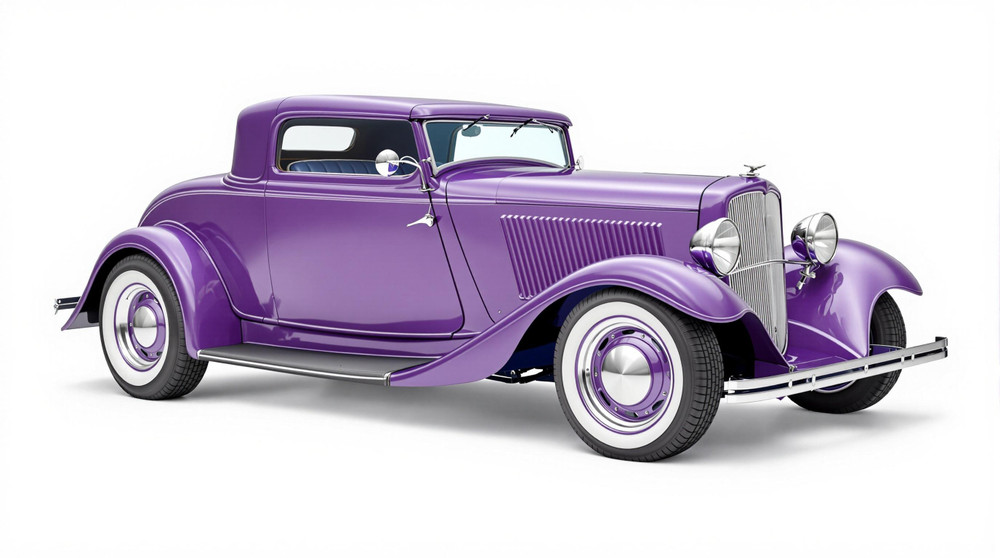
Image of 1932 Marmon Series 16, Note: These illustrations use artistic license and may differ from actual historical models.
Performance Metrics
Fundamental Metrics
Emotional Appeal
MMP Rating
| Engine Specifications | |
|---|---|
| Engine: | Single option - V16 |
| Displacement: | 491 cubic inches (8.0 liters) |
| Horsepower: | Estimated 200-250 HP |
| Torque: | Not available |
| Compression Ratio: | Not available |
| Ignition System: | Battery and coil |
| Cooling System: | Liquid-cooled |
| Performance Specifications | |
| 0-60 Time: | Not available |
| 1/4 Mile Time: | Not available |
| Top Speed: | Estimated 100-115 mph |
| Transmission and Drive | |
| Drive Type: | Rear-wheel drive |
| Transmission Type: | 3-speed manual |
| Fuel and Efficiency | |
| Fuel System Type: | Carburetor |
| MPG: | Not available |
| Dimensions and Brakes | |
| Brakes: | Mechanical drum brakes |
| Wheelbase: | 145 inches |
| Weight: | Estimated 5,000-6,000 lbs |
Note: Specifications for classic cars are given to the best of our ability, considering the limited and variant data available.
1932 Marmon Series 16: America’s V16 Grand Tourer
Sixteen cylinders, an aluminum engine, and a long, unmistakable hood made the 1932 Marmon Series 16 one of the boldest American automobiles of its era. Built by the Marmon Motor Car Company of Indianapolis, Indiana, it was a high-priced luxury car designed to take on the finest offerings from Cadillac and Packard. Its most intriguing twist is that Marmon’s V16 arrived just after Cadillac had introduced its own celebrated sixteen-cylinder car, turning the early 1930s into a rare contest for the title of America’s ultimate multi-cylinder automobile.
The Series 16 grew from the work of Howard Marmon, an engineer and automotive pioneer who had been developing ideas for a sixteen-cylinder engine since the late 1920s. The car reached production for the 1931 model year and continued into 1933, as the Great Depression made the market for extravagant automobiles increasingly difficult. The 1932 model was therefore both a technical showcase and a product of a precarious moment in American luxury-car history.
Long-Hood Style and Coachbuilt Detail
The Marmon’s proportions announce its purpose before the engine is even heard. A long hood stretches forward from the passenger compartment, while the tall, carefully shaped radiator grille and sweeping front fenders give the car an imposing but composed profile. The hood sides and broad fenders emphasize the car’s length, and the bodywork balances formal luxury with the cleaner, more streamlined styling that was beginning to influence cars of the period.
Marmon offered the Series 16 in several body configurations, including sedans, coupes, convertible coupes, and more formal town-car and limousine styles. Availability varied by model year and coachwork order. Open cars showed off the sweeping fenders and long body to particular effect, while the closed sedan and limousine versions suited buyers who wanted privacy and chauffeur-driven comfort. LeBaron was among the coachbuilders associated with the Sixteen, and individual cars could differ in trim and finish.
Inside, the Series 16 delivered the materials expected of a top-tier automobile: carefully finished wood trim, substantial upholstery in leather or cloth, and a roomy cabin designed for long-distance travel. The dashboard and controls were arranged for the driver, but the overall atmosphere was one of quiet, tailored formality. Buyers could specify finishes and colors, so there was no single universal palette. Deep blues, greens, maroons, and black were appropriate choices for the period, with contrasting or two-tone paint adding distinction where ordered.
Aluminum V16 Engineering
The centerpiece was a 491-cubic-inch, or approximately 8.0-liter, V16. Its all-aluminum construction was an important engineering statement at a time when most large American engines relied heavily on cast iron. The 45-degree engine layout kept the powerplant relatively compact for its cylinder count, and the design used overhead valves. Marmon quoted output at about 200 horsepower, an extraordinary figure for a production passenger car of the early 1930s.
The engine was paired with a three-speed manual transmission. Four-wheel hydraulic brakes helped manage the car’s considerable mass and speed, while conventional leaf-spring suspension reflected the mechanical practice of the day. The result combined advanced engine design with familiar chassis technology: a sophisticated powerplant in a substantial, traditional luxury-car platform.
What Made the Marmon Sixteen Matter
The Series 16 was more than a cylinder-count stunt. Its aluminum V16 demonstrated how far a manufacturer could push lightweight engine construction and smooth power delivery in a road car. Sixteen cylinders produced a naturally refined feel, with closely spaced power impulses that made the engine exceptionally smooth compared with many contemporary straight-eight or V8 designs.
Its chief rival was Cadillac’s V16, introduced in 1930. Cadillac had the advantage of arriving first, but Marmon offered a distinctive engineering alternative and a strikingly individual design. The Sixteen’s importance lies partly in that rivalry: it showed that American luxury buyers could choose between competing approaches to the ultimate prestige car. Its influence was more a demonstration of engineering ambition than a direct blueprint for later mass-produced vehicles. The Depression, high manufacturing costs, and a shrinking luxury market prevented the Marmon from becoming a lasting commercial template.
Performance on the Road
Period performance figures and modern test results vary, so exact acceleration numbers should be treated as estimates. With roughly 200 horsepower, the Marmon Sixteen was capable of approaching 100 mph in suitable conditions. A 0-to-60-mph time in the neighborhood of 16 to 20 seconds is a reasonable estimate for a large, heavy car of this type, but it was not a factory-style headline figure and depends on body style, gearing, condition, and testing method.
On a smooth road, the V16’s defining quality is its effortless delivery. Rather than needing to be pushed hard, it gathers speed with a deep, even exhaust note and a notably smooth mechanical rhythm. The three-speed gearbox asks the driver to plan shifts, while the car’s size and weight reward measured inputs. Its leaf-spring suspension can absorb ordinary road imperfections, but sharp bumps still remind occupants that this is a heavy prewar automobile, not a modern touring car.
On winding roads, the driver must account for the long wheelbase, substantial mass, and period steering and braking feel. It is best enjoyed at a flowing pace, where the engine’s reserve and the car’s dignified ride come into their own. Wind, road surface, tire condition, and the individual car’s restoration all have a noticeable effect on how confidently it feels at speed.
Living With a Marmon Series 16
Today, a Series 16 is principally a collector car, concours entrant, or carefully used touring machine. Its size, rarity, and mechanical complexity make it an impractical daily driver. Owners who take one on the road typically do so for special events, club tours, and carefully planned drives rather than routine commuting.
Maintenance calls for specialist knowledge, especially around the V16 engine, cooling system, ignition, and the correct adjustment of the transmission and brakes. Routine service is straightforward in concept, but parts are not the sort of items an owner can reliably pick up at a local parts counter. Repair work may require a marque expert, a specialist machine shop, or custom fabrication. A well-restored car can be dependable for measured use, but age, infrequent running, and scarce components make careful inspection essential.
Rare Details and Marmon Trivia
The Marmon Sixteen belongs to the same company that built the Marmon Wasp, winner of the first Indianapolis 500 in 1911. That famous racer was a very different machine, but it reflects Marmon’s engineering-minded roots. It is also often credited with using an early rearview mirror in competition, a small innovation that became indispensable on the road.
The Sixteen itself was a road-going luxury car, not a production racer. Its speed was impressive, but its purpose was smooth, high-speed travel and prestige rather than competition. The company’s difficulties during the Depression are central to the car’s story: Marmon ended automobile production in 1933, leaving the Series 16 as one of the marque’s final and most ambitious creations.
Exact production totals are difficult to establish, and surviving cars are scattered among private collections and museums. A reasonable estimate is roughly 400 to 450 Marmon Sixteens across the 1931 to 1933 production run, with perhaps around 200 to 250 built for the 1932 model year. These are estimates, not definitive factory totals. There is no dependable record of a single celebrity owner or a major speed or endurance record that defines the model.
Common criticisms are practical ones: the Sixteen is large, thirsty, expensive to maintain, and dependent on parts and expertise that are increasingly scarce. Its mechanical sophistication is also a double-edged quality. The V16 is the car’s greatest attraction, but it makes restoration and major repairs more demanding than work on a more common straight-eight or V8.
Collector Value and Availability
The Marmon Series 16 is exceptionally rare on today’s market. Complete, documented examples do not appear often, and the value of any individual car depends heavily on its body style, originality, restoration quality, provenance, and mechanical condition. As a broad present-day estimate, a sound but less exceptional car might fall around $250,000 to $500,000. A high-quality restored example could bring roughly $500,000 to $1 million or more, particularly if it has desirable coachwork and strong documentation. These figures are guides rather than fixed prices, since a small number of sales can move the market substantially.
Like other rare prewar luxury cars, the Series 16 does not follow a simple, predictable price curve. Top examples can hold strong appeal among advanced collectors, but the limited buyer pool and substantial upkeep costs can make sales slow. Its scarcity and engineering significance support long-term interest, while the cost of restoration can limit demand. Buyers should budget for inspection and specialist advice, not just the purchase price.
A Lasting American Luxury-Car Statement
The 1932 Marmon Series 16 brought together dramatic proportions, carefully finished coachwork, and one of the most ambitious engines of its time. Its 491-cubic-inch V16 made it a rival to Cadillac’s flagship, while its brief production life captured the end of an era when American manufacturers competed to build ever more powerful and elaborate luxury cars.
Today, the Marmon is not simply a rare automobile with an impressive cylinder count. It is a rolling piece of engineering history, created by a company willing to pursue an extraordinary idea just as the market for such ideas was collapsing. Hear that V16 settle into a smooth, purposeful rhythm, and the Series 16 makes its case all over again.
1932 Marmon Series 16 Catalog of Parts
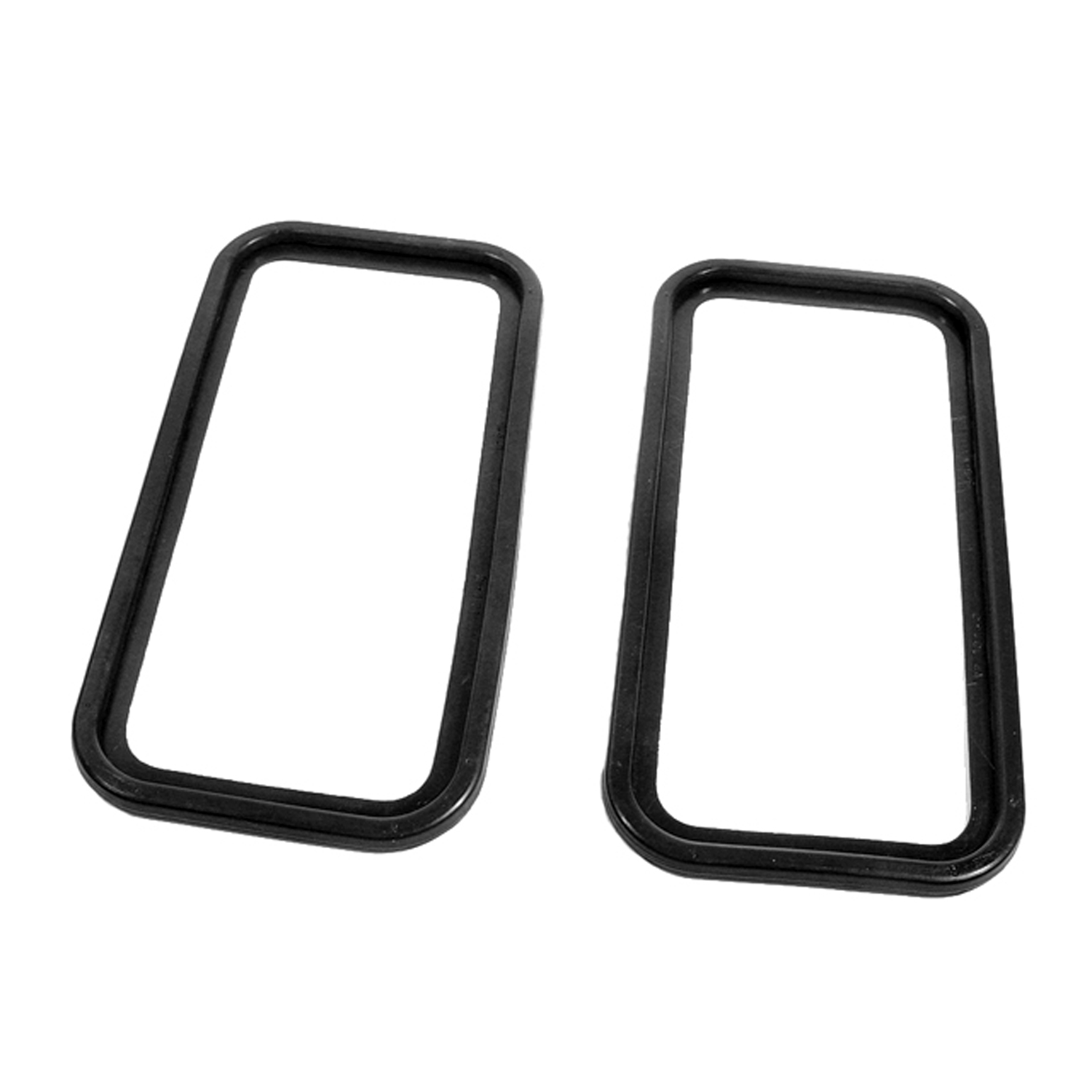 1932 Marmon Series 16 Cowl Vent Seals. 3-1/2" I.D. wide X 8-1/4" I.D. long-RP 101-CCowl Vent Seals. 3-1/2" I.D. wide X 8-1/4" I.D. long. Pair
Why Choose Metro?
For over 100 years, Metro Moulded Parts has been the pinnacle of quality in classic car restoration parts. Our commitment to precision and authenticity in every component ensures a perfect fit and an OEM-level appearance.
- Expert Craftsmanship & Quality: Each part is a testament to our dedication to reliability and perfection, crafted from original designs and thoroughly tested.
- Advanced Technology: We use cutting-edge techniques to create flawless, long-lasting parts that surpass others in performance.
- SuperSoft Sponge – The Ultimate Door Seal: Not only are our door seals 30% softer than competitors', but they're also guaranteed to never leak. They effectively reduce wind and road noise, enhancing your classic car's comfort and driving experience.
- Proudly American: Our parts are a product of American craftsmanship, made in the USA with a spirit of excellence and heritage.
- Unrivaled Warranty: We back our products with a 30-year industry-leading warranty, a testament to our confidence in their quality.
Join us in preserving the legacy of classic cars with parts that are crafted for perfection, not just made.