
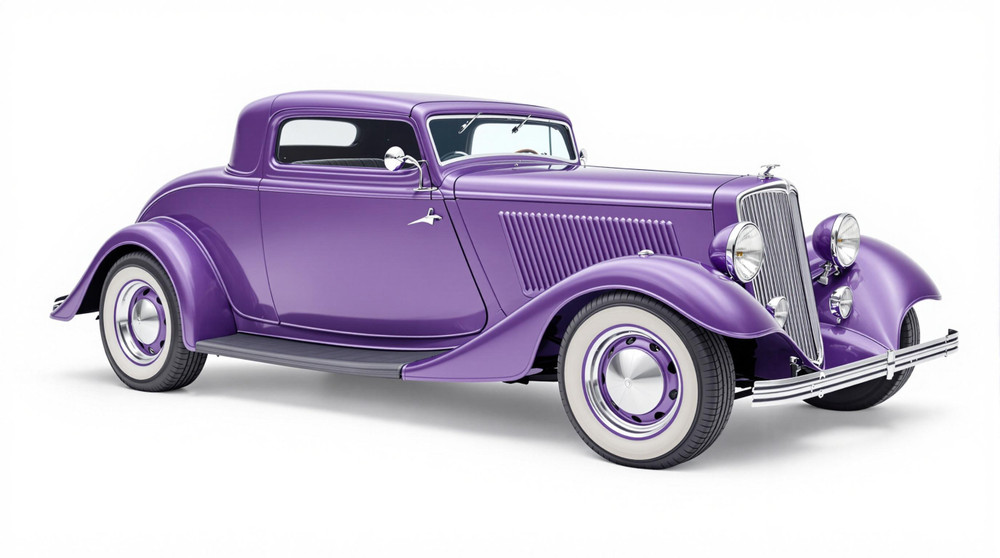
Image of 1933 Marmon Series 16, Note: These illustrations use artistic license and may differ from actual historical models.
Performance Metrics
Fundamental Metrics
Emotional Appeal
MMP Rating
| Engine Specifications | |
|---|---|
| Engine Options: | Straight 8 |
| Displacement Range: | 491 cubic inches |
| Horsepower Range: | Estimated 200 HP |
| Torque: | Not available |
| Compression Ratio: | Not available |
| Ignition System: | Battery and coil |
| Cooling System: | Water-cooled |
| Performance Specifications | |
| 0-60 Time: | Not available |
| 1/4 Mile Time: | Not available |
| Top Speed: | Estimated 100 mph |
| Transmission and Drive | |
| Drive Type: | Rear-wheel drive |
| Transmission Type: | 3-speed manual |
| Fuel and Efficiency | |
| Fuel System Type: | Carburetor |
| MPG: | Not available |
| Dimensions and Brakes | |
| Brakes: | Mechanical drum brakes |
| Wheelbase: | 145 inches |
| Weight: | Estimated 5,000 lbs |
Note: Specifications for classic cars are given to the best of our ability, considering the limited and variant data available.
1933 Marmon Series 16: America’s Other V16
The 1933 Marmon Series 16 is a rare kind of American luxury car: enormous, technically ambitious, and built by a company willing to challenge Cadillac on its own turf. Known more commonly as the Marmon Sixteen or Model 16, it paired an advanced V16 engine with coachbuilt elegance at a time when the Great Depression was making such extravagance increasingly difficult to sell.
Marmon’s story began in Indianapolis, where the Marmon family had made industrial equipment before turning to automobiles. Engineer Howard C. Marmon led the company’s automotive development. The Sixteen arrived in 1931 and remained in production through 1933, giving Marmon a brief but memorable place in the elite V16 club. A notable detail: its all-aluminum engine was rated at about 200 horsepower, an extraordinary figure for a production passenger car of its era.
Long Hood, Coachbuilt Presence
The Series 16 announced its intentions from across the street. Its long hood stretched toward a tall, upright radiator grille, while sweeping front fenders, substantial headlamps, running boards, and optional side-mounted spare tires completed the formal luxury-car silhouette. The proportions were grand without relying on excessive ornament. On many examples, the engine compartment alone seemed to promise a different scale of motoring.
Marmon offered the chassis to coachbuilders and supplied a range of body styles, including sedans, coupes, convertible coupes, limousines, and formal town-car designs. Exact offerings varied by year and coachbuilder. The most dramatic examples are the long, open cars and elegant convertibles, while sedans and limousines suited owners who wanted V16 power with a more discreet appearance. Custom coachwork means no single body style represents every 1933 Series 16.
Paint and trim could be tailored to the buyer, so there was no simple, universal list of colors for every body. Dark blues, greens, maroons, and black are natural fits for the era’s luxury palette, but original finishes depended on the individual car and its coachbuilder. Buyers could also specify contrasting fenders or body accents, making each car feel more personal than a mass-produced model.
A Quiet, Lavish Cabin
Inside, the emphasis was on comfort and craftsmanship rather than modern gadgets. Depending on the body and specification, occupants could find leather or fine cloth upholstery, polished wood trim, substantial carpets, and carefully finished metal fittings. Limousines and other formal bodies could provide a chauffeur’s partition, while open cars put passengers directly in the breeze and sunlight.
These were hand-finished luxury automobiles, not standardized interiors built in identical batches. Materials and details could differ from car to car, and surviving examples may have been retrimmed during restoration. The best-preserved interiors show the care that went into making a Marmon feel like a tailored object rather than simply a large vehicle.
The Engineering Behind the Sixteen
The heart of the Marmon was its approximately 491-cubic-inch, or 8.0-liter, V16. The engine used an aluminum-alloy construction and was rated at around 200 horsepower. Its compact, relatively narrow V layout helped package sixteen cylinders into a luxury-car chassis without making the engine impossibly wide. For context, the Cadillac V16 had established the American production V16 category first, but Marmon’s engine was a formidable rival and was advertised as one of the most powerful passenger-car engines available.
Power went through a conventional three-speed manual transmission to the rear wheels. The car also offered the expected equipment for a high-end automobile of its time, including four-wheel brakes and a full complement of lighting and instrumentation. These features were impressive in combination with the V16, but the car was still a product of the early 1930s: it lacked modern conveniences such as power steering, electronic engine management, and contemporary crash protection.
Why the Marmon Sixteen Matters
The Series 16 was more than a cylinder-count contest. Its lightweight-alloy engine reflected Howard Marmon’s interest in reducing mass and improving mechanical efficiency, even in a huge luxury car. The project showed that American makers outside the largest corporations could pursue sophisticated engine design and compete for the attention of the wealthiest buyers.
Its closest rival was Cadillac’s V16, introduced before the Marmon reached production. Cadillac had the stronger dealer network and corporate resources, while Marmon offered a compelling alternative with its own engineering identity. The Sixteen’s rarity today reflects both its limited production and the economic conditions surrounding it. The Great Depression sharply reduced demand for high-priced cars, and Marmon’s automobile business ended in 1933. The Marmon-Herrington name continued in commercial vehicles, but the Series 16 marked the end of the company’s great-car ambition.
Performance and the Open Road
Period specifications and later accounts commonly place the Marmon Sixteen’s top speed around 100 mph, though actual performance depended on body style, gearing, condition, and road surface. A dependable factory 0-to-60-mph figure is difficult to establish. Given the car’s weight and three-speed gearing, a rough estimate of about 15 to 20 seconds is more realistic than a modern-style quick launch. Treat both figures as broad period-performance estimates, not guaranteed test results for every surviving car.
The V16’s character was less about sharp acceleration than effortless progress. With a large reserve of torque, the engine could move the car with a smooth, steady feel once underway. The sound would be a deep mechanical murmur rather than the hard-edged note of a high-revving sports car. A healthy example should feel composed at touring speeds, though its size and mass demand anticipation, especially when braking or maneuvering in tight spaces.
On rough roads, the long chassis and substantial suspension were intended to deliver a comfortable ride, but the experience cannot match modern isolation or control. On a winding road, the driver has to plan ahead: the car is large, the steering is unassisted, and the tires and brakes belong to another era. Windy open roads suit the Marmon better than narrow city streets, where parking and turning can become a physical exercise.
Owning a Marmon Today
A 1933 Series 16 is best suited to careful touring, concours events, and private collections. It is not a practical daily driver. Its considerable dimensions, specialist mechanical systems, and limited access to replacement parts make regular modern traffic an unnecessary challenge.
Maintenance is a specialist undertaking. The V16’s aluminum construction and intricate layout call for experienced hands, and rebuilding or sourcing engine components can be expensive. Routine service is manageable for a skilled vintage-car mechanic, but an average owner should not expect the easy parts availability of a common prewar Ford or Chevrolet. Before purchase, a buyer should commission a thorough inspection of the engine, cooling system, transmission, brakes, chassis, and coachwork. Correct history and careful documentation matter enormously.
Rare Facts and Common Criticisms
Marmon built roughly 400 Sixteens in total, a commonly cited estimate for the model’s short production run. Exact counts can vary among historical references, and the number of 1933 cars alone was smaller than the total for the full 1931-to-1933 run. Surviving examples are scarce, and the combination of original chassis, engine, and coachwork is especially important to collectors.
The car did not become famous for a major speed record or endurance feat. Its achievement was the engineering statement itself: a production American luxury car with sixteen cylinders and a powerful, lightweight-alloy engine. It is also easy to confuse the Marmon Sixteen with Cadillac’s better-known V16. Cadillac’s stronger commercial presence helped it dominate public memory, but Marmon remains a distinct and technically important rival.
Common criticisms are practical rather than glamorous. The car is costly to maintain, challenging to drive in modern conditions, and difficult to restore correctly. Its size and fuel consumption also make it a demanding touring companion. Those drawbacks are part of the ownership equation, not a surprise to discover after the auction.
Collector Value and Availability
Values depend heavily on body style, originality, restoration quality, provenance, and whether the car retains its correct V16 engine. As a broad 2026 market estimate, a project or incomplete example might fall around $250,000 to $500,000, while a sound, well-presented car could bring roughly $500,000 to $1.2 million. Exceptional, highly original, or especially desirable coachbuilt examples may exceed that range, potentially reaching $1.5 million or more. These are guide estimates rather than a formal appraisal, and individual auction results can vary substantially.
Series 16s appear infrequently on the open market, so buyers may wait years for the right body style and condition. Over the long term, top-quality examples have strong reasons to hold collector interest: very low production, advanced engineering, and membership in the exclusive prewar V16 category. The market is selective, however. A poor restoration or undocumented car may be difficult to sell, while a well-documented example with excellent coachwork can attract international attention. The most defensible trend is steady interest at the top end, rather than guaranteed appreciation for every car.
A Lasting Indianapolis Statement
The 1933 Marmon Series 16 combined a landmark V16 engine, imposing coachbuilt styling, and the ambition of an independent American manufacturer. It was not an easy car to own, even when new, and it is certainly not a casual choice today. But as a symbol of prewar engineering confidence, the Marmon Sixteen remains remarkable: a final, magnificent expression of a company that dared to build one of America’s great luxury cars.
1933 Marmon Series 16 Catalog of Parts
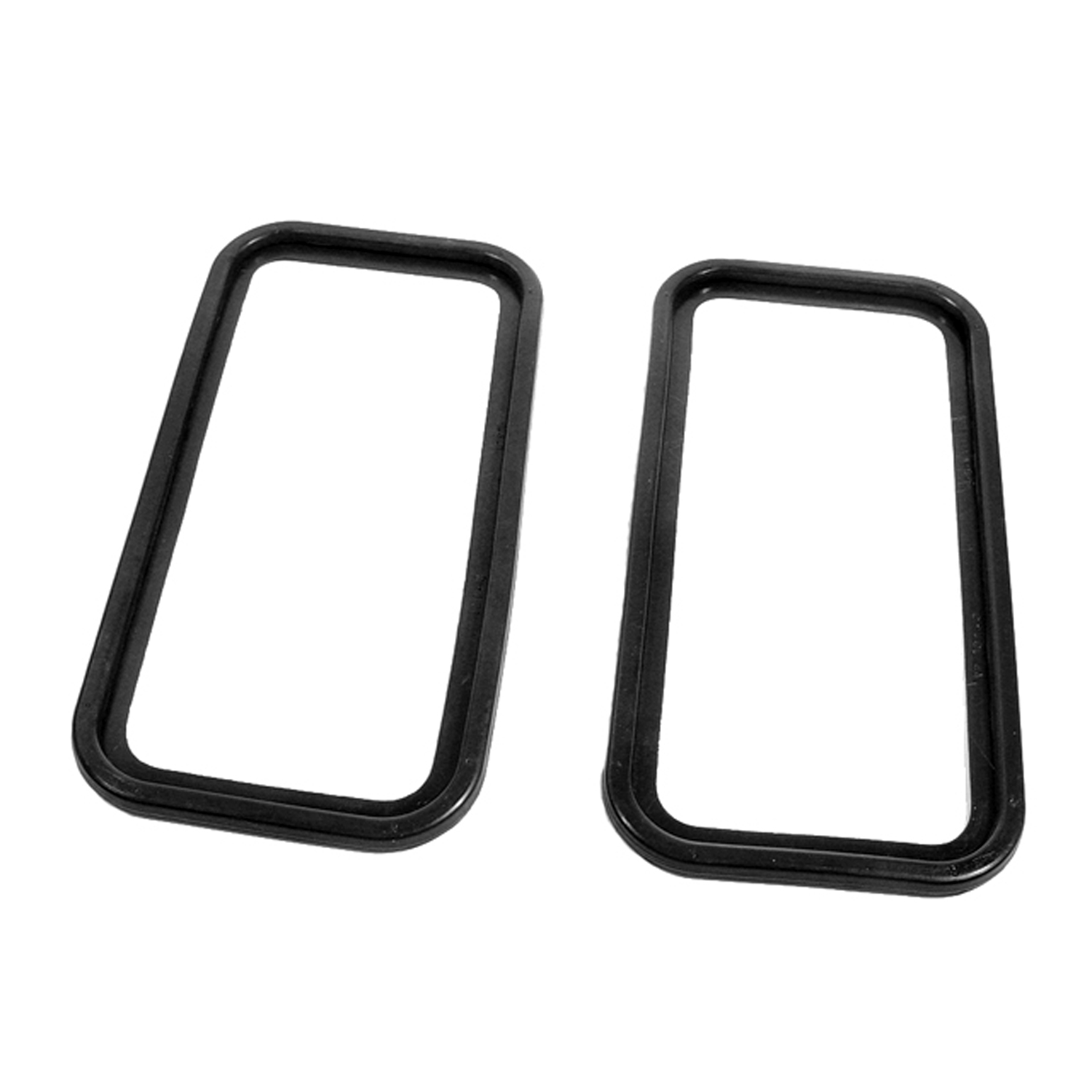 1933 Marmon Series 16 Cowl Vent Seals. 3-1/2" I.D. wide X 8-1/4" I.D. long-RP 101-CCowl Vent Seals. 3-1/2" I.D. wide X 8-1/4" I.D. long. Pair
Why Choose Metro?
For over 100 years, Metro Moulded Parts has been the pinnacle of quality in classic car restoration parts. Our commitment to precision and authenticity in every component ensures a perfect fit and an OEM-level appearance.
- Expert Craftsmanship & Quality: Each part is a testament to our dedication to reliability and perfection, crafted from original designs and thoroughly tested.
- Advanced Technology: We use cutting-edge techniques to create flawless, long-lasting parts that surpass others in performance.
- SuperSoft Sponge – The Ultimate Door Seal: Not only are our door seals 30% softer than competitors', but they're also guaranteed to never leak. They effectively reduce wind and road noise, enhancing your classic car's comfort and driving experience.
- Proudly American: Our parts are a product of American craftsmanship, made in the USA with a spirit of excellence and heritage.
- Unrivaled Warranty: We back our products with a 30-year industry-leading warranty, a testament to our confidence in their quality.
Join us in preserving the legacy of classic cars with parts that are crafted for perfection, not just made.