

Image of 1935 Mercedes-Benz 500 K, Note: These illustrations use artistic license and may differ from actual historical models.
Performance Metrics
Fundamental Metrics
Emotional Appeal
MMP Rating
| Engine Specifications | |
|---|---|
| Engine: | Straight 8 |
| Displacement: | 5018 cc |
| Horsepower: | 100-160 hp |
| Torque: | Not available |
| Compression Ratio: | Not available |
| Ignition System: | Coil and distributor |
| Cooling System: | Water-cooled |
| Performance Specifications | |
| 0-60 Time: | Not available |
| 1/4 Mile Time: | Not available |
| Top Speed: | 160 km/h (99 mph) |
| Transmission and Drive | |
| Drive Type: | Rear-wheel drive |
| Transmission Type: | 4-speed manual |
| Fuel and Efficiency | |
| Fuel System Type: | Carburetor |
| MPG: | Not available |
| Dimensions and Brakes | |
| Brakes: | Hydraulic drum brakes |
| Wheelbase: | 129.5 in (3290 mm) |
| Weight: | 2700 kg |
Note: Specifications for classic cars are given to the best of our ability, considering the limited and variant data available.
The 1935 Mercedes-Benz 500 K was a grand-touring car with the presence of a rolling work of art and the performance to match. Built by Mercedes-Benz during the height of the classic luxury-car era, it combined hand-finished coachwork with a supercharged straight-eight, making it one of the most ambitious and recognizable cars of its time.
Mercedes-Benz 500 K Origins
The 500 K arrived in 1934 as a flagship for Mercedes-Benz, Germany’s leading luxury-car manufacturer. Its name reflected its five-liter engine and the “K” for Kompressor, the German word for supercharger. The model evolved from the earlier 380 and was produced through 1936, before the more powerful 540 K took its place.
The car emerged during a period when wealthy buyers expected both exceptional speed and exceptional craftsmanship. Mercedes-Benz answered with a substantial, carefully engineered chassis and bodywork built at its Sindelfingen coachworks. A notable detail was the supercharger’s operation: it engaged when the driver pressed the accelerator fully, delivering a burst of power accompanied by a distinctive blower whine.
500 K Design and Coachwork
The 500 K’s styling is all sweeping lines and confident proportions. Its long hood flows into a low, rearward cabin, while deeply curved fenders frame large wheels and prominent side-mounted exhaust pipes. The tall, upright grille gives the car a formal face, and details such as the sculpted running boards and rear-mounted spare tires make the bodywork feel almost architectural.
Mercedes-Benz offered the 500 K in several body styles, including Cabriolet A, B, and C models, a touring car, coupes, and the exceptionally rare Autobahn-Kurier. The two-seat Spezial Roadster is the most iconic: it pairs a low windscreen and flowing rear deck with a spare wheel carried at the tail. Its dramatic proportions have made it one of the most celebrated prewar Mercedes designs.
Color and trim could be tailored to the buyer. Black, deep blue, burgundy, and cream were among the period-appropriate choices, and two-tone finishes suited the car’s elaborate coachwork particularly well. Interiors were trimmed in high-quality leather, with polished wood and finely finished metal fittings. The cabin was luxurious, but it remained a driver’s space, with clear instruments and substantial controls rather than modern convenience features.
Engineering Ahead of Its Era
At the heart of the 500 K was a 5,018 cc overhead-valve inline-eight. In normal operation, it produced about 100 horsepower. With the Roots-type supercharger engaged, output rose to roughly 160 horsepower, depending on how the figure is stated. A four-speed manual transmission sent power to the rear wheels.
The chassis was advanced for a car of its size. Independent front suspension used double wishbones, while the rear used a swing-axle arrangement. Coil springs and hydraulic dampers helped manage the car’s considerable mass, and four-wheel hydraulic brakes provided stopping power. These features distinguished the 500 K from many contemporaries that still relied on less sophisticated suspension layouts.
Its significance was not that it was a mass-market technology pioneer. It was a showcase of what Mercedes-Benz could achieve when engineering, performance, and coachbuilt luxury were brought together without the usual cost constraints. The 500 K also helped establish the visual and mechanical template for the 540 K that followed.
Performance and Driving Feel
A healthy 500 K could reach approximately 160 km/h, or 100 mph, a formidable speed for a large luxury car in the mid-1930s. Period acceleration figures are not directly comparable to today’s standardized tests, and results varied with body style and condition. A reasonable estimate for 0 to 60 mph is around 15 to 18 seconds.
On the road, the 500 K feels substantial rather than nimble. Its long wheelbase and compliant suspension suit sweeping roads and steady cruising, while the weight and period steering demand attention at low speeds and in tight corners. The rear swing axles also call for respect on uneven or slippery surfaces, particularly if the driver makes abrupt inputs. It is best enjoyed with smooth, deliberate steering and braking.
With the supercharger engaged, the straight-eight develops a sharper, more urgent note, and the compressor adds its unmistakable mechanical whine. At a relaxed pace, the engine is smoother and quieter. The ride is generous by prewar standards, though modern drivers will notice road movement through the chassis and the absence of contemporary safety and convenience systems.
Owning a Mercedes-Benz 500 K
Today, the 500 K is primarily a concours, touring, and collection car, not a practical daily driver. Its size, age, value, and specialized engineering make regular use an undertaking best suited to an experienced owner. Long-distance classic-car tours are possible when the car is properly prepared, but routine errands are not its natural role.
Maintenance requires marque expertise and access to specialist parts. The engine, supercharger, chassis, brakes, and coachwork all demand careful inspection, and restoration work can be exceptionally costly. An average owner should not expect to handle every repair in a home garage. Correctly maintained cars can be driven, but originality and careful mechanical stewardship are central to preserving both reliability and value.
Rare 500 K Facts
Mercedes-Benz built approximately 342 examples of the 500 K between 1934 and 1936. Only about 29 were Spezial Roadsters, making that body style especially rare. Production figures can vary slightly across references, but the broad picture is clear: even among prestigious prewar cars, the 500 K was produced in very small numbers.
The 500 K is sometimes described as an Autobahn-era car, a fitting association with Germany’s growing high-speed road network, but it was not a purpose-built speed-record machine. Its achievement was bringing genuine high-speed capability to an exceptionally luxurious touring car. Many examples were commissioned by wealthy industrialists, aristocrats, and international buyers, with individual histories varying from car to car.
Its common criticisms are practical ones: it is heavy, thirsty, mechanically complex, and expensive to restore. The supercharger also requires proper maintenance and informed operation. Those drawbacks are part of the ownership reality, even if they do little to diminish the car’s appeal.
500 K Collector Values
The 500 K is extremely rare on the market. A well-documented car in good condition may bring roughly $2 million to $5 million, with value depending heavily on body style, originality, restoration quality, and provenance. The Spezial Roadster sits in a different league: exceptional examples can reach roughly $5 million to more than $10 million. One notable 1935 Spezial Roadster sold for about $9.9 million at auction in 2016.
Long-term demand for the finest examples has generally been strong, but prices are not guaranteed to rise steadily. The market is thin, and a car’s exact history and condition can create a major difference in value. Restoration costs, authenticity, and the quality of surviving documentation all matter. For a car this rare, the right example can be more important than the average market estimate.
A Prewar Mercedes-Benz Icon
The 1935 Mercedes-Benz 500 K brought together a supercharged straight-eight, advanced suspension, hand-finished coachwork, and the presence of a true flagship. It was fast for its era, elaborate without apology, and produced in numbers small enough to make surviving cars exceptional today.
Nearly a century later, the 500 K remains a powerful reminder of what prewar automotive engineering and craftsmanship could achieve. It is not simply a classic Mercedes-Benz. It is one of the great grand-touring cars of its age.
1935 Mercedes-Benz 500 K Catalog of Parts
 1935 Mercedes-Benz 500 K Headlight Pads. 3-5/8" wide X 12" long. Pair R&L-MP 823-EHeadlight Pads. 3-5/8" wide X 12" long. Pair R&L
 1935 Mercedes-Benz 500 K Headlight Pads. 5-3/8" wide X 7-3/8" long. Pair-MP 823-FHeadlight Pads. 5-3/8" wide X 7-3/8" long. Pair
 1935 Mercedes-Benz 500 K Park Light Pads. 3-7/8" wide X 5-1/8" long. Pair-MP 823-JPark Light Pads. 3-7/8" wide X 5-1/8" long. Pair
 1935 Mercedes-Benz 500 K Headlight Bar Pads. 2" wide X 4-3/4" long. Pair-MP 823-KHeadlight Bar Pads. 2" wide X 4-3/4" long. Pair
 1935 Mercedes-Benz 500 K Trunk Hinge Pads. 1-5/8" wide X 12" long. Set-MP 823-PTrunk Hinge Pads. 1-5/8" wide X 12" long. Set
 1935 Mercedes-Benz 500 K Coupler to Engine Seal. 1-1/8" I.D., 2-3/4" O.D. Each-RP 15Coupler to Engine Seal. 1-1/8" I.D., 2-3/4" O.D. Each
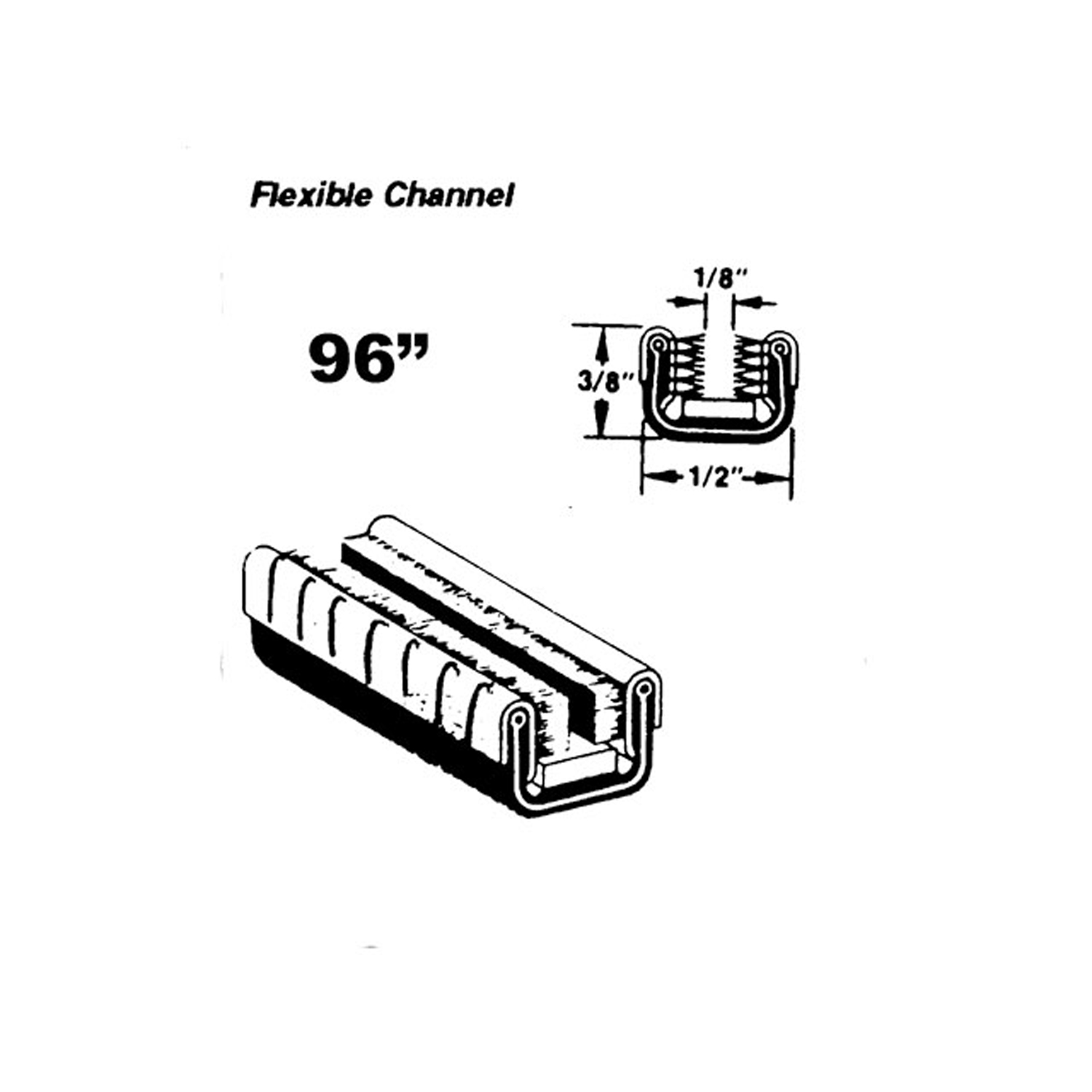 1935 Mercedes-Benz 500 K Flexible glass-run channel. Rubber covered and pile lined-WC 12-96Flexible glass-run channel. Rubber covered and pile lined. Unbeaded. 96 in. long. Each. NOTE: $20 special shipping charge applies for domestic orders. Call or email for overseas shipping costs. Part can be sectioned in two or three equal lengths to reduce overseas shipping costs.
Why Choose Metro?
For over 100 years, Metro Moulded Parts has been the pinnacle of quality in classic car restoration parts. Our commitment to precision and authenticity in every component ensures a perfect fit and an OEM-level appearance.
- Expert Craftsmanship & Quality: Each part is a testament to our dedication to reliability and perfection, crafted from original designs and thoroughly tested.
- Advanced Technology: We use cutting-edge techniques to create flawless, long-lasting parts that surpass others in performance.
- SuperSoft Sponge – The Ultimate Door Seal: Not only are our door seals 30% softer than competitors', but they're also guaranteed to never leak. They effectively reduce wind and road noise, enhancing your classic car's comfort and driving experience.
- Proudly American: Our parts are a product of American craftsmanship, made in the USA with a spirit of excellence and heritage.
- Unrivaled Warranty: We back our products with a 30-year industry-leading warranty, a testament to our confidence in their quality.
Join us in preserving the legacy of classic cars with parts that are crafted for perfection, not just made.