

Image of 1936 Mercedes-Benz 500 K, Note: These illustrations use artistic license and may differ from actual historical models.
Performance Metrics
Fundamental Metrics
Emotional Appeal
MMP Rating
| Engine Specifications | |
|---|---|
| Engine: | Straight 8 |
| Displacement: | 5018 cc |
| Horsepower: | 100-160 hp |
| Torque: | Not available |
| Compression Ratio: | Not available |
| Ignition System: | Coil and battery |
| Cooling System: | Water-cooled |
| Performance Specifications | |
| 0-60 Time: | Not available |
| 1/4 Mile Time: | Not available |
| Top Speed: | 160 km/h (99 mph) |
| Transmission and Drive | |
| Drive Type: | Rear-wheel drive |
| Transmission Type: | 4-speed manual |
| Fuel and Efficiency | |
| Fuel System Type: | Carburetor |
| MPG: | Not available |
| Dimensions and Brakes | |
| Brakes: | Hydraulic drum brakes |
| Wheelbase: | 129.5 in (3290 mm) |
| Weight: | 2700 kg |
Note: Specifications for classic cars are given to the best of our ability, considering the limited and variant data available.
1936 Mercedes-Benz 500 K: The Supercharged Grand Tourer
The 1936 Mercedes-Benz 500 K turned a long, elegant body and a quietly potent eight-cylinder engine into one of the great statements of prewar motoring. Built by Mercedes-Benz in Germany, it was a flagship luxury car for drivers who wanted more than a chauffeur’s seat: the 500 K paired formal coachwork with a supercharger that could transform its manner from smooth cruiser to formidable grand tourer.
The model was introduced in 1934 and built through 1936, during a period when European makers were competing to create ever more powerful, refined luxury cars. Its name referred to its five-litre engine and “Kompressor,” the German word for supercharger. A particularly intriguing detail is that the blower was not constantly engaged. It came into action when the driver pressed the accelerator fully, adding a dramatic surge of power, and a distinctive whine, when called upon.
Long Bonnet, Hand-Finished Cabin
The 500 K’s proportions make its purpose clear at a glance. A tall, upright radiator leads into a sweeping bonnet, while a gently curved body, flowing wings and exposed spare wheels give the car an unmistakable prewar profile. Chrome details and carefully shaped running boards add formality without overwhelming the design. The overall effect is imposing, but the lines remain fluid rather than boxy.
Mercedes-Benz offered the 500 K in several factory body styles, including Cabriolet A, B and C versions, a coupe, a touring car, a roadster and the celebrated Special Roadster. The Special Roadster is the most iconic today, with its long hood, open cockpit, low windscreen and dramatically tapered rear. Cabriolets offered a more practical balance of weather protection and open-air motoring, while closed bodies suited owners who wanted a more private touring car.
Inside, the emphasis was on craftsmanship and comfort. Depending on the body and specification, owners could expect carefully fitted leather upholstery, quality carpeting, polished wood trim and substantial metal fittings. Details varied from car to car, as bespoke coachwork and individual orders were part of the luxury experience. Period color choices and combinations also varied; black, deep blue, maroon, cream and two-tone finishes all suit the car’s formal lines. There was no single universal “500 K color,” and original paintwork is best verified against a specific car’s records.
Under the sculpted bodywork, the 500 K was a sophisticated machine for its era. Its 5,018 cc inline-eight engine used overhead valves and a Roots-type supercharger. The car also featured independent front suspension, a swing-axle rear suspension and hydraulic brakes on all four wheels. Those systems helped distinguish it from many contemporaries that still relied on less advanced suspension layouts or mechanical braking.
Why the 500 K Mattered
The 500 K showed how engineering and coachbuilt luxury could work together. Its supercharged engine delivered serious performance, but the car was not a stripped-down sports machine. It was designed to carry its occupants in comfort, at speed, over long distances. That combination helped define the high-performance luxury grand tourer: a car with the pace of a sporting model and the presence, finish and equipment of a flagship.
Its independent front suspension and four-wheel hydraulic brakes were important parts of that package. They gave Mercedes-Benz a more modern foundation for controlling a heavy, powerful car, even though the driving experience remained very different from that of a contemporary vehicle. The 500 K also helped establish the visual language of the 1930s Mercedes-Benz flagship, with its upright grille, long bonnet and flowing coachwork. The later 540 K developed the same basic idea with a larger engine.
Unlike a purpose-built racing car, the 500 K’s significance came from bringing speed and engineering sophistication to an exclusive road car. It was expensive, complex and produced in small numbers, so its influence was more about setting an ambitious standard than changing everyday motoring.
Supercharged Performance on the Open Road
The 500 K’s engine produced about 100 horsepower with the supercharger disengaged and approximately 160 horsepower when the blower was engaged. Exact figures and performance varied with body style, gearing and vehicle condition. Mercedes-Benz quoted a top speed in the region of 160 km/h, or 100 mph, for suitably specified cars. That was genuinely fast for a large luxury automobile of the mid-1930s.
There is no single dependable factory 0-to-60 mph figure that applies to every 500 K body. Modern estimates generally place acceleration in the low-to-mid teens in seconds, with heavier bodies likely taking longer. Treat any precise figure as an estimate rather than a period-certified result. The car’s considerable weight and its focus on grand touring matter as much as the engine’s output.
On a smooth, open road, the 500 K would feel substantial and composed, with the long wheelbase helping it settle into a steady cruising rhythm. Its suspension was advanced for the day, but it was not designed to erase every bump. Uneven surfaces would still make themselves felt through the chassis, and tight, winding roads would demand respect. The car’s size and weight make quick direction changes a very different proposition from those in a modern sports car.
The driving experience is part of the appeal. With the blower disengaged, the straight-eight is intended to deliver smooth, measured power. Press the accelerator fully and the supercharger adds urgency, accompanied by its characteristic mechanical whine. The driver works a period manual gearbox, manages substantial controls and has to plan braking and corner entry well ahead. It is a rewarding car to drive, but not a casual one.
Owning a 500 K Today
A 500 K is best thought of as a collector car, show car and occasional touring machine, not a daily driver. Its size, value, age and mechanical complexity make routine modern traffic a poor setting for it. Well-preserved examples may appear at concours events, historic gatherings and carefully organized tours, where their engineering and coachwork can be appreciated without asking them to cope with everyday commuting.
Maintenance requires specialist knowledge and access to correct parts. The supercharger, inline-eight engine, chassis, brakes and bodywork all need attention from people familiar with prewar Mercedes-Benz cars. Repairs are not generally within the reach of an average owner working with ordinary tools, and a neglected example can require a major restoration. Regular, informed servicing is essential, particularly if the car is driven rather than kept primarily in a collection.
Reliability depends heavily on condition and maintenance history. A correctly restored and carefully maintained 500 K can be used for measured touring, but age alone makes it unwise to assume that any example is ready for the road. A specialist inspection, a review of restoration records and verification of the car’s identity and coachwork are crucial before purchase.
Rare Details and Common Misconceptions
The Special Roadster is the body style most often associated with the 500 K, but it represents only one expression of the model. A 500 K should also not be confused with the later 540 K. The two share a family resemblance and the same supercharged grand-touring philosophy, but the 540 K has a larger engine and is a separate model.
Production was tiny by ordinary automotive standards. A commonly cited figure is approximately 342 Mercedes-Benz 500 K cars built, though historical production totals can vary depending on how chassis and completed bodies are counted. The precise number of surviving, correctly identified examples is another matter. Each car’s chassis, engine, coachwork and documentation should be assessed individually.
The 500 K was a prestige road car, not a mass-produced speed-record machine, so its reputation rests on craftsmanship, performance and rarity rather than a famous production-car record. It is also worth resisting the temptation to attach every prewar Mercedes celebrity story to the 500 K. The better-known 540 K has its own high-profile history, and the two models are often mixed up in popular accounts.
One criticism is practical rather than historical: the 500 K is expensive to buy, restore and maintain, and its vintage controls and braking performance require a thoughtful driver. Its exclusivity also means that parts and qualified expertise can be difficult to find. Those drawbacks are real, but they are part of the ownership equation for almost any rare, hand-built prewar flagship.
Collector Values and Market Outlook
Values depend enormously on body style, originality, restoration quality, provenance and matching numbers. As a broad current-market guide, a strong 500 K in a less sought-after body style might fall around $1.5 million to $3.5 million. Exceptional or highly desirable cars can reach $5 million to $10 million or more, with particularly important Special Roadsters potentially exceeding that range at major sales. These are estimates, not appraisals, and individual auction results can differ substantially.
Availability is extremely limited. With roughly 342 cars commonly cited as total production, a genuine 500 K is rarely an ordinary market offering. The most desirable examples are often sold through specialist dealers or high-profile auctions, and may change hands privately. Documentation and expert authentication are essential because restoration history and originality have a major effect on both value and collectability.
Over the long term, the model’s rarity, historical importance and international recognition have supported strong collector demand. Prices can still move with the wider classic-car market, and a costly restoration does not guarantee a higher resale value. The best examples are likely to remain the most resilient, while cars with uncertain history or extensive, poorly documented work may face a narrower pool of buyers.
A Prewar Mercedes-Benz at Full Voice
The 1936 Mercedes-Benz 500 K brought together a supercharged straight-eight, advanced-for-its-time chassis engineering and coachbuilt elegance in a package few people could afford when new and fewer can own today. Its Special Roadster remains an icon, but every body style reflects the model’s central achievement: making serious performance part of a refined luxury car.
Nearly a century later, the 500 K still feels like more than a beautiful object. It is a machine built to cover distance with authority, and a vivid reminder of how far engineering and craftsmanship could be pushed before the war reshaped the automobile industry.
1936 Mercedes-Benz 500 K Catalog of Parts
 1936 Mercedes-Benz 500 K Headlight Pads. 3-5/8" wide X 12" long. Pair R&L-MP 823-EHeadlight Pads. 3-5/8" wide X 12" long. Pair R&L
 1936 Mercedes-Benz 500 K Headlight Pads. 5-3/8" wide X 7-3/8" long. Pair-MP 823-FHeadlight Pads. 5-3/8" wide X 7-3/8" long. Pair
 1936 Mercedes-Benz 500 K Park Light Pads. 3-7/8" wide X 5-1/8" long. Pair-MP 823-JPark Light Pads. 3-7/8" wide X 5-1/8" long. Pair
 1936 Mercedes-Benz 500 K Headlight Bar Pads. 2" wide X 4-3/4" long. Pair-MP 823-KHeadlight Bar Pads. 2" wide X 4-3/4" long. Pair
 1936 Mercedes-Benz 500 K Trunk Hinge Pads. 1-5/8" wide X 12" long. Set-MP 823-PTrunk Hinge Pads. 1-5/8" wide X 12" long. Set
 1936 Mercedes-Benz 500 K Coupler to Engine Seal. 1-1/8" I.D., 2-3/4" O.D. Each-RP 15Coupler to Engine Seal. 1-1/8" I.D., 2-3/4" O.D. Each
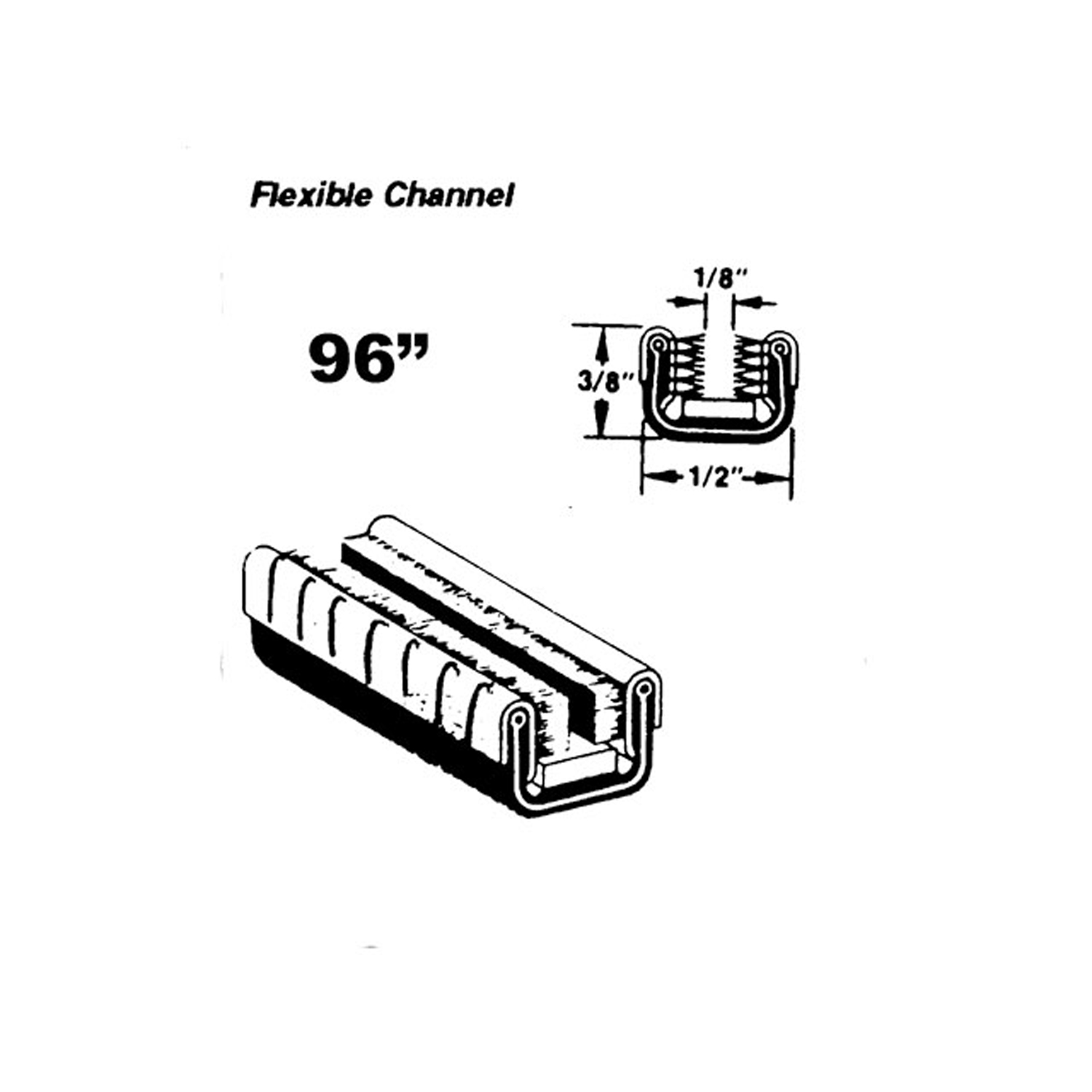 1936 Mercedes-Benz 500 K Flexible glass-run channel. Rubber covered and pile lined-WC 12-96Flexible glass-run channel. Rubber covered and pile lined. Unbeaded. 96 in. long. Each. NOTE: $20 special shipping charge applies for domestic orders. Call or email for overseas shipping costs. Part can be sectioned in two or three equal lengths to reduce overseas shipping costs.
Why Choose Metro?
For over 100 years, Metro Moulded Parts has been the pinnacle of quality in classic car restoration parts. Our commitment to precision and authenticity in every component ensures a perfect fit and an OEM-level appearance.
- Expert Craftsmanship & Quality: Each part is a testament to our dedication to reliability and perfection, crafted from original designs and thoroughly tested.
- Advanced Technology: We use cutting-edge techniques to create flawless, long-lasting parts that surpass others in performance.
- SuperSoft Sponge – The Ultimate Door Seal: Not only are our door seals 30% softer than competitors', but they're also guaranteed to never leak. They effectively reduce wind and road noise, enhancing your classic car's comfort and driving experience.
- Proudly American: Our parts are a product of American craftsmanship, made in the USA with a spirit of excellence and heritage.
- Unrivaled Warranty: We back our products with a 30-year industry-leading warranty, a testament to our confidence in their quality.
Join us in preserving the legacy of classic cars with parts that are crafted for perfection, not just made.