

Image of 1937 Mercedes-Benz 320, Note: These illustrations use artistic license and may differ from actual historical models.
Performance Metrics
Fundamental Metrics
Emotional Appeal
MMP Rating
| Engine Specifications | |
|---|---|
| Engine: | Inline 6 |
| Displacement: | 3.4 L |
| Horsepower: | Estimated 78-85 hp |
| Torque: | Not available |
| Compression Ratio: | Not available |
| Ignition System: | Coil ignition |
| Cooling System: | Water-cooled |
| Performance Specifications | |
| 0-60 Time: | Not available |
| 1/4 Mile Time: | Not available |
| Top Speed: | 78 mph |
| Transmission and Drive | |
| Drive Type: | Rear-wheel drive |
| Transmission Type: | 4-speed manual |
| Fuel and Efficiency | |
| Fuel System Type: | Carburetor |
| MPG: | Not available |
| Dimensions and Brakes | |
| Brakes: | Drum brakes |
| Wheelbase: | 130 inches |
| Weight: | 3,300 lbs |
Note: Specifications for classic cars are given to the best of our ability, considering the limited and variant data available.
1937 Mercedes-Benz 320: A Prewar Luxury Car with Quiet Authority
The 1937 Mercedes-Benz 320 was built for a world that valued comfort, craftsmanship, and effortless long-distance travel. With its tall chrome grille, sweeping fenders, and smooth six-cylinder engine, it carried the prestige of the Mercedes-Benz name without being the company’s largest or most expensive model. It was a substantial, finely engineered touring car, offered in several body styles to suit everyone from private owners to formal chauffeur-driven clients.
Known by its factory designation, W142, the 320 arrived in 1937 as the successor to the Mercedes-Benz 290. It was produced in Germany by Daimler-Benz, the company formed in 1926 from the merger of Benz & Cie. and Daimler-Motoren-Gesellschaft. The 320 remained in production until 1942, with civilian car production increasingly disrupted by the Second World War.
One intriguing detail is that “the 1937 Mercedes-Benz 320” does not describe just one body or specification. Buyers could order a relatively practical four-door sedan, a long-wheelbase Pullman limousine, or a hand-finished cabriolet. Engine and chassis specifications also evolved during production, so surviving examples can differ in displacement and detail.
Classic Mercedes Styling and Coachbuilt Choice
The 320 wore the familiar prewar Mercedes-Benz silhouette: a high, upright radiator grille, a long hood, separate but flowing front fenders, and round headlamps positioned beside the grille. Running boards connected the front and rear fenders, while the rear bodywork curved neatly around a spare wheel or luggage arrangement. The effect was formal without being stiff, with a sense of movement even when the car was parked.
Bodywork varied considerably. Factory offerings included four-door sedans, touring cars, Pullman limousines, and a range of open models such as Cabriolet A, B, C, and D versions. The Cabriolet A, with its two doors and elegant open touring proportions, is among the most visually striking and collectible. The Cabriolet D, generally a larger four-door convertible, offered a more practical way to travel with the top down. Exact configurations depended on the chassis and year.
Inside, the 320 emphasized comfort and quality rather than sporty minimalism. Depending on body style and specification, the cabin could feature leather or high-grade cloth upholstery, polished wood trim, substantial carpeting, and a broad dashboard with clear, period-style instruments. Long-wheelbase cars could provide generous rear-seat space, and chauffeur-oriented versions might include a glass partition. The hand-finished coachwork and trim meant that the experience could vary from one car to another.
Factory paint choices changed over time and could be specified to suit the body and buyer. Dark colors such as black, deep blue, and burgundy look especially at home on the 320’s formal lines, while two-tone combinations suited some open and touring bodies. Today, many restored examples wear historically sympathetic dark finishes, but period color availability was broader than a single “correct” shade.
Engineering for the Open Road
The 320 used a front-mounted, water-cooled inline-six. Early cars had a displacement of about 3.2 liters and produced roughly 78 metric horsepower. Later versions grew to approximately 3.4 liters, with output around 80 metric horsepower. Figures vary by year and source, so it is important to identify the individual car’s engine and chassis rather than assume every 320 has identical specifications.
Power went to the rear wheels through a four-speed manual gearbox. The car also benefited from independent front suspension, hydraulic brakes, and Mercedes-Benz engineering intended to make a heavy luxury car stable and composed. These were meaningful features in a period when many cars still relied on more traditional suspension layouts and mechanical braking systems.
The 320 was not a stripped-down innovation showcase. Its appeal came from combining established engineering with refinement: a smooth six-cylinder engine, a well-developed chassis, and the choice of substantial factory bodies. Mercedes-Benz had built its reputation on this balance, and the W142 continued that approach in the years just before wartime production reshaped the industry.
Where the 320 Fits in Automotive History
The Mercedes-Benz 320 occupied an important middle ground in the company’s prewar range. It offered more space and performance than a modest family car, but it sat below flagship models such as the 500K and 540K in price and extravagance. Its natural rivals included other European luxury and upper-medium cars, among them models from Horch and BMW. Against that field, the 320 stood out for its combination of body-style choice, mechanical sophistication, and Mercedes-Benz build quality.
Its significance is less about a single headline-grabbing invention and more about the way it brought advanced chassis engineering into a versatile luxury model. Independent front suspension and hydraulic brakes helped deliver the controlled ride and braking expected of a high-quality touring car. The 320 also showed how a shared chassis could support very different roles, from family transport to formal limousine service.
The car’s production years overlapped with a turbulent period in German and European history. As war approached and then began, private motoring and civilian manufacturing became increasingly constrained. Some examples later served in official or military roles, although the histories of individual cars vary and should be verified rather than assumed. The W142 is therefore both a luxury automobile and a surviving artifact of the final prewar era of European coachbuilt motoring.
Road Manners, Speed, and the Driving Experience
For a car of its period and size, the Mercedes-Benz 320 could reach a top speed in the neighborhood of 125 to 130 km/h, or roughly 78 to 81 mph, depending on engine, body, gearing, and condition. A modern-style 0-to-60-mph figure was not the usual factory measure. Based on its power and weight, a reasonable estimate for many versions is around 20 to 25 seconds, with heavier limousines likely slower. Treat that as a period-car estimate, not a guaranteed specification.
The six-cylinder engine is best understood as a smooth, steady touring motor rather than a performance engine. It builds speed progressively, and its subdued mechanical note suits relaxed travel. The manual gearbox calls for deliberate shifts, especially in a car that may weigh well over 1.5 tonnes depending on its body. In a well-maintained example, the engine should feel composed rather than strained at normal road speeds.
On a smooth road, the 320’s long wheelbase and suspension help it settle into a comfortable cruise. Broken pavement and sharp bumps are handled with the measured movement typical of a heavy prewar car, not the tight body control of a modern saloon. On winding roads, drivers need to plan ahead: the steering, brakes, tall body, and period tires reward smooth inputs and sensible speeds. A cabriolet can feel more exposed to wind and road noise than a closed sedan, while a long limousine prioritizes passenger comfort over agility.
Driving one is a hands-on experience. The driver works the gearbox, reads the road well ahead, and leaves generous room for braking. It is less about chasing a stopwatch than enjoying the engine’s even cadence, the elevated view over the hood, and the feeling of guiding a substantial piece of machinery through a landscape.
Living with a W142
Today, most 320s are used as show cars, touring classics, museum pieces, or special-occasion vehicles rather than daily transportation. A sound example can take part in vintage rallies and club tours, but regular use requires care, preparation, and access to a specialist familiar with prewar Mercedes-Benz engineering.
Maintenance is not especially convenient by modern standards. The cars require knowledgeable attention to their engine, cooling system, ignition, brakes, suspension, and electrical equipment. Replacement parts may be available through marque specialists or reproduction suppliers, but scarce trim, coachwork components, and model-specific mechanical pieces can be costly and slow to source. Repairs are possible for a skilled owner, but this is not generally an ideal first restoration project.
Reliability depends heavily on the quality of the restoration and how the car has been maintained. A carefully sorted 320 can be rewarding on planned drives; an over-restored showpiece or a neglected barn find may need significant work before it is safe for the road. Fuel consumption, limited parts availability, and the need for regular servicing are common ownership drawbacks.
Notable Details and Common Misconceptions
The W142 was made in several body styles, and that variety is one of its most appealing features. It also means that two cars wearing 320 badges can differ markedly in passenger space, weight, appearance, and value. A cabriolet and a Pullman limousine may share the model name while offering very different driving and ownership experiences.
The 320 is not chiefly remembered as a racing car, nor is it known for holding a major speed or endurance record. Its reputation rests on luxury touring, engineering, and craftsmanship. Some cars from the period later appeared in official service, but claims that a particular example belonged to a famous person or took part in a notable event should be supported by documentation.
Common criticisms are straightforward: the car is heavy, relatively slow by modern standards, thirsty compared with contemporary vehicles, and expensive to maintain. Its brakes and handling also demand more anticipation than those of a modern car. Those limitations are part of the ownership reality, but they are balanced by the 320’s presence, comfortable ride, and distinctive prewar character.
Collector Values and Market Rarity
The Mercedes-Benz 320 is uncommon today, especially in well-documented, correctly restored condition. A commonly cited production total for W142 cars is around 6,800 to 6,900, covering the model’s various years and body styles. Exact counts can differ among references, and surviving numbers are lower. The rarer coachbuilt and open bodies are much harder to find than standard closed cars.
As a broad U.S. market estimate, a project car or incomplete example might fall around $40,000 to $100,000. A sound, usable sedan or touring car could range roughly from $100,000 to $250,000. Desirable, well-restored cabriolets often occupy a higher bracket, perhaps $200,000 to $600,000, while exceptional examples with rare bodywork, strong provenance, and top-level restoration can approach or exceed $1 million. These are guide ranges, not appraisals: condition, originality, coachbuilder, history, and quality of documentation can dramatically change the result.
Over the long term, the 320 has benefited from the enduring appeal of prewar Mercedes-Benz cars, and the best examples remain valuable. The market is selective, however. Major restoration costs can exceed the difference between a good car and a mediocre one, so prices do not rise uniformly across every example. Rare open cars with verified history are generally more resilient than ordinary projects or heavily altered cars.
Why the Mercedes-Benz 320 Still Matters
The 1937 Mercedes-Benz 320 brought together elegant prewar styling, a refined six-cylinder engine, advanced-for-its-time chassis features, and an unusually broad choice of bodywork. It was not built to dominate a racetrack or set a speed record. It was built to cover distance in comfort and style, whether carrying a family, a chauffeur’s passengers, or an owner enjoying an open-air tour.
That blend of engineering and craftsmanship is what keeps the W142 compelling. More than a handsome old Mercedes, the 320 is a reminder of the moment when luxury cars were still shaped by individual coachwork and designed around the long journey. Stand beside one and its scale is impressive; hear its six-cylinder engine settle into a steady rhythm, and its original purpose becomes clear.
1937 Mercedes-Benz 320 Catalog of Parts
 1937 Mercedes-Benz 320 Coupler to Engine Seal. 1-1/8" I.D., 2-3/4" O.D. Each-RP 15Coupler to Engine Seal. 1-1/8" I.D., 2-3/4" O.D. Each
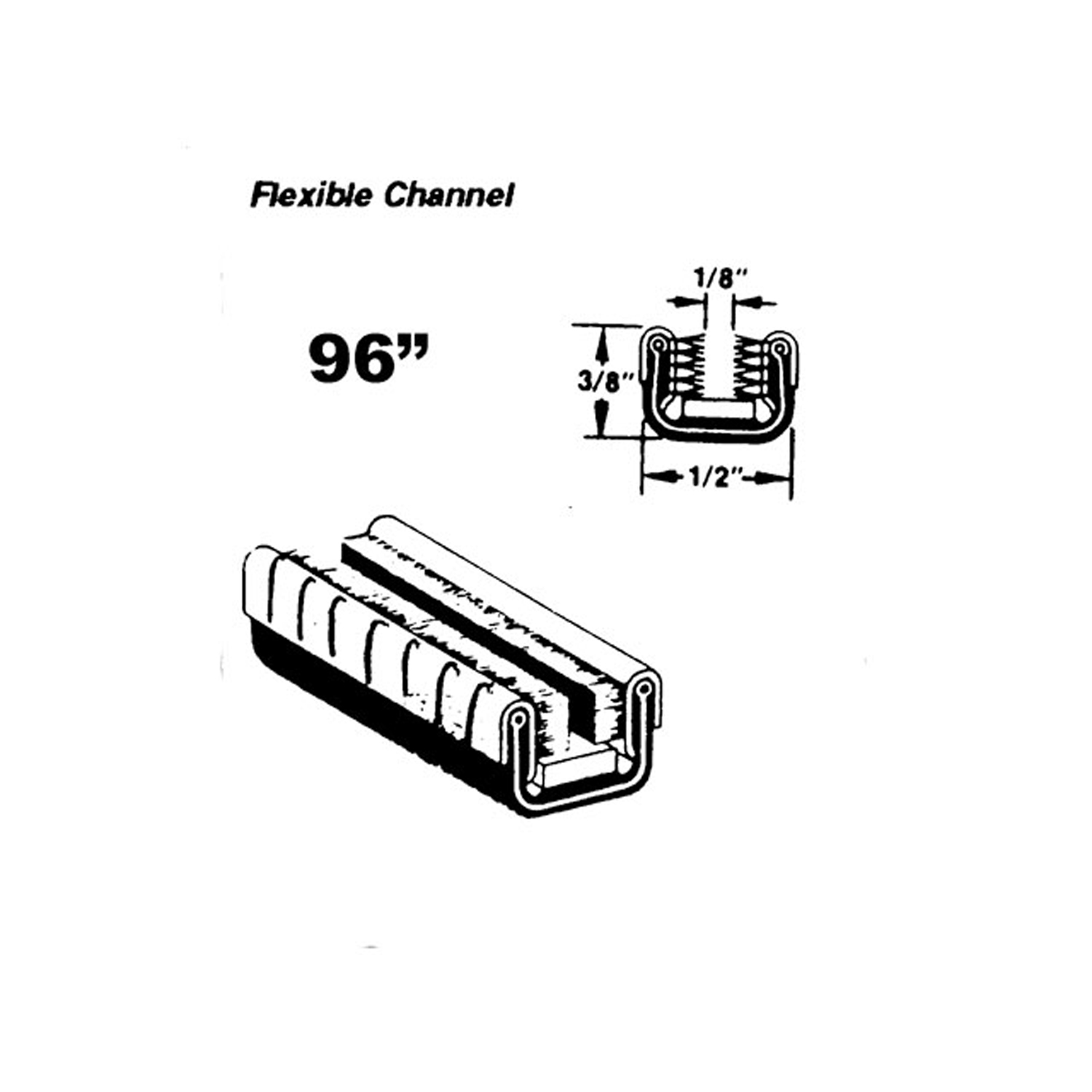 1937 Mercedes-Benz 320 Flexible glass-run channel. Rubber covered and pile lined-WC 12-96Flexible glass-run channel. Rubber covered and pile lined. Unbeaded. 96 in. long. Each. NOTE: $20 special shipping charge applies for domestic orders. Call or email for overseas shipping costs. Part can be sectioned in two or three equal lengths to reduce overseas shipping costs.
Why Choose Metro?
For over 100 years, Metro Moulded Parts has been the pinnacle of quality in classic car restoration parts. Our commitment to precision and authenticity in every component ensures a perfect fit and an OEM-level appearance.
- Expert Craftsmanship & Quality: Each part is a testament to our dedication to reliability and perfection, crafted from original designs and thoroughly tested.
- Advanced Technology: We use cutting-edge techniques to create flawless, long-lasting parts that surpass others in performance.
- SuperSoft Sponge – The Ultimate Door Seal: Not only are our door seals 30% softer than competitors', but they're also guaranteed to never leak. They effectively reduce wind and road noise, enhancing your classic car's comfort and driving experience.
- Proudly American: Our parts are a product of American craftsmanship, made in the USA with a spirit of excellence and heritage.
- Unrivaled Warranty: We back our products with a 30-year industry-leading warranty, a testament to our confidence in their quality.
Join us in preserving the legacy of classic cars with parts that are crafted for perfection, not just made.