

Image of 1938 Mercedes-Benz 320, Note: These illustrations use artistic license and may differ from actual historical models.
Performance Metrics
Fundamental Metrics
Emotional Appeal
MMP Rating
| Engine Specifications | |
|---|---|
| Engine Options: | Inline 6 |
| Displacement Range: | 3.4 L |
| Horsepower Range: | Estimated 78-85 hp |
| Torque: | Not available |
| Compression Ratio: | Not available |
| Ignition System: | Distributor ignition |
| Cooling System: | Water-cooled |
| Performance Specifications | |
| 0-60 Time: | Not available |
| 1/4 Mile Time: | Not available |
| Top Speed: | 78 mph |
| Transmission and Drive | |
| Drive Type: | Rear-wheel drive |
| Transmission Type: | 4-speed manual |
| Fuel and Efficiency | |
| Fuel System Type: | Carburetor |
| MPG: | Not available |
| Dimensions and Brakes | |
| Brakes: | Drum brakes |
| Wheelbase: | 129.5 inches |
| Weight: | Estimated 3,300 lbs |
Note: Specifications for classic cars are given to the best of our ability, considering the limited and variant data available.
1938 Mercedes-Benz 320: A Prewar Luxury Tourer
The 1938 Mercedes-Benz 320 paired stately prewar coachwork with the kind of engineering that made the three-pointed star a luxury-car benchmark. Built by Daimler-Benz in Germany, it was part of the W142 series, introduced in 1937 as the successor to the Mercedes-Benz 290. Its appeal was broader than outright speed: buyers could choose from elegant factory bodies or order a chassis for custom coachwork, creating cars that ranged from dignified family sedans to glamorous open tourers.
The 320 arrived during a turbulent period for Europe. It was designed in the late 1930s, when long-distance motoring and prestige were central to the luxury-car market, but production continued into the Second World War and was disrupted by it. One notable detail for anyone researching a 1938 example is that the model evolved quickly: early cars used a 3.2-liter engine, while a larger 3.4-liter version appeared from 1938. Exact specifications therefore depend on the car’s production date and configuration.
Elegant Lines and Bespoke Bodywork
The 320’s styling is unmistakably prewar Mercedes-Benz. A tall, upright radiator grille anchors the long nose, flanked by prominent headlamps and flowing front fenders. The hood stretches back toward a sharply defined passenger cabin, while the rear fenders continue the car’s sweeping lines. Compared with later, more streamlined automobiles, the 320 looks formal and substantial, but its curved fenders and carefully proportioned bodywork keep it from appearing boxy.
Mercedes offered the W142 in several wheelbase and body configurations. Depending on year and market, buyers could find sedans and touring cars, as well as Cabriolet A, B, and D versions. Cabriolet A was a particularly striking two-seat open car; Cabriolet B offered additional seating, while Cabriolet D combined four doors with an open-top layout. Long-wheelbase versions provided roomier passenger accommodation, and chassis could also be supplied for specialist coachwork. The Cabriolets, especially the more sporting two-door styles, are among the most recognizable and sought-after forms today.
The cabin was trimmed to suit a luxury car of the period, with quality upholstery, polished wood or wood-look dashboard details, and substantial metal fittings. Equipment and materials varied by body style and specification, but the overall effect was crafted rather than mass-produced. Paint was also a matter of specification: dark shades such as black, deep blue, maroon, and restrained greens or grays suit the car’s formal character, though individual cars could be ordered in other finishes. There was no single color combination that defines every 320.
Engineering for the Open Road
For its era, the 320 combined traditional luxury with modern chassis engineering. The W142 used independent front suspension and a rear swing-axle layout, helping it ride and respond differently from older cars with rigid axles at both ends. Hydraulic brakes were another important feature for a large, fast car. A four-speed manual gearbox gave the driver control over the engine’s power, though the exact transmission details and equipment can vary between examples.
The early 3,208 cc straight-six produced about 78 PS. From 1938, the engine grew to approximately 3,405 cc and produced about 80 PS, or roughly 79 mechanical horsepower. Those figures may seem modest by modern standards, but the 320 was built to carry passengers in comfort and cover long distances smoothly, not to deliver sports-car acceleration. The larger engine was a useful refinement rather than a radical change in character.
How the 320 Drives
Published performance figures vary by body style, gearing, and engine version. A sound, correctly specified 320 could reach roughly 80 mph, or about 130 km/h, with lighter bodies generally having an advantage over heavier limousines. A period-style estimate for 0 to 60 mph is around 20 to 25 seconds, but this should be treated as an approximation rather than a universal factory figure. The car’s weight, condition, and bodywork make a real difference.
On the road, the 320 is best understood as a measured grand tourer. The six-cylinder engine delivers its power progressively, and the long wheelbase helps it settle into a relaxed cruise. The ride can feel composed over ordinary road imperfections, while the independent front suspension gives it a more sophisticated feel than many earlier luxury cars. On tight or winding roads, its size and period steering ask for anticipation and deliberate inputs. It is not a modern sports sedan, and hurried cornering is not where it shines.
From behind the wheel, the experience is tactile. The driver works a manual gearbox, judges the car’s generous dimensions, and listens to the smooth mechanical note of a large prewar straight-six. There is no power steering or modern electronic assistance, so low-speed maneuvering requires effort and care. At a steady pace, however, the 320’s long hood, upright instruments, and unhurried engine make every trip feel like a proper motoring occasion.
Why the Mercedes-Benz 320 Matters
The W142 represents an important point in Mercedes-Benz’s prewar development. It brought independent suspension and hydraulic braking to a large luxury-car package while retaining the craftsmanship and body variety expected by wealthy customers. It also showed how a manufacturer could offer one underlying model as several distinct experiences, from formal limousine to open touring car.
Its competitors included luxury offerings from German makers such as Horch and BMW, along with prestigious cars from other European and American manufacturers. The 320’s combination of a refined six-cylinder engine, advanced-for-its-time chassis design, and multiple body styles helped distinguish it. Its influence is less about one feature copied by every rival and more about the enduring Mercedes-Benz formula: sophisticated engineering presented in a carefully finished, high-status car.
Living with a 320 Today
Today, a Mercedes-Benz 320 is primarily a show car, touring car, or prized collection piece rather than a routine daily driver. A well-maintained example can take part in historic rallies and club events, but regular use requires planning. These cars are now many decades old, and even a strong engine cannot compensate for neglected brakes, worn suspension components, deteriorated wiring, or poor previous repairs.
Maintenance is specialized. Routine servicing is manageable for an experienced vintage-car owner, but sourcing correct parts and repairing period systems can be challenging. The car’s mechanicals are less complicated than those of a modern vehicle, yet restoration demands knowledge of prewar Mercedes-Benz engineering, careful parts research, and skilled coachwork. Reliability depends heavily on restoration quality and ongoing care. Before buying, a prospective owner should arrange an inspection by a specialist familiar with W142 cars, including checks of the chassis, drivetrain, brakes, and body structure.
Production, Wartime Use, and Other Facts
Production figures commonly cited for the W142 family are around 6,861 cars, though totals can depend on which versions and chassis are included. That makes the 320 uncommon compared with postwar Mercedes-Benz sedans, but rarity varies considerably by body style. A surviving sedan is not equivalent in scarcity or market demand to a beautifully preserved Cabriolet or a car with documented coachwork.
The model’s production overlapped with the Second World War, and some Mercedes-Benz passenger cars of the period were requisitioned or used as staff transport. The 320’s civilian luxury origins make its later wartime history part of the broader story of prewar European automobiles, although an individual car’s history needs to be established from its own records and provenance.
One of the model’s most interesting details is that a car described simply as a “1938 320” may have either the earlier 3.2-liter engine or the enlarged 3.4-liter unit, depending on its build date and specification. That is why chassis records and engine numbers matter to collectors. A further common misconception is that every 320 was a convertible: Mercedes offered several closed and open body styles, and the most dramatic surviving examples tend to attract the most attention.
Collector Values and Availability
Values depend sharply on body style, originality, restoration quality, provenance, and market location. As a broad 2026 estimate in the U.S. market, a sound, presentable sedan or touring car might fall around $100,000 to $250,000. Well-restored open cars can be worth roughly $250,000 to $600,000, with exceptionally rare, beautifully documented, or especially desirable examples potentially selling for more. These are guide ranges, not appraisals, and auction results can vary widely.
Good examples do not appear on the market every day, and the most attractive Cabriolets are especially scarce. The broader prewar-car market is selective: top-quality, correctly documented cars remain desirable, while compromised restorations and cars needing extensive work can be difficult to sell. In nominal terms, strong examples have generally benefited from long-term collector interest, but values are not guaranteed to rise steadily, particularly after accounting for inflation and restoration costs.
A Lasting Prewar Star
The 1938 Mercedes-Benz 320 is a compelling blend of graceful styling, thoughtful engineering, and prewar luxury. Its straight-six engine, advanced chassis features, and choice of body styles made it a sophisticated touring car in its day. Today, it rewards owners who value craftsmanship and character as much as speed, and it remains a vivid reminder of an era when a car could be both a carefully engineered machine and a work of coachbuilt art.
1938 Mercedes-Benz 320 Catalog of Parts
 1938 Mercedes-Benz 320 Coupler to Engine Seal. 1-1/8" I.D., 2-3/4" O.D. Each-RP 15Coupler to Engine Seal. 1-1/8" I.D., 2-3/4" O.D. Each
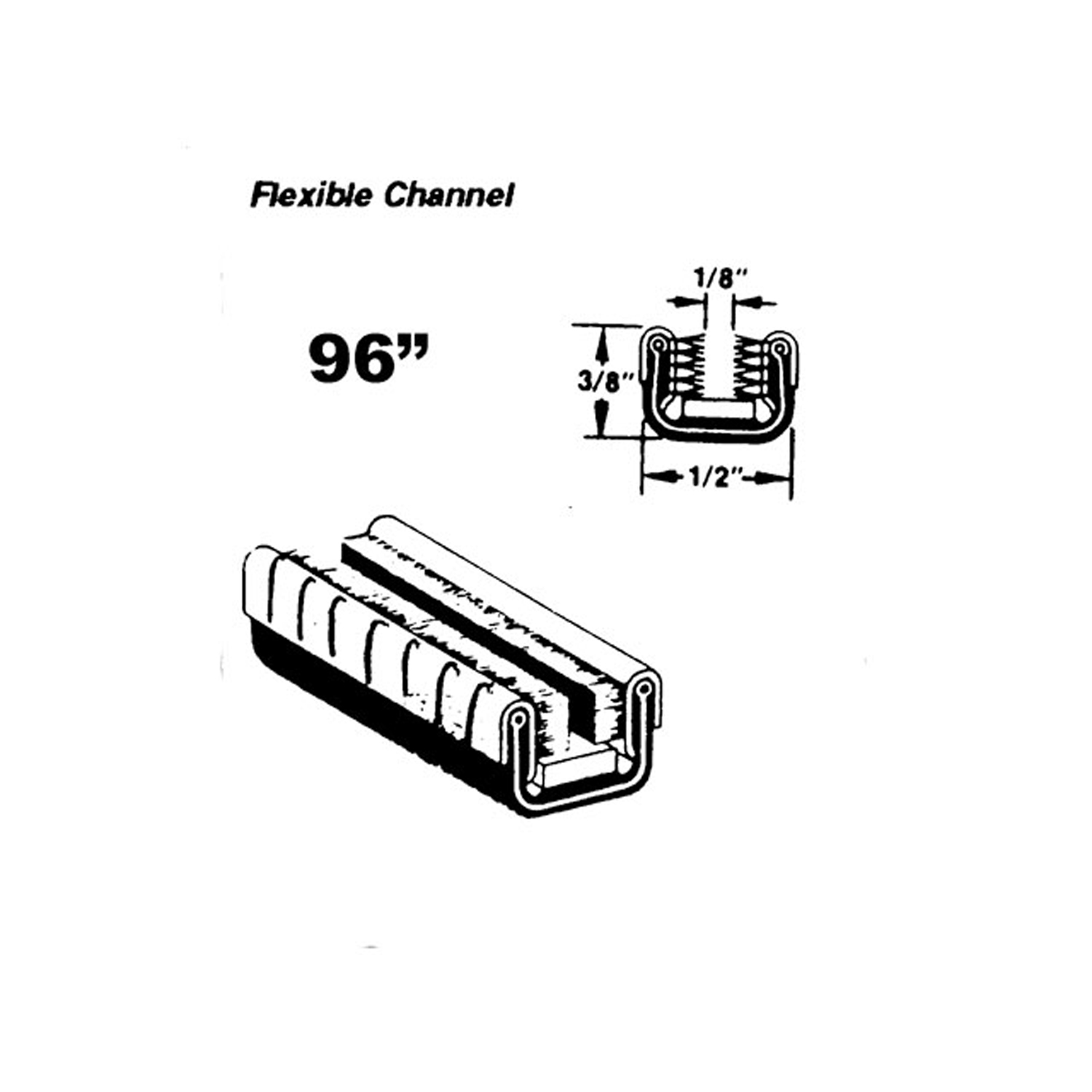 1938 Mercedes-Benz 320 Flexible glass-run channel. Rubber covered and pile lined-WC 12-96Flexible glass-run channel. Rubber covered and pile lined. Unbeaded. 96 in. long. Each. NOTE: $20 special shipping charge applies for domestic orders. Call or email for overseas shipping costs. Part can be sectioned in two or three equal lengths to reduce overseas shipping costs.
Why Choose Metro?
For over 100 years, Metro Moulded Parts has been the pinnacle of quality in classic car restoration parts. Our commitment to precision and authenticity in every component ensures a perfect fit and an OEM-level appearance.
- Expert Craftsmanship & Quality: Each part is a testament to our dedication to reliability and perfection, crafted from original designs and thoroughly tested.
- Advanced Technology: We use cutting-edge techniques to create flawless, long-lasting parts that surpass others in performance.
- SuperSoft Sponge – The Ultimate Door Seal: Not only are our door seals 30% softer than competitors', but they're also guaranteed to never leak. They effectively reduce wind and road noise, enhancing your classic car's comfort and driving experience.
- Proudly American: Our parts are a product of American craftsmanship, made in the USA with a spirit of excellence and heritage.
- Unrivaled Warranty: We back our products with a 30-year industry-leading warranty, a testament to our confidence in their quality.
Join us in preserving the legacy of classic cars with parts that are crafted for perfection, not just made.