

Image of 1962 Mercury Meteor, Note: These illustrations use artistic license and may differ from actual historical models.
Performance Metrics
Fundamental Metrics
Emotional Appeal
MMP Rating
| Engine Specifications | |
|---|---|
| Engine: | 170 CID I6, 260 CID V8 |
| Displacement: | 170-260 CID |
| Horsepower: | 101-164 hp |
| Torque: | 240-258 lb-ft |
| Compression Ratio: | 8.7:1 - 8.8:1 |
| Ignition System: | Conventional, distributor |
| Cooling System: | Liquid-cooled |
| Performance Specifications | |
| 0-60 Time: | Estimated 10-12 seconds |
| 1/4 Mile Time: | Estimated 17-19 seconds |
| Top Speed: | 100-110 mph |
| Transmission and Drive | |
| Drive Type: | Rear-wheel drive |
| Transmission Type: | 2-speed automatic, 3-speed manual |
| Fuel and Efficiency | |
| Fuel System Type: | Carburetor |
| MPG: | Estimated 15-20 mpg |
| Dimensions and Brakes | |
| Brakes: | Drum brakes |
| Wheelbase: | 116.5 inches |
| Weight: | 2,800-3,200 lbs |
Note: Specifications for classic cars are given to the best of our ability, considering the limited and variant data available.
1962 Mercury Meteor: The One-Year Mid-Size Mercury
The 1962 Mercury Meteor was Mercury’s brief, intriguing answer to a question many American buyers were beginning to ask: could a car be roomier and more substantial than a compact without carrying the price and bulk of a full-size model? Built by the Ford Motor Company, the Meteor shared its basic engineering with the new Ford Fairlane, while adding Mercury-specific styling and trim.
Its timing made it unusual. Mercury already had the compact Comet and the larger Monterey, leaving room for a car in between. The Meteor filled that gap for 1962, but its American-market run was short. That one-model-year status makes it less familiar than its Ford cousin and gives the car an appealing footnote in Mercury history.
One detail that adds to its charm is the name itself. Meteor had a longer life as a Mercury-related name in Canada, where it was used on different cars over the years. The 1962 U.S. Meteor, however, was a distinct mid-size model, not simply another version of the Canadian Meteor.
Clean Styling and Mid-Century Comfort
The Meteor wore the era’s crisp, squared-off look without the extravagant fins and heavy ornamentation associated with some late-1950s American cars. Its broad front grille, paired headlamps, sculpted hood and restrained side trim gave it a confident, formal appearance. The roofline and long side panels made the car look larger than a compact, while its proportions remained more manageable than those of a full-size Mercury.
Inside, the Meteor offered a conventional, comfortable American-car cabin. Buyers could choose from cloth and vinyl combinations, with more upscale trim available on better-equipped models. The dashboard used clear, straightforward instruments, and the broad front bench seat was designed for relaxed cruising rather than close-fitting support. Higher trims added dressier upholstery and brightwork, while the sporty S-33 gave the interior a more youthful character, including bucket-seat-style appointments on some configurations.
Technology was practical rather than futuristic. The Meteor used unitized body construction, independent front suspension with coil springs and a solid rear axle on leaf springs. A three-speed manual transmission was available, while an automatic transmission made stop-and-go driving easier. These were familiar, serviceable systems for the period, and they helped keep the car’s mechanical layout approachable for owners and independent repair shops.
Paint choices followed early-1960s tastes, with solid colors and two-tone combinations available depending on body style and trim. Buyers could select conservative shades such as white, black and blue, or choose brighter reds and other period colors. Contrasting roof colors were especially effective on the hardtops, emphasizing the Meteor’s clean roofline. Exact colors and combinations varied by trim and production details.
The range included two-door and four-door sedans, two-door and four-door hardtops, and station-wagon models. The S-33 two-door hardtop is the most eye-catching version today: its lower, pillarless profile and sportier trim make it the natural choice for collectors seeking the most distinctive Meteor. The four-door sedan, by contrast, best represents the model’s practical family-car role.
Why the Meteor Matters
The Meteor’s significance lies in its place between Mercury’s established categories. The compact Comet targeted buyers looking for economy and easier parking; the Monterey served customers who wanted a traditional full-size Mercury. The Meteor offered a middle ground, using the Fairlane’s mid-size platform to give Mercury a more accessible car with greater room and presence than a compact.
That strategy reflected a broader shift in the American market. Buyers were beginning to value cars that delivered useful interior space without the size and operating costs of the biggest models. Ford’s Fairlane helped establish the mid-size formula, and the Meteor was Mercury’s companion to that effort. It did not create a lasting U.S. nameplate, but it showed how manufacturers were adapting their lineups to a changing market.
The Meteor’s short run also highlights a challenge Mercury faced: its product range could feel crowded. With the Comet below it and the Monterey above it, the Meteor had to explain its position to shoppers. Its disappearance from the U.S. lineup after 1962 made it a transitional model, rather than the foundation of a long-running series.
Engines, Speed and Road Manners
Engine choices included a 170-cubic-inch inline six and small-block V8 options, including 221- and 260-cubic-inch versions depending on configuration. Output and equipment varied, but the six-cylinder was aimed at economical everyday use, while the V8s supplied the stronger acceleration that many buyers expected from an American car.
Performance figures depend on engine, transmission, axle ratio and vehicle condition. As a broad period-style estimate, a Meteor with the 260 V8 could reach 0 to 60 mph in roughly 10 to 12 seconds, with a top speed in the neighborhood of 100 to 110 mph. Six-cylinder cars were slower, often taking around 15 seconds or more to reach 60 mph. These are estimates rather than guaranteed factory figures, and a surviving car’s tune and gearing can make a noticeable difference.
On the road, the Meteor feels like a traditional early-1960s American car: comfortable, steady and tuned more for cruising than corner carving. Its coil-spring front suspension helps take the sting out of ordinary bumps, while the leaf-sprung rear axle can feel less composed over sharp or uneven pavement. On winding roads, the car’s size, period tires and soft suspension encourage a smooth, unhurried driving style rather than aggressive turn-in.
A V8 Meteor brings a relaxed, low-pitched rumble under acceleration, with the automatic transmission favoring smooth shifts over urgency. The steering is lighter and less precise than that of a modern car, and the driver sits behind a broad hood with a clear sense of the car’s width. In return, the Meteor offers the easygoing ride and open, spacious feel that made American mid-size cars appealing.
Living With a 1962 Meteor
Today, most Meteors are best suited to weekend drives, local shows and relaxed touring. A well-maintained example can be used regularly, but its age means that reliability depends more on restoration quality and upkeep than on the model’s reputation alone. Cooling systems, brakes, suspension bushings, steering components, electrical connections and fuel delivery deserve careful inspection before regular use.
The basic mechanical layout is familiar to classic Ford specialists, and many service items are straightforward to repair. Some engine and chassis parts are shared with related Ford products, which helps. Meteor-specific trim, body panels, glass details and interior pieces can be harder to locate, so buyers should check the completeness of a car before taking on a restoration. A missing piece of unique brightwork can take longer to find than a routine engine component.
Common criticisms include the car’s brief production life, modest performance with the six-cylinder engine and the difficulty of finding certain model-specific parts. Its soft handling and vintage braking feel are also a reminder that the Meteor belongs to a very different era of driving. Those drawbacks are part of the ownership calculation, not reasons to overlook the car.
Rare Details and Meteor Trivia
The S-33 is the Meteor to know if you like a sporty-looking classic. It added visual distinction to a model otherwise aimed squarely at practical family buyers. Because fewer collectors recognize the Meteor than the Fairlane, an S-33 can attract attention at a show simply by being different.
There is no widely documented speed, endurance or sales record that belongs specifically to the 1962 Meteor, and it is not best known for a major racing victory or a famous celebrity owner. Its historical interest is quieter: it was Mercury’s short-lived attempt to occupy the emerging mid-size market with a car closely related to one of Ford’s most important new models.
Production totals are not consistently presented in the same way across commonly available reference sources, so any single figure should be treated cautiously. A reasonable working estimate is roughly 70,000 to 90,000 U.S. Meteors for the 1962 model year, with about 80,000 as a useful midpoint. That is an estimate, not a definitive factory-certified count, and totals can vary according to how body styles and production categories are grouped.
Collector Values and Availability
The Meteor remains more affordable than many better-known Mercury classics, though condition and trim make a substantial difference. As a general U.S. market guide, a project car may sell for approximately $3,000 to $7,000. A usable driver often falls around $8,000 to $18,000, while a clean, well-restored example can reach roughly $20,000 to $35,000. A particularly sharp S-33 or an unusually complete, high-quality car may bring more, especially when the right buyers are looking.
Availability is limited but not impossibly rare. Sedans and ordinary examples are more likely to surface than well-preserved hardtops or S-33s. Expect to search specialist Ford and Mercury clubs, classic-car listings and regional shows rather than assume one will appear at every large auction.
Values have generally been steady in the niche-classic market, with the best cars gaining more attention than average drivers. The Meteor is unlikely to follow the price curve of a famous muscle car, but its one-year U.S. identity and distinctive position in Mercury history give it a story collectors can appreciate. As with most classics, originality, rust-free bodywork, correct trim and documented restoration matter more than hopeful asking prices.
A Short-Run Mercury Worth Remembering
The 1962 Mercury Meteor combined Fairlane-based mid-size engineering with Mercury styling, comfortable traditional appointments and a choice of economical six-cylinder or more powerful V8 engines. Its brief American-market life left it overshadowed by better-known Mercurys, yet that same rarity makes it an appealing alternative for collectors who want something less predictable.
It is not a muscle car or a technological landmark. It is a well-judged snapshot of a changing industry, built for buyers who wanted a little more room and polish without stepping up to a full-size car. That makes the Meteor more than a forgotten Mercury: it is a distinctive chapter in the story of how American cars found their middle ground.
1962 Mercury Meteor Catalog of Parts
 1962 Mercury Meteor Power Steering Stop Insulator. Die stamped. 1-7/16" O.D-BN 107-APower Steering Stop Insulator. Die stamped. 1-7/16" O.D., 1-1/16" I.D., .808 thick. Each
 1962 Mercury Meteor Shock Absorber Grommet. 1-1/4" bottom O.D., 1" high-BN 12Shock Absorber Grommet. 1-1/4" bottom O.D., 1" high., with 3/4" I.D. Each
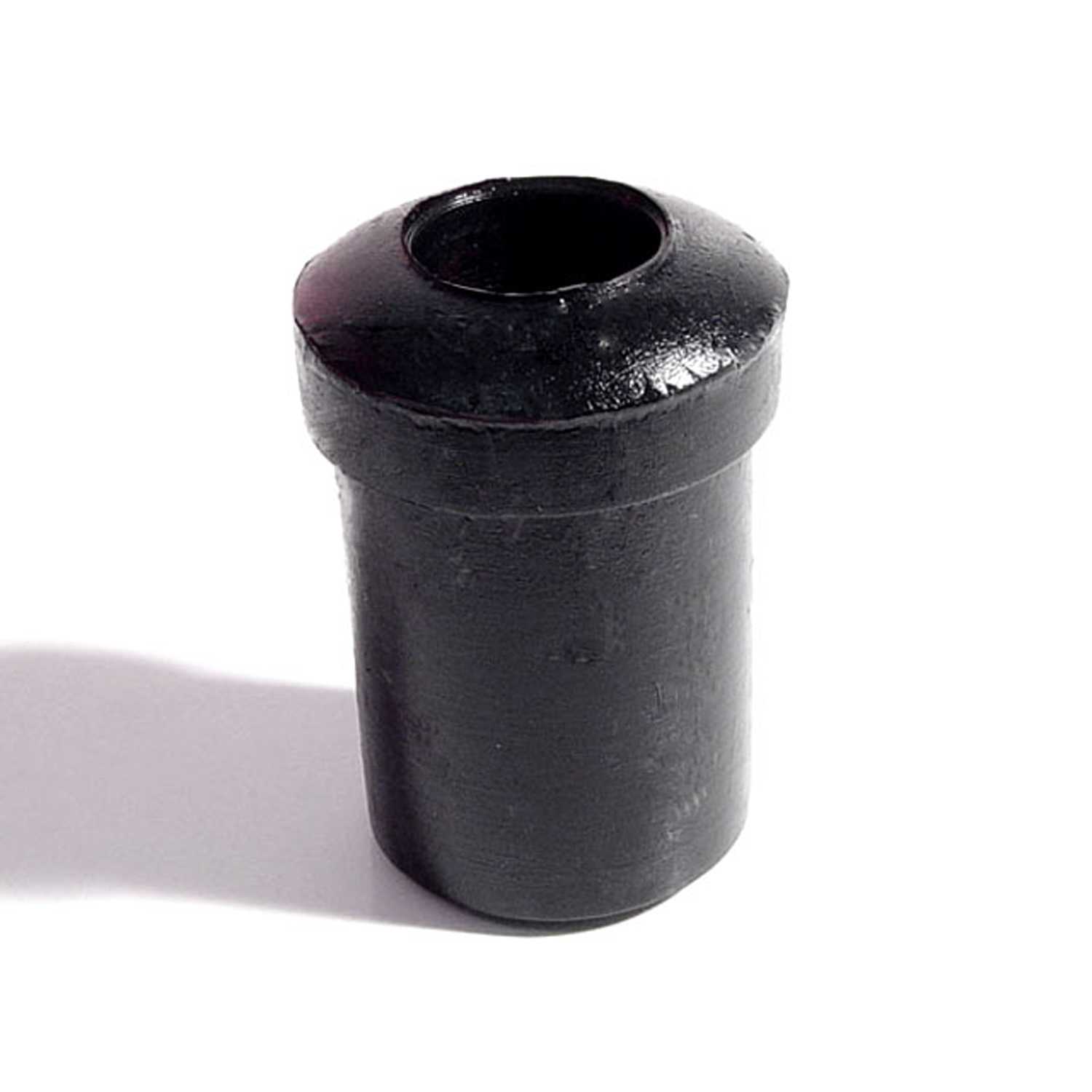 1962 Mercury Meteor Spring and Shackle Bushing. 1" bottom O.D-BN 20Spring and Shackle Bushing. 1" bottom O.D. X 1-5/8" high, with 9/16" I.D. Each
 1962 Mercury Meteor Shock Absorber Grommet. 1" bottom O.D., 1-7/16" high-BN 3Shock Absorber Grommet. 1" bottom O.D., 1-7/16" high., with 5/8" I.D. Each
 1962 Mercury Meteor Stabilizer Bar Bushings-BN 32-DStabilizer Bar Bushings. 1-9/16" long X 1-1/2" wide X 1-5/8" high, 15/16" I.D. Pair
 1962 Mercury Meteor Hood Bumper. Made with steel core. Held by screw. Each-HF 40Hood Bumper. Made with steel core. Held by screw. Each
 1962 Mercury Meteor Generator Boot. Replaces OEM #C1AZ10170B-RP 2-FGenerator Boot. Replaces OEM #C1AZ10170B. Note: Notch may have to be cut by purchaser. Each
 1962 Mercury Meteor Door Lock Knob. Black Rubber. Each-RP 306Door Lock Knob. Black Rubber. Each
 1962 Mercury Meteor Door Lock Knob. 1-1/2" high. Made of red rubber. Each-RP 306-ADoor Lock Knob. 1-1/2" high. Made of red rubber. Each
 1962 Mercury Meteor Door Lock Knob. 1-1/2" high. Made of blue rubber. Each-RP 306-BDoor Lock Knob. 1-1/2" high. Made of blue rubber. Each
 1962 Mercury Meteor Door Lock Knob. 1-1/2" high. Made of turquoise rubber-RP 306-CDoor Lock Knob. 1-1/2" high. Made of turquoise rubber. Each
 1962 Mercury Meteor Door Lock Knob. 1-1/2" high. Made of beige rubber. Each-RP 306-DDoor Lock Knob. 1-1/2" high. Made of beige rubber. Each
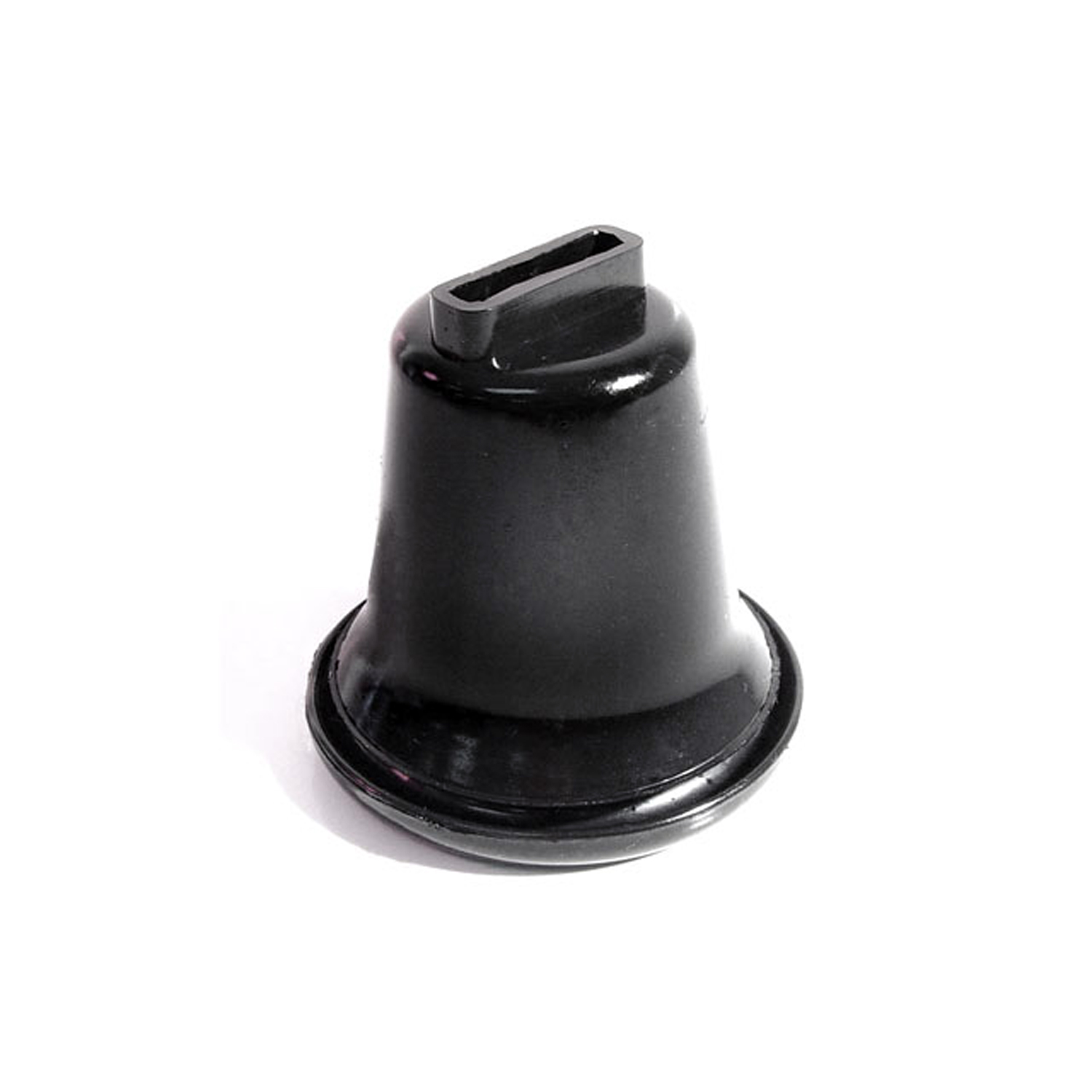 1962 Mercury Meteor Brake Booster Boot. Each-RP 32-AABrake Booster Boot. Each
 1962 Mercury Meteor Deck Lid Bumper. Replaces OEM #C20Z-6243634A. Each-SB 30-BDeck Lid Bumper. Replaces OEM #C20Z-6243634A. Each
 1962 Mercury Meteor Hood Bumper. Snap-in wire base like original. Each-SB 89-AHood Bumper. Snap-in wire base like original. Each
 1962 Mercury Meteor Windshield Seal Fits 62-65 Fairlane 2&4 Door Sedan And Wagon-VWS 0619This windshield seal fits all styles except for the 2 door hardtops. This gasket works with chrome trim.
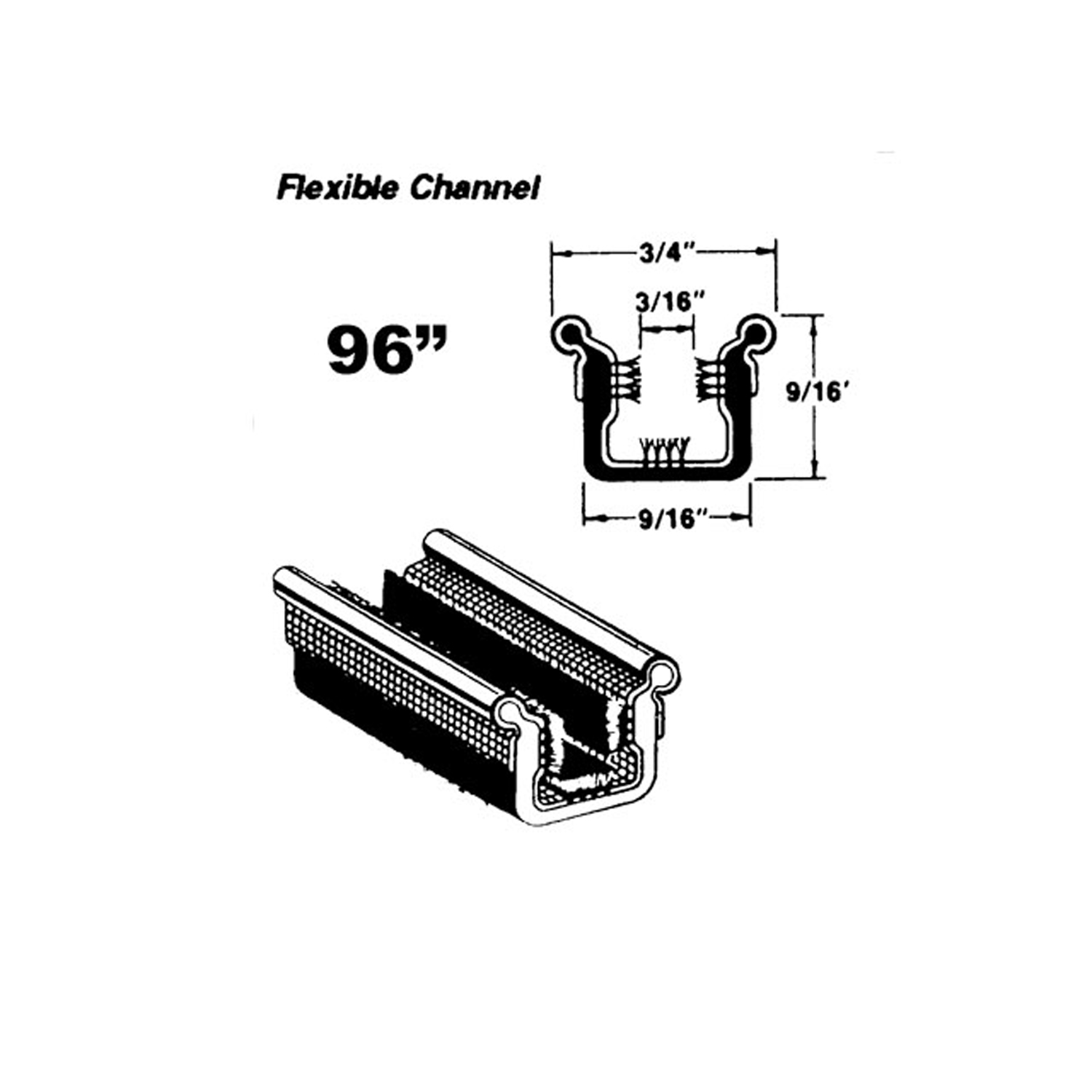 1962 Mercury Meteor Flexible window channel-WC 10-96Flexible window channel. Rubber covered with mohair lining and stainless steel bead. 96 in. long. Each. NOTE: $20 special shipping charge applies for domestic orders. Call or email for overseas shipping costs. Part can be sectioned in two or three equal lengths to reduce overseas shipping costs.
 1962 Mercury Meteor Flexible Sweeper. Made of rubber-WC 23-/FTFlexible Sweeper. Made of rubber. Seal for outside of side window. Sold by the foot
 1962 Mercury Meteor Flexible Sweeper. Made of rubber-WC 23-48Flexible Sweeper. Made of rubber. Seal for outside of side window. 48" Piece. Each
 1962 Mercury Meteor Flexible Sweeper. Made of rubber-WC 23-96Flexible Sweeper. Made of rubber. Seal for outside of side window. 96" Piece. each
Why Choose Metro?
For over 100 years, Metro Moulded Parts has been the pinnacle of quality in classic car restoration parts. Our commitment to precision and authenticity in every component ensures a perfect fit and an OEM-level appearance.
- Expert Craftsmanship & Quality: Each part is a testament to our dedication to reliability and perfection, crafted from original designs and thoroughly tested.
- Advanced Technology: We use cutting-edge techniques to create flawless, long-lasting parts that surpass others in performance.
- SuperSoft Sponge – The Ultimate Door Seal: Not only are our door seals 30% softer than competitors', but they're also guaranteed to never leak. They effectively reduce wind and road noise, enhancing your classic car's comfort and driving experience.
- Proudly American: Our parts are a product of American craftsmanship, made in the USA with a spirit of excellence and heritage.
- Unrivaled Warranty: We back our products with a 30-year industry-leading warranty, a testament to our confidence in their quality.
Join us in preserving the legacy of classic cars with parts that are crafted for perfection, not just made.